

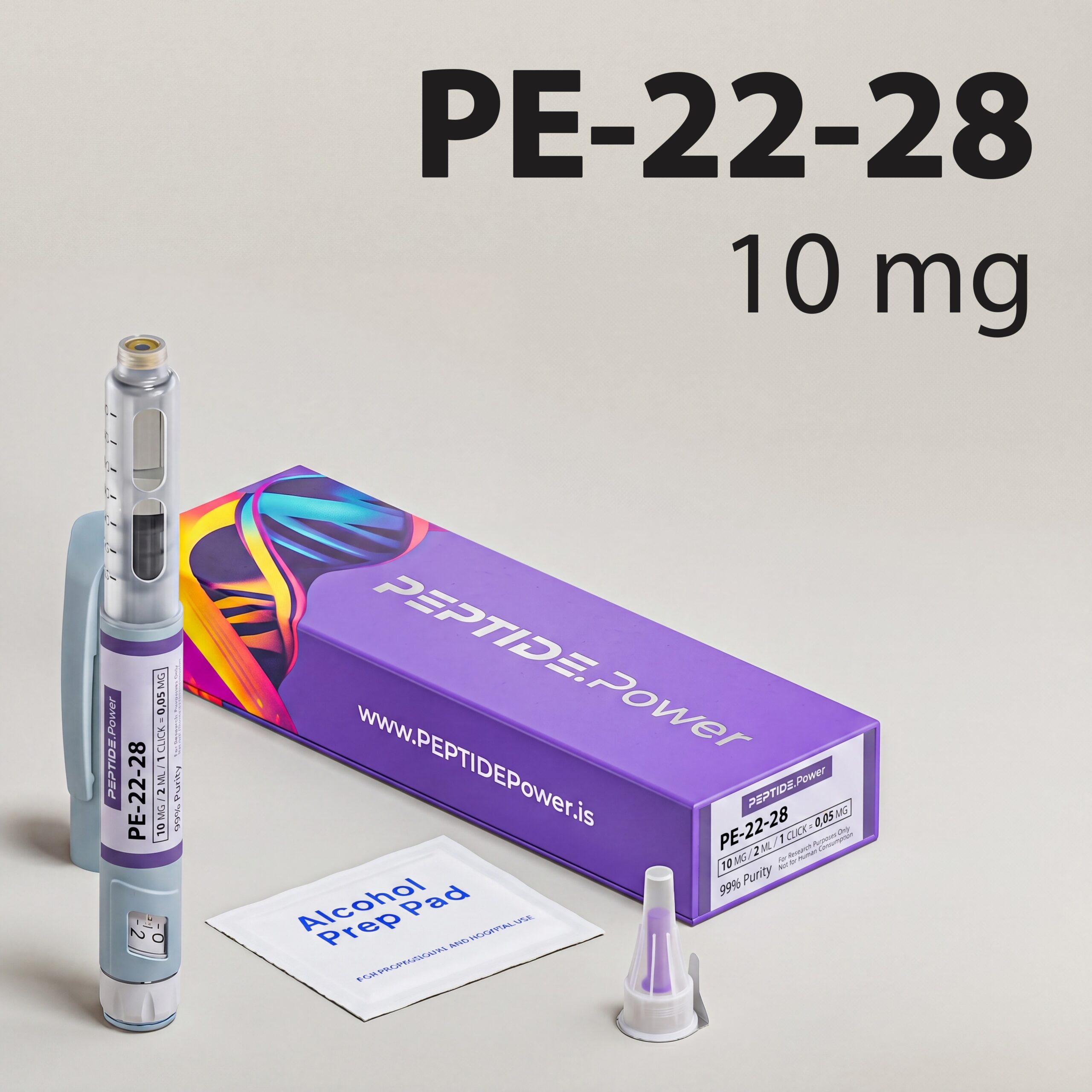




PE-22-28
PE-22-28 is a synthetic seven-amino-acid peptide derived from the active core of spadin, investigated for its ability to selectively block TREK-1 potassium channels in the central nervous system. It is studied in experimental models of depression, mood regulation, and neuroplasticity, with reported effects on serotonergic signaling and hippocampal neurogenesis.
77,00 €
📦Also available in a stack · save up to 101,00 €
Brain - Advancedsave 101,00 €View the stack →PE-22-28 - Mood & Neuroplasticity Research Peptide
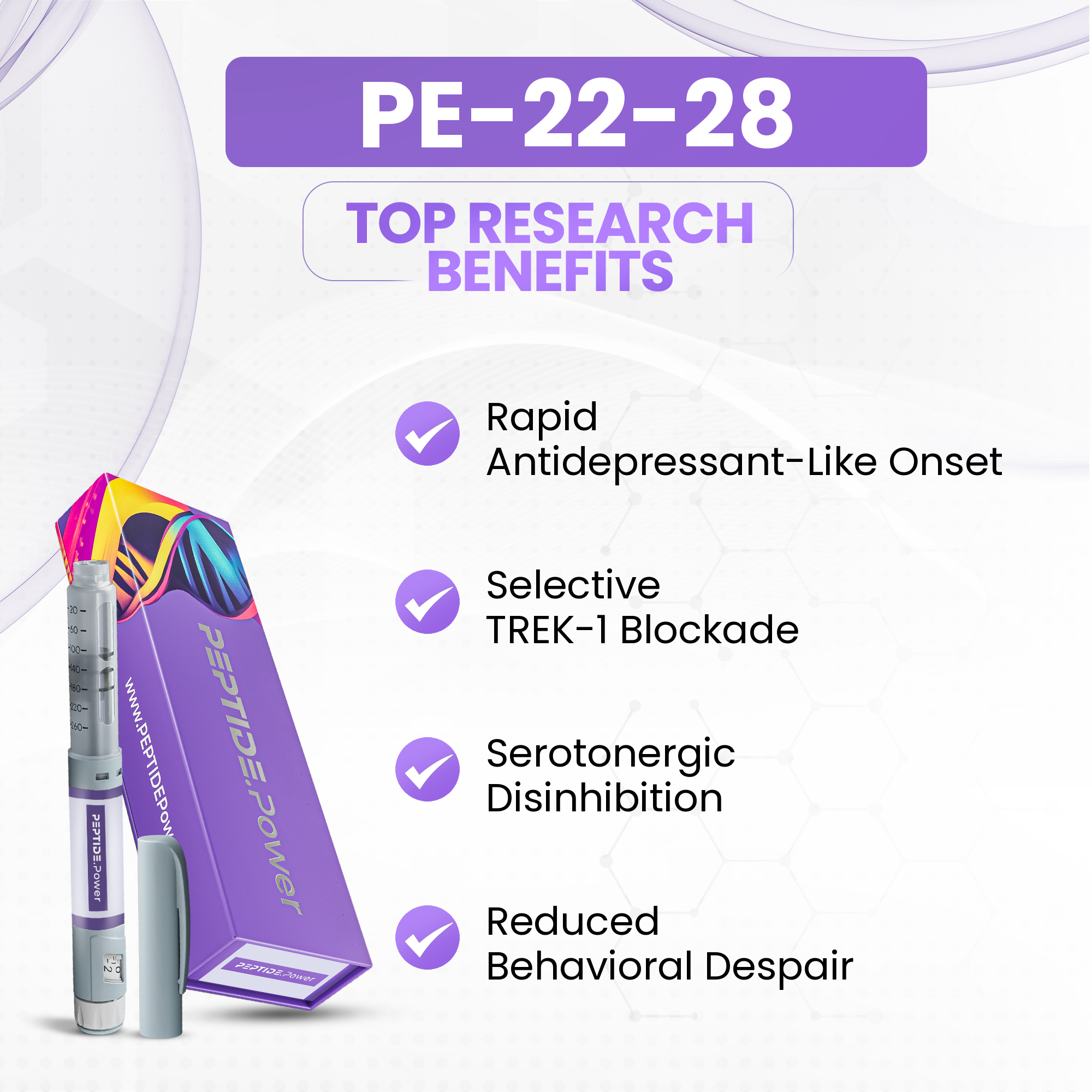
Studied for antidepressant-like effects within hours, contrasting delayed SSRI onset in rodent models.
Selectively inhibits TREK-1 two-pore-domain potassium channels implicated in mood and excitability.
Enhances dorsal raphe serotonin neuron firing without acting as a reuptake inhibitor.
Decreases immobility and increases active coping in forced swim and tail suspension tests.
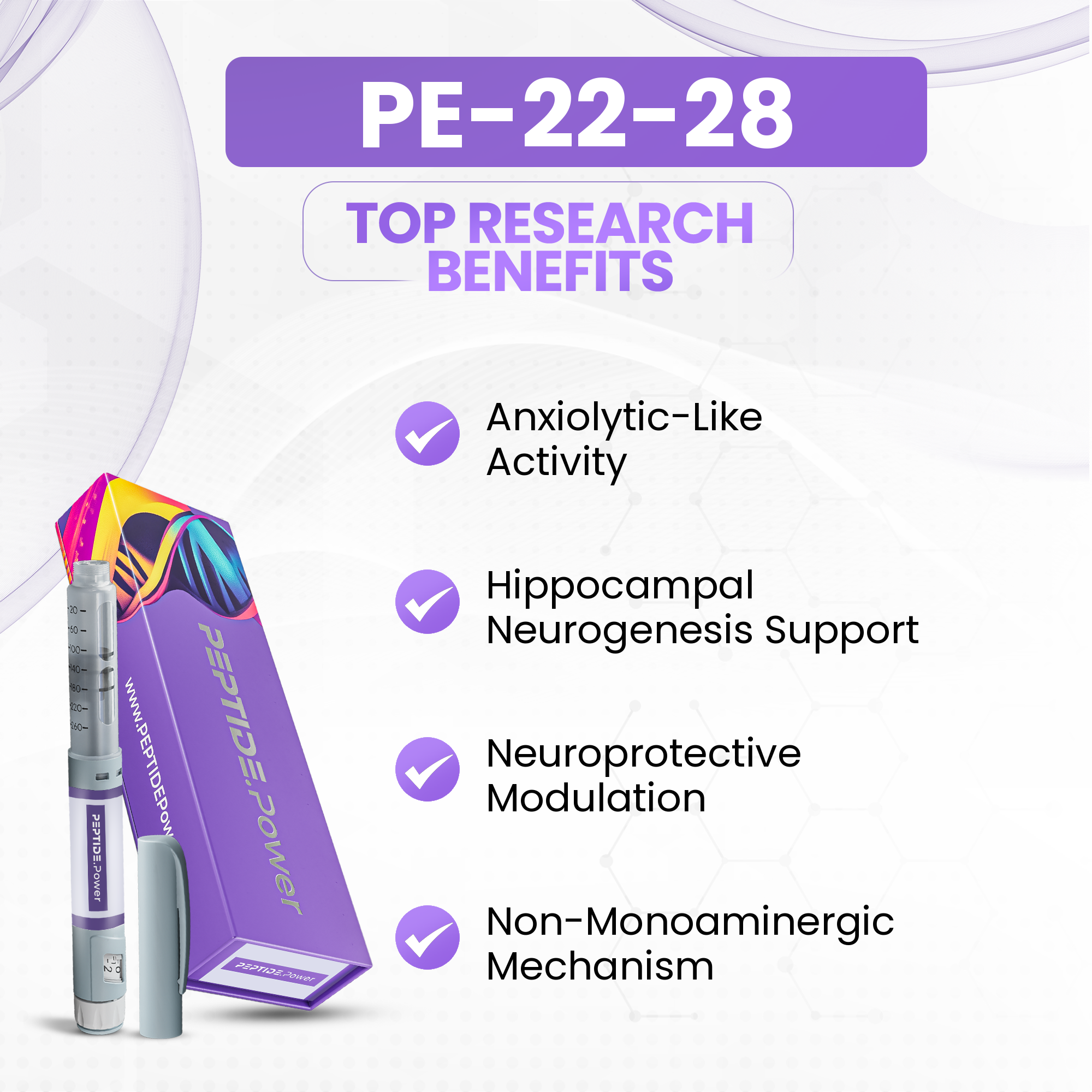
Reduces avoidance and increases exploration in elevated plus maze and open field paradigms.
Investigated for promoting hippocampal neurogenesis relevant to mood regulation and neuroplastic adaptation.
Studied for influencing neuronal resilience, membrane stability, and excitotoxicity responses in ischemic stress models.
Represents a novel non-monoaminergic research strategy for depressive-state and mood pathway investigation.
Description
PE-22-28 is a synthetic seven-amino-acid peptide derived from the spadin sequence, a fragment of the sortilin propeptide. It is investigated for its ability to selectively block the TREK-1 potassium channel, a target strongly implicated in mood regulation, stress response, and neuronal plasticity in research models.
In experimental rodent models, PE-22-28 has been observed to produce rapid antidepressant-like effects, with behavioral changes reported within hours rather than the weeks typical of conventional pharmacological agents. Studies describe increased hippocampal neurogenesis, enhanced BDNF expression, and improved synaptic plasticity following short-term administration.
Additional research interest centers on PE-22-28’s cardioprotective profile, as TREK-1 inhibition has been linked to reduced post-ischemic injury in cardiac tissue models. Unlike its parent compound spadin, PE-22-28 demonstrates improved metabolic stability while preserving channel selectivity.
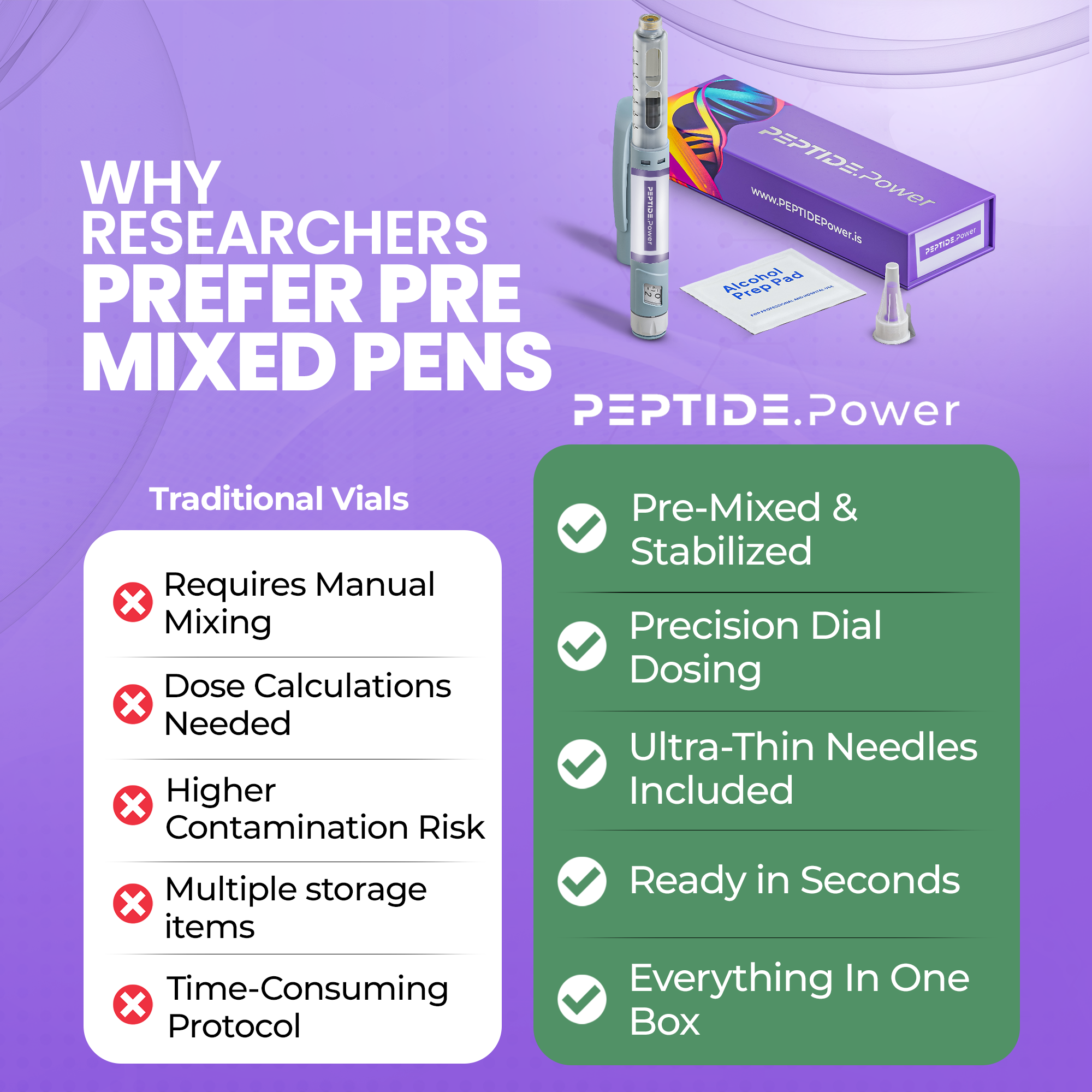
Supplied in a pre-mixed, ready-to-use pen, PE-22-28 is intended for in vitro assays and animal-model investigations into neuropsychiatric and cardiovascular pathways.
Clinical Status:
PE-22-28 is a research peptide evaluated primarily in rodent behavioral and electrophysiological studies. It is not approved for medical use and remains restricted to experimental and laboratory research.
Evidence type:
Human RCT ☐ | Observational ☐ | Animal ✔ | In vitro ✔ | Regulatory ☐
Mechanism of Action
PE-22-28 is a synthetic spadin analog that selectively blocks TREK-1 potassium channels, two-pore domain channels highly expressed in mood-regulating brain regions such as the prefrontal cortex and hippocampus. By inhibiting TREK-1, PE-22-28 enhances serotonergic neurotransmission and promotes BDNF expression, hippocampal neurogenesis, and synaptic plasticity, producing rapid antidepressant-like effects in research models without affecting cardiac TREK-1 activity.
Benefits
- Rapid-Onset Antidepressant-Like Activity:
PE-22-28 has been investigated for its capacity to produce antidepressant-like effects within hours of administration in rodent models, contrasting with the delayed onset typical of conventional SSRIs. In forced swim and tail suspension tests, treated animals displayed reduced immobility and increased active coping behavior. This rapid response profile has positioned PE-22-28 as a research candidate for studying fast-acting mood modulation pathways. - TREK-1 Channel Inhibition:
A defining feature of PE-22-28 is its selective inhibition of the TREK-1 potassium channel, a two-pore-domain channel implicated in mood regulation, pain perception, and neuronal excitability. By blocking TREK-1, PE-22-28 enhances serotonergic neuron firing in the dorsal raphe nucleus, a mechanism studied as a novel non-monoaminergic strategy for depressive-state research. - Serotonergic Signaling Modulation:
Research suggests that PE-22-28 indirectly enhances serotonergic transmission without acting as a reuptake inhibitor. By disinhibiting serotonin neurons through TREK-1 blockade, it amplifies endogenous serotonin release in mood-relevant brain regions. This makes it a valuable research tool for exploring alternative pathways to mood and emotional regulation outside classical SSRI mechanisms. - Neuroprotective Potential:
In experimental models of ischemia and neuronal stress, TREK-1 modulation has been linked with altered neuronal survival outcomes. PE-22-28 is being studied for its capacity to influence neuronal resilience, membrane stability, and excitotoxicity responses. These properties make it relevant in preclinical research focused on stress-induced neuronal injury and cognitive-affective dysfunction. - Anxiolytic-Like Behavioral Effects:
Beyond antidepressant-like activity, PE-22-28 has been observed to reduce anxiety-related behaviors in rodent paradigms such as elevated plus maze and open field testing. Treated animals exhibited increased exploration and reduced avoidance behavior. These observations support its inclusion in research models examining the overlap between TREK-1 channel activity and anxiety-related neural circuits. - Non-Monoaminergic Mechanism:
PE-22-28 operates outside the classical monoamine reuptake framework, providing researchers with a distinct pharmacological tool to study mood disorders. Its ion channel-targeted mechanism offers an alternative experimental angle for investigating treatment-resistant depressive states, where conventional serotonin- and norepinephrine-based interventions show limited efficacy in preclinical comparison models. - Blood-Brain Barrier Permeability:
Despite its peptide structure, PE-22-28 has been reported to cross the blood-brain barrier following peripheral administration in animal studies. This property is critical for its central nervous system activity and distinguishes it from many peptides that require direct intracerebral delivery. Its CNS bioavailability supports its utility in systemic dosing research designs. - Synaptic Plasticity Research Applications:
Emerging studies suggest PE-22-28 may influence synaptic plasticity markers and hippocampal signaling pathways associated with neuroadaptive responses. By modulating TREK-1 activity, it indirectly affects downstream BDNF and CREB-related cascades observed in stress and depression models. This positions PE-22-28 as a research compound for exploring molecular mechanisms underlying long-term mood and cognitive adaptation.
Research Data
| Study / Model | Reported effect |
|---|---|
| Chronic mild stress mouse model | ↓ Depressive-like behavior in forced swim and tail suspension tests |
| Rodent models of social isolation | ↑ Sociability and exploratory activity; reduced anhedonia markers |
| TREK-1 channel expression studies | Selective inhibition of TREK-1 potassium channels in prefrontal cortex |
| Spadin analog comparison (in vivo) | Faster onset of antidepressant-like response vs. classical SSRIs (~4 days) |
| Hippocampal neurogenesis assays | ↑ BDNF expression and neuronal plasticity markers |
| Acute stress rodent models | Modulation of HPA-axis response; reduced corticosterone elevation |
| In vitro neuronal cultures | Enhanced serotonergic neurotransmission via TREK-1 blockade |
Stack Suggestions
PE-22-28 is often combined in research with:
- PE-22-28 + Selank → Complementary modulation of mood and stress-resilience pathways in behavioral models.
- PE-22-28 + Semax → Combined neurotrophic support and BDNF pathway engagement.
- PE-22-28 + Dihexa → Synergistic exploration of synaptic plasticity and cognitive performance.
- PE-22-28 + Cerebrolysin → Broad neuroprotective and antidepressant-like research synergy.
⚠ Stacks are for experimental design only; not safety or efficacy guidance.
Pen Dosage Chart
| PE-22-28 Pen 10 mg | |
| Volume | 2 mL |
| mg/mL | 5 mg/mL |
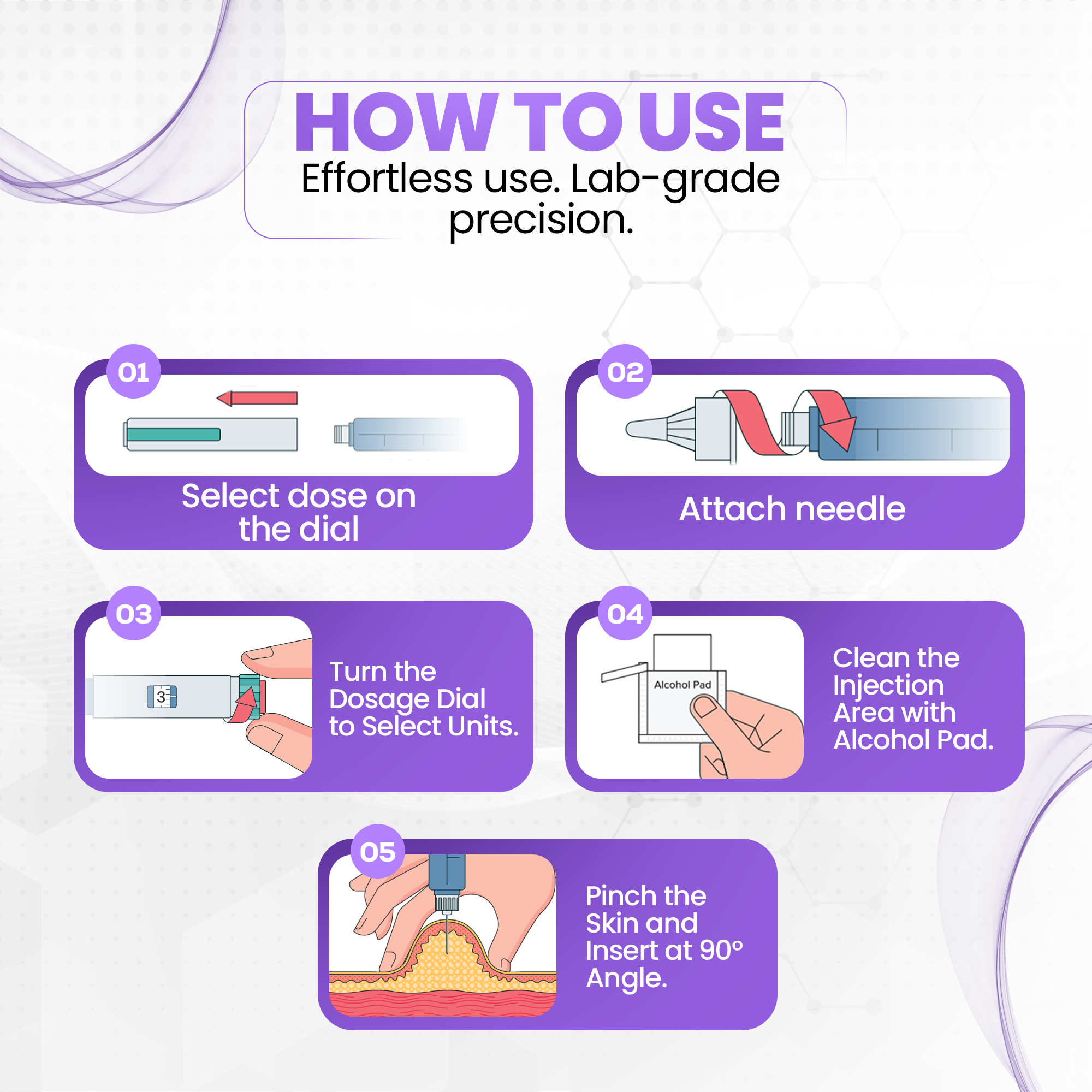
| Click-to-Dose | 1 click = 0.05 mg |
| Example(s) | 10 clicks = 0.5 mg |
Dosage & Protocols Variations
Standard Research Protocol
- Dose: 0.3 – 0.5 mg
- Duration: 4 – 6 weeks
- Frequency: Daily, intranasal or SubQ
- Cycle Interval: 2 – 4 weeks off before repeating
- Goal / Description: Baseline protocol for mood and stress-resilience models.
Therapeutic Research Protocol
- Dose: 0.5 – 1.0 mg
- Duration: 6 – 8 weeks
- Frequency: Daily
- Cycle Interval: 4 weeks off before repeating
- Goal / Description: Higher-dose protocol used in depressive-behavior and anhedonia models.
Biohacker Protocol (experimental)
- Dose: 0.1 – 0.2 mg
- Duration: Continuous
- Frequency: 3 – 5× per week
- Cycle Interval: Optional 1 week off monthly
- Goal / Description: Microdose schedule for sustained neuroplasticity and mood-balance research.
Possible Side Effects
PE-22-28 is generally well-tolerated in preclinical and animal studies, with no significant adverse effects reported in available research data.
Observed effects in experimental models are minimal and transient:
- Mild injection-site sensitivity in subcutaneous administration models.
- Transient changes in locomotor activity during initial dosing periods.
- Minor variability in sleep-wake patterns reported in rodent behavioral assays.
No evidence of cardiotoxicity, hepatotoxicity, or hormonal disruption has been observed in available data. Unlike conventional SSRIs studied in parallel models, PE-22-28 has not been associated with sexual dysfunction, weight gain, or sedation in research settings.
Product Attributes
- CAS #: 252977-78-1
- Molecular Formula: C37H56N10O11
- Sequence (AA): KQAGSSS
- Molecular Weight: 824.9 g/mol
- Half-Life: ~7 days (extended CNS activity)
- Synonyms: PE 22-28, Spadin analog, Truncated spadin peptide
- Type: Synthetic research peptide (TREK-1 channel blocker)
- Research Focus: Cognitive & Neurological, Mood & Stress Modulation
Scientific References
- Spadin, a sortilin-derived peptide, targeting rapid-acting antidepressant Animal | In vitro
- Antidepressant-like effects of PE-22-28, a TREK-1 channel blocker Animal
- Identification of a novel antidepressant peptide based on the structure of spadin Animal | In vitro
- TREK-1 channel as a new target for fast-acting antidepressants Animal | In vitro
- Deletion of the background potassium channel TREK-1 results in a depression-resistant phenotype Animal
- Spadin as a new antidepressant: absence of TREK-1-related side effects Animal
- Two-pore domain potassium channels as therapeutic targets in mood disorders Observational | Animal | In vitro
Included In The Box
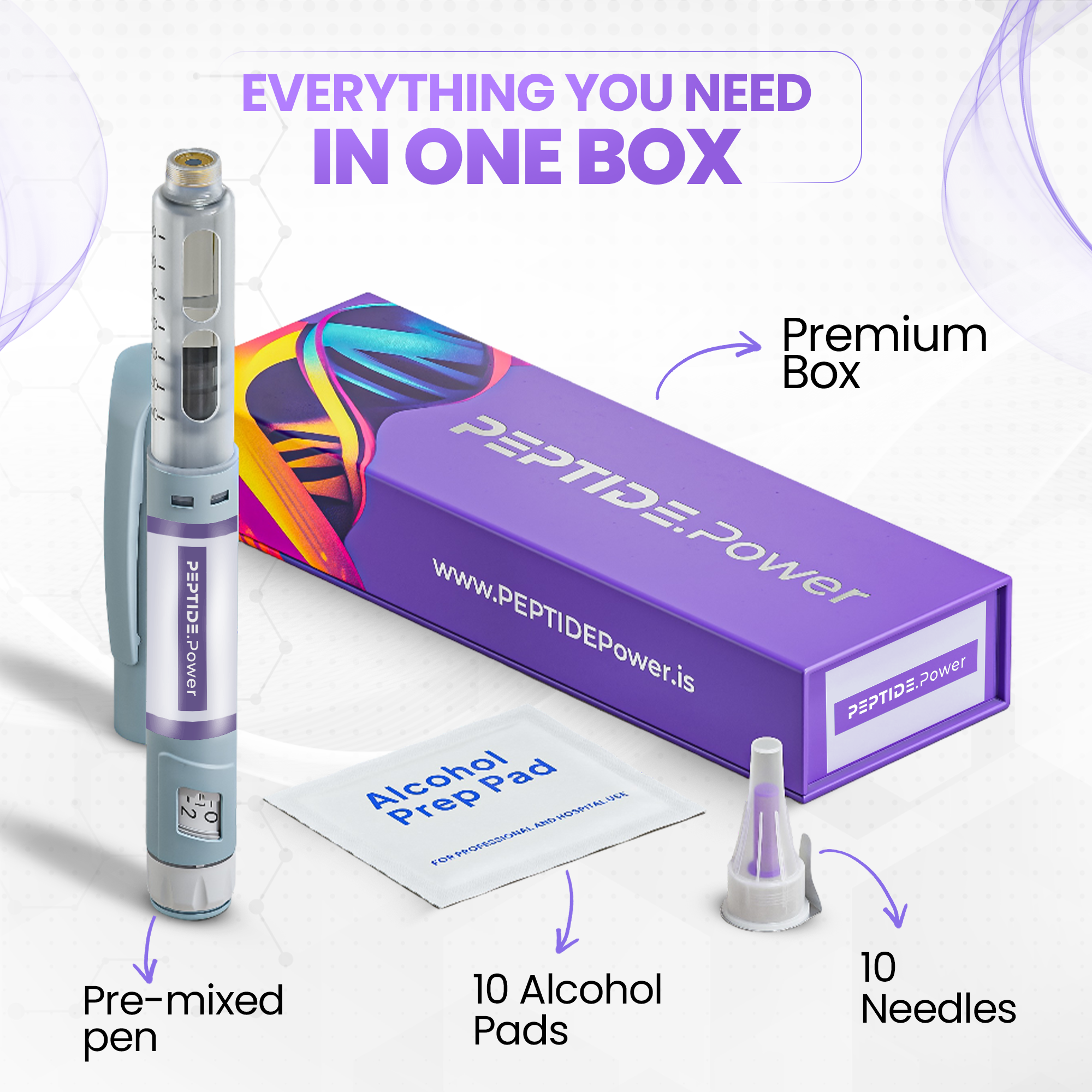
Every product arrives in a premium, custom-designed PEPTIDE.Power box, engineered for convenience, hygiene, and safe storage in your refrigerator. Inside, you will find everything needed for your full research protocol:
- 1× Disposable Pre-Mixed Injection Pen
- Powered by our proprietary PSM Technology™: precision stabilization & mixing system for consistent potency
- 10× Ultra-thin Needles (33G, 4 mm)
- 10× Alcohol Pads for sterile preparation
- Internal Stabilizing Foam Insert to prevent shaking during transport
- Instruction Panel printed on the inside of the box for quick reference
- Security Seal Sticker ensuring the package has not been opened or tampered with
Storage
Store the product in a refrigerator at 1-8°C immediately upon delivery. To maintain optimal stability, keep the pen away from light, and do not expose it to repeated temperature changes.
Once reconstituted (all our pens come pre-mixed), research compounds remain stable for 6-8 weeks under proper refrigeration.
Do not freeze after reconstitution. Always keep the box closed so the pen, needles, and alcohol pads stay clean and protected.
For best results, use the product consistently within the recommended time window and always follow your research protocol.
Delivery
We ship with Next-Day EU Delivery via DHL Express or UPS Express.
All orders are prepared fresh on the day of dispatch, placed in EPS Cold-Chain Transport Boxes, and shipped with cooling elements to maintain a stable temperature throughout the journey.
Our logistics process is designed so the package arrives overnight, avoiding customs delays inside the European Union.
Products are shipped from our EU facility, ensuring no import duties, no customs clearance, and always fast and secure delivery.
Payment
Due to the nature of research peptides and the high-risk category assigned by payment processors, credit card companies do not generally support merchants in this field.
For this reason, we accept mainly Bank Transfers.
We also work with a crypto payment provider, and from time to time, card payments may be available depending on processor availability.
Within the European Union, SEPA transfers are fast, low-cost, and usually arrive within minutes to a few hours, making the payment process smooth and simple.
Once the transfer is received, your order is prepared immediately and dispatched the same day, depending on the daily cut-off time.
Please note that we do not dispatch shipments on Fridays or on days before official public holidays. This is done to ensure that parcels can be delivered on the next working day and are not held in transit over weekends or holidays.
This method ensures compliance, security, and continuity of service for all customers across the EU.
Didn't find the answer to your question?
View all frequently asked questionsRELATED PRODUCTS


MOTS-c


P21 (P021)
P21 is a synthetic tetrapeptide derived from ciliary neurotrophic factor (CNTF), engineered to retain the neurogenic and neurotrophic activity of


Pinealon
Pinealon is a synthetic short peptide bioregulator composed of three amino acids (Glu-Asp-Arg), developed within the Russian peptide research tradition


PT-141 (Bremelanotide)

