






FOXO4-DRI (Proxofim)
FOXO4-DRI (Proxofim) е синтетичен пептид, изследван заради способността му да въздейства върху стареещи клетки чрез нарушаване на взаимодействията FOXO4-p53. В предклинични изследвания този механизъм е свързан със селективна апоптоза на стареещи клетки, като същевременно се запазват здрави клетъчни популации. FOXO4-DRI се изследва предимно в контекста на клетъчното стареене, биологията на стареенето и изследванията, свързани с дълголетието . Формулиран само за изследователска употреба.
122,00 €
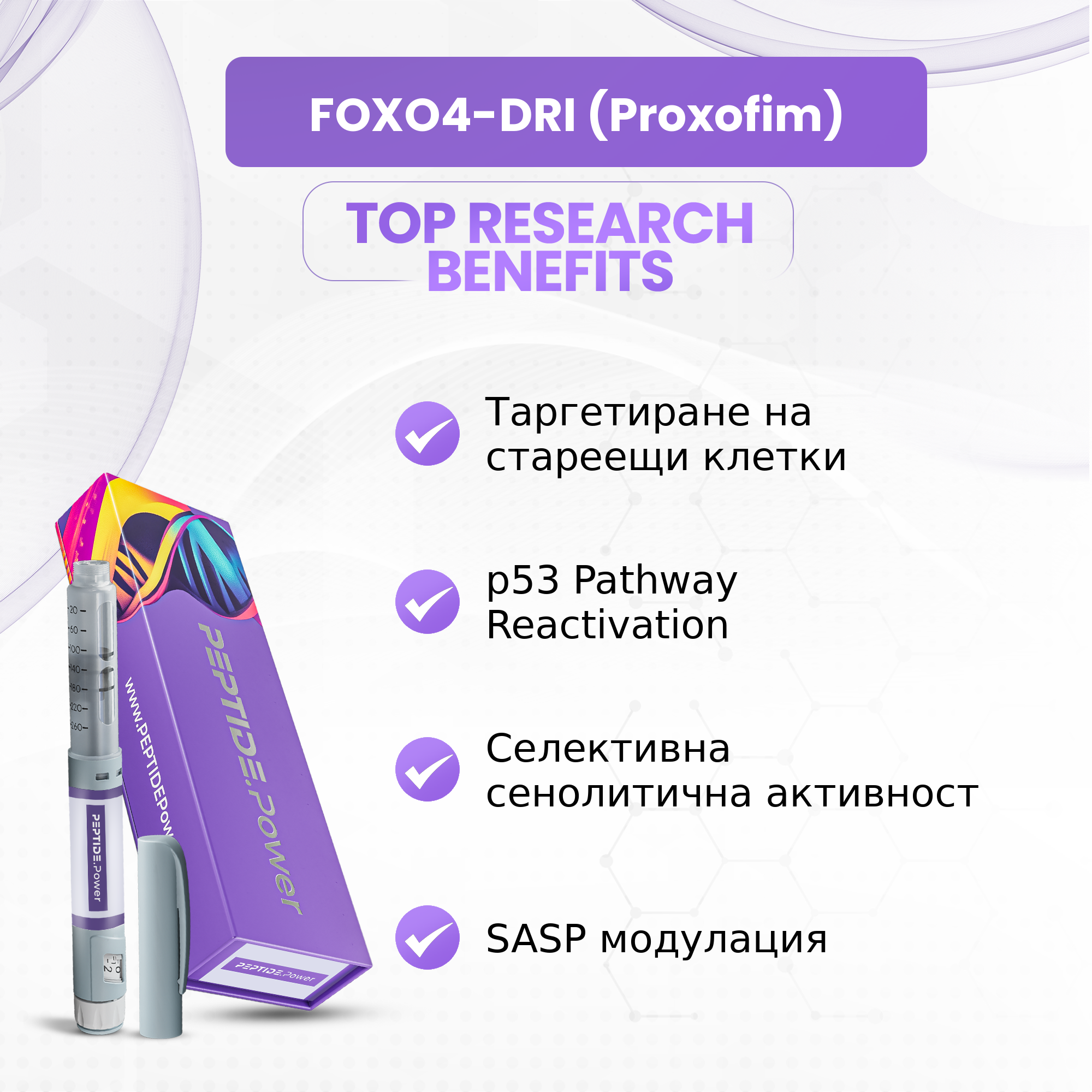
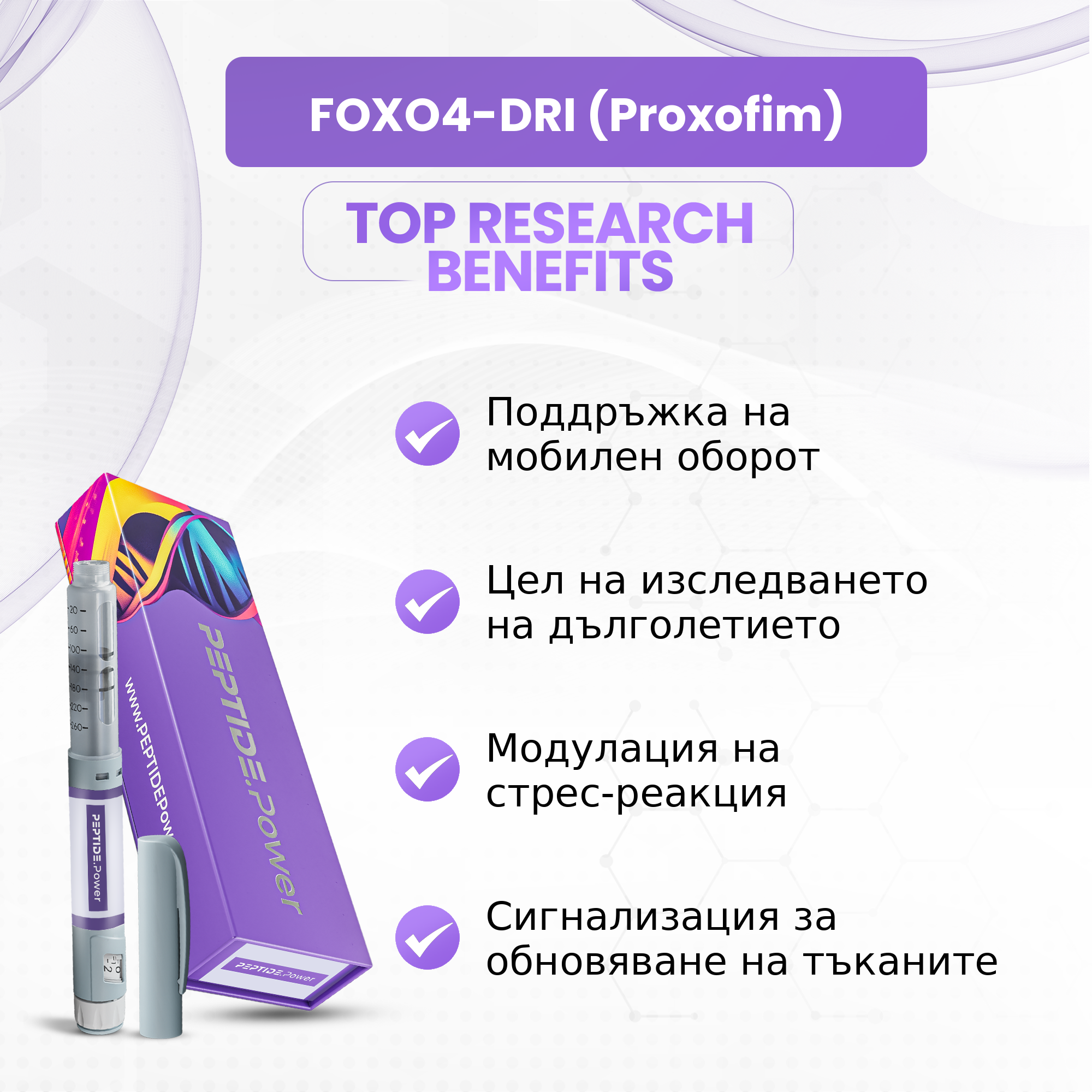
FOXO4-DRI - Селективно разрушаване на сенесцентни клетки и дълголетие
Пречи на пътищата за оцеляване при стареене
Възстановява апоптотичната сигнализация
Насочено към увредени клетъчни популации
Влияе върху възпалителния секреторен фенотип
Насърчава премахването на нефункционални клетки
Изучаван в модели на биология на стареенето
Ангажира FOXO4-медиирани пътища
Подкрепя регенеративни изследователски среди
Описание
FOXO4-DRI е модифициран пептид, предназначен да пречи на взаимодействието между FOXO4 и p53 , ключов протеин, участващ в клетъчните стрес реакции. В стареещите клетки, FOXO4 се свързва с p53 и предотвратява апоптозата, позволявайки на тези увредени клетки да персистират. FOXO4-DRI конкурентно нарушава това взаимодействие, потенциално възстановявайки апоптотичната сигнализация, специфично в стареещите клетъчни популации.
Стареещите клетки се натрупват с течение на времето и се характеризират с променена генна експресия, резистентност към апоптоза и секреция на възпалителни медиатори, общо наричани секреторен фенотип, свързан със стареенето (SASP). FOXO4-DRI е изследван в предклинични модели, изследващи селективното елиминиране на тези клетки.
Изследователските области включват клетъчно стареене, стареене на тъканите и експериментални модели на дълголетие. Пептидът се изследва строго в лабораторни и предклинични изследователски среди.
Клинично състояние
Човешки рандомизирани контролирани проучвания ▣ | Наблюдателни проучвания ▣ | Животни ✔ | In vitro ✔
Проучвано предимно в предклинични модели за изследване на стареенето и дълголетието, без мащабни клинични изпитвания върху хора.
Механизъм на действие
FOXO4-DRI нарушава защитното взаимодействие между FOXO4 и p53 в стареещите клетки, позволявайки на увредените клетки да преминат през апоптоза. Тази селективна намеса е насочена към клетки, натрупали стрес-свързани увреждания, като същевременно се щадят здравите клетки.
Ползи
- Нарушава мрежата за оцеляване на стареещите клетки:
Стареещите клетки навлизат в състояние на траен арест на растежа, но се съпротивляват на апоптозата, въпреки натрупването на увреждане на ДНК и оксидативен стрес. Един от механизмите, поддържащи тази резистентност, е взаимодействието между FOXO4 и p53 в ядрото. FOXO4-DRI е проектиран да пречи на това специфично взаимодействие протеин-протеин. Чрез конкурентно свързване с FOXO4, той предотвратява секвестирането на p53 от FOXO4, като по този начин възстановява присъщия апоптотичен сигнален капацитет на клетката. Този механизъм не стимулира клетъчната смърт като цяло, а вместо това е насочен към зависимост от оцеляване, характерна за стареещите клетки. Селективността на това разрушаване е от основно значение за неговото позициониране в сенолитичните изследвания. - Реактивира апоптотични пътища, задвижвани от p53:
p53 е главен регулатор на геномната цялост и клетъчните стрес реакции. В здрави клетки, активирането на p53 може да инициира възстановяване на ДНК или апоптоза в зависимост от тежестта на увреждането. В стареещите клетки, свързването с FOXO4 ограничава проапоптотичната функция на p53. FOXO4-DRI освобождава p53 от това инхибиторно взаимодействие, което позволява активирането на низходящи гени, участващи в пътищата на митохондриалната апоптоза. Това включва повишена регулация на проапоптотичните сигнални каскади, които възстановяват контролираното клетъчно елиминиране. Целенасоченото реактивиране на p53 отличава този пептид от системните цитотоксични стратегии. - Намалява свързаното със стареенето секреторно фенотипно натоварване:
Стареещите клетки секретират възпалителни цитокини, хемокини, растежни фактори и протеази, общо наричани секреторен фенотип, свързан със стареенето (SASP). Персистиращата SASP сигнализация допринася за локална тъканна дисфункция и хронични възпалителни микросреди в модели на стареене. Чрез елиминиране на стареещите клетки в предклинични системи, FOXO4-DRI индиректно намалява източника на SASP фактори. Това намаление може да повлияе на ремоделирането на извънклетъчната матрица, набирането на имунни клетки и паракринната сигнализация в околните тъкани. Модулацията на тази възпалителна микросреда е централен фокус в изследванията на стареенето. - Подпомага изследването на структурното подмладяване на тъканите:
Натрупаните стареещи клетки могат да нарушат тъканната архитектура, като променят междуклетъчната комуникация и състава на извънклетъчната матрица. В животински модели селективното отстраняване на тези клетки е свързано с подобрена тъканна морфология и регенеративен капацитет. FOXO4-DRI се изследва в този контекст, за да се изследва как целенасочената сенолиза влияе върху структурата на органно ниво. Вместо директно насърчаване на растежа, тя има за цел да изчисти дисфункционалните клетъчни компоненти, които възпрепятстват нормалните процеси на обновяване на тъканите. - Ангажира мрежите за сигнализиране на транскрипционни фактори FOXO:
Транскрипционните фактори на FOXO регулират резистентността към оксидативен стрес, метаболитната адаптация и генната експресия, свързана с дълголетието. FOXO4-DRI взаимодейства в рамките на тази по-широка сигнална мрежа, като селективно се насочва към механизмите за оцеляване, медиирани от FOXO4. Докато основното му действие включва освобождаване на p53, модулацията на свързаните с FOXO4 пътища се пресича с клетъчните системи за стрес-реагиране. Това позиционира FOXO4-DRI в рамките на напредналите изследвания за молекулярно дълголетие, а не в категориите ендокринни или метаболитни пептиди. - Селективен сенолитичен механизъм, различен от този на широките цитотоксични агенти:
Традиционните цитотоксични съединения индуцират апоптоза в пролифериращите клетки без дискриминация. FOXO4-DRI, за разлика от тях, използва молекулярна зависимост, уникална за стареещите клетки. Тъй като здравите пролифериращи клетки не разчитат на устойчиво секвестиране на FOXO4-p53 за оцеляване, те са по-малко засегнати в експериментални модели. Тази селективна стратегия за насочване представлява прецизен подход към сенолизата, фокусиран върху възстановяването на вътрешната апоптоза, а не върху индуцирането на външен стрес. - Улеснява изследванията на биологичните пътища на стареене:
Клетъчното стареене се счита за един от отличителните белези на стареенето. Натрупването на стареещи клетки е свързано с намален регенеративен потенциал и променена тъканна хомеостаза. FOXO4-DRI се изследва в предклинични модели на дълголетие, за да се оцени как клирънсът на стареещите клетки влияе върху биологичните маркери на стареене. Това включва оценка на тъканната устойчивост, възпалителната сигнализация и регенеративния капацитет на клетъчно ниво. - Действа на ниво взаимодействие на ядрените протеини:
За разлика от метаболитните или хормоналните пептиди, които действат върху мембранните рецептори, FOXO4-DRI функционира чрез нарушаване на взаимодействията на ядрените протеини. Неговата D-ретро-инверсо конфигурация повишава стабилността, като същевременно поддържа структурна мимикрия, необходима за конкурентно инхибиране. Този вътреклетъчен механизъм го отличава от пептидите, които стимулират системни сигнални каскади. Активността му е съсредоточена върху модифициране на решенията за клетъчната съдба в рамките на увредените клетъчни популации. - Допринася за експерименталното моделиране на клетъчния обмен:
Като позволява отстраняването на стареещи клетки, FOXO4-DRI подкрепя изследванията за това как клетъчното обновление влияе върху тъканното равновесие. Балансът между стареенето, апоптозата и регенерацията е от основно значение за поддържането на функцията на органите. Изучаването на тази динамика позволява на изследователите да изследват как селективната сенолиза влияе върху дългосрочната структурна адаптация в модели на стареене. Това прави FOXO4-DRI релевантен в рамките на изследванията на клетъчни системи на високо ниво, а не в традиционните рамки за хормонална модулация.
Изследователски данни
| Изследване / Модел | Наблюдаван ефект |
|---|---|
| Естествено състарени мишки | ↑ гъстота на козината, ↑ маркери за бъбречна функция, подобрена физическа активност |
| Модел на сенесценция, индуцирана от доксорубицин | Селективно елиминиране на стареещи клетки, намалено увреждане на тъканите |
| Xpd TTD/TTD прогероидни мишки | Възстановена физическа форма, ↓ свързани със сенесценцията маркери в множество тъкани |
| In vitro стареещи фибробласти (IMR90) | Целенасочена апоптоза чрез нарушаване на FOXO4-p53; здравите клетки остават незасегнати |
| Тъкан от бъбрек на състарена мишка | ↓ експресия на p21, ↓ SASP фактори, подобрена гломерулна функция |
| Чернодробна тъкан в състарени модели | Намалено натоварване от стареещи клетки, ↑ маркери за чернодробна регенерация |
Предложения за комбиниране
FOXO4-DRI често се комбинира в изследванията с:
- FOXO4-DRI + Epitalon → Съчетава сенолитично прочистване с модулиране на теломеразата в модели за изследване на дълголетие.
- FOXO4-DRI + NAD+ → Комбинира премахването на стареещи клетки с подкрепа на митохондриалната и клетъчната енергия.
- FOXO4-DRI + GHK-Cu → Подпомага тъканната регенерация след сенолитично прочистване в модели на застаряваща кожа.
- FOXO4-DRI + Thymalin → Изследван за синергични ефекти върху имунната модулация и клетъчното стареене.
⚠ Комбинациите са само за експериментален дизайн; не са препоръка за безопасност или ефикасност.
Таблица за дозиране на писалката
| FOXO4-DRI (Proxofim) Писалка 10 mg | |
|---|---|
| Обем | 2 mL |
| mg/mL | 5 mg/mL |
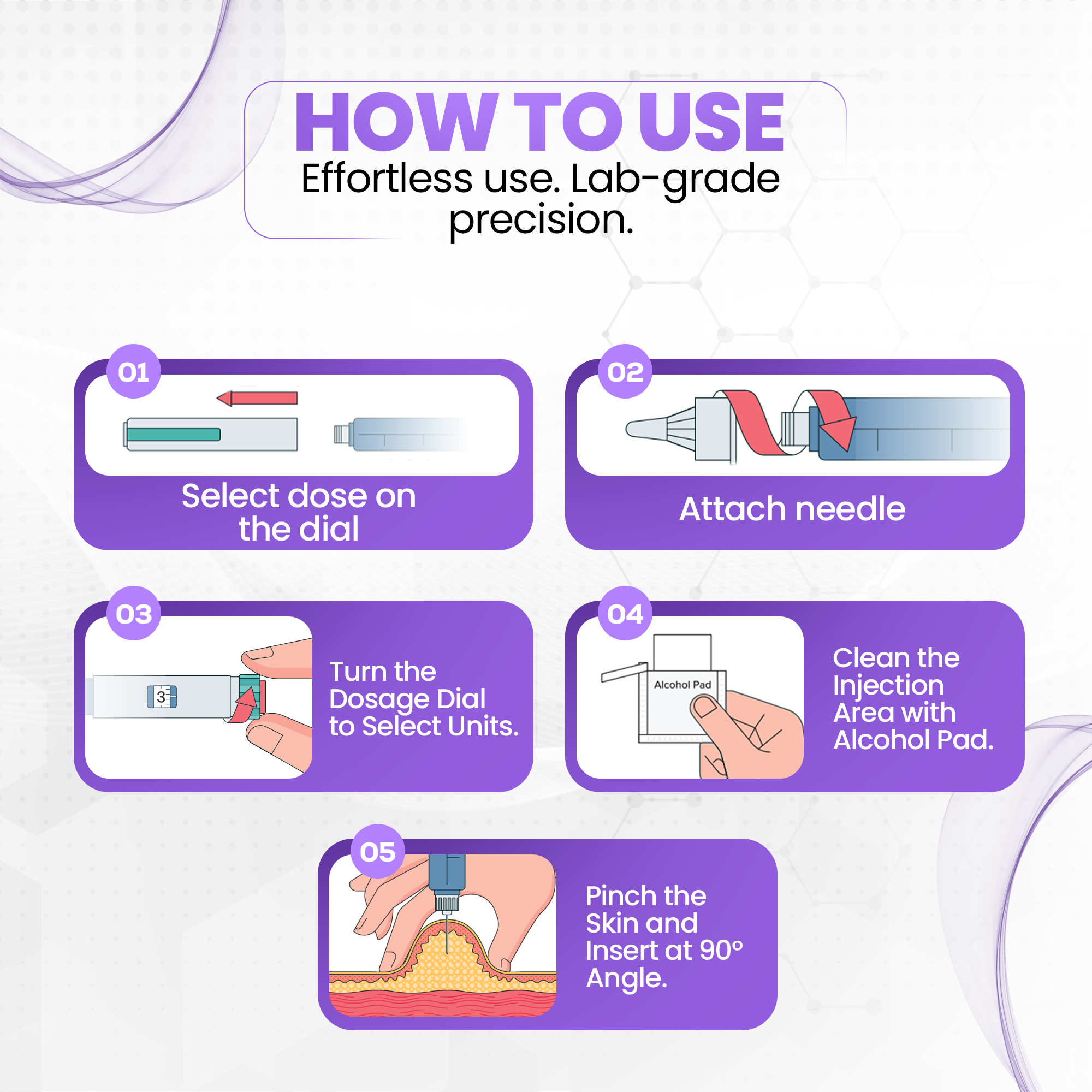
| Клик-към-доза | 1 click = 0.05 mg |
| Пример(и) | 10 clicks = 0.5 mg |
Дозировки и вариации на протоколи
Стандартен изследователски протокол
- Доза: 1.0 – 5.0 mg (= 20-100 кликвания)
- Продължителност: 3 последователни дни
- Честота: Веднъж на всеки 2 седмици (интермитентен пулс)
- Интервал на цикъла: 2 – 4 седмици пауза преди повторение
- Цел / Описание: Базово сенолитично пулсиране, наблюдавано в предклинични модели на стареене.
Терапевтичен изследователски протокол
- Доза: 5.0 – 10.0 mg (= 100-200 кликвания)
- Продължителност: 3 последователни дни на цикъл
- Честота: 1 цикъл на всеки 3 – 4 седмици
- Интервал на цикъла: 3 – 4 седмици пауза преди повторение
- Цел / Описание: По-висока доза пулс, оценявана за ускорено очистване на стареещи клетки в изследователски модели.
Биохакерски протокол (експериментален)
- Доза: 0.5 – 1.0 mg (= 10-20 кликвания)
- Продължителност: 3 последователни дни
- Честота: Веднъж на всеки 4 – 6 седмици
- Интервал на цикъла: 4 – 6 седмици пауза преди повторение
- Цел / Описание: Микродозово пулсиране, изследвано за кумулативни сенолитични ефекти при минимална експозиция.
Възможни странични ефекти
FOXO4-DRI е оценяван почти изключително в предклинични и животински проучвания, с ограничени данни за безопасност при висши организми.
Наблюдаваните ефекти в експериментални модели включват:
- Преходна умора или летаргия след прилагане при животински модели.
- Леко дразнене на мястото на инжектиране или локализирано възпаление.
- Краткосрочни промени в броя на кръвните клетки по време на фазите на сенолитично прочистване.
- Потенциални маркери за бъбречен стрес, докладвани в проучвания при гризачи при по-високи дози.
Не са докладвани доказателства за дългосрочна системна, хормонална или органно-специфична токсичност в наличните предклинични данни; въпреки това, профилите на безопасност при хора остават неопределени.
Характеристики на продукта
- CAS номер: 1things-to-fill
- Молекулна формула: N/A
- Последователност (АК): LTLRKEPASEIAQSILEAYSQNGWANRRSGGKRPPPRRRQRRKKRG
- Молекулно тегло: ~5237 g/mol
- PubChem CID: N/A
- Период на полуразпад: ~2-4 часа
- Синоними: Proxofim, FOXO4-D-Retro-Inverso, FOXO4 DRI пептид
- Тип: Синтетичен ретро-инверсо пептид (сенолитичен агент)
- Изследователски фокус: Дълголетие и стареене, Клетъчно подмладяване
Научни източници
- Targeted Apoptosis of Senescent Cells Restores Tissue Homeostasis in Response to Chemotoxicity and Aging Животни | In vitro
- FOXO4-DRI peptide selectively induces apoptosis in senescent cells Животни | In vitro
- Senolytics: Eliminating Senescent Cells and Alleviating Intervertebral Disc Degeneration Животни | In vitro
- Cellular senescence: Defining a path forward Обсервационно | Животни | In vitro
- The role of senescent cells in ageing Животни | In vitro
- FOXO4 peptide disrupts FOXO4-p53 interaction to target senescent cells Животни | In vitro
- Senolytic therapy alleviates age-associated bone loss in mice Животни | In vitro
- Therapeutic interventions for aging: the case of cellular senescence Обсервационно | Животни | In vitro
Включено в кутията
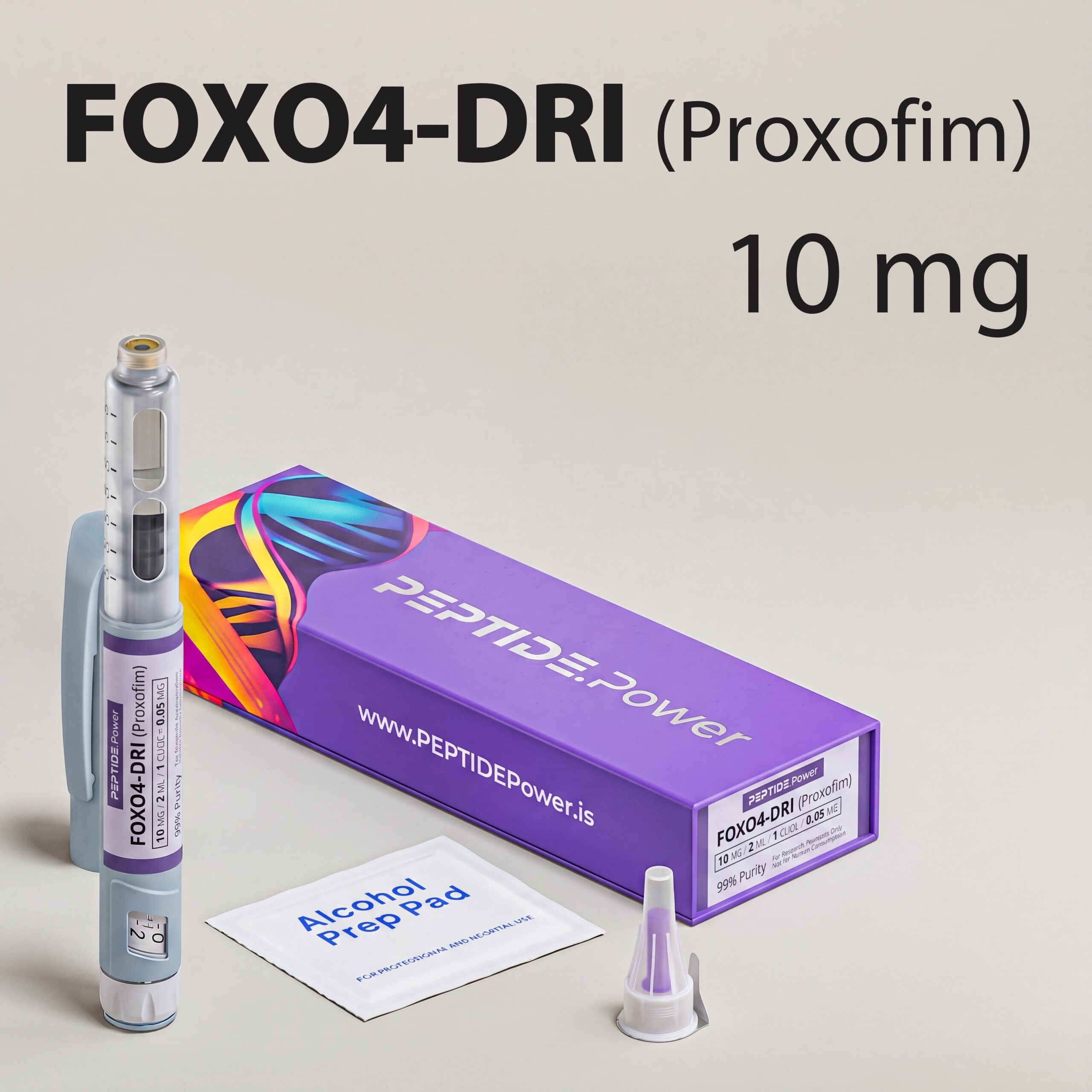
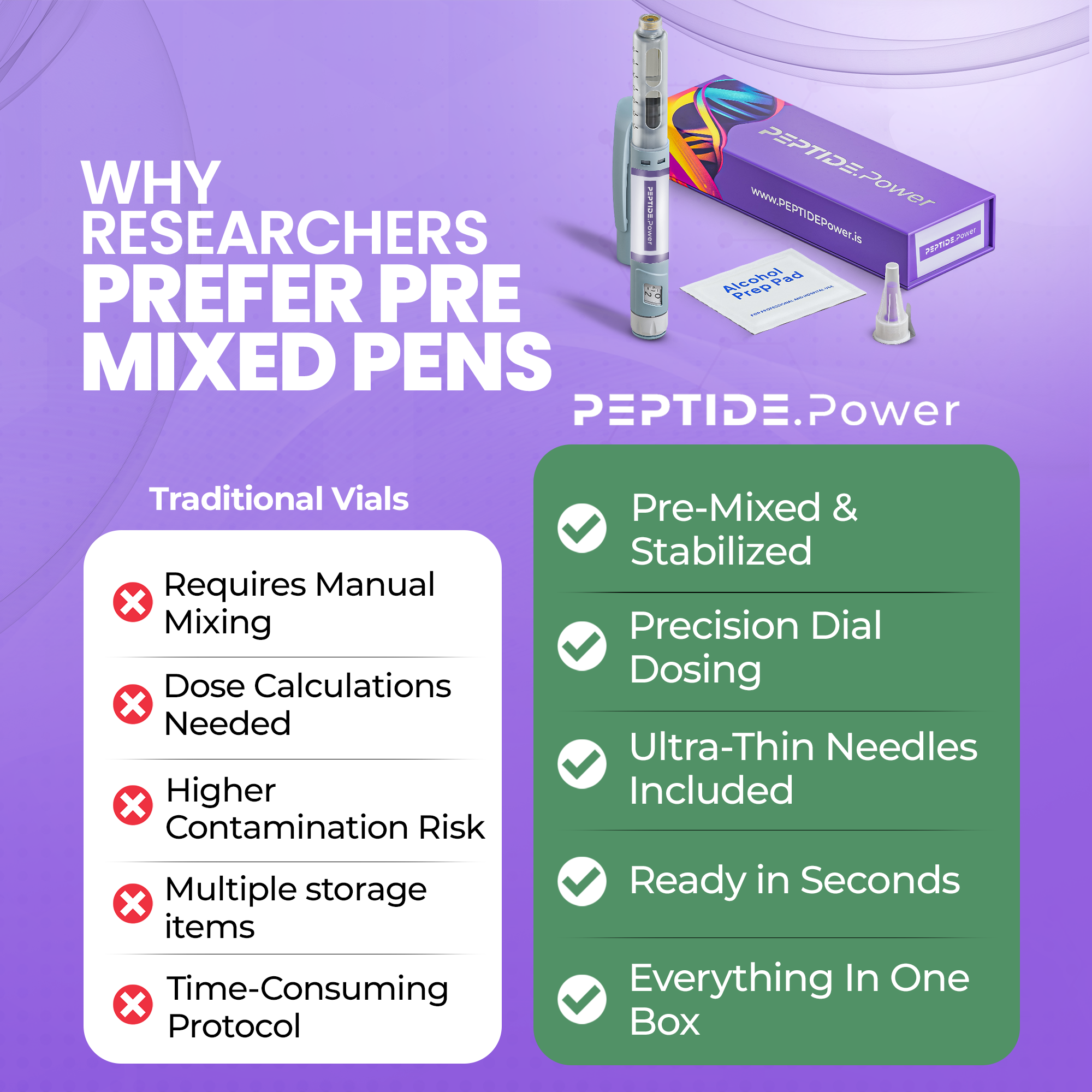
Всеки продукт пристига в премиум, специално проектирана кутия на PEPTIDE.Power, проектирана за удобство, хигиена и безопасно съхранение във вашия хладилник. Вътре ще намерите всичко необходимо за пълния ви изследователски протокол:
- 1× Еднократна предварително смесена инжекционна писалка
- Захранван от нашата патентована PSM Technology™ – прецизна система за стабилизация & смесване за постоянна ефикасност
- 10× Ултратънки игли (33G, 4 мм)
- 10× Спиртни тампони за стерилна подготовка
- Вътрешна стабилизираща дунапренова вложка за предотвратяване на разклащане по време на транспорт
- Панел с инструкции, отпечатан от вътрешната страна на кутията за бърза справка
- Стикер за защитен печат, гарантиращ, че опаковката не е отваряна или манипулирана
Съхранение
Съхранявайте продукта в хладилник при 1-7°C веднага след доставка. За да поддържате оптимална стабилност, дръжте писалката далеч от светлина и не я излагайте на повтарящи се температурни промени.
След като бъдат реконституирани (всички наши писалки са предварително смесени), изследователските съединения остават стабилни за 6-8 седмици при правилно съхранение в хладилник.
Не замразявайте след реконституция. Винаги дръжте кутията затворена, така че писалката, иглите и спиртните тампони да останат чисти и защитени.
За най-добри резултати използвайте продукта последователно в рамките на препоръчителния времеви прозорец и винаги следвайте вашия изследователски протокол.
Доставка
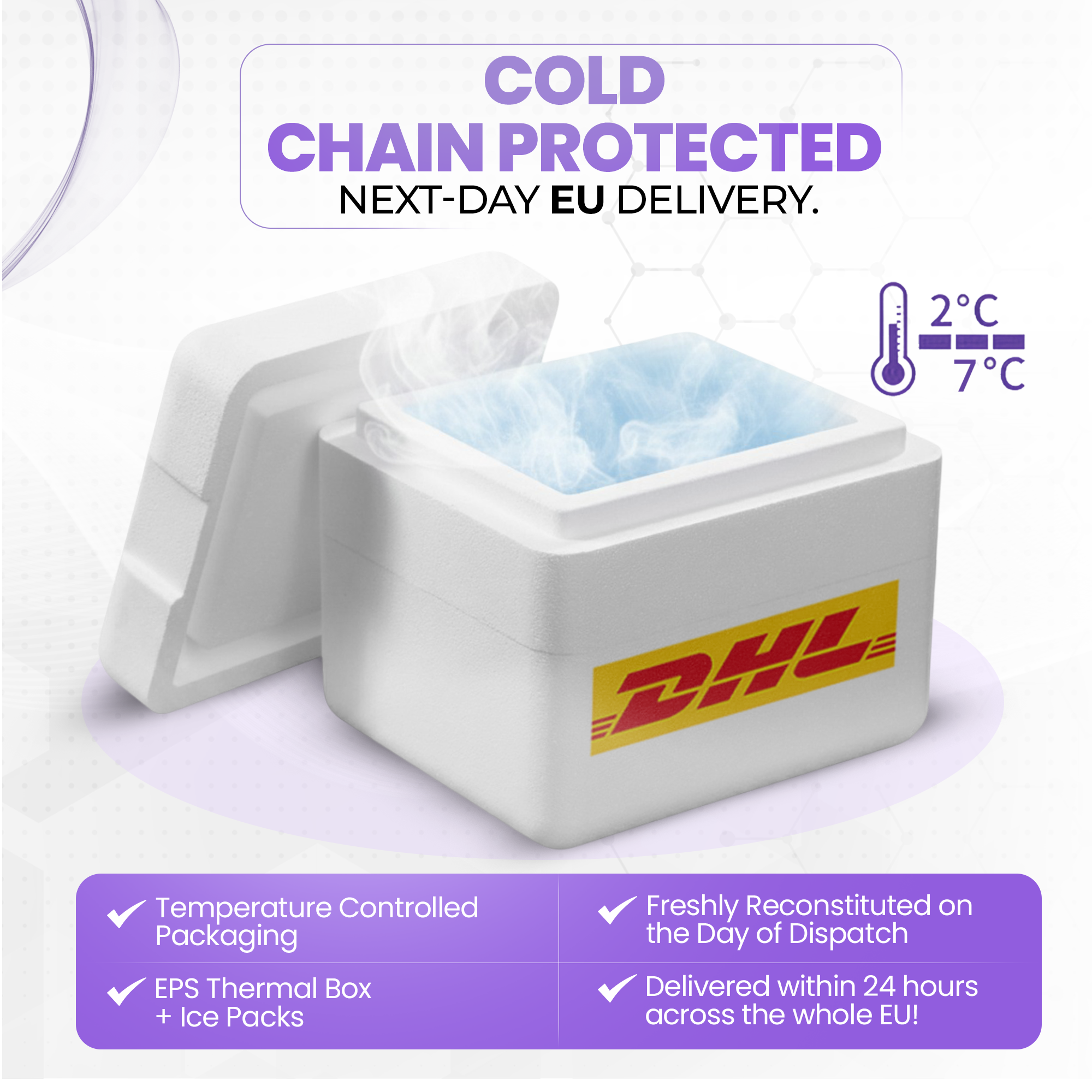
Изпращаме с Доставка в ЕС на следващия ден чрез DHL Express или UPS Express.
Всички поръчки се приготвят свежи в деня на изпращане, поставят се в EPS транспортни кутии за студена верига и се изпращат с охлаждащи елементи за поддържане на стабилна температура по време на целия път.
Нашият логистичен процес е проектиран така, че пратката да пристигне за една нощ, избягвайки митнически забавяния в рамките на Европейския съюз.
Продуктите се изпращат от нашето съоръжение в ЕС, осигурявайки без вносни мита, без митническо освобождаване и винаги бърза и сигурна доставка.
Плащане
Поради естеството на изследователските пептиди и категорията с висок риск, определена от платежните оператори, компаниите за кредитни карти не поддържат търговци в тази област.
Поради тази причина приемаме само банкови преводи.
В рамките на Европейския съюз, SEPA преводите са бързи, нискотарифни и обикновено пристигат в рамките на минути до няколко часа, което прави процеса на плащане гладък и прост.
След като преводът бъде получен, вашата поръчка се подготвя незабавно и се изпраща същия ден (в зависимост от часа на поръчка).
Този метод осигурява съответствие, сигурност и непрекъснатост на услугата за всички клиенти в целия ЕС.
Не намерихте отговор на въпроса си?
Вижте всички често задавани въпросиRELATED PRODUCTS


BPC-157 + TB-500


