







FOXO4-DRI (Proxofim)
FOXO4-DRI (Proxofim) este o peptidă sintetică studiată pentru capacitatea sa de a viza celulele senescente prin perturbarea interacțiunilor FOXO4-p53. În cercetările preclinice, acest mecanism a fost asociat cu apoptoza selectivă a celulelor senescente, păstrând în același timp populațiile celulare sănătoase. FOXO4-DRI este investigat în principal în contexte de cercetare legate de îmbătrânirea celulară, biologia senescenței și longevitate . Formulat exclusiv pentru uz în cercetare.
122,00 €
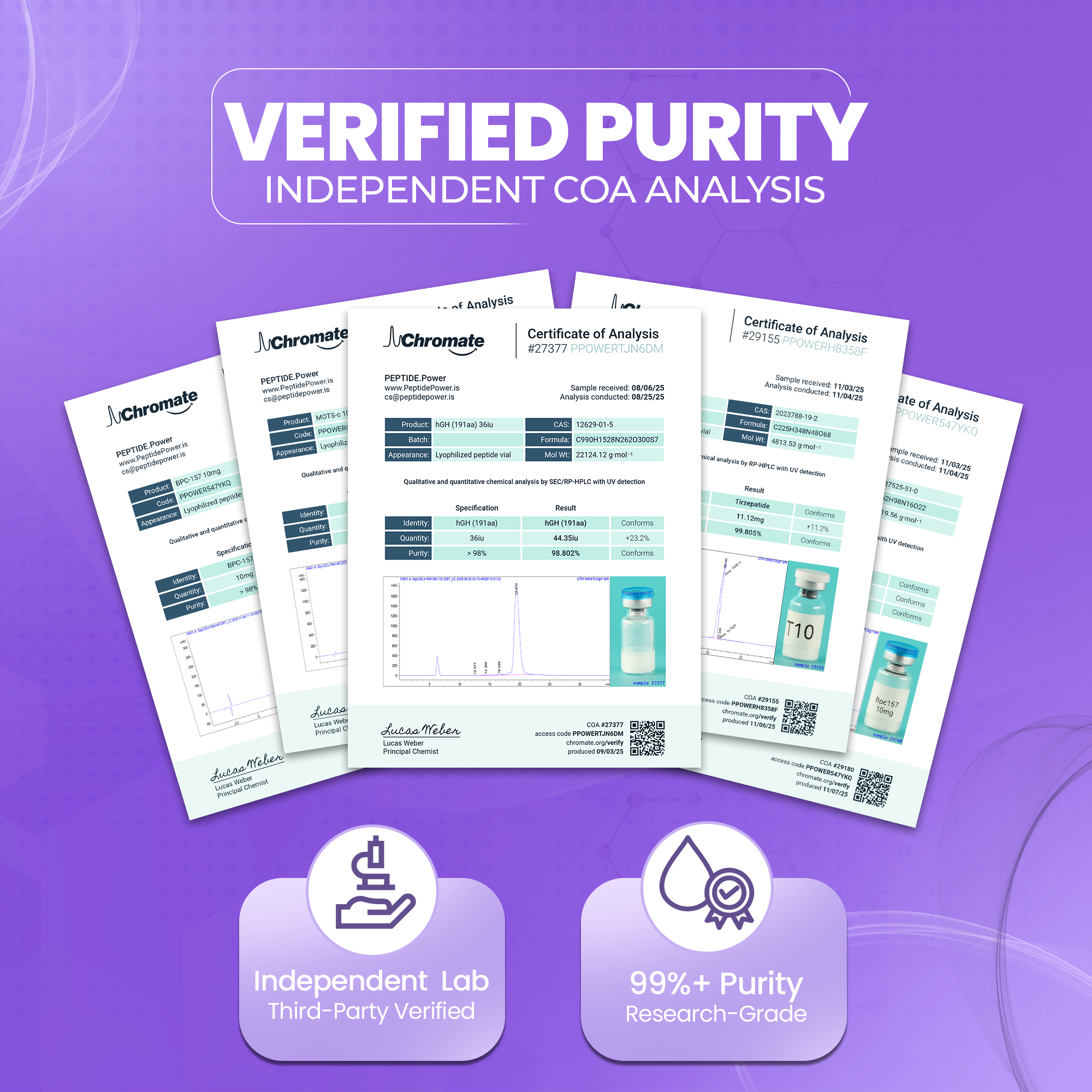
Certificate de calitate
Analiză de laborator independentă, terță parte (CoA) - de la propriul nostru brand.
FOXO4-DRI - Distrugerea selectivă a celulelor senescente și longevitate
Interferează cu căile de supraviețuire ale senescenței
Reface semnalizarea apoptotică
Vizează populațiile celulare deteriorate
Influențează fenotipul secretor inflamator
Promovează eliminarea celulelor disfuncționale
Studiat în modele biologice de îmbătrânire
Angajează căile mediate de FOXO4
Susține mediile de cercetare regenerativă
Descriere
FOXO4-DRI este o peptidă modificată concepută pentru a interfera cu interacțiunea dintre FOXO4 și p53 , o proteină cheie implicată în răspunsurile la stres celular. În celulele senescente, FOXO4 se leagă de p53 și previne apoptoza, permițând acestor celule deteriorate să persiste. FOXO4-DRI perturbă competitiv această interacțiune, restabilind potențial semnalizarea apoptotică în mod specific în populațiile de celule senescente.
Celulele senescente se acumulează în timp și sunt caracterizate prin expresie genetică alterată, rezistență la apoptoză și secreție de mediatori inflamatori, denumiți colectiv fenotip secretor asociat senescenței (SASP). FOXO4-DRI a fost studiat în modele preclinice care examinează eliminarea selectivă a acestor celule.
Domeniile de cercetare includ senescența celulară, îmbătrânirea țesuturilor și modele experimentale de longevitate. Peptida este investigată strict în medii de cercetare de laborator și preclinice.
Starea clinică
Studiu clinic randomizat (RCT) uman ▣ | Observațional ▣ | Animal ✔ | In vitro ✔
Studiat în principal în modele preclinice de cercetare a senescenței și longevității, fără studii clinice la scară largă pe oameni.
Mecanism de acțiune
FOXO4-DRI perturbă interacțiunea protectoare dintre FOXO4 și p53 în celulele senescente , permițând celulelor deteriorate să intre în apoptoză. Această interferență selectivă vizează celulele care au acumulat daune legate de stres, protejând în același timp celulele sănătoase.
Beneficii
- Perturbă rețeaua de supraviețuire a celulelor senescente:
Celulele senescente intră într-o stare de stopare permanentă a creșterii, dar rezistă apoptozei în ciuda acumulării de deteriorări ale ADN-ului și a stresului oxidativ. Unul dintre mecanismele care susțin această rezistență este interacțiunea dintre FOXO4 și p53 în nucleu. FOXO4-DRI este conceput pentru a interfera cu această interacțiune specifică proteină-proteină. Prin legarea competitivă a FOXO4, acesta împiedică FOXO4 să sechestreze p53, restabilind astfel capacitatea intrinsecă de semnalizare apoptotică a celulei. Acest mecanism nu stimulează în general moartea celulară, ci vizează o dependență de supraviețuire caracteristică celulelor senescente. Selectivitatea acestei perturbări este esențială pentru poziționarea sa în cercetarea senolitică. - Reactivează căile apoptotice determinate de p53:
p53 este un regulator principal al integrității genomice și al răspunsurilor la stresul celular. În celulele sănătoase, activarea p53 poate iniția repararea ADN-ului sau apoptoza, în funcție de severitatea deteriorării. În celulele senescente, legarea FOXO4 limitează funcția pro-apoptotică a p53. FOXO4-DRI eliberează p53 din această interacțiune inhibitorie, permițând activarea genelor din aval implicate în căile apoptozei mitocondriale. Aceasta include suprareglarea cascadelor de semnalizare pro-apoptotică care restabilesc eliminarea celulară controlată. Reactivarea țintită a p53 distinge această peptidă de strategiile citotoxice sistemice. - Reduce încărcătura fenotipică secretorie asociată senescenței:
Celulele senescente secretă citokine inflamatorii, chemokine, factori de creștere și proteaze, denumite colectiv fenotip secretor asociat senescenței (SASP). Semnalizarea persistentă SASP contribuie la disfuncția tisulară locală și la micromediile inflamatorii cronice în modelele de îmbătrânire. Prin eliminarea celulelor senescente în sistemele preclinice, FOXO4-DRI reduce indirect sursa factorilor SASP. Această reducere poate influența remodelarea matricei extracelulare, recrutarea celulelor imune și semnalizarea paracrină în țesuturile înconjurătoare. Modularea acestui micromediu inflamator este un punct central de interes în cercetarea îmbătrânirii. - Susține investigarea rejuvenării structurale a țesuturilor:
Celulele senescente acumulate pot afecta arhitectura țesuturilor prin modificarea comunicării intercelulare și a compoziției matricei extracelulare. În modelele animale, îndepărtarea selectivă a acestor celule a fost asociată cu o morfologie tisulară și o capacitate regenerativă îmbunătățite. FOXO4-DRI este studiat în acest context pentru a examina modul în care senoliza țintită influențează structura la nivel de organ. În loc să promoveze direct creșterea, aceasta își propune să elimine componentele celulare disfuncționale care împiedică procesele normale de reînnoire a țesuturilor. - Angajează rețelele de semnalizare ale factorilor de transcripție FOXO:
Factorii de transcripție FOXO reglează rezistența la stresul oxidativ, adaptarea metabolică și expresia genelor asociată cu longevitatea. FOXO4-DRI interacționează în cadrul acestei rețele de semnalizare mai largi prin țintirea selectivă a mecanismelor de supraviețuire mediate de FOXO4. Deși acțiunea sa principală implică eliberarea de p53, modularea căilor legate de FOXO4 se intersectează cu sistemele celulare de răspuns la stres. Acest lucru poziționează FOXO4-DRI în cadrul cercetării avansate a longevității moleculare, mai degrabă decât în categoriile de peptide endocrine sau metabolice. - Mecanism senolitic selectiv distinct de agenții citotoxici generali:
Compușii citotoxici tradiționali induc apoptoza în celulele proliferative fără discriminare. FOXO4-DRI, în schimb, exploatează o dependență moleculară specifică celulelor senescente. Deoarece celulele proliferative sănătoase nu se bazează pe sechestrarea susținută a FOXO4-p53 pentru supraviețuire, acestea sunt mai puțin afectate în modelele experimentale. Această strategie de direcționare selectivă reprezintă o abordare bazată pe precizie a senolizei, concentrându-se pe restabilirea apoptozei intrinseci mai degrabă decât pe inducerea stresului extern. - Facilitează cercetarea căilor biologice de îmbătrânire:
Senescența celulară este considerată una dintre caracteristicile îmbătrânirii. Acumularea de celule senescente este asociată cu un potențial regenerativ redus și o homeostazie tisulară alterată. FOXO4-DRI este studiat în modele preclinice de longevitate pentru a evalua modul în care eliminarea celulelor senescente influențează markerii biologici ai îmbătrânirii. Aceasta include evaluarea rezistenței tisulare, a semnalizării inflamatorii și a capacității regenerative la nivel celular. - Operează la nivelul interacțiunii dintre proteinele nucleare:
Spre deosebire de peptidele metabolice sau hormonale care acționează asupra receptorilor membranari, FOXO4-DRI funcționează prin perturbarea interacțiunilor dintre proteinele nucleare. Configurația sa D-retro-inverso sporește stabilitatea, menținând în același timp mimetismul structural necesar pentru inhibarea competitivă. Acest mecanism intracelular îl diferențiază de peptidele care stimulează cascadele de semnalizare sistemică. Activitatea sa este centrată pe modificarea deciziilor privind soarta celulară în cadrul populațiilor celulare deteriorate. - Contribuie la modelarea experimentală a ratei de reînnoire celulară:
Prin permiterea eliminării celulelor senescente, FOXO4-DRI susține investigarea modului în care rata de reînnoire celulară influențează echilibrul țesuturilor. Echilibrul dintre senescență, apoptoză și regenerare este esențial pentru menținerea funcției organelor. Studierea acestei dinamici permite cercetătorilor să exploreze modul în care senoliza selectivă influențează adaptarea structurală pe termen lung în modelele de îmbătrânire. Acest lucru face ca FOXO4-DRI să fie relevant în cercetarea sistemelor celulare la nivel înalt, mai degrabă decât în cadrele tradiționale de modulare hormonală.
Date de cercetare
| Studiu / Model | Efect raportat |
|---|---|
| Șoareci îmbătrâniți natural | ↑ densitatea blănii, ↑ markerii funcției renale, activitate fizică îmbunătățită |
| Model de senescență indusă de doxorubicină | Eliminarea selectivă a celulelor senescente, daune tisulare reduse |
| Șoareci progeroizi Xpd TTD/TTD | Condiție fizică restaurată, ↓ markerii asociați senescenței în multiple țesuturi |
| Fibroblaste senescente in vitro (IMR90) | Apoptoză țintită prin perturbarea FOXO4-p53; celulele sănătoase neafectate |
| Țesut renal de șoarece îmbătrânit | ↓ expresia p21, ↓ factorii SASP, funcție glomerulară îmbunătățită |
| Țesut hepatic în modele îmbătrânite | Sarcină redusă de celule senescente, ↑ markerii regenerării hepatice |
Sugestii de combinare
FOXO4-DRI este adesea combinat în cercetare cu:
- FOXO4-DRI + Epitalon → Asociază eliminarea senolitică cu modularea telomerazei pentru modele de cercetare a longevității.
- FOXO4-DRI + NAD+ → Combină îndepărtarea celulelor senescente cu suportul mitocondrial și energetic celular.
- FOXO4-DRI + GHK-Cu → Susține regenerarea tisulară după eliminarea senolitică în modele de îmbătrânire cutanată.
- FOXO4-DRI + Thymalin → Explorat pentru efecte sinergice asupra modulării imune și a îmbătrânirii celulare.
⚠ Combinațiile sunt doar pentru proiectare experimentală; nu reprezintă recomandări de siguranță sau eficacitate.
Tabel de dozare pentru stilou
| FOXO4-DRI (Proxofim) Pen 10 mg | |
|---|---|
| Volum | 2 mL |
| mg/mL | 5 mg/mL |
| Click-doză | 1 click = 0.05 mg |
| Exemplu(e) | 10 clicks = 0.5 mg |
Dozare și variații de protocol
Protocol Standard de Cercetare
- Doză: 1,0 – 5,0 mg (= 20-100 click-uri)
- Durată: 3 zile consecutive
- Frecvență: O dată la 2 săptămâni (puls intermitent)
- Interval de ciclu: 2 – 4 săptămâni pauză înainte de repetare
- Obiectiv / Descriere: Pulsare senolitică de bază observată în modele preclinice de îmbătrânire.
Protocol Terapeutic de Cercetare
- Doză: 5,0 – 10,0 mg (= 100-200 click-uri)
- Durată: 3 zile consecutive per ciclu
- Frecvență: 1 ciclu la fiecare 3 – 4 săptămâni
- Interval de ciclu: 3 – 4 săptămâni pauză înainte de repetare
- Obiectiv / Descriere: Puls cu doză mai mare evaluat pentru eliminarea accelerată a celulelor senescente în modele de cercetare.
Protocol Biohacker (experimental)
- Doză: 0,5 – 1,0 mg (= 10-20 click-uri)
- Durată: 3 zile consecutive
- Frecvență: O dată la 4 – 6 săptămâni
- Interval de ciclu: 4 – 6 săptămâni pauză înainte de repetare
- Obiectiv / Descriere: Pulsare cu microdoze investigată pentru efecte senolitice cumulative cu expunere minimă.
Posibile efecte secundare
FOXO4-DRI a fost evaluat aproape exclusiv în studii preclinice și pe animale, cu date limitate de siguranță în organisme superioare.
Efectele observate în modelele experimentale includ:
- Oboseală tranzitorie sau letargie după administrare în modelele animale.
- Iritație ușoară la locul injectării sau inflamație localizată.
- Modificări pe termen scurt ale numărului de celule sanguine în timpul fazelor de eliminare senolitică.
- Markeri potențiali de stres renal raportați în studiile pe rozătoare la doze mai mari.
Nu au fost raportate dovezi de toxicitate sistemică, hormonală sau specifică organelor pe termen lung în datele preclinice disponibile; totuși, profilurile de siguranță la om rămân nedefinite.
Atribute produs
- CAS #: 1796895-23-4
- Formulă moleculară: C78H137N31O28S
- Secvență (AA): LTLRKEPASEIAQSILEAYSQNGWANRRSEK (D-retro-inverso)
- Greutate moleculară: 1953.2 g/mol
- PubChem CID: 122173247
- Timp de înjumătățire: ~2-4 ore
- Sinonime: Proxofim, FOXO4-D-Retro-Inverso, FOXO4-p53 Interfering Peptide
- Tip: Peptidă sintetică de cercetare (senolitic, modificare D-retro-inverso)
- Domeniu de cercetare: Longevitate & Anti-îmbătrânire, Senescență celulară
Referințe științifice
- Targeted Apoptosis of Senescent Cells Restores Tissue Homeostasis in Response to Chemotoxicity and Aging Animal | In vitro
- FOXO4-DRI peptide selectively induces apoptosis in senescent cells Animal | In vitro
- Senolytics: Eliminating Senescent Cells and Alleviating Intervertebral Disc Degeneration Animal | In vitro
- Cellular senescence: Defining a path forward Observațional | Animal | In vitro
- The role of senescent cells in ageing Animal | In vitro
- FOXO4 peptide disrupts FOXO4-p53 interaction to target senescent cells Animal | In vitro
- Senolytic therapy alleviates age-associated bone loss in mice Animal | In vitro
- Therapeutic interventions for aging: the case of cellular senescence Observațional | Animal | In vitro
Inclus în cutie
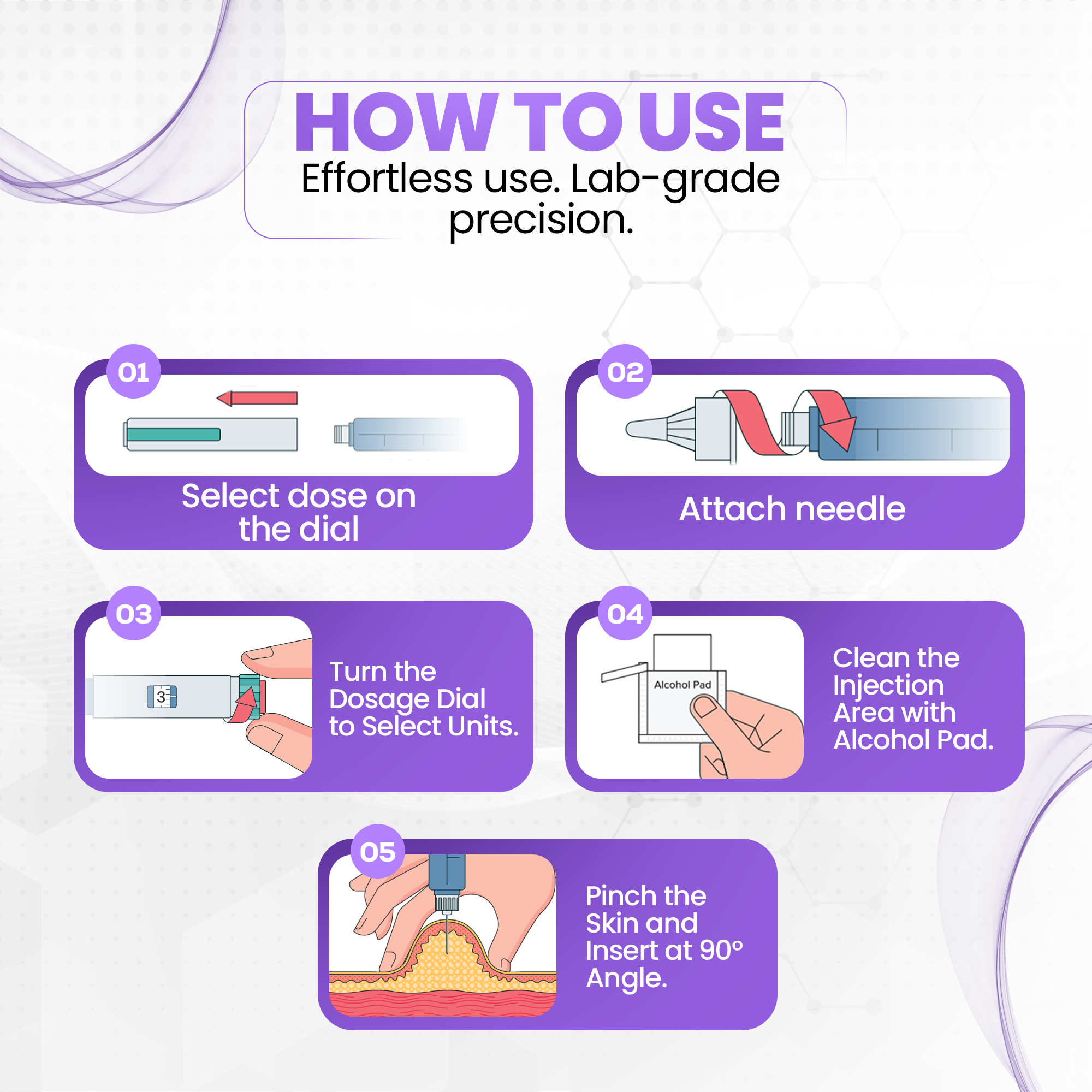
Fiecare produs sosește într-o cutie premium PEPTIDE.Power personalizată, proiectată pentru comoditate, igienă și depozitare sigură în frigider. În interior, veți găsi tot ce este necesar pentru protocolul dumneavoastră complet de cercetare:
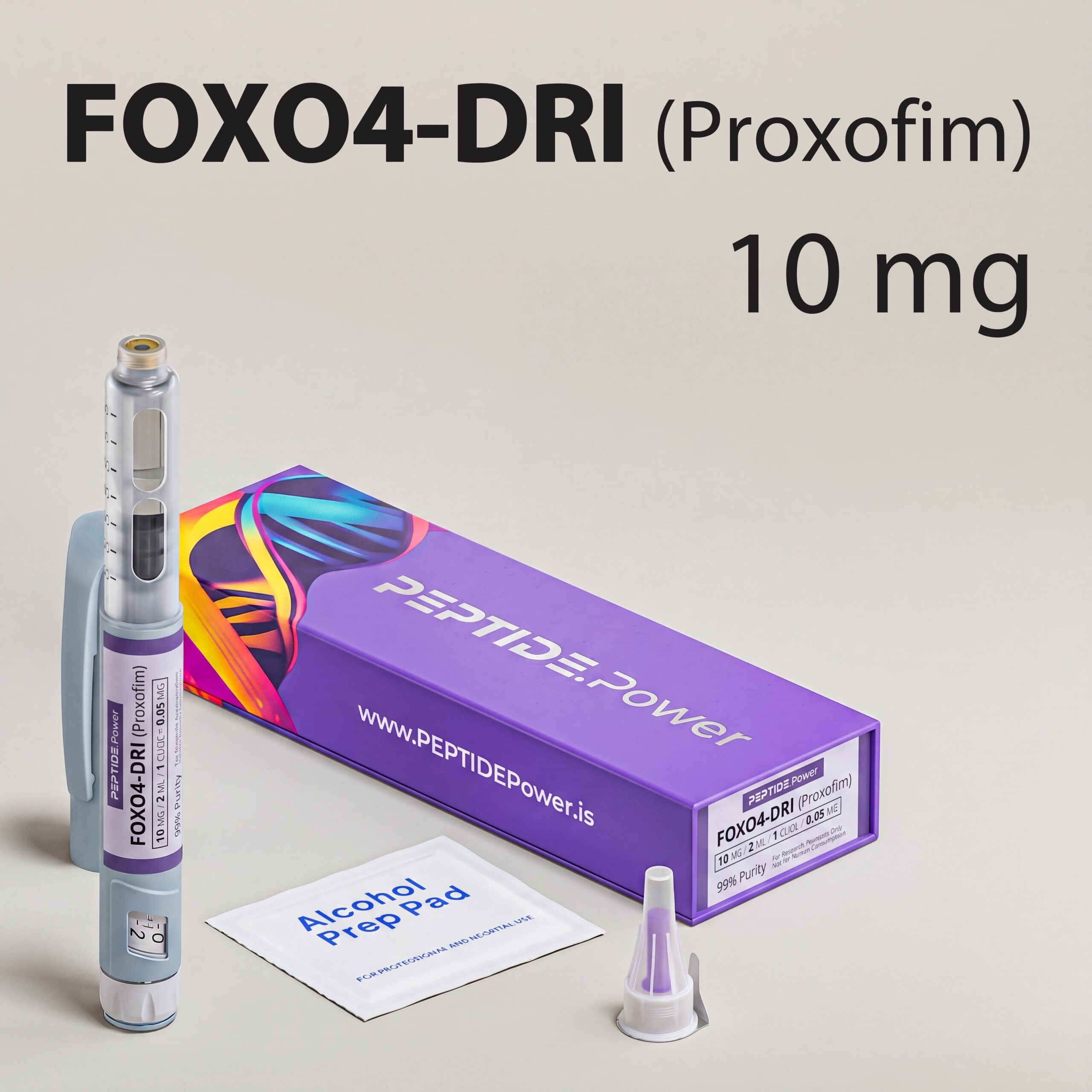
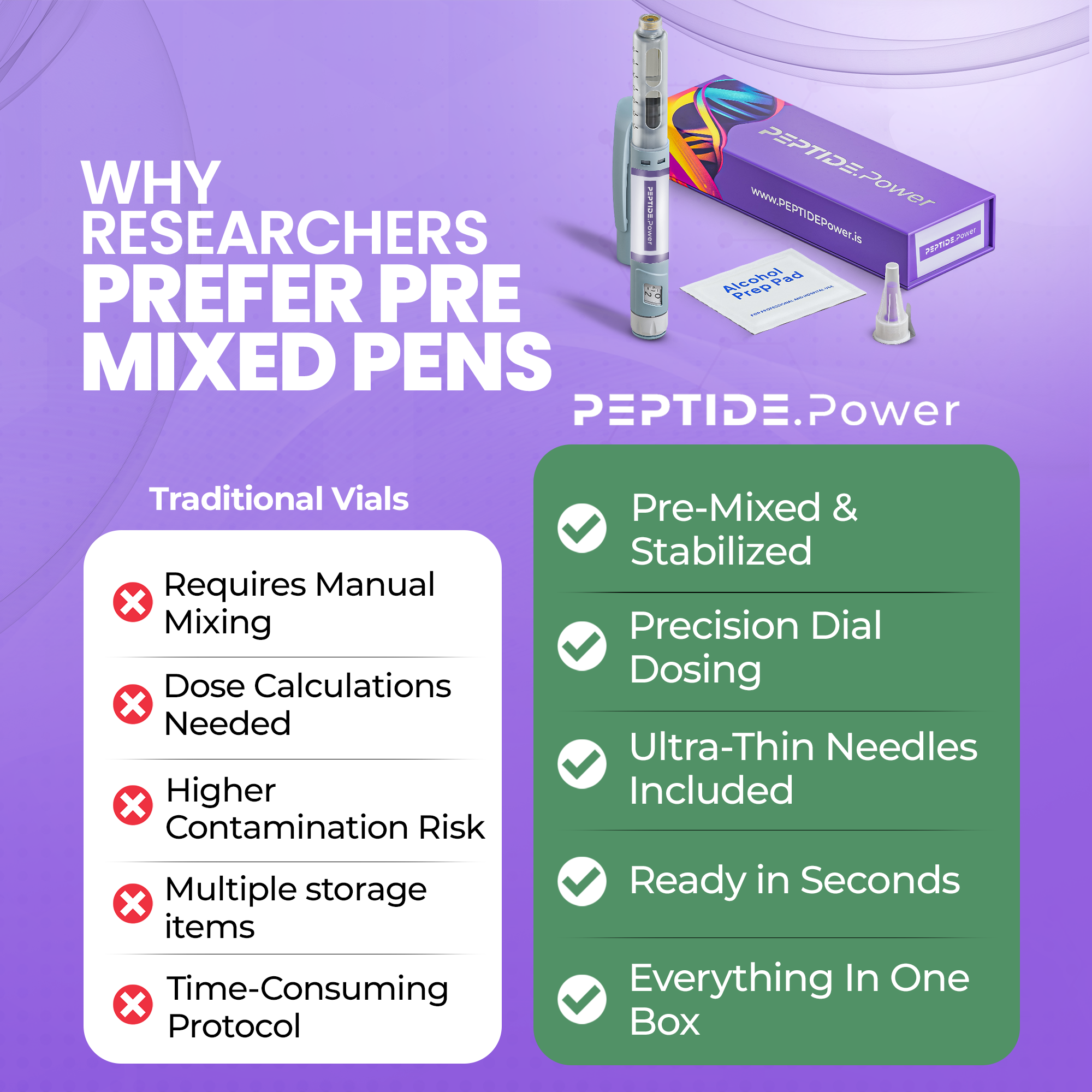
- 1× Stilou de injecție pre-amestecat de unică folosință
- Alimentat de Tehnologia PSM™ – sistem de stabilizare și amestecare de precizie pentru potență constantă
- 10× Ace ultra-subțiri (33G, 4 mm)
- 10× Tampoane cu alcool pentru pregătire sterilă
- Insert din spumă stabilizatoare internă pentru prevenirea agitării în timpul transportului
- Panou de instrucțiuni imprimat pe interiorul cutiei pentru referință rapidă
- Autocolant sigiliu de securitate care asigură că pachetul nu a fost deschis sau modificat
Depozitare
A se păstra produsul la frigider la 1 – 7°C imediat după livrare. Pentru a menține o stabilitate optimă, țineți stiloul ferit de lumină și nu îl expuneți la schimbări repetate de temperatură.
Odată reconstituite (toate stilourile noastre vin pre-amestecate), compușii de cercetare rămân stabili timp de 6 – 8 săptămâni sub refrigerare adecvată.
Nu congelați după reconstituire. Păstrați întotdeauna cutia închisă astfel încât stiloul, acele și tampoanele cu alcool să rămână curate și protejate.
Pentru cele mai bune rezultate, utilizați produsul în mod constant în intervalul de timp recomandat și urmați întotdeauna protocolul dumneavoastră de cercetare.
Livrare
Expediem cu Livrare în UE în ziua următoare prin DHL Express sau UPS Express.
Toate comenzile sunt pregătite proaspăt în ziua expedierii, plasate în cutii de transport cu lanț de frig EPS și expediate cu elemente de răcire pentru a menține o temperatură stabilă pe tot parcursul călătoriei.
Procesul nostru logistic este conceput astfel încât pachetul să sosească a doua zi, evitând întârzierile vamale în interiorul Uniunii Europene.
Produsele sunt expediate din facilitatea noastră din UE, asigurând fără taxe de import, fără vămuire și întotdeauna livrare rapidă și sigură.
Plată
Din cauza naturii peptidelor de cercetare și a categoriei de risc ridicat atribuită de procesatorii de plăți, companiile de carduri de credit nu susțin comercianții din acest domeniu.
Din acest motiv, acceptăm doar transferuri bancare.
În cadrul Uniunii Europene, transferurile SEPA sunt rapide, cu costuri reduse și de obicei ajung în câteva minute până la câteva ore, făcând procesul de plată simplu și ușor.
Odată ce transferul este primit, comanda dumneavoastră este pregătită imediat și expediată în aceeași zi (în funcție de ora limită).
Această metodă asigură conformitatea, securitatea și continuitatea serviciului pentru toți clienții din UE.
Nu ați găsit răspunsul la întrebarea dvs.?
Vedeți toate întrebările frecventeRELATED PRODUCTS


CJC 1295 (No DAC)


GHK-Cu


IGF-1LR3


Kisspeptin

