

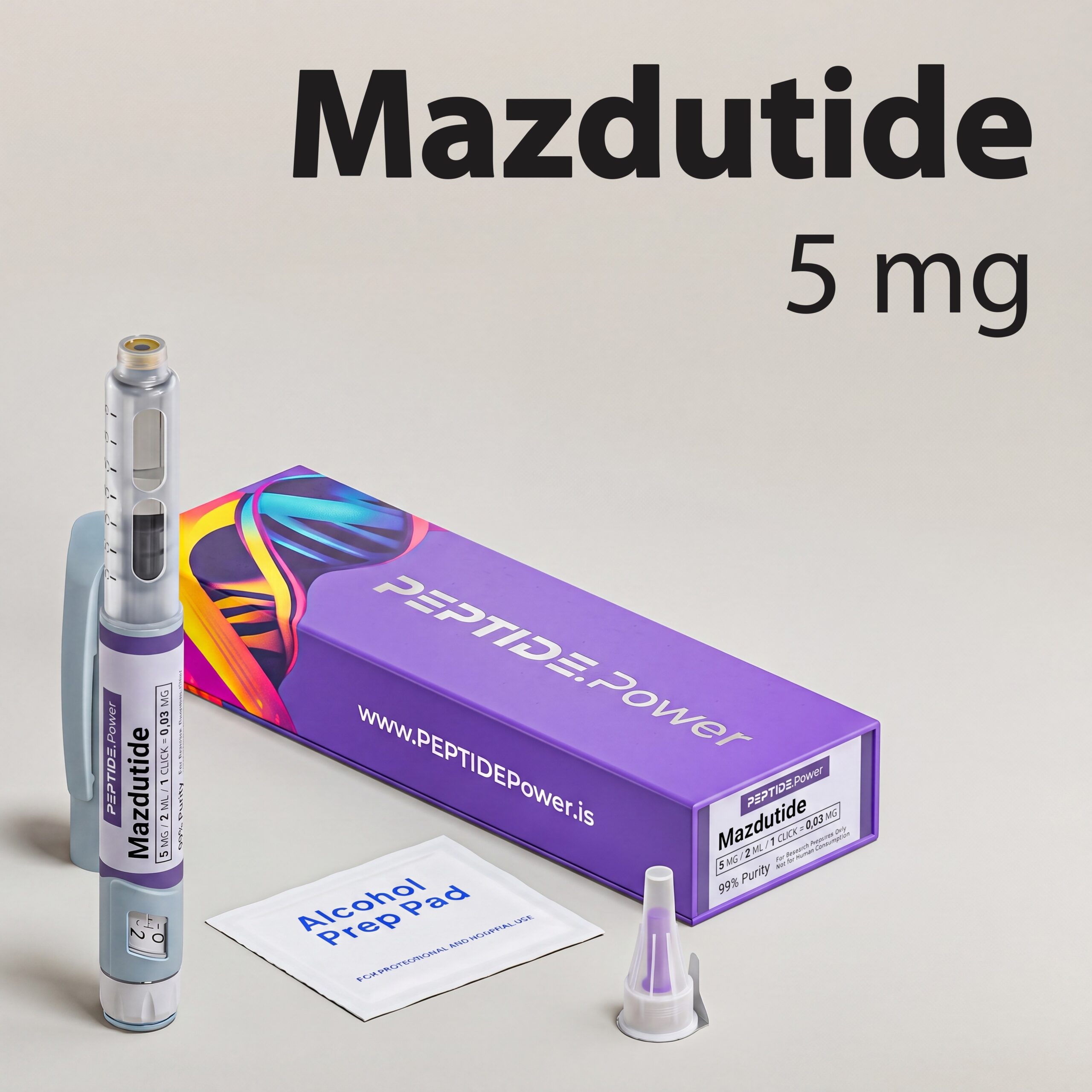







Mazdutide
Mazdutida este un agonist dual al receptorilor GLP-1 și glucagon, studiat pentru rolul său în reglarea apetitului, controlul glicemic și semnalizarea cheltuielilor energetice . Prin activarea simultană a căilor incretinei și glucagonului, aceasta influențează circuitele centrale de sațietate și procesele metabolice periferice. În cercetările clinice, s-a observat că Mazdutida susține reducerea greutății corporale și modularea metabolică în studii structurate. Formulat într-un stilou injector (pen) preamestecat stabilizat, exclusiv pentru uz în cercetare.
151,00 €
Mazdutide - Reglarea apetitului și consumul energetic
Studiată pentru echilibrarea apetitului și a metabolismului
Activează căile receptorilor GLP-1 și glucagon
Investigată pentru influențarea semnalizării termogenice
Susține semnalizarea insulinei dependentă de glucoză
Coordonează căile de control al apetitului și oxidare
Implică circuitele hipotalamice în reglarea sațietății
Investigată pentru influențarea metabolismului hepatic
Investigată pentru îmbunătățiri ale profilului lipidic și ale tensiunii arteriale
Descriere
Mazdutida este un agonist dual sintetic care vizează atât receptorii GLP-1, cât și pe cei ai glucagonului , conceput pentru a integra semnalizarea sațietății mediată de incretine cu căile de cheltuieli energetice asociate cu glucagonul. Spre deosebire de agoniștii receptorilor GLP-1 cu cale unică, Mazdutida implică mecanisme complementare care influențează suprimarea apetitului și reglarea ratei metabolice. Este studiată în principal în contexte de cercetare privind obezitatea, sindromul metabolic și diabetul de tip 2.
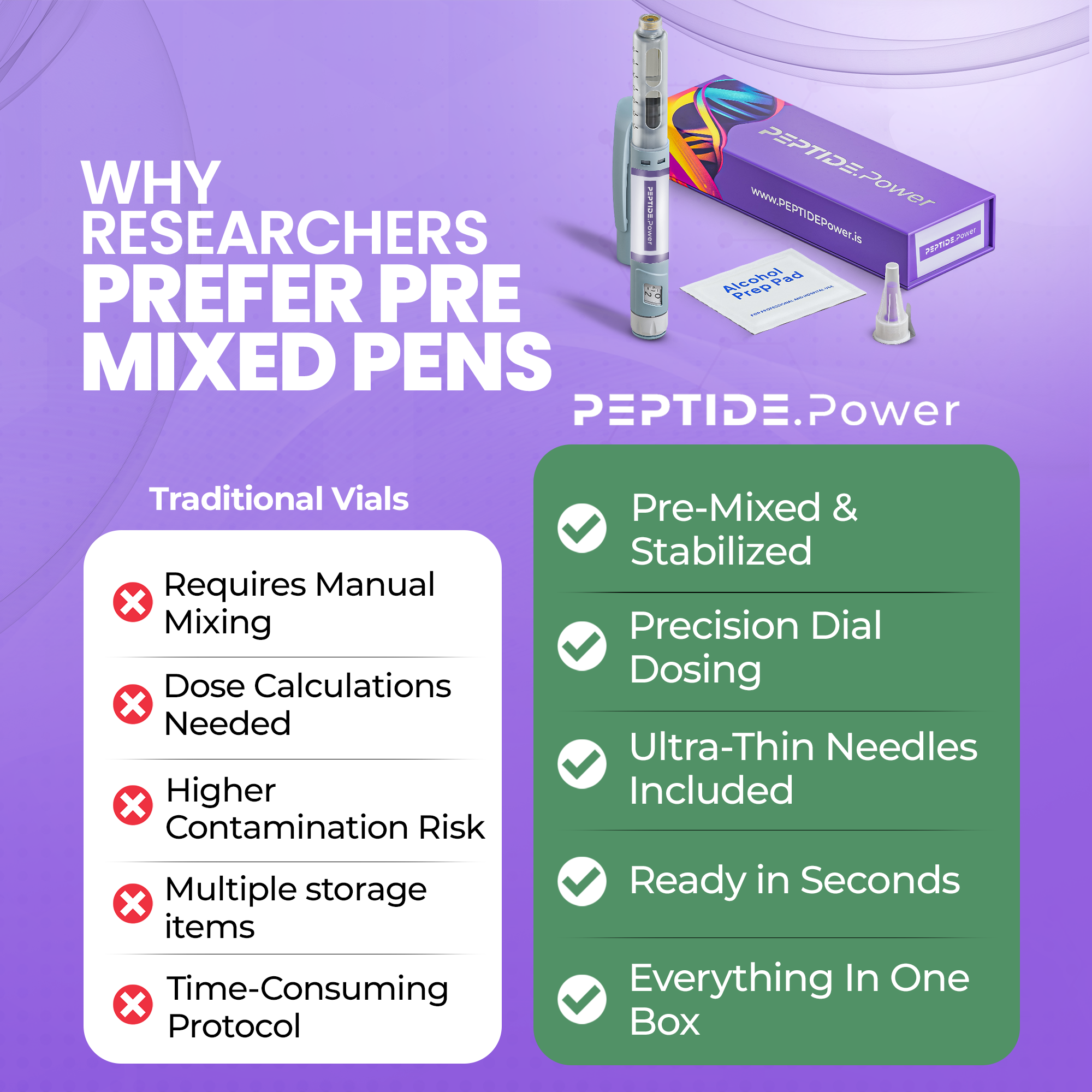
Formula noastră este furnizată într-un stilou injector (pen) preamestecat, stabilizat, pentru administrare subcutanată. Administrarea subcutanată susține expunerea sistemică controlată și activitatea farmacodinamică previzibilă în protocoalele experimentale. Fiecare unitate este proaspăt preparată pentru a păstra integritatea peptidelor și dozarea standardizată. Produsul este destinat strict utilizării în laborator și cercetare.
În modele clinice și preclinice, Mazdutida a demonstrat efecte asupra reducerii apetitului, îmbunătățirii markerilor glicemici și modulării greutății corporale. Activarea receptorilor GLP-1 influențează secreția de insulină și semnalizarea sațietății, în timp ce activarea receptorilor de glucagon contribuie la modularea producției de glucoză hepatică și la creșterea cheltuielilor energetice. Domeniile de cercetare includ reglarea metabolică, studii de reducere a adipozității și evaluarea factorilor de risc cardiometabolici.
Starea clinică
Studiu clinic randomizat (RCT) uman ✔ | Observațional ✔ | Animal ✔ | In vitro ✔
În prezent, evaluat în mai multe studii clinice pe oameni pentru obezitate și tulburări metabolice.
Mecanism de acțiune
Mazdutida activează atât receptorii GLP-1, cât și cei ai glucagonului , integrând suprimarea apetitului cu modularea ratei metabolice. Activarea receptorilor GLP-1 influențează semnalizarea sațietății în circuitele hipotalamice și sporește secreția de insulină dependentă de glucoză. Implicarea receptorilor de glucagon contribuie la creșterea cheltuielilor energetice și la modularea căilor metabolice hepatice. Mecanismul combinat susține reglarea metabolică coordonată în modelele de cercetare.
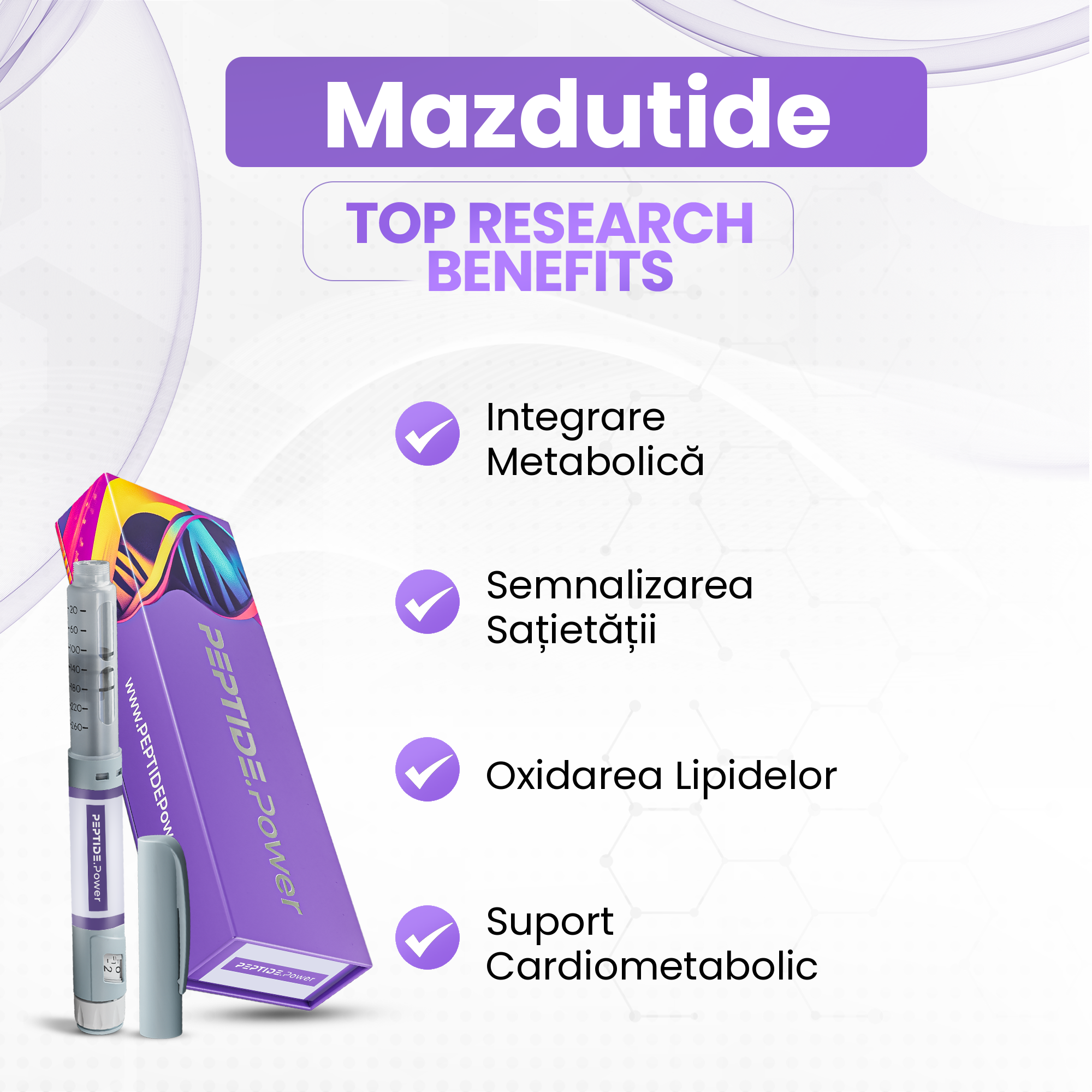
Beneficii
- Supresie integrată a apetitului și reglare metabolică:
Mazdutida combină semnalizarea sațietății bazată pe incretine cu activarea metabolică mediată de glucagon. Activarea receptorilor GLP-1 centrali influențează controlul apetitului în nucleii hipotalamici implicați în homeostazia energetică. Studiile clinice demonstrează un aport caloric redus și o reducere susținută a greutății corporale în contexte de cercetare structurate. Adăugarea implicării receptorilor de glucagon susține efecte metabolice complementare. Acest mecanism integrat diferențiază Mazdutida de agoniștii GLP-1 cu cale unică. - Control glicemic îmbunătățit prin semnalizarea incretinelor:
Activarea receptorului GLP-1 promovează secreția de insulină dependentă de glucoză din celulele beta pancreatice. Acest mecanism susține un control glicemic postprandial îmbunătățit în populațiile studiate în domeniul metabolic. Golirea gastrică încetinită contribuie în continuare la fluctuații moderate ale glucozei. Aceste efecte combinate susțin poziționarea sa în cadrul cercetării tulburărilor metabolice. - Modularea cheltuielilor energetice prin activarea receptorilor de glucagon:
Implicarea receptorilor de glucagon influențează procesele metabolice hepatice și căile de oxidare a lipidelor. Modelele preclinice sugerează o creștere a cheltuielilor energetice asociate cu stimularea căii glucagonului. Acest mecanism își propune să contrabalanseze reducerile ratei metabolice observate adesea în timpul intervențiilor de slăbire. Componenta termogenică distinge strategiile de agonism dual. - Reducerea adipozității în contexte structurate de cercetare:
Studiile clinice raportează reduceri semnificative ale greutății corporale și ale masei țesutului adipos. Aceste rezultate sunt legate de suprimarea coordonată a apetitului și de modularea ratei metabolice. Activarea duală a receptorilor susține implicarea metabolică susținută dincolo de controlul apetitului. - Influență potențială asupra markerilor de risc cardiometabolic:
Cercetările indică îmbunătățiri ale profilurilor lipidice și ale indicilor glicemici în timpul evaluării clinice. Deși studiate în principal pentru reducerea greutății, îmbunătățirile metabolice se extind la parametri cardiometabolici mai largi. Aceste descoperiri susțin includerea sa în protocoalele de cercetare legate de obezitate. - Strategie echilibrată a agonismului dual:
Mazdutida este concepută pentru a echilibra activarea GLP-1 și a receptorilor de glucagon pentru a optimiza efectul terapeutic, reducând în același timp hiperglicemia excesivă mediată de glucagon. Designul molecular își propune să armonizeze căile de sațietate și de consum energetic. Această abordare echilibrată a coagonismului reprezintă o strategie de generație următoare pentru incretine în cercetarea metabolică. - Farmacocinetică subcutanată previzibilă:
Furnizat într-un stilou injector (pen) preamestecat stabilizat pentru administrare subcutanată, Mazdutide demonstrează o expunere sistemică constantă în cadrul studiilor clinice. Administrarea subcutanată susține scheme de dozare structurate și răspunsuri farmacodinamice reproductibile. Fiecare unitate este proaspăt preparată și destinată strict utilizării în laborator.
Date de cercetare
| Studiu / Model | Efect raportat |
|---|---|
| Studiu de fază 3 la adulți chinezi cu obezitate (GLORY-1) | ↓ greutatea corporală cu ~14% la 48 de săptămâni cu doza de 6 mg vs placebo |
| Studiu de fază 2 în diabetul de tip 2 | ↓ HbA1c cu ~1,5-2,0%, ↓ glicemia à jeun, ↑ controlul glicemic |
| Modele murine de obezitate indusă de dietă | ↓ aportul alimentar, ↑ cheltuielile energetice, ↓ conținutul lipidic hepatic |
| Evaluări clinice metabolice | ↓ fracția de grăsime hepatică, profil lipidic îmbunătățit, ↓ circumferința taliei |
| Studii de legare la receptori (in vitro) | Activare duală confirmată a GLP-1R și GCGR cu potență echilibrată |
| Analiza biomarkerilor cardiometabolici | ↓ trigliceride, ↓ colesterol LDL, markeri ai tensiunii arteriale îmbunătățiți |
Sugestii de combinare
Mazdutida este adesea combinată în cercetare cu:
- Mazdutidă + Retatrutidă → Studii comparative care explorează activarea duală versus triplă a receptorilor incretinici în modele metabolice.
- Mazdutidă + Tesofensină → Investighează suprimarea centrală combinată a apetitului cu căile de semnalizare incretină-glucagon.
- Mazdutidă + BPC-157 → Asociază modularea metabolică cu aplicații de cercetare privind citoprotecția gastrointestinală.
- Mazdutidă + AOD-9604 → Explorează căi complementare lipolitice și de compoziție corporală mediate de incretine.
- Mazdutidă + NAD+ → Combină cercetarea substratului energetic mitocondrial cu semnalizarea termogenică mediată de glucagon.
⚠ Combinațiile sunt doar pentru proiectare experimentală; nu reprezintă recomandări de siguranță sau eficacitate.
Tabel de dozare pentru stilou
| Mazdutide Pen 5 mg | |
|---|---|
| Volum | 2 mL |
| mg/mL | 2.5 mg/mL |
| Click-doză | 1 click = 0.025 mg |
| Exemplu(e) | 10 clicks = 0.25 mg |
Dozare și variații de protocol
Protocol Standard de Cercetare
- Doză: 3 – 4,5 mg (= 120-180 click-uri)
- Durată: 8 – 12 săptămâni
- Frecvență: O dată pe săptămână
- Interval de ciclu: 4 săptămâni pauză înainte de repetare
- Obiectiv / Descriere: Dozare de referință utilizată în modelele de cercetare privind reglarea metabolică și a apetitului.
Protocol Terapeutic de Cercetare
- Doză: 4-5 mg (= 160-200 click-uri)
- Durată: 12 – 24 săptămâni
- Frecvență: O dată pe săptămână
- Interval de ciclu: 4 – 6 săptămâni pauză înainte de repetare
- Obiectiv / Descriere: Protocol cu doză mai mare care vizează controlul glicemic și parametrii compoziției corporale.
Protocol Biohacker (experimental)
- Doză: 1,5 – 3 mg (= 60-120 click-uri)
- Durată: 6 – 10 săptămâni
- Frecvență: O dată pe săptămână, titrată ascendent
- Interval de ciclu: 2 – 4 săptămâni pauză înainte de repetare
- Obiectiv / Descriere: Abordare de titrare în microdoze care minimizează efectele de adaptare gastrointestinală.
Posibile efecte secundare
Mazdutida este în general bine tolerată în studiile clinice și preclinice, majoritatea efectelor raportate fiind ușoare până la moderate și dependente de doză.
Efectele observate frecvent includ:
- Tulburări gastrointestinale precum greață, vărsături și diaree, în special în timpul escaladării dozei.
- Scăderea apetitului și reduceri tranzitorii ale aportului alimentar.
- Creșteri ușoare ale frecvenței cardiace raportate în unele studii clinice.
- Dispepsie ocazională, balonare sau disconfort abdominal.
- Reacții la locul injectării, inclusiv roșeață sau iritație ușoară.
Nu au fost observate dovezi privind efecte adverse hepatice, renale sau cardiovasculare severe în datele disponibile, deși siguranța pe termen lung rămâne în continuă investigare.
Atribute produs
- CAS #: 2376312-49-1
- Formulă moleculară: C172H265N43O53
- Secvență (AA): HSQGTFTSDYSKYLDEKKAKEFVQWLMNT (modificată cu acid gras)
- Greutate moleculară: ~3850 g/mol
- PubChem CID: N/A
- Timp de înjumătățire: ~150-180 ore
- Sinonime: IBI362, LY3305677, agonist dual GLP-1/glucagon
- Tip: Peptidă sintetică de cercetare (co-agonist dual al receptorilor incretinei)
- Domeniu de cercetare: Metabolism și Compoziție Corporală, Reglare Glicemică
Referințe științifice
- Mazdutide for overweight or obesity in Chinese adults: a randomized, double-blind, placebo-controlled phase 2 trial Studiu clinic
- A phase 1 randomized trial to evaluate safety, pharmacokinetics, and pharmacodynamics of IBI362 (LY3305677) in Chinese overweight or obese adults Studiu clinic
- Efficacy and safety of mazdutide in Chinese patients with type 2 diabetes: a randomized, double-blind, placebo-controlled phase 2 trial Studiu clinic
- OXM-based dual GLP-1/glucagon receptor agonists for the treatment of obesity and metabolic disease Observațional | Animal | In vitro
- Dual glucagon-like peptide-1 and glucagon receptor agonism reduces energy intake in type 2 diabetes with obesity Studiu clinic
- Glucagon-like peptide-1 and glucagon receptor co-agonists: novel therapeutics for obesity and type 2 diabetes Animal | In vitro
- Anti-obesity drug discovery: advances and challenges Observațional | Animal
Inclus în cutie
Fiecare produs sosește într-o cutie premium PEPTIDE.Power personalizată, proiectată pentru comoditate, igienă și depozitare sigură în frigider. În interior, veți găsi tot ce este necesar pentru protocolul dumneavoastră complet de cercetare:
- 1× Stilou de injecție pre-amestecat de unică folosință
- Alimentat de Tehnologia PSM™ – sistem de stabilizare și amestecare de precizie pentru potență constantă
- 10× Ace ultra-subțiri (33G, 4 mm)
- 10× Tampoane cu alcool pentru pregătire sterilă
- Insert din spumă stabilizatoare internă pentru prevenirea agitării în timpul transportului
- Panou de instrucțiuni imprimat pe interiorul cutiei pentru referință rapidă
- Autocolant sigiliu de securitate care asigură că pachetul nu a fost deschis sau modificat
Depozitare
A se păstra produsul la frigider la 1 – 7°C imediat după livrare. Pentru a menține o stabilitate optimă, țineți stiloul ferit de lumină și nu îl expuneți la schimbări repetate de temperatură.
Odată reconstituite (toate stilourile noastre vin pre-amestecate), compușii de cercetare rămân stabili timp de 6 – 8 săptămâni sub refrigerare adecvată.
Nu congelați după reconstituire. Păstrați întotdeauna cutia închisă astfel încât stiloul, acele și tampoanele cu alcool să rămână curate și protejate.
Pentru cele mai bune rezultate, utilizați produsul în mod constant în intervalul de timp recomandat și urmați întotdeauna protocolul dumneavoastră de cercetare.
Livrare
Expediem cu Livrare în UE în ziua următoare prin DHL Express sau UPS Express.
Toate comenzile sunt pregătite proaspăt în ziua expedierii, plasate în cutii de transport cu lanț de frig EPS și expediate cu elemente de răcire pentru a menține o temperatură stabilă pe tot parcursul călătoriei.
Procesul nostru logistic este conceput astfel încât pachetul să sosească a doua zi, evitând întârzierile vamale în interiorul Uniunii Europene.
Produsele sunt expediate din facilitatea noastră din UE, asigurând fără taxe de import, fără vămuire și întotdeauna livrare rapidă și sigură.
Plată
Din cauza naturii peptidelor de cercetare și a categoriei de risc ridicat atribuită de procesatorii de plăți, companiile de carduri de credit nu susțin comercianții din acest domeniu.
Din acest motiv, acceptăm doar transferuri bancare.
În cadrul Uniunii Europene, transferurile SEPA sunt rapide, cu costuri reduse și de obicei ajung în câteva minute până la câteva ore, făcând procesul de plată simplu și ușor.
Odată ce transferul este primit, comanda dumneavoastră este pregătită imediat și expediată în aceeași zi (în funcție de ora limită).
Această metodă asigură conformitatea, securitatea și continuitatea serviciului pentru toți clienții din UE.
Nu ați găsit răspunsul la întrebarea dvs.?
Vedeți toate întrebările frecventeRELATED PRODUCTS


AOD-9604


GHRP-6


HCG (Choriomon)


Humanin

