






Cagrilintide
Cagrilintide es un análogo de amilina de acción prolongada estudiado por su papel en la regulación del apetito y la señalización metabólica. Al activar los receptores de amilina en el cerebro, influye en las vías de saciedad y en el control de la ingesta energética. En entornos de investigación clínica, se ha evaluado Cagrilintide por su impacto en la regulación del peso corporal y la modulación del apetito. Destinado estrictamente a uso de laboratorio y de investigación.
97,00 €
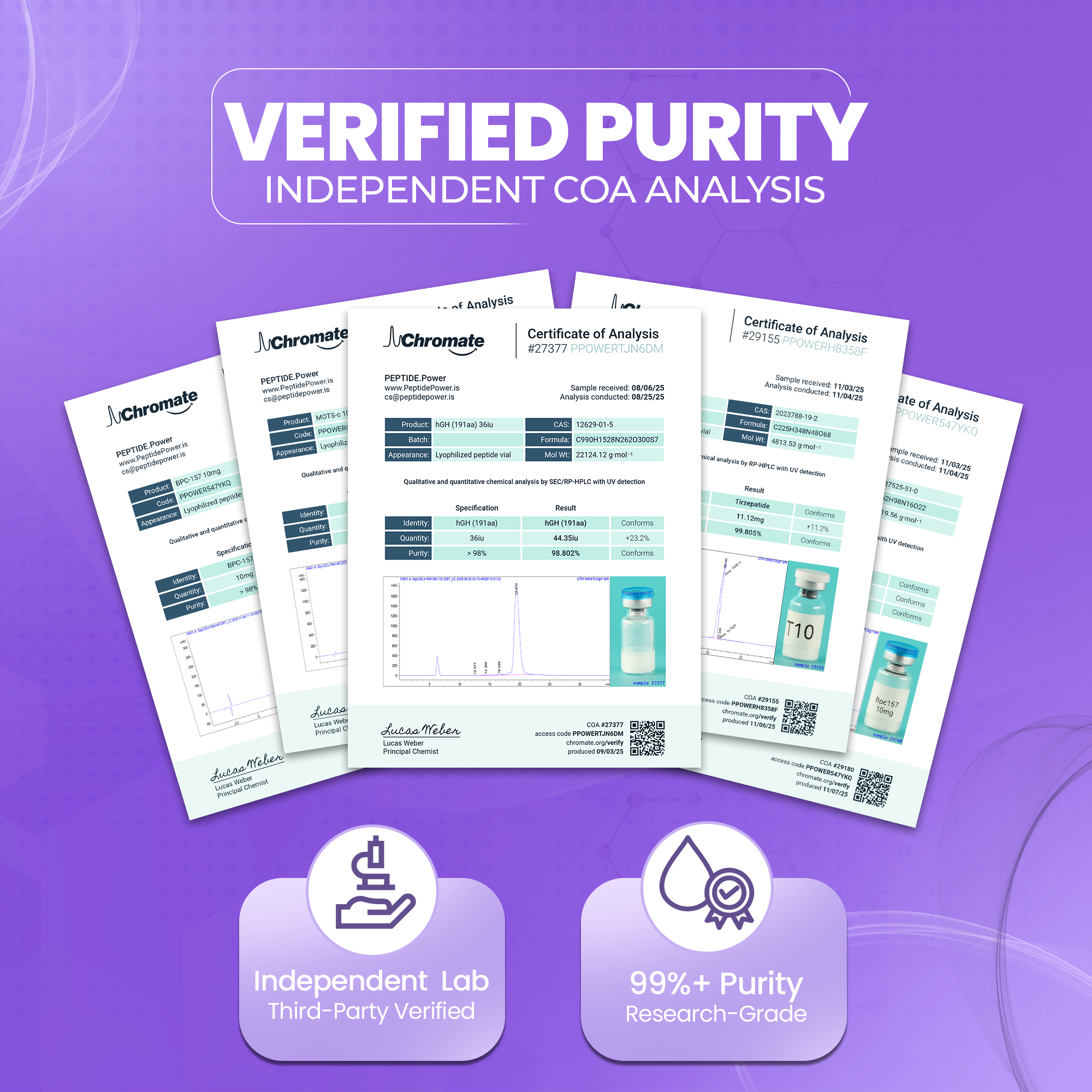
Certificados de calidad
Análisis de laboratorio independiente de terceros (CoA) - de nuestra propia marca.
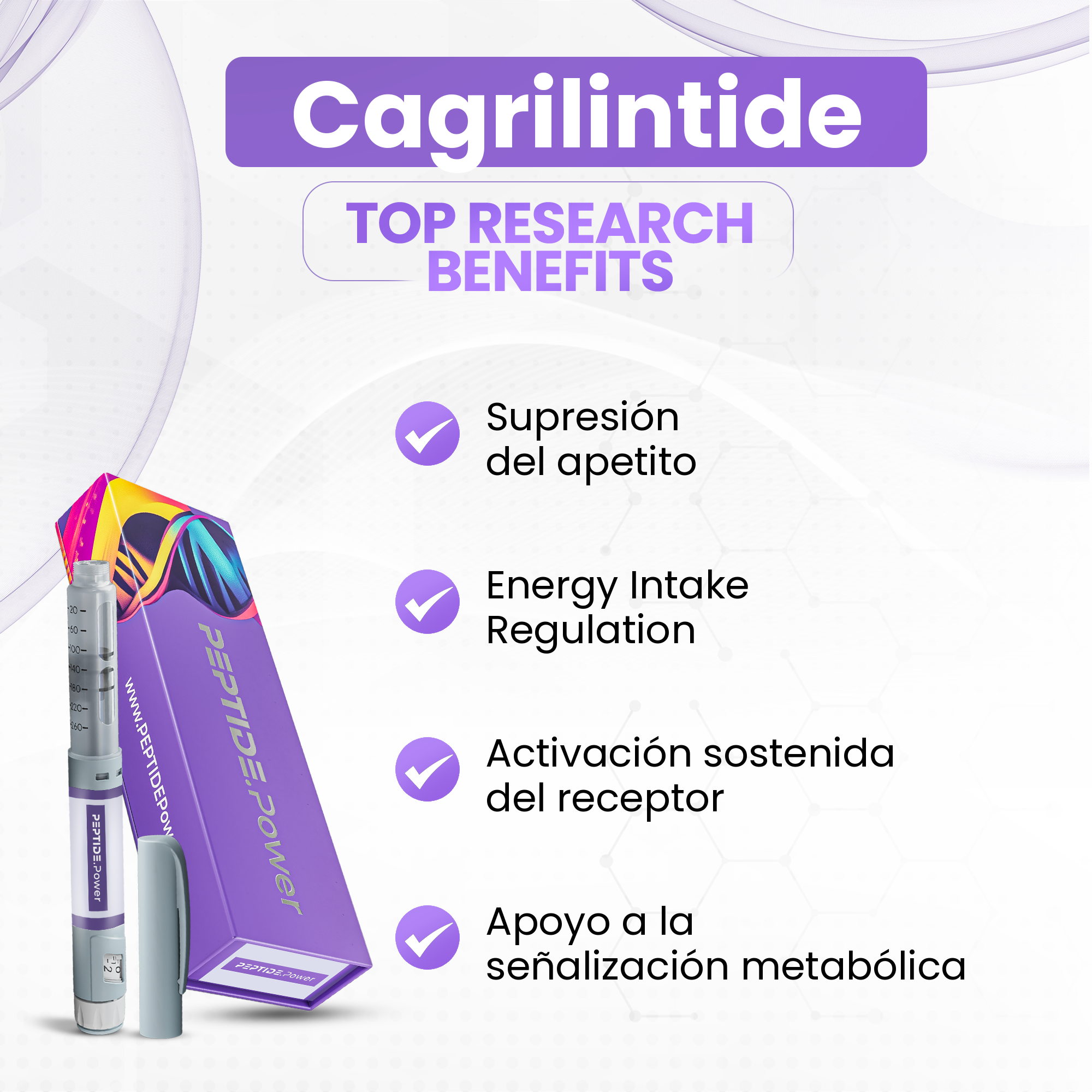
Cagrilintide - Supresión del apetito y control metabólico
Activa las vías centrales de saciedad.
Influye en el control del tamaño de las comidas
Análogo de amilina de acción prolongada
Activa los circuitos reguladores del apetito.
Estudiado en modelos de obesidad
Influye en los centros de saciedad
Retarda la digestión después de las comidas.
Estudiado en terapias combinadas
Descripción
Cagrilintide es un análogo sintético de acción prolongada de la amilina, una hormona cosecretada con la insulina por las células beta pancreáticas. La amilina desempeña un papel en la regulación de la glucosa posprandial y en la promoción de la saciedad. Cagrilintide está diseñado para proporcionar una activación prolongada del receptor en comparación con la amilina nativa.
En investigaciones clínicas en humanos, se ha estudiado Cagrilintide por sus efectos en la reducción del apetito, la modulación de la ingesta energética y la regulación del peso corporal. La activación de los receptores centrales de amilina influye en circuitos del hipotálamo y del tronco encefálico implicados en la señalización de la saciedad. Los ámbitos de investigación incluyen la obesidad, la regulación metabólica y las terapias combinadas basadas en incretinas.
Estado clínico
ECA en humanos ✔ | Observacional ✔ | Animal ✔ | In vitro ✔
Evaluado en múltiples ensayos clínicos en humanos para la investigación de la obesidad y la regulación metabólica.
Mecanismo de acción
Cagrilintide activa los receptores de amilina en el cerebro, favoreciendo la saciedad y reduciendo la ingesta de alimentos. Su diseño de acción prolongada extiende la interacción con el receptor en comparación con la amilina nativa.
Beneficios
- Activa circuitos centrales de saciedad mediados por amilina:
Cagrilintide se une a receptores de amilina situados en el área postrema y en núcleos hipotalámicos implicados en la regulación del apetito. Estas regiones integran señales periféricas de nutrientes y las traducen en percepción de saciedad. La activación de los receptores de amilina influye en los patrones de descarga neuronal asociados con la finalización de la comida y la reducción del impulso de hambre. A diferencia de la supresión del apetito impulsada por vías estimulantes, Cagrilintide actúa dentro de redes fisiológicas de saciedad. Esta modulación central respalda la investigación sobre el control neuroendocrino de la ingesta de alimentos. - Interactúa con complejos del receptor de calcitonina, RAMP para especificidad del receptor:
Los receptores de amilina son complejos heterodiméricos compuestos por receptores de calcitonina acoplados a proteínas modificadoras de la actividad del receptor (RAMP). Cagrilintide se une de forma selectiva a estos complejos receptores, desencadenando cascadas de señalización intracelular que regulan la percepción del apetito. Esta arquitectura del receptor aporta especificidad funcional dentro del sistema nervioso central. El diseño estructural de Cagrilintide mejora la duración de la interacción con el receptor en comparación con la amilina nativa, contribuyendo a una señalización sostenida en modelos experimentales. - Activación prolongada del receptor mediante un diseño de acción prolongada:
La amilina nativa se elimina rápidamente de la circulación, lo que limita su efecto biológico. Cagrilintide incorpora modificaciones estructurales que amplían su semivida y prolongan la interacción con el receptor. La interacción sostenida con el receptor permite una activación continua de las vías de saciedad sin picos y valles repetidos. Este perfil de actividad extendida lo diferencia de los análogos de amilina de acción corta y respalda marcos de investigación de modulación del apetito de mayor duración. - Modula el vaciamiento gástrico y el flujo de nutrientes:
La activación del receptor de amilina influye en la motilidad gastrointestinal al ralentizar el vaciamiento gástrico. El retraso en la llegada de nutrientes al intestino delgado contribuye a una saciedad más prolongada y a excursiones de glucosa posprandial más moderadas. Este mecanismo periférico complementa la supresión central del apetito. Al influir tanto en la señalización cerebral como intestinal, Cagrilintide integra sistemas de control neuroendocrino y digestivo. - Se integra con la insulina y la señalización metabólica posprandial:
La amilina se cosecreta fisiológicamente con la insulina desde las células beta pancreáticas. Esta cosecreción refleja una regulación coordinada de la ingesta de nutrientes y del manejo de la glucosa. Al imitar la señalización de la amilina, Cagrilintide participa en esta red metabólica integrada. Su acción influye en la percepción del apetito, a la vez que se alinea con las vías de procesamiento de nutrientes mediadas por la insulina en modelos de investigación. - Demuestra una acción complementaria con las vías de GLP-1:
Los agonistas del receptor GLP-1 y los análogos de amilina actúan mediante mecanismos distintos pero complementarios. GLP-1 influye en la secreción de insulina y en el control central del apetito, mientras que la amilina modula principalmente la saciedad y el vaciamiento gástrico. El mecanismo de Cagrilintide ofrece potencial aditivo o sinérgico cuando se estudia junto con terapias basadas en incretinas. Esta implicación de doble vía refleja una regulación neuroendocrina por capas del equilibrio energético. - Respalda la investigación estructurada de reducción de la ingesta energética:
Al activar circuitos de saciedad y ralentizar la digestión, Cagrilintide reduce la ingesta calórica en entornos experimentales controlados. En lugar de estimular directamente el metabolismo, modifica los impulsores conductuales previos del consumo de energía. Este enfoque lo diferencia de los compuestos termogénicos y lo sitúa dentro de los ámbitos de investigación de regulación del apetito. - Actúa dentro de sistemas fisiológicos de homeostasis energética:
El equilibrio energético se mantiene mediante una señalización coordinada entre leptina, insulina, GLP-1, grelina y amilina. Cagrilintide se integra en esta red al potenciar la retroalimentación de saciedad, preservando a la vez los bucles reguladores endógenos. Su mecanismo refleja una modulación de la arquitectura de control energético propia del organismo, en lugar de una aceleración metabólica forzada. - Influye en bucles de comunicación tronco encefálico-hipotálamo:
El área postrema actúa como una interfaz clave entre los péptidos circulantes y la regulación central del apetito. La actividad de Cagrilintide en esta región influye en vías de señalización hipotalámica posteriores. Esta integración tronco encefálico-hipotálamo es central para la supresión coordinada del hambre y la reducción del tamaño de las comidas. Comprender este bucle es esencial en contextos avanzados de investigación metabólica.
Datos de investigación
| Estudio / Modelo | Efecto reportado |
|---|---|
| Ensayo de fase 1b en adultos con sobrepeso/obesidad | ↓ peso corporal hasta 10,8% durante 26 semanas con dosis semanal de 4,5 mg |
| Combinación con semaglutida (CagriSema) en DT2 | ↓ HbA1c y ↓ peso corporal más allá de la monoterapia con semaglutida |
| Modelos de roedores con obesidad inducida por dieta | Reducción de la ingesta de alimentos, ↓ adiposidad, mejor sensibilidad a la leptina |
| Estudios humanos de evaluación de la saciedad | Vaciado gástrico retardado y plenitud posprandial prolongada |
| Ensayos preclínicos de unión al receptor de amilina | Activación sostenida del receptor con vida media prolongada frente a la amilina nativa |
| Perfilado metabólico en sujetos obesos | Mejor control glucémico y marcadores lipídicos junto con la pérdida de peso |
Sugerencias de combinación
Cagrilintide se combina frecuentemente en investigación con:
- Cagrilintide + Sеmаglutіdе → Activación dual de receptores de amilina y GLP-1 para una mayor supresión del apetito y reducción de peso en estudios metabólicos.
- Cagrilintide + Тіrzераtіdе → Combina la señalización de amilina con el coagonismo GIP/GLP-1 para efectos metabólicos y de saciedad más amplios.
- Cagrilintide + Rеtаtrutіdе → Explorado por la regulación sinérgica del balance energético y el metabolismo del tejido adiposo.
- Cagrilintide + AOD-9604 → Investigado por efectos complementarios sobre la lipólisis y la composición corporal.
⚠ Las combinaciones son solo para diseño experimental; no constituyen orientación de seguridad o eficacia.
Tabla de dosificación de la pluma
| Cagrilintide Pluma 5 mg | |
|---|---|
| Volumen | 2 mL |
| mg/mL | 2.5 mg/mL |
| Clic-a-dosis | 1 click = 0.025 mg |
| Ejemplo(s) | 10 clicks = 0.25 mg |
Dosificación y variaciones de protocolo
Protocolo de Investigación Estándar
- Dosis: 0,3 – 1,2 mg (= 12-48 clics)
- Duración: 8 – 12 semanas
- Frecuencia: Una vez por semana
- Intervalo de Ciclo: 4 semanas de descanso antes de repetir
- Objetivo / Descripción: Protocolo de referencia para la regulación del apetito y la modulación del peso corporal en modelos experimentales.
Protocolo de Investigación Terapéutica
- Dosis: 1,2 – 2,4 mg (= 48-96 clics)
- Duración: 12 – 20 semanas
- Frecuencia: Una vez por semana
- Intervalo de Ciclo: 4 – 6 semanas de descanso antes de repetir
- Objetivo / Descripción: Protocolo de dosis más alta utilizado en investigación sobre obesidad para evaluar la saciedad sostenida y la reducción de adiposidad.
Protocolo Combinado (Cagrilintide + Sеmаglutіdе)
- Dosis: 0,6 – 2,4 mg de Cagrilintide + 0,25 – 2,4 mg de Sеmаglutіdе (= 24-96 clics)
- Duración: 12 – 20 semanas
- Frecuencia: Una vez por semana, coadministrados
- Intervalo de Ciclo: 4 – 6 semanas de descanso antes de repetir
- Objetivo / Descripción: Activación dual de los receptores de amilina y GLP-1 estudiada para mejorar los resultados metabólicos y de peso.
Posibles efectos secundarios
Cagrilintide es generalmente bien tolerado en estudios de investigación clínica, y la mayoría de los efectos reportados son leves y transitorios.
Los efectos secundarios comúnmente reportados en entornos de investigación incluyen:
- Náuseas, particularmente durante las fases de escalada de dosis.
- Vómitos leves o malestar gastrointestinal.
- Disminución del apetito y reducción de la ingesta de alimentos.
- Estreñimiento transitorio o alteración de los hábitos intestinales.
- Reacciones en el sitio de inyección, como enrojecimiento o irritación leve.
- Fatiga ocasional o dolor de cabeza durante la administración inicial.
Se ha observado que la mayoría de los efectos gastrointestinales disminuyen con la exposición continuada y la titulación gradual de la dosis. No se han reportado evidencias de efectos adversos hepáticos, renales o cardiovasculares graves en los datos de investigación clínica disponibles.
Atributos del producto
- CAS #: 1415456-99-3
- Fórmula molecular: C188H297N51O54
- Secuencia (AA): KCNTATCATQRLANFLVHSSNNFGAILSSTNVGSNTY-NH2 (modificada con cadena lateral de ácido graso)
- Peso molecular: ~4,205 g/mol
- Vida media: ~7 días
- Sinónimos: AM-833, Análogo de amilina de acción prolongada
- Tipo: Péptido sintético de investigación (análogo de amilina)
- Enfoque de investigación: Metabolismo y Composición Corporal, Regulación del Apetito
Referencias científicas
- Effect of cagrilintide alone or in combination with sеmаglutіdе on body weight Ensayo clínico
- Sеmаglutіdе and cagrilintide in adults with overweight or obesity Ensayo clínico
- Pharmacokinetics and tolerability of cagrilintide in subjects with overweight or obesity Ensayo clínico
- Cagrilintide plus sеmаglutіdе for obesity management Ensayo clínico
- Amylin agonists in the treatment of obesity Observacional | Animal
- Amylin and amylin analogs: regulation of food intake and body weight Animal | In vitro
- Combination therapy for obesity: incretin and amylin pathways Observacional
- Cagrilintide overview: mechanism, evidence, and dosage Observacional | Ensayo clínico
Incluido en la caja
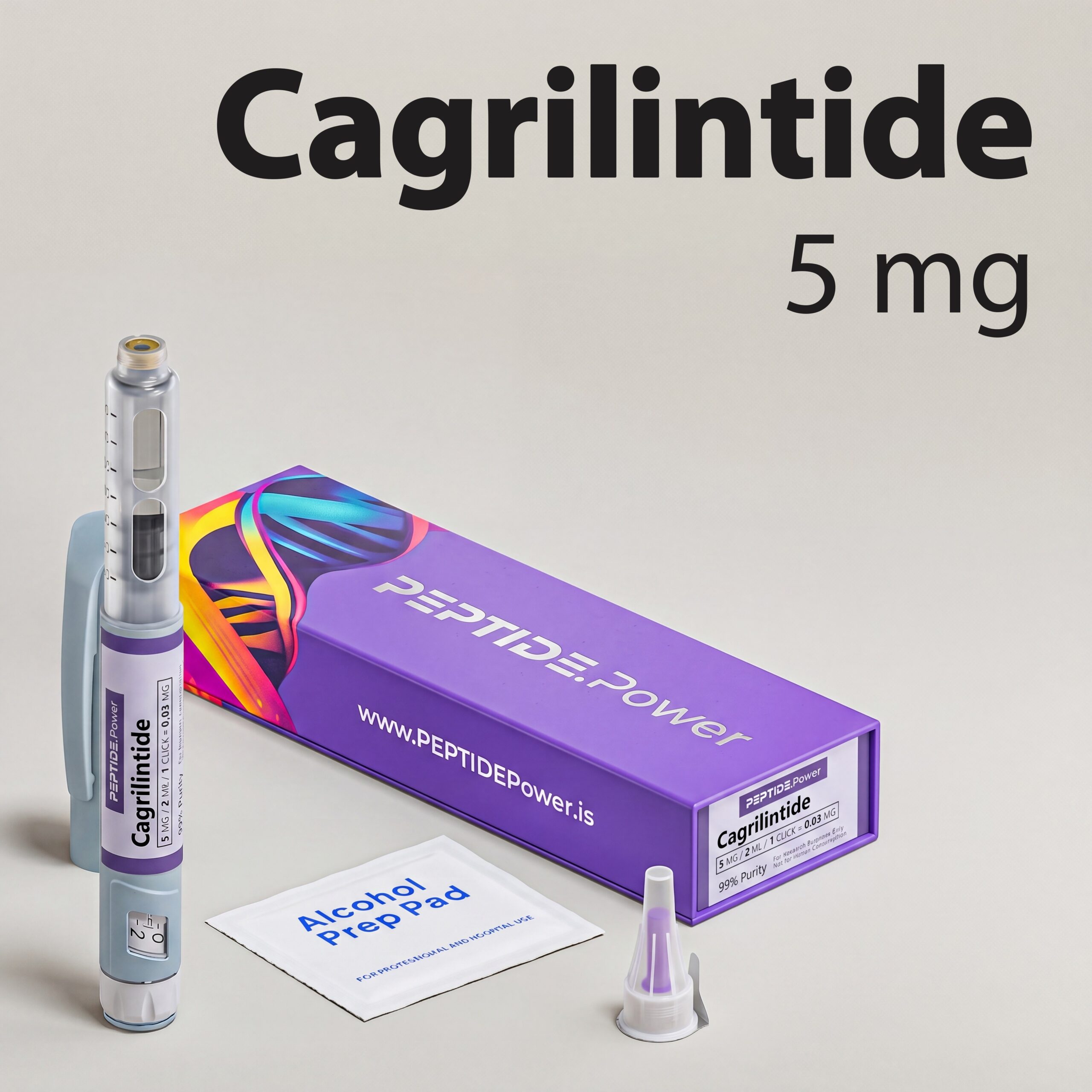
Cada producto se entrega en una caja PEPTIDE.Power de primera calidad y diseño personalizado , diseñada para mayor comodidad, higiene y un almacenamiento seguro en el refrigerador. En su interior, encontrará todo lo necesario para su protocolo de investigación completo:
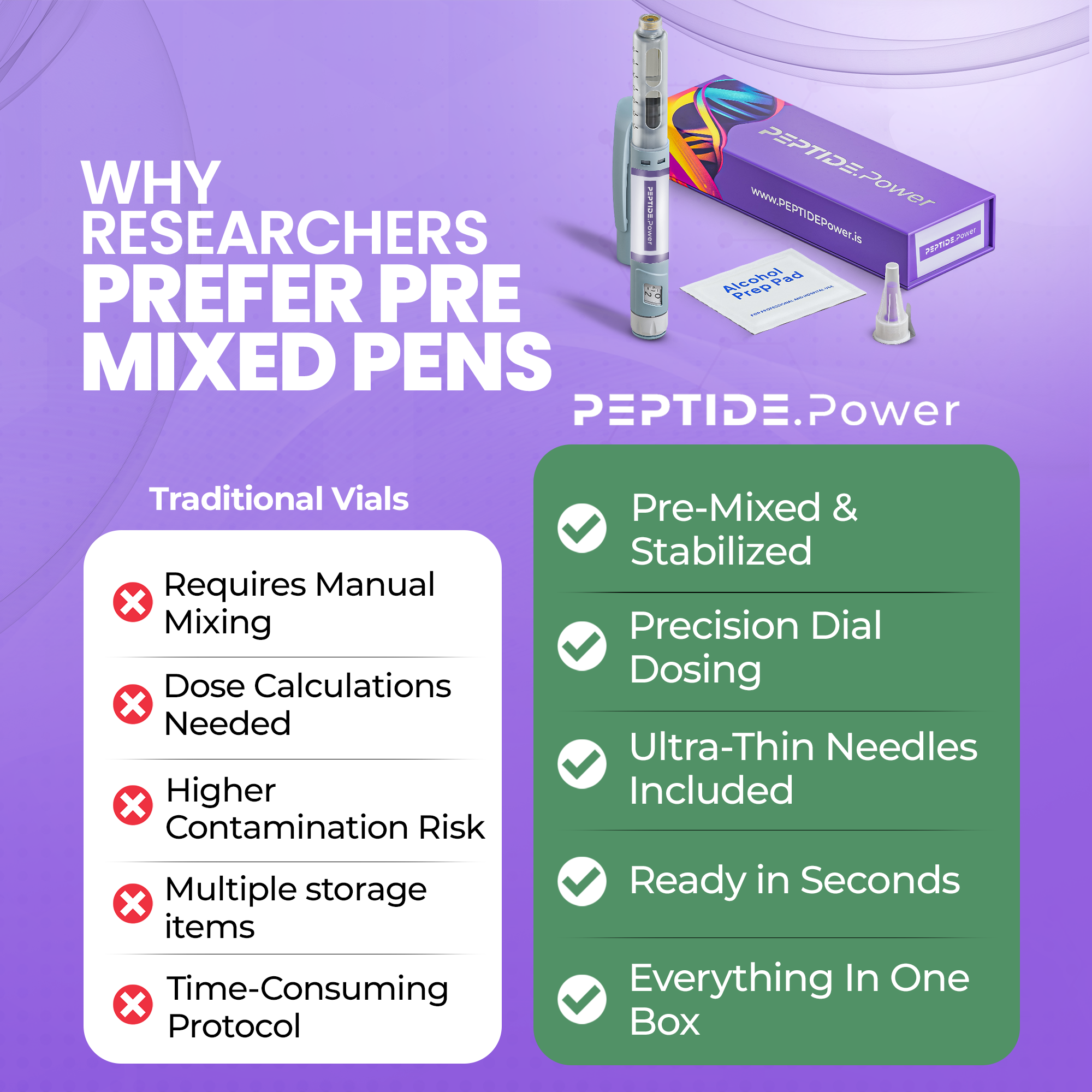
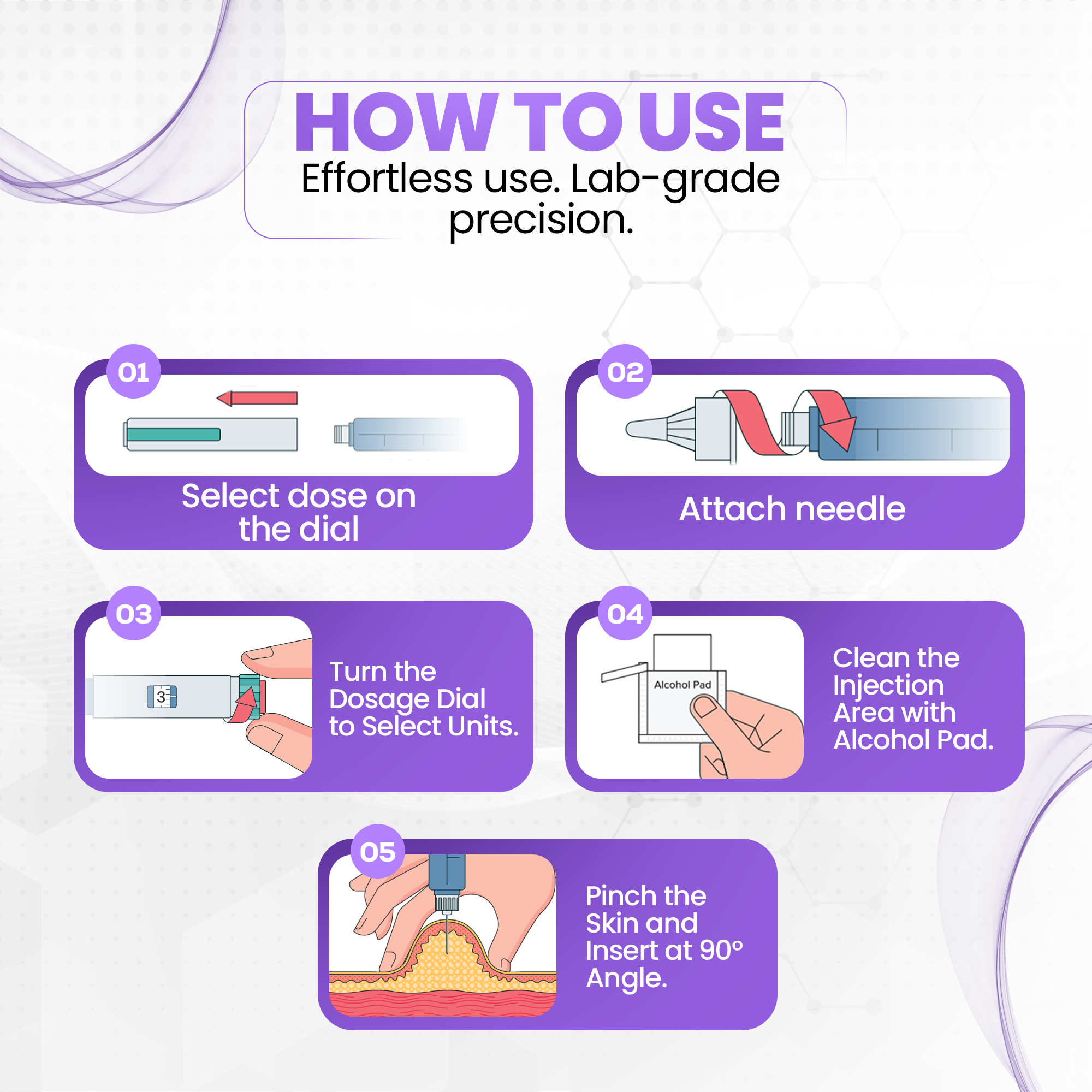
- 1 pluma de inyección desechable premezclada
- Desarrollado con nuestra tecnología patentada PSM™ : sistema de estabilización y mezcla de precisión para una potencia constante
- 10 agujas ultrafinas (33 G, 4 mm)
- 10 toallitas con alcohol para preparación estéril
- Inserto de espuma estabilizadora interna para evitar vibraciones durante el transporte
- Panel de instrucciones impreso en el interior de la caja para una referencia rápida.
- Adhesivo de sello de seguridad que garantiza que el paquete no ha sido abierto ni manipulado.
Almacenamiento
Conserve el producto en el refrigerador a una temperatura entre 1 y 7 °C inmediatamente después de la entrega. Para mantener una estabilidad óptima, mantenga la pluma alejada de la luz y evite cambios bruscos de temperatura.
Una vez reconstituidos (todas nuestras plumas vienen premezcladas), los compuestos de investigación permanecen estables durante 6 a 8 semanas bajo refrigeración adecuada.
No congelar después de la reconstitución. Mantenga siempre la caja cerrada para que la pluma, las agujas y las toallitas con alcohol se mantengan limpias y protegidas.
Para obtener mejores resultados, utilice el producto de manera constante dentro del tiempo recomendado y siga siempre su protocolo de investigación.
Entrega
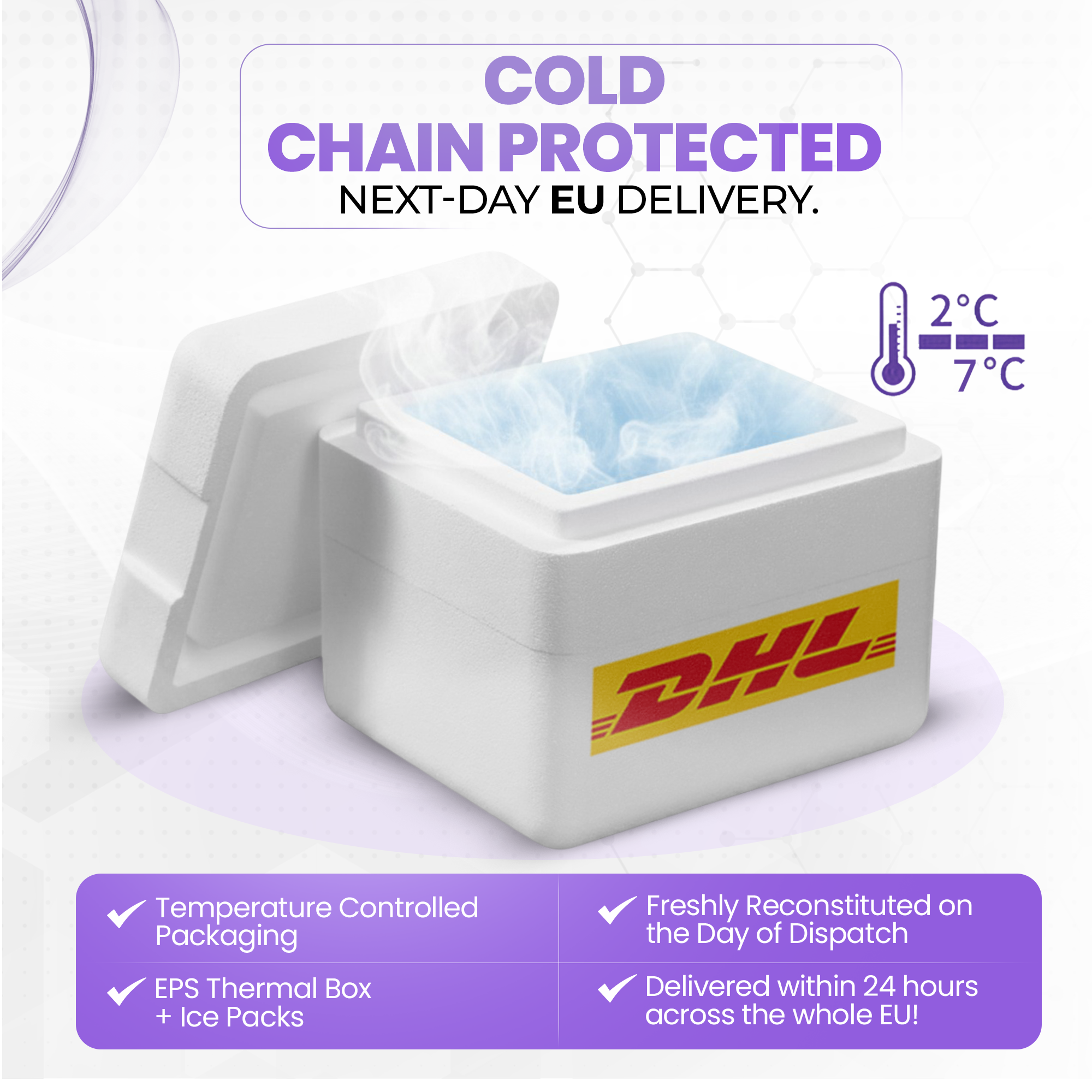
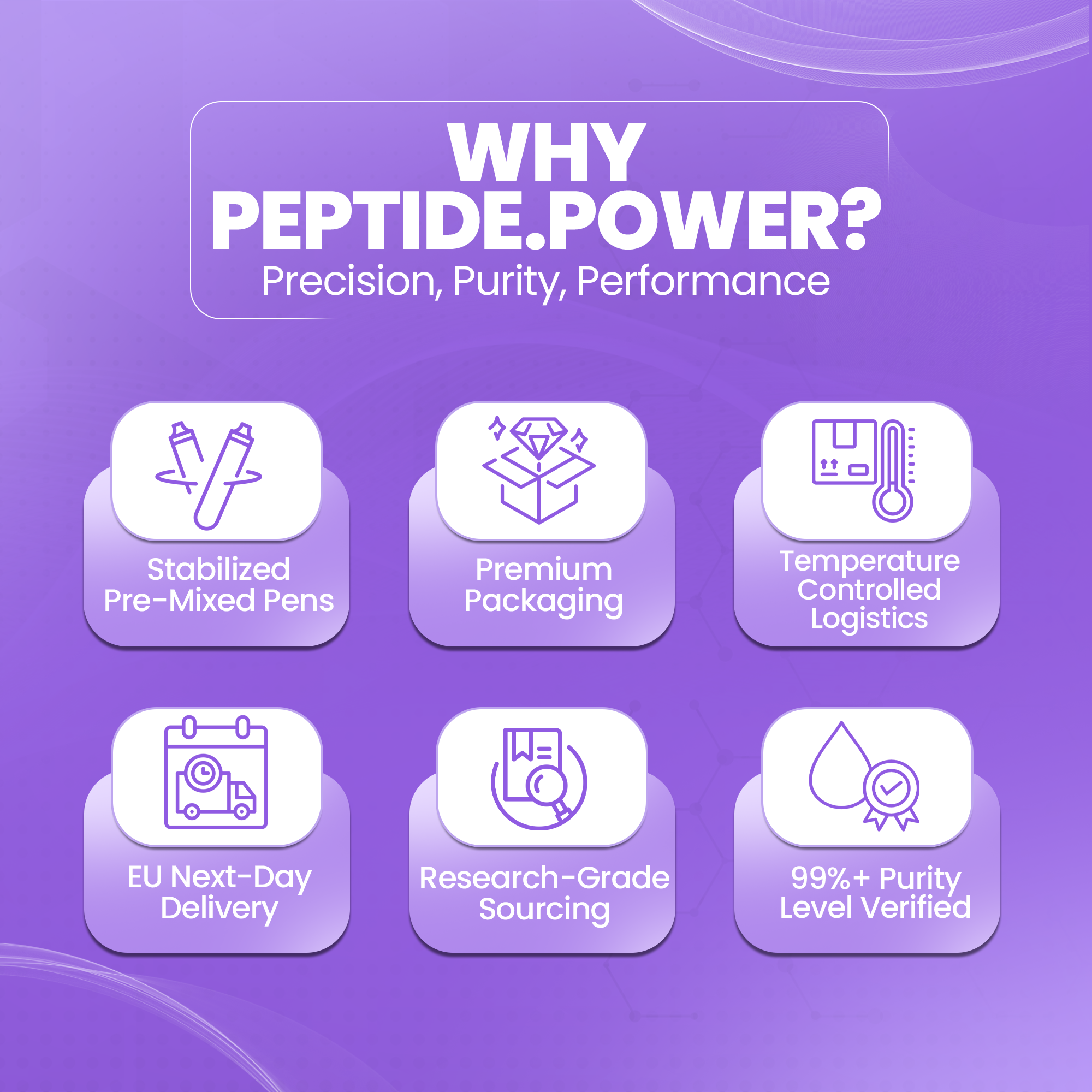
Realizamos envíos con entrega al día siguiente en la UE a través de DHL Express o UPS Express .
Todos los pedidos se preparan frescos el día del envío, se colocan en cajas de transporte de cadena de frío de EPS y se envían con elementos de enfriamiento para mantener una temperatura estable durante todo el viaje.
Nuestro proceso logístico está diseñado para que el paquete llegue al día siguiente , evitando retrasos en las aduanas dentro de la Unión Europea.
Los productos se envían desde nuestras instalaciones de la UE, lo que garantiza que no hay derechos de importación , ni despacho de aduanas , y siempre una entrega rápida y segura .
Pago
Debido a la naturaleza de los péptidos de investigación y la categoría de alto riesgo asignada por los procesadores de pagos, las compañías de tarjetas de crédito no apoyan a los comerciantes en este campo .
Por este motivo, sólo aceptamos transferencias bancarias .
Dentro de la Unión Europea, las transferencias SEPA son rápidas, de bajo coste y suelen llegar en cuestión de minutos o unas horas , lo que hace que el proceso de pago sea sencillo y fluido.
Una vez recibida la transferencia, tu pedido se prepara inmediatamente y se envía el mismo día (dependiendo del horario de corte).
Este método garantiza el cumplimiento, la seguridad y la continuidad del servicio para todos los clientes en la UE.
¿No encontró respuesta a su pregunta?
Ver todas las preguntas frecuentesRELATED PRODUCTS


Blend Tesamorelin + Ipamorelin
Tesamorelin + Ipamorelin is a research blend combining a GHRH analog with a selective GHRP, investigated for its synergistic stimulation of endogenous growth hormone release. It is studied in experimental models for effects on body composition, lipolysis, and IGF-1 modulation without significant cortisol or prolactin elevation.


GHK-Cu


IGF-1LR3


MOTS-c

