









Energy – Start
The Energy Start stack assembles three peptides central to mitochondrial and metabolic research, MOTS-c, NAD+ and AICAR, in one curated kit for work on cellular energy production and AMPK-linked pathways.
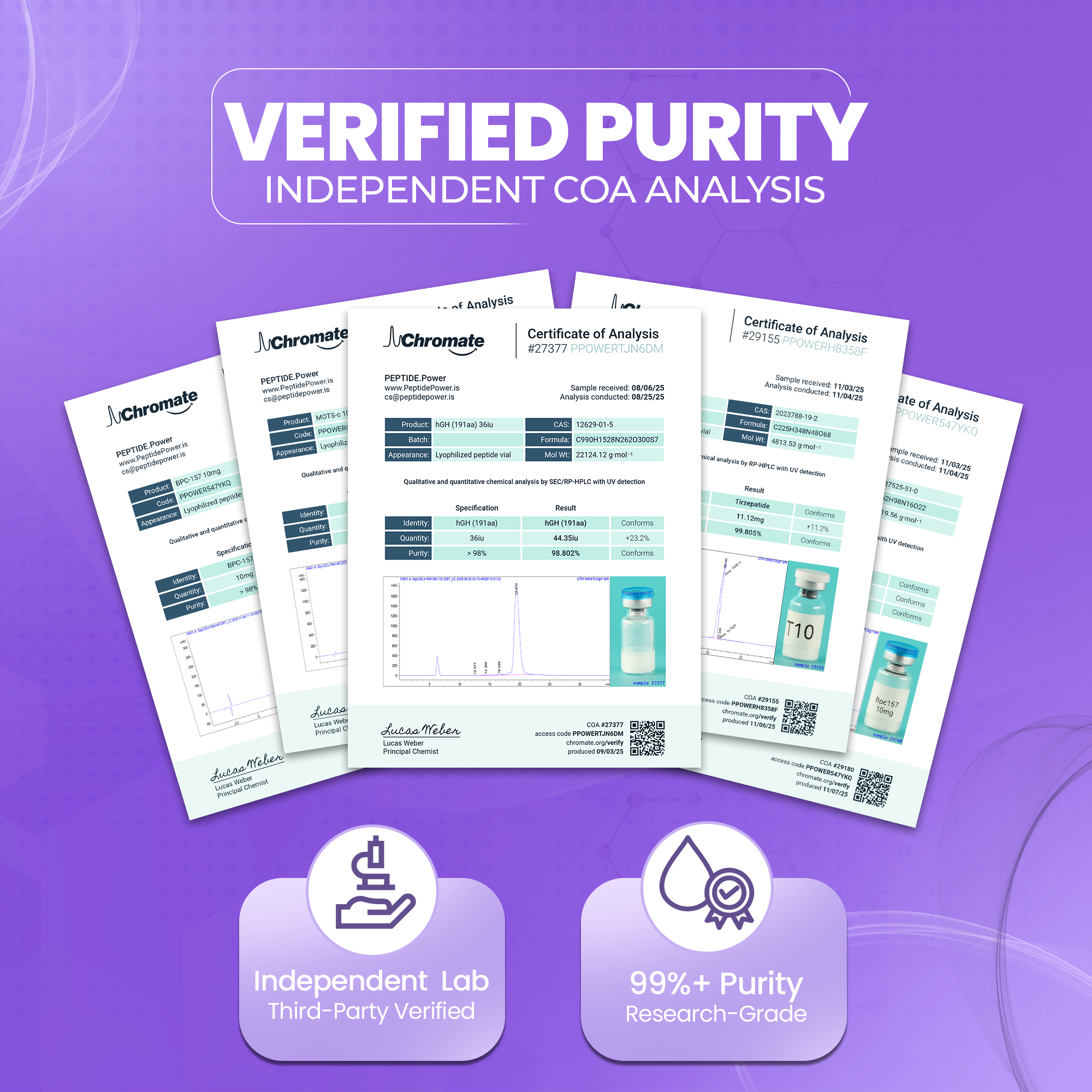
Each component is supplied at research-grade purity for laboratory use. For research purposes only; not for human consumption.
420,00 € Le prix initial était : 420,00 €.357,00 €Le prix actuel est : 357,00 €.
Un kit de recherche sur l’énergie mitochondriale associant MOTS-c, NAD+ et AICAR pour des études métaboliques.
Ce que contient ce pack


Energy - Start - Foundational Cellular Energy Research
Explored with NAD+
Investigated with MOTS-c
Researched with AICAR
Studied with AICAR
Explored with NAD+
Researched with MOTS-c
Investigated with AICAR
Studied with MOTS-c
Description
Mécanisme d'action
This research stack explores foundational cellular energy pathways. MOTS-c is studied for its role in mitochondrial function and metabolic homeostasis. NAD+ research focuses on its critical involvement in cellular energy production and redox balance. AICAR is investigated for its potential to activate AMPK, mimicking exercise effects and influencing glucose and fatty acid metabolism, collectively targeting core aspects of cellular vitality.
Bénéfices
- Mitochondrial Function – Explored with MOTS-c.
- Cellular Energy – Investigated via NAD+ pathways.
- Metabolic Regulation – Researched through AICAR activation.
- Endurance Pathways – Studied with AICAR.
- Redox Balance – Explored with NAD+.
- Glucose Homeostasis – Researched with MOTS-c.
Données de recherche
MOTS-c
| Study/model | Reported effect |
| Human observational studies (older adults) | ↓ endogenous MOTS-c levels correlate with insulin resistance and aging |
| Animal models (diet-induced obesity) | ↓ fat accumulation, ↑ insulin sensitivity, and restored glucose tolerance |
| Exercise physiology studies | ↑ endurance performance and mitochondrial gene expression in muscle |
| Cellular stress models | ↑ AMPK activation and mitochondrial ROS reduction under oxidative stress |
| High-fat diet mice | ↓ hepatic lipid accumulation and improved metabolic parameters |
| In vitro myocyte cultures | ↑ GLUT4 expression and glucose uptake after peptide exposure |
| Human pilot trial (2022) | Safe SubQ administration; improved fasting glucose and perceived energy |
| Longevity studies (aged mice) | ↑ median lifespan and improved skeletal muscle mitochondrial function |
NAD+
| Study/model | Reported effect |
| Human clinical trials (IV NAD+ administration) | ↑ plasma NAD+ by 4-6×; improved fatigue and alertness scores |
| Animal models (aged mice) | Restored mitochondrial function and ↑ lifespan by 15-20% |
| Cellular aging models | Activation of SIRT1 and PARP1 → enhanced DNA repair and mitochondrial biogenesis |
| Human observational studies | Correlation between low NAD+ and metabolic dysfunction, insulin resistance |
| In vitro neuronal cultures | Protection from oxidative and excitotoxic stress; improved neurite outgrowth |
| Metabolic disorder models | ↓ triglycerides and hepatic steatosis via AMPK activation |
| Exercise recovery studies | ↑ muscle NAD+/NADH ratio and improved endurance performance |
| Brain ischemia models | ↓ infarct size and enhanced neuronal survival post-injury |
AICAR
| Study / Model | Reported effect |
|---|---|
| Sedentary mice (4-week oral administration) | ↑ endurance capacity by ~44% without exercise training |
| Skeletal muscle (rodent models) | ↑ AMPK phosphorylation, ↑ PGC-1α expression, enhanced mitochondrial biogenesis |
| Diet-induced obese mice | ↓ adiposity, improved glucose tolerance, ↑ fatty acid oxidation |
| Insulin-resistant rat models | ↑ GLUT4 translocation, improved insulin sensitivity in skeletal muscle |
| Ischemia-reperfusion cardiac models | Reduced infarct size and improved post-ischemic recovery |
| In vitro myocyte culture | ↑ glucose uptake and mitochondrial oxidative capacity |
| Aged rodent models | Partial restoration of mitochondrial function and metabolic flexibility |
Suggestions de combinaison
This research bundle suits investigators exploring foundational cellular energy, metabolic health, and mitochondrial function. It offers a strategic starting point for understanding key pathways influencing vitality and metabolic resilience.
Tableau de dosage du stylo
MOTS-c
| MOTS-c Pen 10 mg | |
| Volume | 2.0 mL |
| mg/mL | 5 mg/mL |
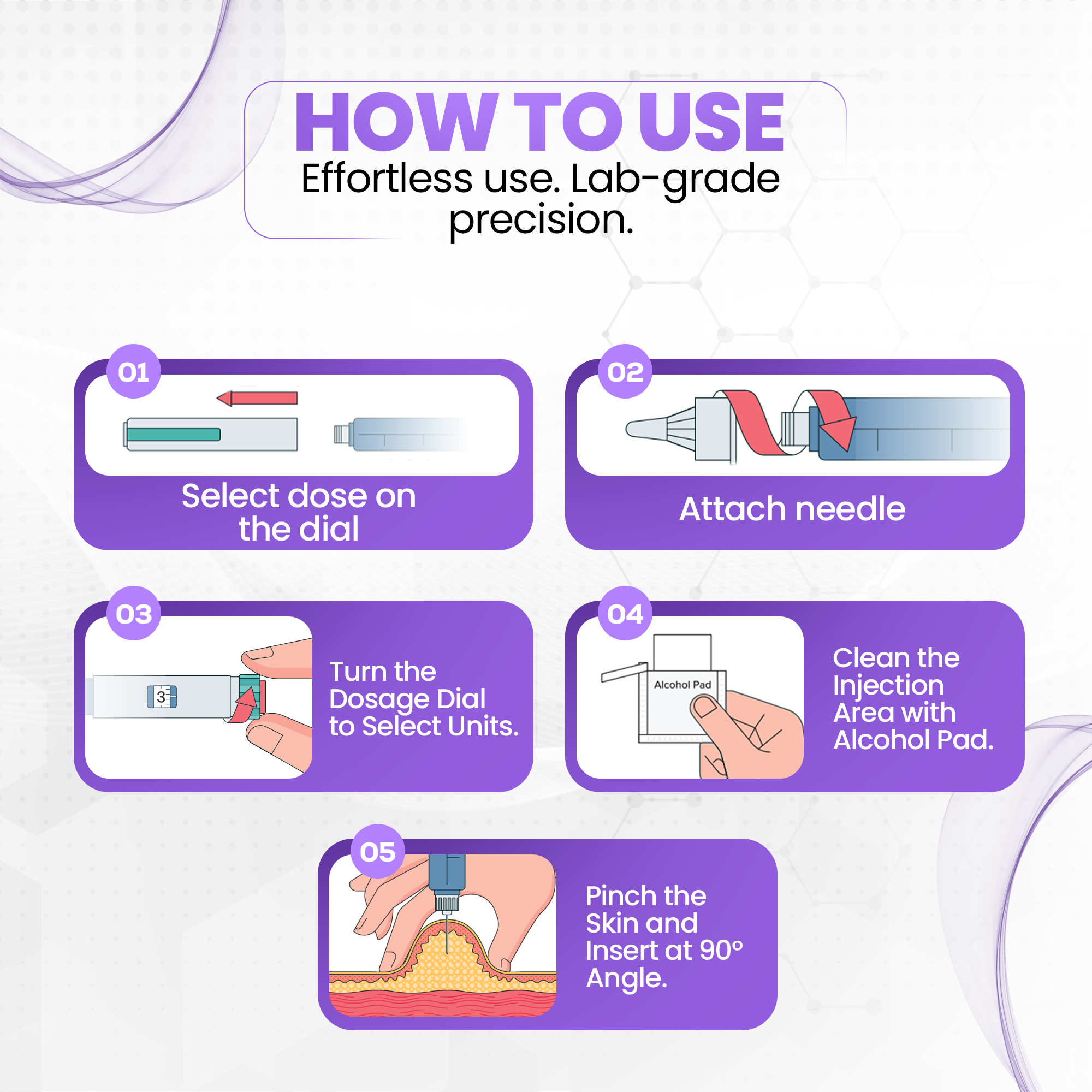
| Click-to-Dose | 1 click = 0.05 mg |
| Example(s) | 20 clicks = 1 mg |
NAD+
| NAD+ Pen 500 mg | |
| Volume | 3.0 mL |
| mg/mL | 166.67 mg/mL |
| Click-to-Dose | 1 click = 1.67 mg |
| Example(s) | 30 clicks = 50 mg |
| NAD+ Pen 1000 mg | |
| Volume | 3.0 mL |
| mg/mL | 333.33 mg/mL |
| Click-to-Dose | 1 click = 3.33 mg |
| Example(s) | 15 clicks = 50 mg |
AICAR
| AICAR Pen 100 mg | |
| Volume | 3 mL |
| mg/mL | 33.333 mg/mL |
| Click-to-Dose | 1 click = 0.333 mg |
| Example(s) | 10 clicks = 3.333 mg |
Dosage et variations de protocole
MOTS-c
Standard Metabolic Protocol
- Dose: 0.5 – 1 mg (= 10-20 clicks)
- Duration: 8 – 12 weeks
- Frequency: 1× daily
- Cycle Interval: 4-week rest
- Goal / Description: Commonly used for metabolic regulation and insulin sensitivity studies
Performance & Endurance Protocol
- Dose: 1 mg (= 20 clicks)
- Duration: 8 – 12 weeks
- Frequency: Every Other Day
- Cycle Interval: 4-week rest
- Goal / Description: Applied in models focused on energy optimization and fatigue resistance
Mitochondrial Recovery Protocol
- Dose: 5 mg (= 100 clicks)
- Duration: 8 – 12 weeks
- Frequency: 1× daily
- Cycle Interval: 8-week rest
- Goal / Description: Studied for mitochondrial repair and oxidative stress response
NAD+
Standard Cellular Support
- Dose: 50 – 100 mg (variant 500 mg pen = 30-60 clicks / variant 1000 mg pen = 15-30 clicks)
- Duration: 8 – 12 weeks
- Frequency: Every Other Day
- Cycle Interval: 4-week rest
- Goal / Description: Common research design for mitochondrial and energy studies
Intensive Regeneration Protocol
- Dose: 100 – 250 mg (variant 500 mg pen = 60-150 clicks / variant 1000 mg pen = 30-75 clicks)
- Duration: 8 – 12 weeks
- Frequency: 1× daily
- Cycle Interval: 8-week rest
- Goal / Description: Applied in models focusing on recovery and DNA repair
Neurocognitive Focus Protocol
- Dose: 50 mg (variant 500 mg pen = 30 clicks / variant 1000 mg pen = 15 clicks)
- Duration: 8 – 12 weeks
- Frequency: 1× daily (morning)
- Cycle Interval: 4-week rest
- Goal / Description: Studied for neuronal resilience and alertness optimization
Longevity & Metabolic Protocol
- Dose: 50 – 150 mg (variant 500 mg pen = 30-90 clicks / variant 1000 mg pen = 15-45 clicks)
- Duration: 8 – 12 weeks
- Frequency: Every Other Day
- Cycle Interval: 8-week rest
- Goal / Description: Designed for long-term metabolic and aging research
AICAR
Standard Research Protocol
- Dose: 0.5 – 1.0 mg/kg
- Duration: 4 – 6 weeks
- Frequency: Daily
- Cycle Interval: 2 – 4 weeks off before repeating
- Goal / Description: Baseline AMPK activation models for metabolic and endurance research.
Therapeutic Research Protocol
- Dose: 1.0 – 2.0 mg/kg
- Duration: 4 – 8 weeks
- Frequency: Daily
- Cycle Interval: 4 weeks off before repeating
- Goal / Description: Higher-dose studies targeting glucose uptake and lipid oxidation.
Biohacker Protocol (experimental)
- Dose: 0.25 – 0.5 mg/kg
- Duration: 6 – 8 weeks
- Frequency: 3 – 5× per week
- Cycle Interval: 2 weeks off
- Goal / Description: Microdose continuous mitochondrial and endurance research.
Effets secondaires possibles
MOTS-c
MOTS-c, as a research peptide regulating metabolism, may induce various side effects in experimental models, primarily related to its influence on energy systems. These effects are often dose-dependent and more prominent during initial administration. It’s crucial to monitor subjects closely, as subcutaneous delivery can sometimes cause localized reactions.
Injection Site Reactions: Commonly observed, manifesting as redness or swelling that resolves within hours. Rotating sites minimizes this.
Fatigue: A sense of lethargy reported early on, possibly due to metabolic shifts. It often resolves as homeostasis stabilizes.
Nausea: Mild gastrointestinal upset, linked to AMPK activation. Typically transient.
Headache: Occasional, attributed to vascular adjustments.
Most side effects are transient and manageable through dose adjustments in research settings. However, prolonged exposure warrants vigilance for potential hypersensitivity, though rare in controlled protocols.
NAD+
NAD+, as a research coenzyme boosting metabolism, may induce mild side effects in experimental models, primarily during initial administration. These are dose-dependent and often transient. It’s crucial to monitor for subcutaneous reactions.
Headache: Commonly observed at higher doses, manifesting as mild pressure, linked to vascular changes. It typically resolves within days.
Nausea: Occasional gastrointestinal upset, especially with rapid escalation. Frequency decreases with slower protocols.
Dizziness: Lightheadedness reported early on, possibly from energy shifts. Resolves as models adapt.
Flushing: Warm sensation or skin redness, attributed to niacin-like effects.
Fatigue: Paradoxical tiredness initially, due to metabolic adjustments.
Most side effects are minor and manageable through dose titration. Prolonged exposure warrants vigilance for rare issues like hypersensitivity, though uncommon in controlled settings.
AICAR
AICAR is generally well-tolerated in animal studies and limited human research settings.
Reported side effects are infrequent and typically mild:
- Transient elevation in plasma lactate and uric acid levels.
- Mild hypoglycemia or fluctuations in blood glucose during administration.
- Headache or dizziness observed in early infusion studies.
- Localized irritation at injection site in subcutaneous research models.
- Reduced heart rate and mild hemodynamic changes in cardiovascular research protocols.
No evidence of hepatotoxic, nephrotoxic, or hormonal adverse effects has been observed in available preclinical data.
Attributs du produit
Références scientifiques
MOTS-c
- Mitochondria-derived peptide MOTS-c restores mitochondrial … Animal
- MOTS-c Peptide | Benefits, Safety, & Buying Advice Animal
- Mitochondrial-encoded peptide MOTS-c prevents pancreatic islet … Animal
- Mitochondrial-Encoded Peptide MOTS-c, Diabetes, and Aging … Animal
- MOTS-c Peptide Therapy: The Definitive 2025+ Blueprint for … Review
- MOTS-c: A promising mitochondrial-derived peptide for therapeutic … Animal
- Mitochondria-derived peptide MOTS-c: effects and mechanisms … Animal
- MOTS-c Peptide: Benefits, Mechanism, and Side Effects Explained Review
- What Is MOTS-C? Mitochondrial Peptide for Anti-Aging Explained Review
- MOTS-c Peptide: Mechanism, Benefits, and Research Applications Review
NAD+
- NAD+ therapy in age-related degenerative disorders: A benefit/risk … Review
- The efficacy and safety of β-nicotinamide mononucleotide (NMN … Human RCT
- NAD + Supplementation Normalizes Key Alzheimer’s Features and … Animal
- Effect of Nicotinamide Adenine Dinucleotide on Heart Failure … Review
- Nicotinamide riboside Induced Energy Stress and Metabolic … Animal
- Oral nicotinamide riboside raises NAD+ and lowers biomarkers of … Human RCT
- Nicotinamide riboside, a trace nutrient in foods, is a vitamin B3 with … Review
- safety, insulin-sensitivity, and lipid-mobilizing effects – PubMedHuman RCT
- NAD+ Metabolism in Cardiac Health, Aging, and Disease – PubMed Review
- NAD + -boosting molecules suppress mast cell degranulation and … Animal
AICAR
- AMP-activated protein kinase: ancient energy gauge provides clues to modern understanding of metabolism Animal | In vitro
- AMPK and PPARdelta agonists are exercise mimetics Animal | In vitro
- AMPK: a contextual oncogene or tumor suppressor? Animal | In vitro
- 5-aminoimidazole-4-carboxamide riboside increases glucose transport and cell-surface GLUT4 content in skeletal muscle Animal | In vitro
- AICAR and metformin, but not exercise, increase muscle glucose transport through AMPK-, ERK-, and PDK1-dependent activation of atypical PKC Animal | In vitro
- AICAR inhibits adipocyte differentiation in 3T3L1 and restores metabolic alterations in diet-induced obesity mice Animal | In vitro
- WADA Prohibited List – Hormone and Metabolic Modulators (S4) Regulatory
- AMPK activation by AICAR reduces ischemic injury and improves mitochondrial function Animal | In vitro
Contenu de la boîte
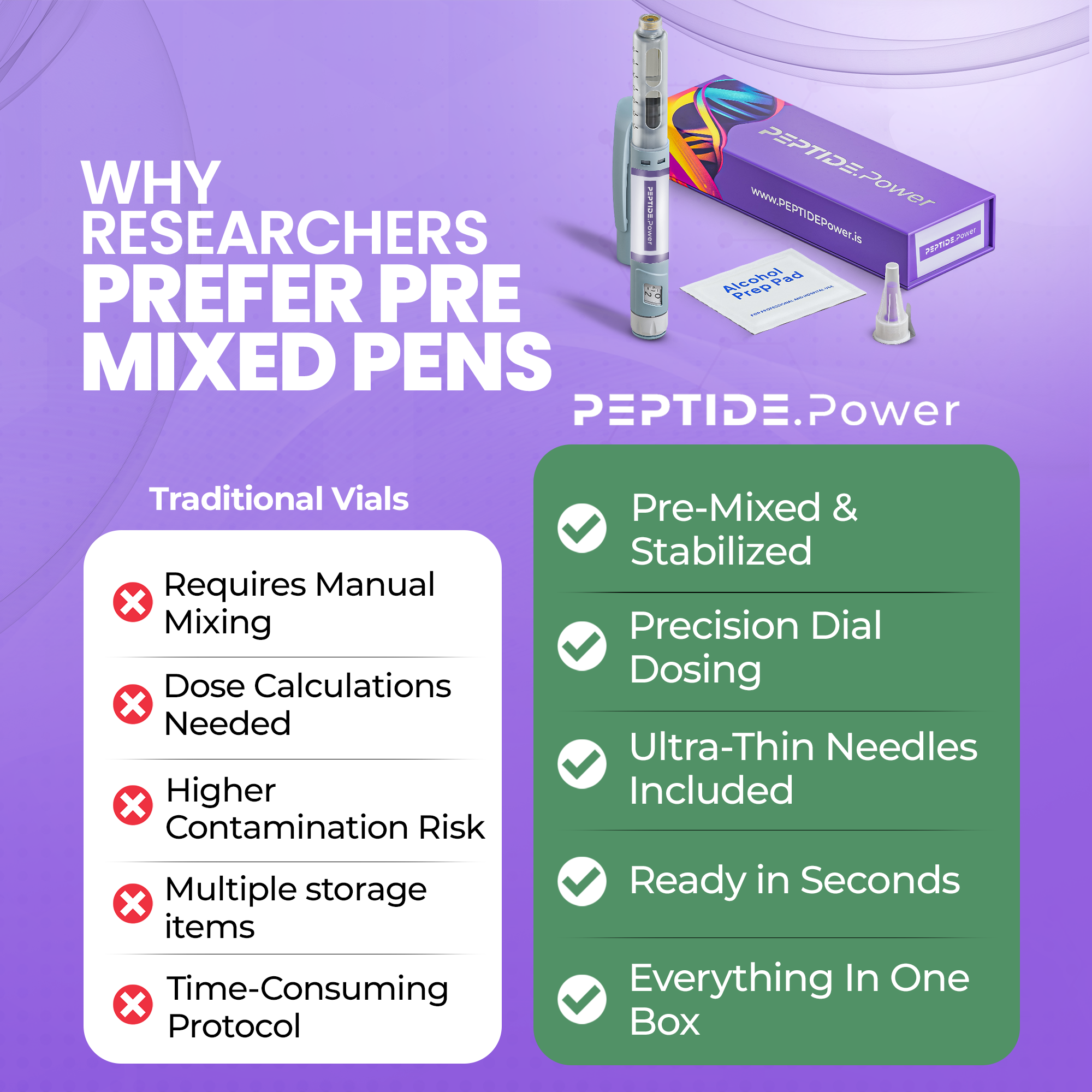
Chaque produit est livré dans une boîte PEPTIDE.Power haut de gamme, au design exclusif, conçue pour la praticité, l’hygiène et une conservation sûre au réfrigérateur. À l’intérieur, vous trouverez tout le nécessaire pour votre protocole de recherche complet :
- 1× stylo injecteur jetable pré-mélangé
- Propulsé par notre PSM Technology™ exclusive – système de stabilisation et de mélange de précision pour une puissance constante
- 10× aiguilles ultra-fines (33G, 4 mm)
- 10× tampons d’alcool pour une préparation stérile
- Insert en mousse stabilisatrice interne pour éviter les secousses pendant le transport
- Panneau d’instructions imprimé à l’intérieur de la boîte pour une référence rapide
- Sceau de sécurité garantissant que l’emballage n’a pas été ouvert ni altéré
Conservation
Conservez le produit au réfrigérateur entre 1 et 8°C dès la livraison. Pour préserver une stabilité optimale, gardez le stylo à l’abri de la lumière et ne l’exposez pas à des variations de température répétées.
Une fois reconstitués (tous nos stylos sont pré-mélangés), les composés de recherche restent stables pendant 6 à 8 semaines sous réfrigération adéquate.
Ne pas congeler après reconstitution. Gardez toujours la boîte fermée afin que le stylo, les aiguilles et les tampons d’alcool restent propres et protégés.
Pour de meilleurs résultats, utilisez le produit de manière régulière dans la période recommandée et suivez toujours votre protocole de recherche.
Livraison
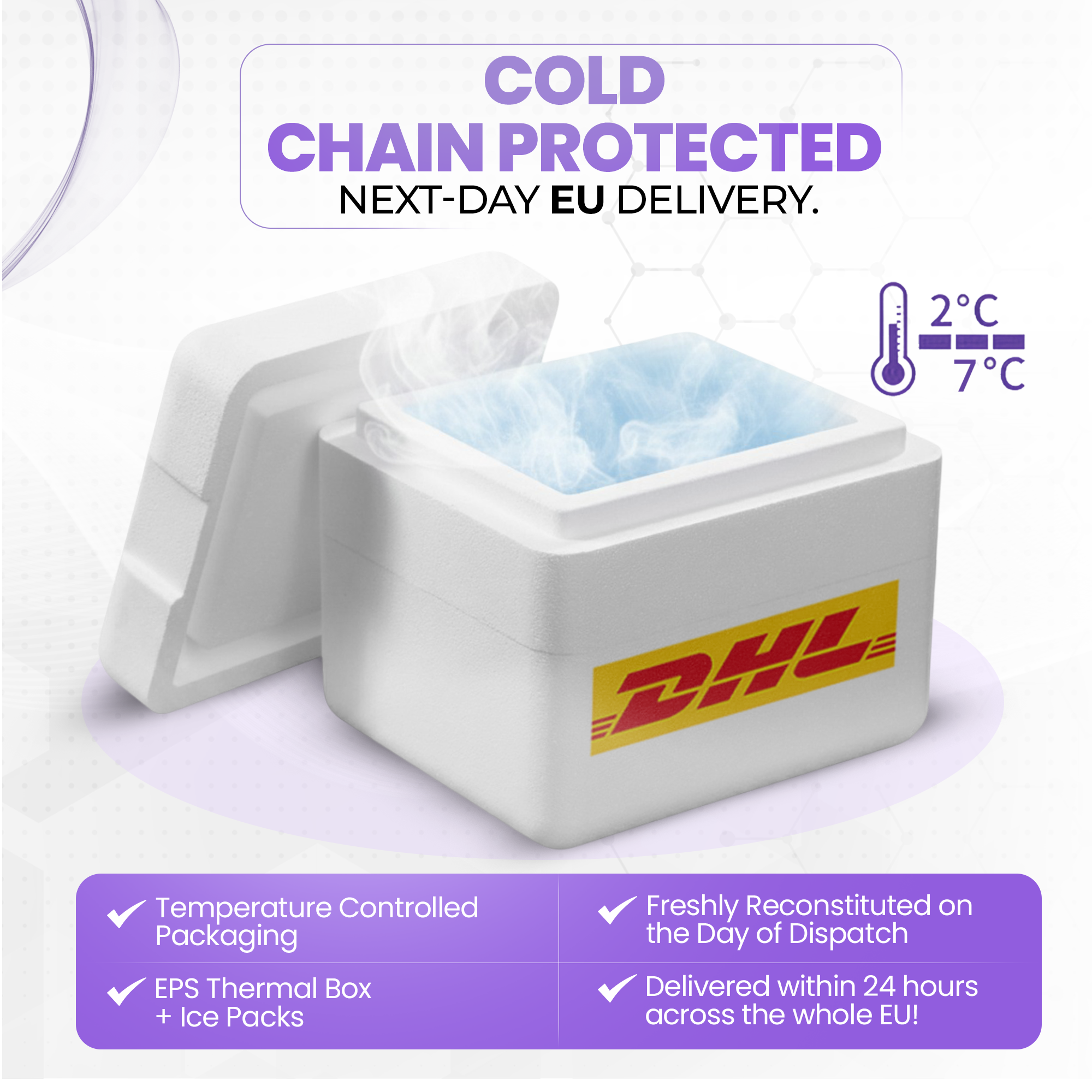
Nous expédions avec une livraison le lendemain dans l’UE via DHL Express ou UPS Express.
Toutes les commandes sont préparées le jour même de l’expédition, placées dans des boîtes de transport EPS à chaîne du froid et expédiées avec des éléments réfrigérants pour maintenir une température stable tout au long du trajet.
Notre processus logistique est conçu pour que le colis arrive du jour au lendemain, en évitant les retards douaniers au sein de l’Union européenne.
Les produits sont expédiés depuis notre site dans l’UE, garantissant aucuns frais d’importation, aucun dédouanement et toujours une livraison rapide et sécurisée.
Paiement
En raison de la nature des peptides de recherche et de la catégorie à haut risque attribuée par les processeurs de paiement, les sociétés de cartes de crédit ne prennent généralement pas en charge les marchands de ce secteur.
Pour cette raison, nous acceptons principalement les virements bancaires.
Nous travaillons également avec un prestataire de paiement en crypto-monnaie, et de temps à autre, le paiement par carte peut être disponible selon la disponibilité du processeur.
Au sein de l’Union européenne, les virements SEPA sont rapides, peu coûteux et arrivent généralement en quelques minutes à quelques heures, ce qui rend le paiement simple et fluide.
Dès réception du virement, votre commande est préparée immédiatement et expédiée le jour même, selon l’heure limite quotidienne.
Veuillez noter que nous n’effectuons pas d’expéditions le vendredi ni les jours précédant un jour férié officiel. Cela permet de garantir que les colis soient livrés le jour ouvrable suivant et ne restent pas en transit pendant le week-end ou les jours fériés.
Cette méthode garantit la conformité, la sécurité et la continuité du service pour tous les clients de l’UE.
Vous n'avez pas trouvé de réponse à votre question ?
Voir toutes les questions fréquentesRELATED PRODUCTS


Bioregulator – Start


Lean Mass – Start


Repair Matrix – Start

