









Energy – Start
The Energy Start stack assembles three peptides central to mitochondrial and metabolic research, MOTS-c, NAD+ and AICAR, in one curated kit for work on cellular energy production and AMPK-linked pathways.
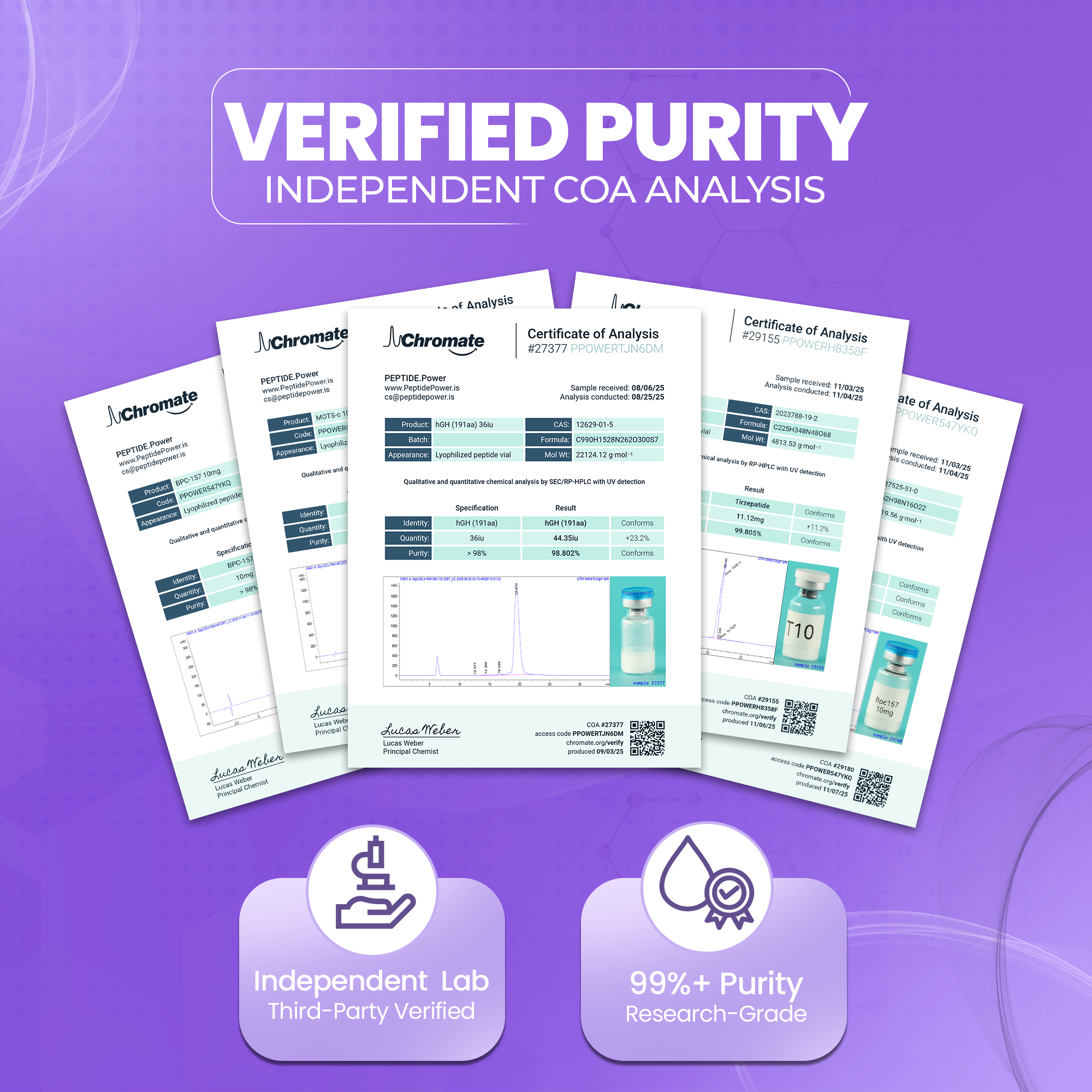
Each component is supplied at research-grade purity for laboratory use. For research purposes only; not for human consumption.
420,00 € Prețul inițial a fost: 420,00 €.357,00 €Prețul curent este: 357,00 €.
Un kit de cercetare a energiei mitocondriale care asociază MOTS-c, NAD+ și AICAR pentru studii metabolice.
Ce include acest pachet


Energy - Start - Foundational Cellular Energy Research
Explored with NAD+
Investigated with MOTS-c
Researched with AICAR
Studied with AICAR
Explored with NAD+
Researched with MOTS-c
Investigated with AICAR
Studied with MOTS-c
Descriere
Mecanism de acțiune
This research stack explores foundational cellular energy pathways. MOTS-c is studied for its role in mitochondrial function and metabolic homeostasis. NAD+ research focuses on its critical involvement in cellular energy production and redox balance. AICAR is investigated for its potential to activate AMPK, mimicking exercise effects and influencing glucose and fatty acid metabolism, collectively targeting core aspects of cellular vitality.
Beneficii
- Mitochondrial Function – Explored with MOTS-c.
- Cellular Energy – Investigated via NAD+ pathways.
- Metabolic Regulation – Researched through AICAR activation.
- Endurance Pathways – Studied with AICAR.
- Redox Balance – Explored with NAD+.
- Glucose Homeostasis – Researched with MOTS-c.
Date de cercetare
MOTS-c
| Study/model | Reported effect |
| Human observational studies (older adults) | ↓ endogenous MOTS-c levels correlate with insulin resistance and aging |
| Animal models (diet-induced obesity) | ↓ fat accumulation, ↑ insulin sensitivity, and restored glucose tolerance |
| Exercise physiology studies | ↑ endurance performance and mitochondrial gene expression in muscle |
| Cellular stress models | ↑ AMPK activation and mitochondrial ROS reduction under oxidative stress |
| High-fat diet mice | ↓ hepatic lipid accumulation and improved metabolic parameters |
| In vitro myocyte cultures | ↑ GLUT4 expression and glucose uptake after peptide exposure |
| Human pilot trial (2022) | Safe SubQ administration; improved fasting glucose and perceived energy |
| Longevity studies (aged mice) | ↑ median lifespan and improved skeletal muscle mitochondrial function |
NAD+
| Study/model | Reported effect |
| Human clinical trials (IV NAD+ administration) | ↑ plasma NAD+ by 4-6×; improved fatigue and alertness scores |
| Animal models (aged mice) | Restored mitochondrial function and ↑ lifespan by 15-20% |
| Cellular aging models | Activation of SIRT1 and PARP1 → enhanced DNA repair and mitochondrial biogenesis |
| Human observational studies | Correlation between low NAD+ and metabolic dysfunction, insulin resistance |
| In vitro neuronal cultures | Protection from oxidative and excitotoxic stress; improved neurite outgrowth |
| Metabolic disorder models | ↓ triglycerides and hepatic steatosis via AMPK activation |
| Exercise recovery studies | ↑ muscle NAD+/NADH ratio and improved endurance performance |
| Brain ischemia models | ↓ infarct size and enhanced neuronal survival post-injury |
AICAR
| Study / Model | Reported effect |
|---|---|
| Sedentary mice (4-week oral administration) | ↑ endurance capacity by ~44% without exercise training |
| Skeletal muscle (rodent models) | ↑ AMPK phosphorylation, ↑ PGC-1α expression, enhanced mitochondrial biogenesis |
| Diet-induced obese mice | ↓ adiposity, improved glucose tolerance, ↑ fatty acid oxidation |
| Insulin-resistant rat models | ↑ GLUT4 translocation, improved insulin sensitivity in skeletal muscle |
| Ischemia-reperfusion cardiac models | Reduced infarct size and improved post-ischemic recovery |
| In vitro myocyte culture | ↑ glucose uptake and mitochondrial oxidative capacity |
| Aged rodent models | Partial restoration of mitochondrial function and metabolic flexibility |
Sugestii de combinare
This research bundle suits investigators exploring foundational cellular energy, metabolic health, and mitochondrial function. It offers a strategic starting point for understanding key pathways influencing vitality and metabolic resilience.
Tabel de dozare pentru stilou
MOTS-c
| MOTS-c Pen 10 mg | |
| Volume | 2.0 mL |
| mg/mL | 5 mg/mL |
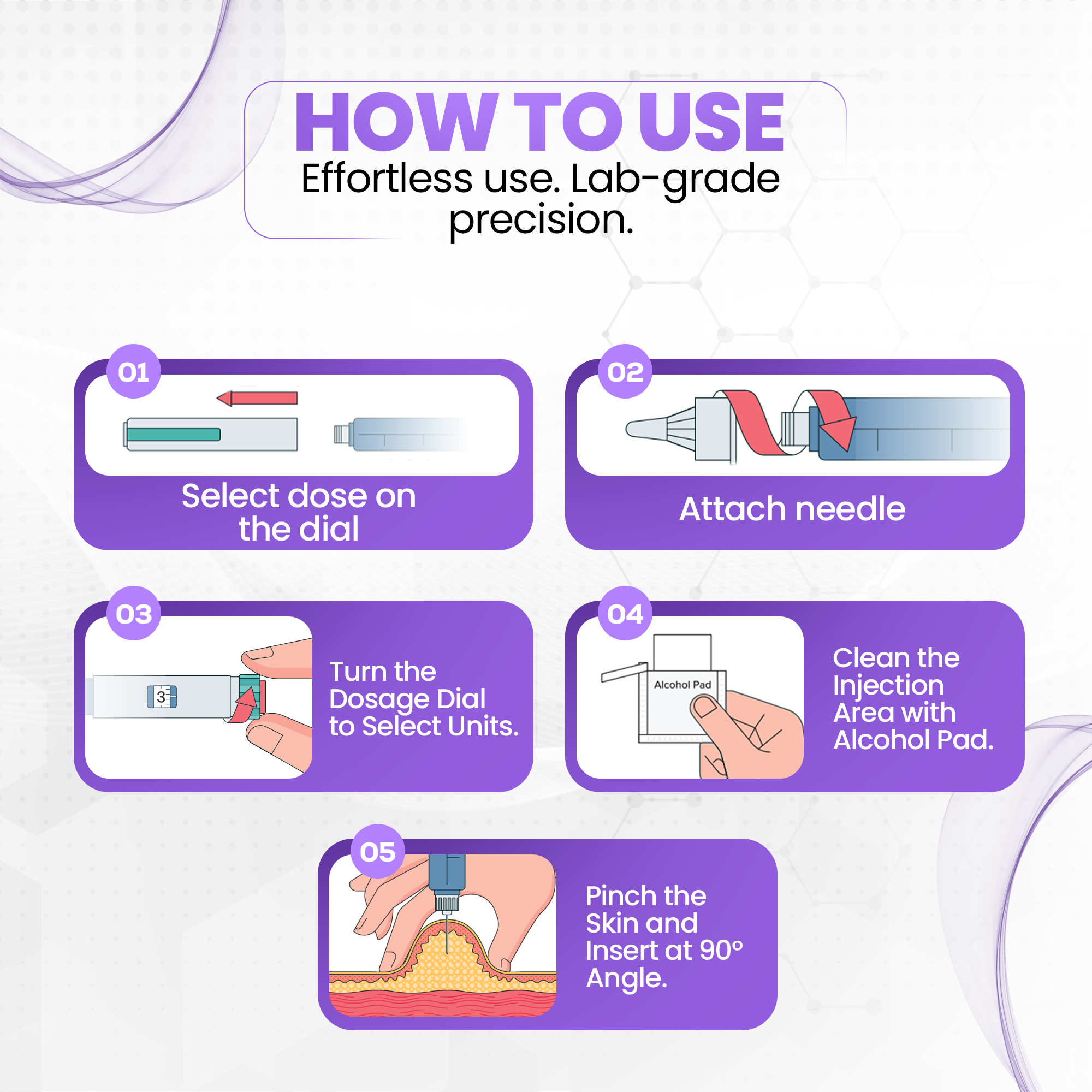
| Click-to-Dose | 1 click = 0.05 mg |
| Example(s) | 20 clicks = 1 mg |
NAD+
| NAD+ Pen 500 mg | |
| Volume | 3.0 mL |
| mg/mL | 166.67 mg/mL |
| Click-to-Dose | 1 click = 1.67 mg |
| Example(s) | 30 clicks = 50 mg |
| NAD+ Pen 1000 mg | |
| Volume | 3.0 mL |
| mg/mL | 333.33 mg/mL |
| Click-to-Dose | 1 click = 3.33 mg |
| Example(s) | 15 clicks = 50 mg |
AICAR
| AICAR Pen 100 mg | |
| Volume | 3 mL |
| mg/mL | 33.333 mg/mL |
| Click-to-Dose | 1 click = 0.333 mg |
| Example(s) | 10 clicks = 3.333 mg |
Dozare și variații de protocol
MOTS-c
Standard Metabolic Protocol
- Dose: 0.5 – 1 mg (= 10-20 clicks)
- Duration: 8 – 12 weeks
- Frequency: 1× daily
- Cycle Interval: 4-week rest
- Goal / Description: Commonly used for metabolic regulation and insulin sensitivity studies
Performance & Endurance Protocol
- Dose: 1 mg (= 20 clicks)
- Duration: 8 – 12 weeks
- Frequency: Every Other Day
- Cycle Interval: 4-week rest
- Goal / Description: Applied in models focused on energy optimization and fatigue resistance
Mitochondrial Recovery Protocol
- Dose: 5 mg (= 100 clicks)
- Duration: 8 – 12 weeks
- Frequency: 1× daily
- Cycle Interval: 8-week rest
- Goal / Description: Studied for mitochondrial repair and oxidative stress response
NAD+
Standard Cellular Support
- Dose: 50 – 100 mg (variant 500 mg pen = 30-60 clicks / variant 1000 mg pen = 15-30 clicks)
- Duration: 8 – 12 weeks
- Frequency: Every Other Day
- Cycle Interval: 4-week rest
- Goal / Description: Common research design for mitochondrial and energy studies
Intensive Regeneration Protocol
- Dose: 100 – 250 mg (variant 500 mg pen = 60-150 clicks / variant 1000 mg pen = 30-75 clicks)
- Duration: 8 – 12 weeks
- Frequency: 1× daily
- Cycle Interval: 8-week rest
- Goal / Description: Applied in models focusing on recovery and DNA repair
Neurocognitive Focus Protocol
- Dose: 50 mg (variant 500 mg pen = 30 clicks / variant 1000 mg pen = 15 clicks)
- Duration: 8 – 12 weeks
- Frequency: 1× daily (morning)
- Cycle Interval: 4-week rest
- Goal / Description: Studied for neuronal resilience and alertness optimization
Longevity & Metabolic Protocol
- Dose: 50 – 150 mg (variant 500 mg pen = 30-90 clicks / variant 1000 mg pen = 15-45 clicks)
- Duration: 8 – 12 weeks
- Frequency: Every Other Day
- Cycle Interval: 8-week rest
- Goal / Description: Designed for long-term metabolic and aging research
AICAR
Standard Research Protocol
- Dose: 0.5 – 1.0 mg/kg
- Duration: 4 – 6 weeks
- Frequency: Daily
- Cycle Interval: 2 – 4 weeks off before repeating
- Goal / Description: Baseline AMPK activation models for metabolic and endurance research.
Therapeutic Research Protocol
- Dose: 1.0 – 2.0 mg/kg
- Duration: 4 – 8 weeks
- Frequency: Daily
- Cycle Interval: 4 weeks off before repeating
- Goal / Description: Higher-dose studies targeting glucose uptake and lipid oxidation.
Biohacker Protocol (experimental)
- Dose: 0.25 – 0.5 mg/kg
- Duration: 6 – 8 weeks
- Frequency: 3 – 5× per week
- Cycle Interval: 2 weeks off
- Goal / Description: Microdose continuous mitochondrial and endurance research.
Posibile efecte secundare
MOTS-c
MOTS-c, as a research peptide regulating metabolism, may induce various side effects in experimental models, primarily related to its influence on energy systems. These effects are often dose-dependent and more prominent during initial administration. It’s crucial to monitor subjects closely, as subcutaneous delivery can sometimes cause localized reactions.
Injection Site Reactions: Commonly observed, manifesting as redness or swelling that resolves within hours. Rotating sites minimizes this.
Fatigue: A sense of lethargy reported early on, possibly due to metabolic shifts. It often resolves as homeostasis stabilizes.
Nausea: Mild gastrointestinal upset, linked to AMPK activation. Typically transient.
Headache: Occasional, attributed to vascular adjustments.
Most side effects are transient and manageable through dose adjustments in research settings. However, prolonged exposure warrants vigilance for potential hypersensitivity, though rare in controlled protocols.
NAD+
NAD+, as a research coenzyme boosting metabolism, may induce mild side effects in experimental models, primarily during initial administration. These are dose-dependent and often transient. It’s crucial to monitor for subcutaneous reactions.
Headache: Commonly observed at higher doses, manifesting as mild pressure, linked to vascular changes. It typically resolves within days.
Nausea: Occasional gastrointestinal upset, especially with rapid escalation. Frequency decreases with slower protocols.
Dizziness: Lightheadedness reported early on, possibly from energy shifts. Resolves as models adapt.
Flushing: Warm sensation or skin redness, attributed to niacin-like effects.
Fatigue: Paradoxical tiredness initially, due to metabolic adjustments.
Most side effects are minor and manageable through dose titration. Prolonged exposure warrants vigilance for rare issues like hypersensitivity, though uncommon in controlled settings.
AICAR
AICAR is generally well-tolerated in animal studies and limited human research settings.
Reported side effects are infrequent and typically mild:
- Transient elevation in plasma lactate and uric acid levels.
- Mild hypoglycemia or fluctuations in blood glucose during administration.
- Headache or dizziness observed in early infusion studies.
- Localized irritation at injection site in subcutaneous research models.
- Reduced heart rate and mild hemodynamic changes in cardiovascular research protocols.
No evidence of hepatotoxic, nephrotoxic, or hormonal adverse effects has been observed in available preclinical data.
Atribute produs
Referințe științifice
MOTS-c
- Mitochondria-derived peptide MOTS-c restores mitochondrial … Animal
- MOTS-c Peptide | Benefits, Safety, & Buying Advice Animal
- Mitochondrial-encoded peptide MOTS-c prevents pancreatic islet … Animal
- Mitochondrial-Encoded Peptide MOTS-c, Diabetes, and Aging … Animal
- MOTS-c Peptide Therapy: The Definitive 2025+ Blueprint for … Review
- MOTS-c: A promising mitochondrial-derived peptide for therapeutic … Animal
- Mitochondria-derived peptide MOTS-c: effects and mechanisms … Animal
- MOTS-c Peptide: Benefits, Mechanism, and Side Effects Explained Review
- What Is MOTS-C? Mitochondrial Peptide for Anti-Aging Explained Review
- MOTS-c Peptide: Mechanism, Benefits, and Research Applications Review
NAD+
- NAD+ therapy in age-related degenerative disorders: A benefit/risk … Review
- The efficacy and safety of β-nicotinamide mononucleotide (NMN … Human RCT
- NAD + Supplementation Normalizes Key Alzheimer’s Features and … Animal
- Effect of Nicotinamide Adenine Dinucleotide on Heart Failure … Review
- Nicotinamide riboside Induced Energy Stress and Metabolic … Animal
- Oral nicotinamide riboside raises NAD+ and lowers biomarkers of … Human RCT
- Nicotinamide riboside, a trace nutrient in foods, is a vitamin B3 with … Review
- safety, insulin-sensitivity, and lipid-mobilizing effects – PubMedHuman RCT
- NAD+ Metabolism in Cardiac Health, Aging, and Disease – PubMed Review
- NAD + -boosting molecules suppress mast cell degranulation and … Animal
AICAR
- AMP-activated protein kinase: ancient energy gauge provides clues to modern understanding of metabolism Animal | In vitro
- AMPK and PPARdelta agonists are exercise mimetics Animal | In vitro
- AMPK: a contextual oncogene or tumor suppressor? Animal | In vitro
- 5-aminoimidazole-4-carboxamide riboside increases glucose transport and cell-surface GLUT4 content in skeletal muscle Animal | In vitro
- AICAR and metformin, but not exercise, increase muscle glucose transport through AMPK-, ERK-, and PDK1-dependent activation of atypical PKC Animal | In vitro
- AICAR inhibits adipocyte differentiation in 3T3L1 and restores metabolic alterations in diet-induced obesity mice Animal | In vitro
- WADA Prohibited List – Hormone and Metabolic Modulators (S4) Regulatory
- AMPK activation by AICAR reduces ischemic injury and improves mitochondrial function Animal | In vitro
Inclus în cutie
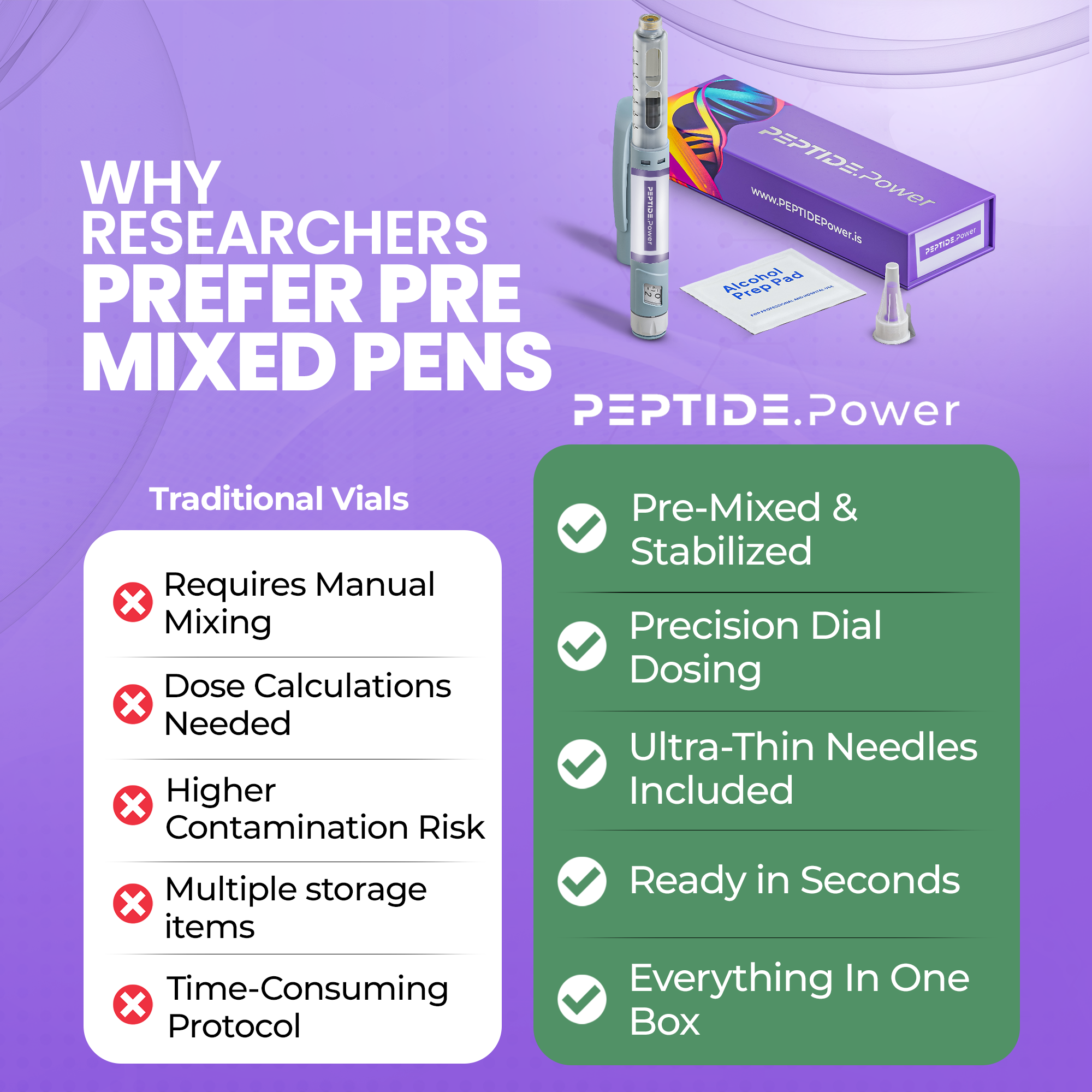
Fiecare produs sosește într-o cutie premium PEPTIDE.Power personalizată, proiectată pentru comoditate, igienă și depozitare sigură în frigider. În interior, veți găsi tot ce este necesar pentru protocolul dumneavoastră complet de cercetare:
- 1× Stilou de injecție pre-amestecat de unică folosință
- Alimentat de Tehnologia PSM™ – sistem de stabilizare și amestecare de precizie pentru potență constantă
- 10× Ace ultra-subțiri (33G, 4 mm)
- 10× Tampoane cu alcool pentru pregătire sterilă
- Insert din spumă stabilizatoare internă pentru prevenirea agitării în timpul transportului
- Panou de instrucțiuni imprimat pe interiorul cutiei pentru referință rapidă
- Autocolant sigiliu de securitate care asigură că pachetul nu a fost deschis sau modificat
Depozitare
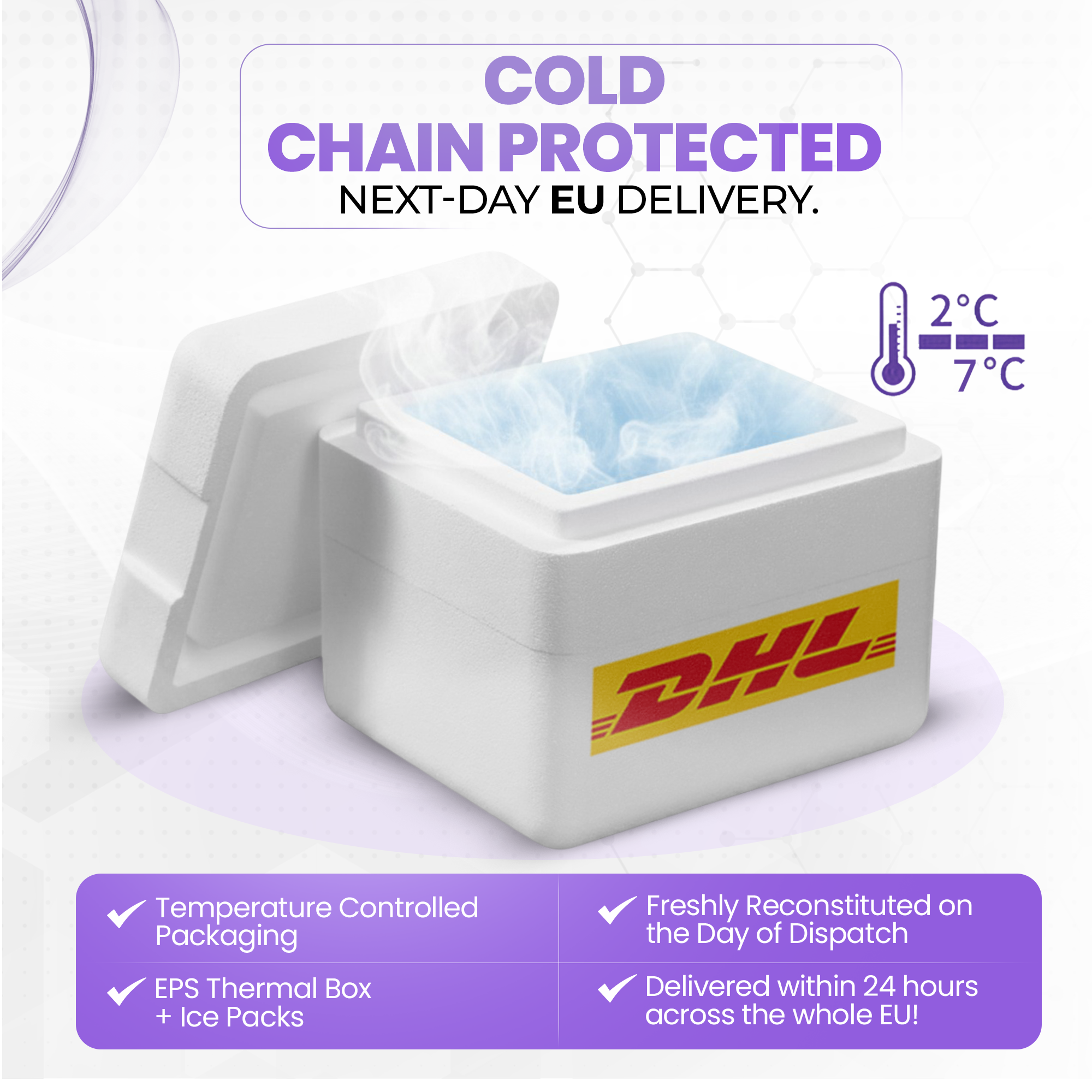
A se păstra produsul la frigider la 1 – 7°C imediat după livrare. Pentru a menține o stabilitate optimă, țineți stiloul ferit de lumină și nu îl expuneți la schimbări repetate de temperatură.
Odată reconstituite (toate stilourile noastre vin pre-amestecate), compușii de cercetare rămân stabili timp de 6 – 8 săptămâni sub refrigerare adecvată.
Nu congelați după reconstituire. Păstrați întotdeauna cutia închisă astfel încât stiloul, acele și tampoanele cu alcool să rămână curate și protejate.
Pentru cele mai bune rezultate, utilizați produsul în mod constant în intervalul de timp recomandat și urmați întotdeauna protocolul dumneavoastră de cercetare.
Livrare
Expediem cu Livrare în UE în ziua următoare prin DHL Express sau UPS Express.
Toate comenzile sunt pregătite proaspăt în ziua expedierii, plasate în cutii de transport cu lanț de frig EPS și expediate cu elemente de răcire pentru a menține o temperatură stabilă pe tot parcursul călătoriei.
Procesul nostru logistic este conceput astfel încât pachetul să sosească a doua zi, evitând întârzierile vamale în interiorul Uniunii Europene.
Produsele sunt expediate din facilitatea noastră din UE, asigurând fără taxe de import, fără vămuire și întotdeauna livrare rapidă și sigură.
Plată
Din cauza naturii peptidelor de cercetare și a categoriei de risc ridicat atribuită de procesatorii de plăți, companiile de carduri de credit nu susțin comercianții din acest domeniu.
Din acest motiv, acceptăm doar transferuri bancare.
În cadrul Uniunii Europene, transferurile SEPA sunt rapide, cu costuri reduse și de obicei ajung în câteva minute până la câteva ore, făcând procesul de plată simplu și ușor.
Odată ce transferul este primit, comanda dumneavoastră este pregătită imediat și expediată în aceeași zi (în funcție de ora limită).
Această metodă asigură conformitatea, securitatea și continuitatea serviciului pentru toți clienții din UE.
Nu ați găsit răspunsul la întrebarea dvs.?
Vedeți toate întrebările frecventeRELATED PRODUCTS


Bioregulator – Advanced


Brain – Advanced


Repair Matrix – Advanced

