








Energy – Start
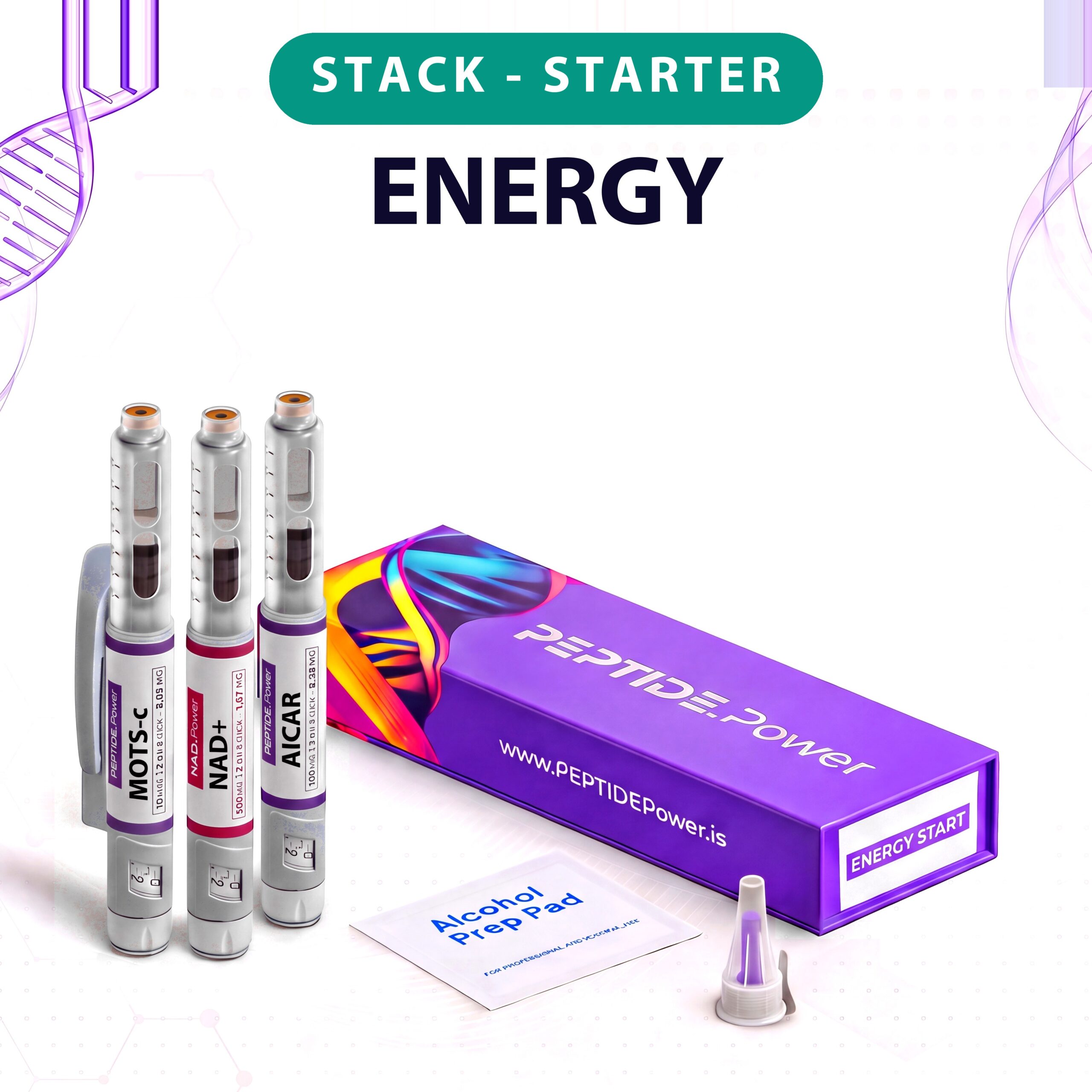
The Energy Start stack assembles three peptides central to mitochondrial and metabolic research, MOTS-c, NAD+ and AICAR, in one curated kit for work on cellular energy production and AMPK-linked pathways.
Each component is supplied at research-grade purity for laboratory use. For research purposes only; not for human consumption.
420,00 € Il prezzo originale era: 420,00 €.357,00 €Il prezzo attuale è: 357,00 €.
Un kit di ricerca sull’energia mitocondriale che abbina MOTS-c, NAD+ e AICAR per studi metabolici.
Cosa include questo stack


Energy - Start - Foundational Cellular Energy Research
Explored with NAD+
Investigated with MOTS-c
Researched with AICAR
Studied with AICAR
Explored with NAD+
Researched with MOTS-c
Investigated with AICAR
Studied with MOTS-c
Descrizione
Meccanismo d'azione
This research stack explores foundational cellular energy pathways. MOTS-c is studied for its role in mitochondrial function and metabolic homeostasis. NAD+ research focuses on its critical involvement in cellular energy production and redox balance. AICAR is investigated for its potential to activate AMPK, mimicking exercise effects and influencing glucose and fatty acid metabolism, collectively targeting core aspects of cellular vitality.
Benefici
- Mitochondrial Function – Explored with MOTS-c.
- Cellular Energy – Investigated via NAD+ pathways.
- Metabolic Regulation – Researched through AICAR activation.
- Endurance Pathways – Studied with AICAR.
- Redox Balance – Explored with NAD+.
- Glucose Homeostasis – Researched with MOTS-c.
Dati di ricerca
MOTS-c
| Study/model | Reported effect |
| Human observational studies (older adults) | ↓ endogenous MOTS-c levels correlate with insulin resistance and aging |
| Animal models (diet-induced obesity) | ↓ fat accumulation, ↑ insulin sensitivity, and restored glucose tolerance |
| Exercise physiology studies | ↑ endurance performance and mitochondrial gene expression in muscle |
| Cellular stress models | ↑ AMPK activation and mitochondrial ROS reduction under oxidative stress |
| High-fat diet mice | ↓ hepatic lipid accumulation and improved metabolic parameters |
| In vitro myocyte cultures | ↑ GLUT4 expression and glucose uptake after peptide exposure |
| Human pilot trial (2022) | Safe SubQ administration; improved fasting glucose and perceived energy |
| Longevity studies (aged mice) | ↑ median lifespan and improved skeletal muscle mitochondrial function |
NAD+
| Study/model | Reported effect |
| Human clinical trials (IV NAD+ administration) | ↑ plasma NAD+ by 4-6×; improved fatigue and alertness scores |
| Animal models (aged mice) | Restored mitochondrial function and ↑ lifespan by 15-20% |
| Cellular aging models | Activation of SIRT1 and PARP1 → enhanced DNA repair and mitochondrial biogenesis |
| Human observational studies | Correlation between low NAD+ and metabolic dysfunction, insulin resistance |
| In vitro neuronal cultures | Protection from oxidative and excitotoxic stress; improved neurite outgrowth |
| Metabolic disorder models | ↓ triglycerides and hepatic steatosis via AMPK activation |
| Exercise recovery studies | ↑ muscle NAD+/NADH ratio and improved endurance performance |
| Brain ischemia models | ↓ infarct size and enhanced neuronal survival post-injury |
AICAR
| Study / Model | Reported effect |
|---|---|
| Sedentary mice (4-week oral administration) | ↑ endurance capacity by ~44% without exercise training |
| Skeletal muscle (rodent models) | ↑ AMPK phosphorylation, ↑ PGC-1α expression, enhanced mitochondrial biogenesis |
| Diet-induced obese mice | ↓ adiposity, improved glucose tolerance, ↑ fatty acid oxidation |
| Insulin-resistant rat models | ↑ GLUT4 translocation, improved insulin sensitivity in skeletal muscle |
| Ischemia-reperfusion cardiac models | Reduced infarct size and improved post-ischemic recovery |
| In vitro myocyte culture | ↑ glucose uptake and mitochondrial oxidative capacity |
| Aged rodent models | Partial restoration of mitochondrial function and metabolic flexibility |
Suggerimenti di combinazione
This research bundle suits investigators exploring foundational cellular energy, metabolic health, and mitochondrial function. It offers a strategic starting point for understanding key pathways influencing vitality and metabolic resilience.
Tabella di dosaggio della penna
MOTS-c
| MOTS-c Pen 10 mg | |
| Volume | 2.0 mL |
| mg/mL | 5 mg/mL |
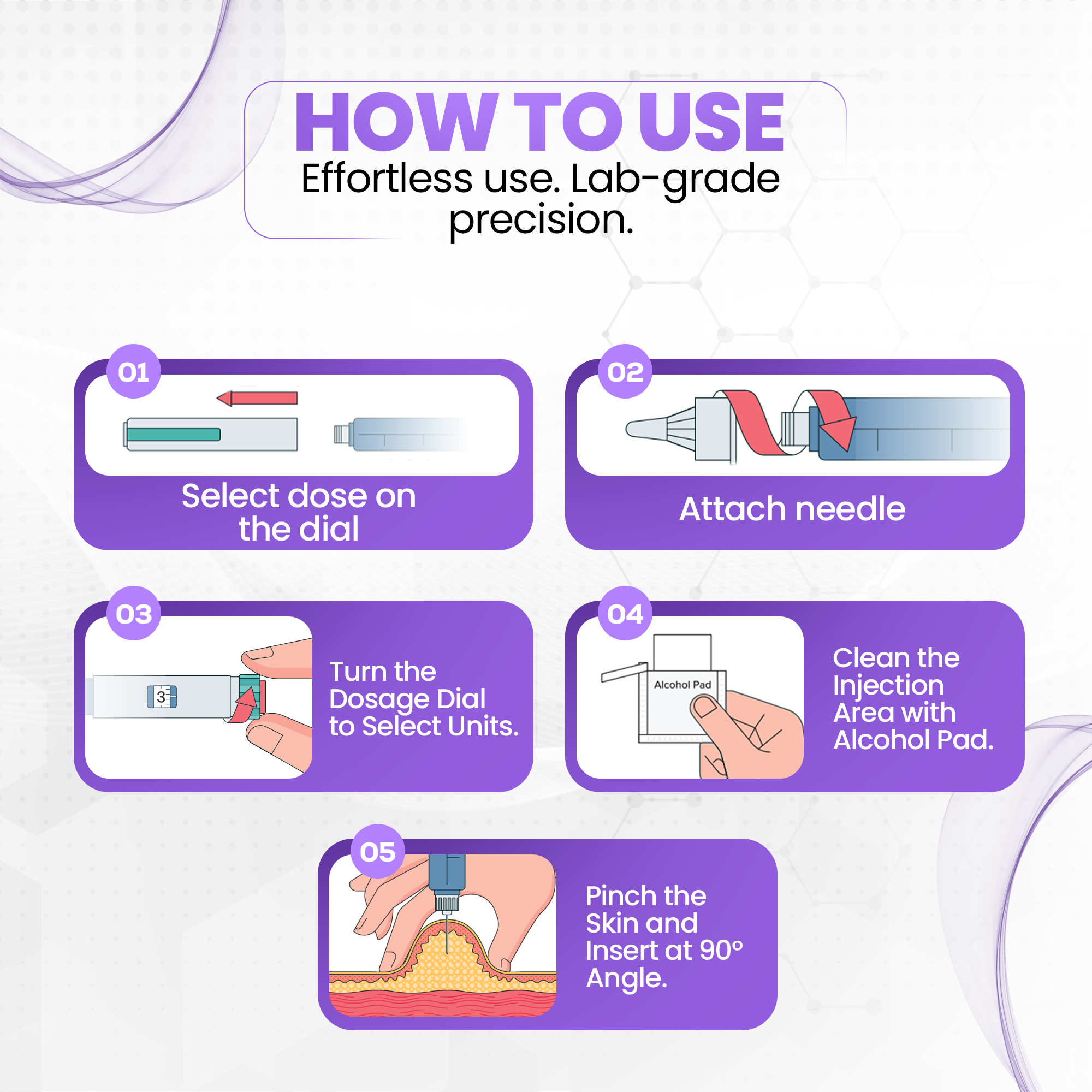
| Click-to-Dose | 1 click = 0.05 mg |
| Example(s) | 20 clicks = 1 mg |
NAD+
| NAD+ Pen 500 mg | |
| Volume | 3.0 mL |
| mg/mL | 166.67 mg/mL |
| Click-to-Dose | 1 click = 1.67 mg |
| Example(s) | 30 clicks = 50 mg |
| NAD+ Pen 1000 mg | |
| Volume | 3.0 mL |
| mg/mL | 333.33 mg/mL |
| Click-to-Dose | 1 click = 3.33 mg |
| Example(s) | 15 clicks = 50 mg |
AICAR
| AICAR Pen 100 mg | |
| Volume | 3 mL |
| mg/mL | 33.333 mg/mL |
| Click-to-Dose | 1 click = 0.333 mg |
| Example(s) | 10 clicks = 3.333 mg |
Dosaggio e varianti di protocollo
MOTS-c
Standard Metabolic Protocol
- Dose: 0.5 – 1 mg (= 10-20 clicks)
- Duration: 8 – 12 weeks
- Frequency: 1× daily
- Cycle Interval: 4-week rest
- Goal / Description: Commonly used for metabolic regulation and insulin sensitivity studies
Performance & Endurance Protocol
- Dose: 1 mg (= 20 clicks)
- Duration: 8 – 12 weeks
- Frequency: Every Other Day
- Cycle Interval: 4-week rest
- Goal / Description: Applied in models focused on energy optimization and fatigue resistance
Mitochondrial Recovery Protocol
- Dose: 5 mg (= 100 clicks)
- Duration: 8 – 12 weeks
- Frequency: 1× daily
- Cycle Interval: 8-week rest
- Goal / Description: Studied for mitochondrial repair and oxidative stress response
NAD+
Standard Cellular Support
- Dose: 50 – 100 mg (variant 500 mg pen = 30-60 clicks / variant 1000 mg pen = 15-30 clicks)
- Duration: 8 – 12 weeks
- Frequency: Every Other Day
- Cycle Interval: 4-week rest
- Goal / Description: Common research design for mitochondrial and energy studies
Intensive Regeneration Protocol
- Dose: 100 – 250 mg (variant 500 mg pen = 60-150 clicks / variant 1000 mg pen = 30-75 clicks)
- Duration: 8 – 12 weeks
- Frequency: 1× daily
- Cycle Interval: 8-week rest
- Goal / Description: Applied in models focusing on recovery and DNA repair
Neurocognitive Focus Protocol
- Dose: 50 mg (variant 500 mg pen = 30 clicks / variant 1000 mg pen = 15 clicks)
- Duration: 8 – 12 weeks
- Frequency: 1× daily (morning)
- Cycle Interval: 4-week rest
- Goal / Description: Studied for neuronal resilience and alertness optimization
Longevity & Metabolic Protocol
- Dose: 50 – 150 mg (variant 500 mg pen = 30-90 clicks / variant 1000 mg pen = 15-45 clicks)
- Duration: 8 – 12 weeks
- Frequency: Every Other Day
- Cycle Interval: 8-week rest
- Goal / Description: Designed for long-term metabolic and aging research
AICAR
Standard Research Protocol
- Dose: 0.5 – 1.0 mg/kg
- Duration: 4 – 6 weeks
- Frequency: Daily
- Cycle Interval: 2 – 4 weeks off before repeating
- Goal / Description: Baseline AMPK activation models for metabolic and endurance research.
Therapeutic Research Protocol
- Dose: 1.0 – 2.0 mg/kg
- Duration: 4 – 8 weeks
- Frequency: Daily
- Cycle Interval: 4 weeks off before repeating
- Goal / Description: Higher-dose studies targeting glucose uptake and lipid oxidation.
Biohacker Protocol (experimental)
- Dose: 0.25 – 0.5 mg/kg
- Duration: 6 – 8 weeks
- Frequency: 3 – 5× per week
- Cycle Interval: 2 weeks off
- Goal / Description: Microdose continuous mitochondrial and endurance research.
Possibili effetti collaterali
MOTS-c
MOTS-c, as a research peptide regulating metabolism, may induce various side effects in experimental models, primarily related to its influence on energy systems. These effects are often dose-dependent and more prominent during initial administration. It’s crucial to monitor subjects closely, as subcutaneous delivery can sometimes cause localized reactions.
Injection Site Reactions: Commonly observed, manifesting as redness or swelling that resolves within hours. Rotating sites minimizes this.
Fatigue: A sense of lethargy reported early on, possibly due to metabolic shifts. It often resolves as homeostasis stabilizes.
Nausea: Mild gastrointestinal upset, linked to AMPK activation. Typically transient.
Headache: Occasional, attributed to vascular adjustments.
Most side effects are transient and manageable through dose adjustments in research settings. However, prolonged exposure warrants vigilance for potential hypersensitivity, though rare in controlled protocols.
NAD+
NAD+, as a research coenzyme boosting metabolism, may induce mild side effects in experimental models, primarily during initial administration. These are dose-dependent and often transient. It’s crucial to monitor for subcutaneous reactions.
Headache: Commonly observed at higher doses, manifesting as mild pressure, linked to vascular changes. It typically resolves within days.
Nausea: Occasional gastrointestinal upset, especially with rapid escalation. Frequency decreases with slower protocols.
Dizziness: Lightheadedness reported early on, possibly from energy shifts. Resolves as models adapt.
Flushing: Warm sensation or skin redness, attributed to niacin-like effects.
Fatigue: Paradoxical tiredness initially, due to metabolic adjustments.
Most side effects are minor and manageable through dose titration. Prolonged exposure warrants vigilance for rare issues like hypersensitivity, though uncommon in controlled settings.
AICAR
AICAR is generally well-tolerated in animal studies and limited human research settings.
Reported side effects are infrequent and typically mild:
- Transient elevation in plasma lactate and uric acid levels.
- Mild hypoglycemia or fluctuations in blood glucose during administration.
- Headache or dizziness observed in early infusion studies.
- Localized irritation at injection site in subcutaneous research models.
- Reduced heart rate and mild hemodynamic changes in cardiovascular research protocols.
No evidence of hepatotoxic, nephrotoxic, or hormonal adverse effects has been observed in available preclinical data.
Attributi del prodotto
Riferimenti scientifici
MOTS-c
- Mitochondria-derived peptide MOTS-c restores mitochondrial … Animal
- MOTS-c Peptide | Benefits, Safety, & Buying Advice Animal
- Mitochondrial-encoded peptide MOTS-c prevents pancreatic islet … Animal
- Mitochondrial-Encoded Peptide MOTS-c, Diabetes, and Aging … Animal
- MOTS-c Peptide Therapy: The Definitive 2025+ Blueprint for … Review
- MOTS-c: A promising mitochondrial-derived peptide for therapeutic … Animal
- Mitochondria-derived peptide MOTS-c: effects and mechanisms … Animal
- MOTS-c Peptide: Benefits, Mechanism, and Side Effects Explained Review
- What Is MOTS-C? Mitochondrial Peptide for Anti-Aging Explained Review
- MOTS-c Peptide: Mechanism, Benefits, and Research Applications Review
NAD+
- NAD+ therapy in age-related degenerative disorders: A benefit/risk … Review
- The efficacy and safety of β-nicotinamide mononucleotide (NMN … Human RCT
- NAD + Supplementation Normalizes Key Alzheimer’s Features and … Animal
- Effect of Nicotinamide Adenine Dinucleotide on Heart Failure … Review
- Nicotinamide riboside Induced Energy Stress and Metabolic … Animal
- Oral nicotinamide riboside raises NAD+ and lowers biomarkers of … Human RCT
- Nicotinamide riboside, a trace nutrient in foods, is a vitamin B3 with … Review
- safety, insulin-sensitivity, and lipid-mobilizing effects – PubMedHuman RCT
- NAD+ Metabolism in Cardiac Health, Aging, and Disease – PubMed Review
- NAD + -boosting molecules suppress mast cell degranulation and … Animal
AICAR
- AMP-activated protein kinase: ancient energy gauge provides clues to modern understanding of metabolism Animal | In vitro
- AMPK and PPARdelta agonists are exercise mimetics Animal | In vitro
- AMPK: a contextual oncogene or tumor suppressor? Animal | In vitro
- 5-aminoimidazole-4-carboxamide riboside increases glucose transport and cell-surface GLUT4 content in skeletal muscle Animal | In vitro
- AICAR and metformin, but not exercise, increase muscle glucose transport through AMPK-, ERK-, and PDK1-dependent activation of atypical PKC Animal | In vitro
- AICAR inhibits adipocyte differentiation in 3T3L1 and restores metabolic alterations in diet-induced obesity mice Animal | In vitro
- WADA Prohibited List – Hormone and Metabolic Modulators (S4) Regulatory
- AMPK activation by AICAR reduces ischemic injury and improves mitochondrial function Animal | In vitro
Contenuto della confezione
Ogni prodotto arriva in una confezione PEPTIDE.Power premium dal design esclusivo, progettata per praticità, igiene e conservazione sicura nel frigorifero. All’interno troverai tutto il necessario per il tuo protocollo di ricerca completo:
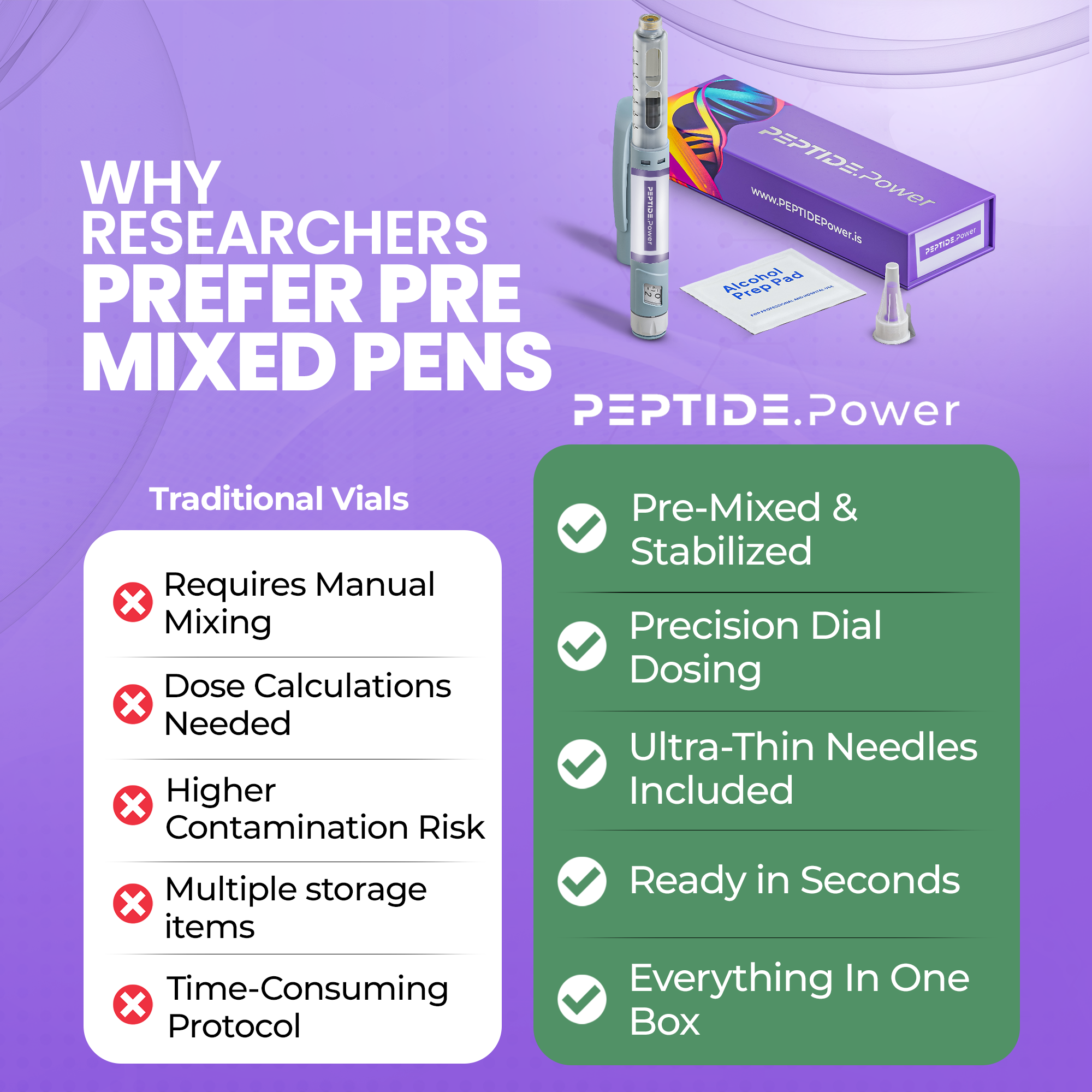
- 1× penna per iniezione monouso pre-miscelata
- Alimentata dalla nostra esclusiva PSM Technology™: sistema di stabilizzazione e miscelazione di precisione per una potenza costante
- 10× aghi ultrasottili (33G, 4 mm)
- 10× tamponi imbevuti di alcol per una preparazione sterile
- Inserto interno in schiuma stabilizzante per evitare scossoni durante il trasporto
- Pannello di istruzioni stampato all’interno della confezione per una rapida consultazione
- Sigillo di sicurezza che garantisce che la confezione non sia stata aperta o manomessa
Conservazione
Conserva il prodotto in frigorifero a 1-8°C immediatamente dopo la consegna. Per mantenere una stabilità ottimale, tieni la penna al riparo dalla luce e non esporla a ripetuti sbalzi di temperatura.
Una volta ricostituiti (tutte le nostre penne sono pre-miscelate), i composti per la ricerca rimangono stabili per 6-8 settimane con una corretta refrigerazione.
Non congelare dopo la ricostituzione. Tieni sempre la confezione chiusa affinché penna, aghi e tamponi imbevuti di alcol restino puliti e protetti.
Per risultati ottimali, utilizza il prodotto con costanza entro il periodo consigliato e segui sempre il tuo protocollo di ricerca.
Consegna
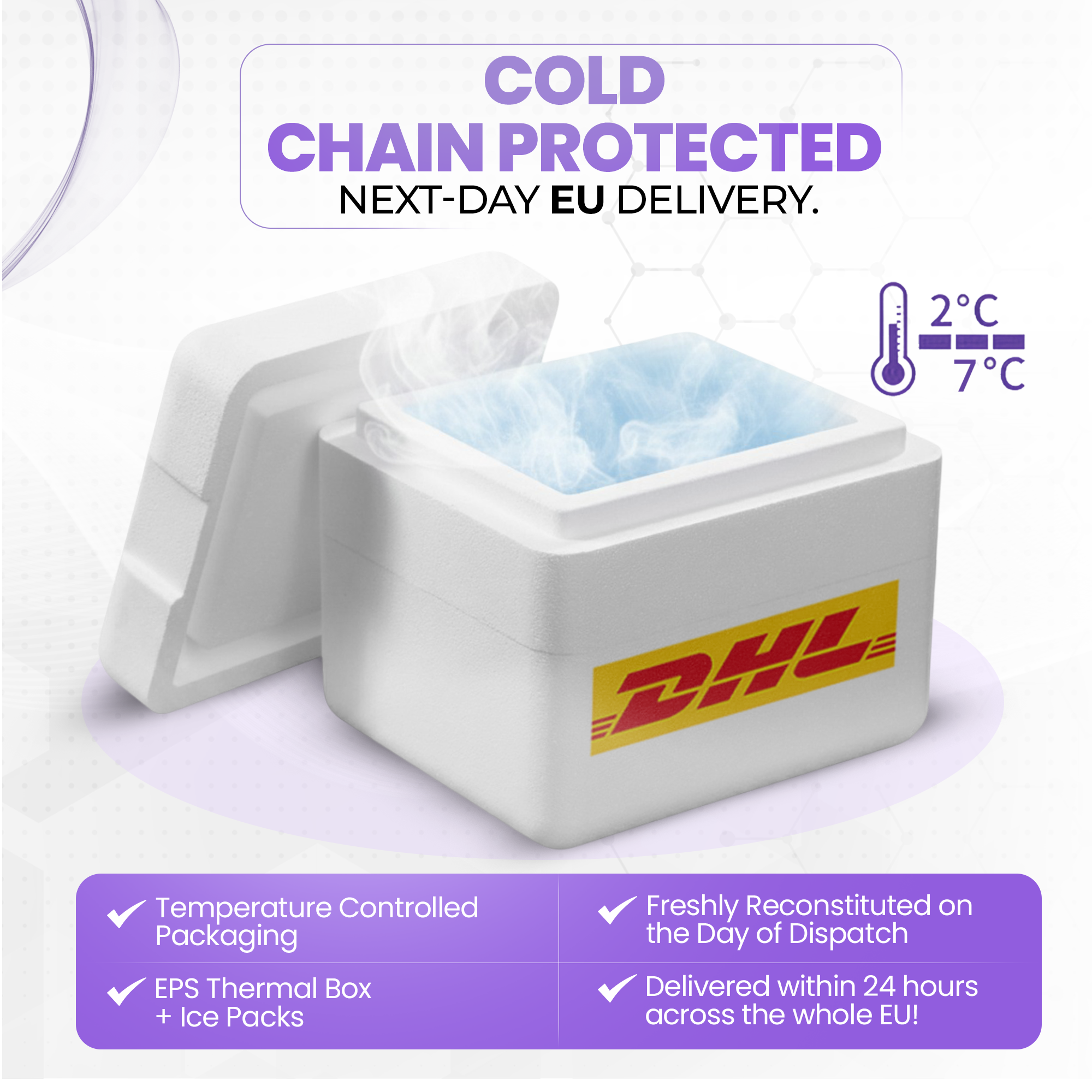
Spediamo con consegna il giorno successivo nell’UE tramite DHL Express o UPS Express.
Tutti gli ordini vengono preparati freschi il giorno della spedizione, collocati in scatole di trasporto EPS a catena del freddo e spediti con elementi refrigeranti per mantenere una temperatura stabile durante tutto il tragitto.
Il nostro processo logistico è progettato affinché il pacco arrivi entro la notte, evitando ritardi doganali all’interno dell’Unione Europea.
I prodotti vengono spediti dalla nostra struttura nell’UE, garantendo nessun dazio di importazione, nessuno sdoganamento e sempre una consegna rapida e sicura.
Pagamento
A causa della natura dei peptidi per la ricerca e della categoria ad alto rischio assegnata dai gestori dei pagamenti, le società emittenti di carte di credito generalmente non supportano i commercianti di questo settore.
Per questo motivo accettiamo principalmente bonifici bancari.
Collaboriamo inoltre con un fornitore di pagamenti in criptovaluta e, di tanto in tanto, il pagamento con carta può essere disponibile a seconda della disponibilità del gestore.
All’interno dell’Unione Europea, i bonifici SEPA sono veloci, economici e di solito arrivano entro pochi minuti o poche ore, rendendo il processo di pagamento semplice e immediato.
Una volta ricevuto il bonifico, il tuo ordine viene preparato immediatamente e spedito lo stesso giorno, in base all’orario limite giornaliero.
Ti preghiamo di notare che non effettuiamo spedizioni il venerdì né nei giorni precedenti le festività ufficiali. Questo serve a garantire che i pacchi possano essere consegnati il giorno lavorativo successivo e non restino in transito durante i fine settimana o le festività.
Questo metodo garantisce conformità, sicurezza e continuità del servizio per tutti i clienti nell’UE.
Non hai trovato la risposta alla tua domanda?
Vedi tutte le domande frequentiRELATED PRODUCTS


Brain – Advanced


Lean Mass – Start


Longevity – Advanced

