

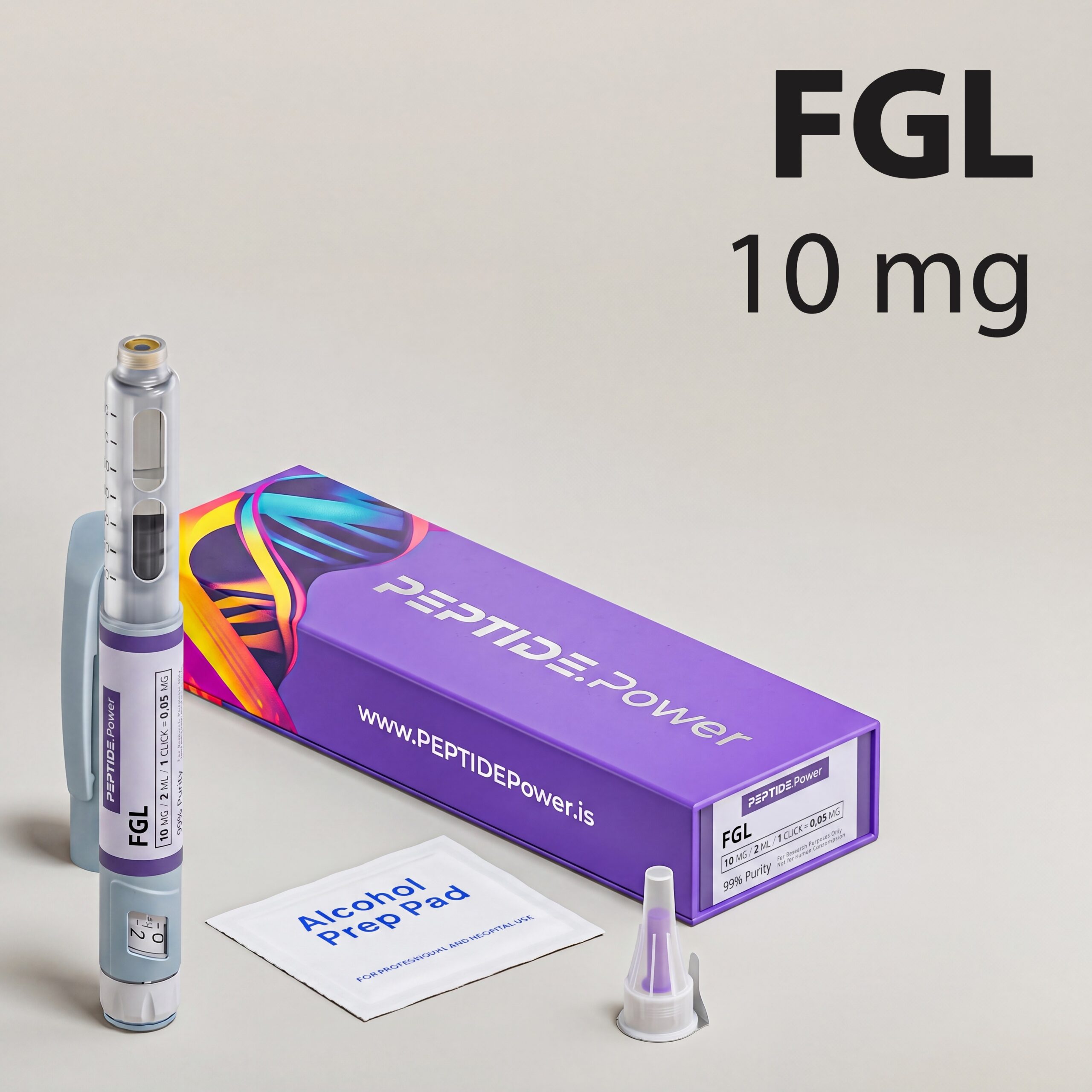


FGL
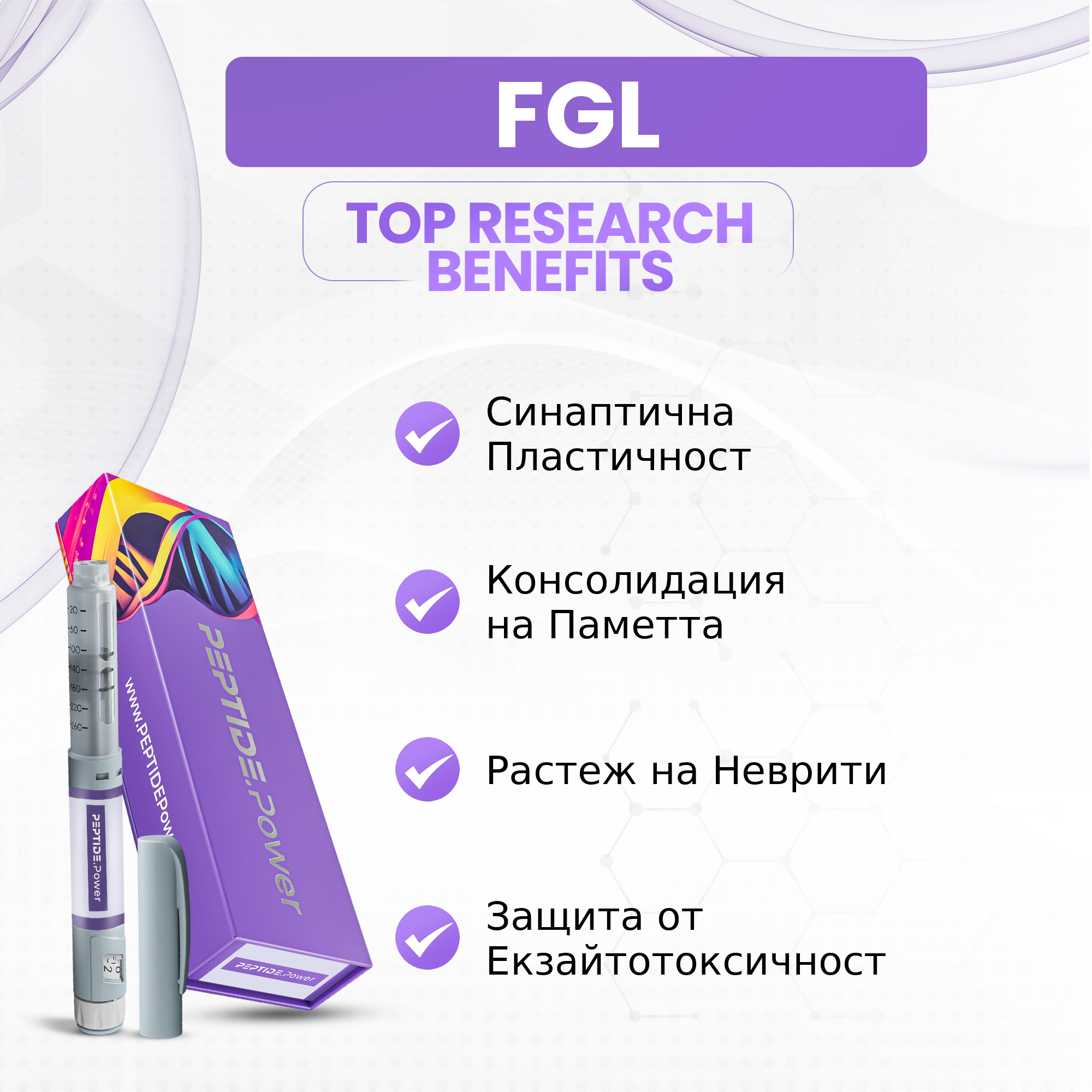
FGL е синтетичен пептид, получен от молекулата на невралната клетъчна адхезия (NCAM), изследван за неговите невротрофични и когнитивно подобряващи свойства в експериментални модели. Проучван е за способността си да имитира взаимодействията NCAM-FGFR, подпомагайки синаптичната пластичност, консолидирането на паметта и невроналното оцеляване в изследвания, фокусирани върху когницията, невропротекцията и свързания с възрастта спад.
59,00 €
📦Влиза и в стек · спести до 101,00 €
Brain - Advancedспести 101,00 €Виж стека →FGL - Пептид за синаптична пластичност и невронно възстановяване
Укрепва хипокампалния LTP чрез FGFR1 сигнализация, повишавайки плътността на дендритните шипове и ефективността на предаване
Подобрява пространствената и контекстуалната памет чрез устойчиво активиране на MAPK/ERK пътя при гризачи
Стимулира дозозависимо аксонално и дендритно разрастване в култивирани неврони, имитирайки NCAM-FGFR трофичната активност
Предпазва невроните от глутаматна екзайтотоксичност чрез активиране на PI3K-Akt сигналните пътища за клетъчно оцеляване
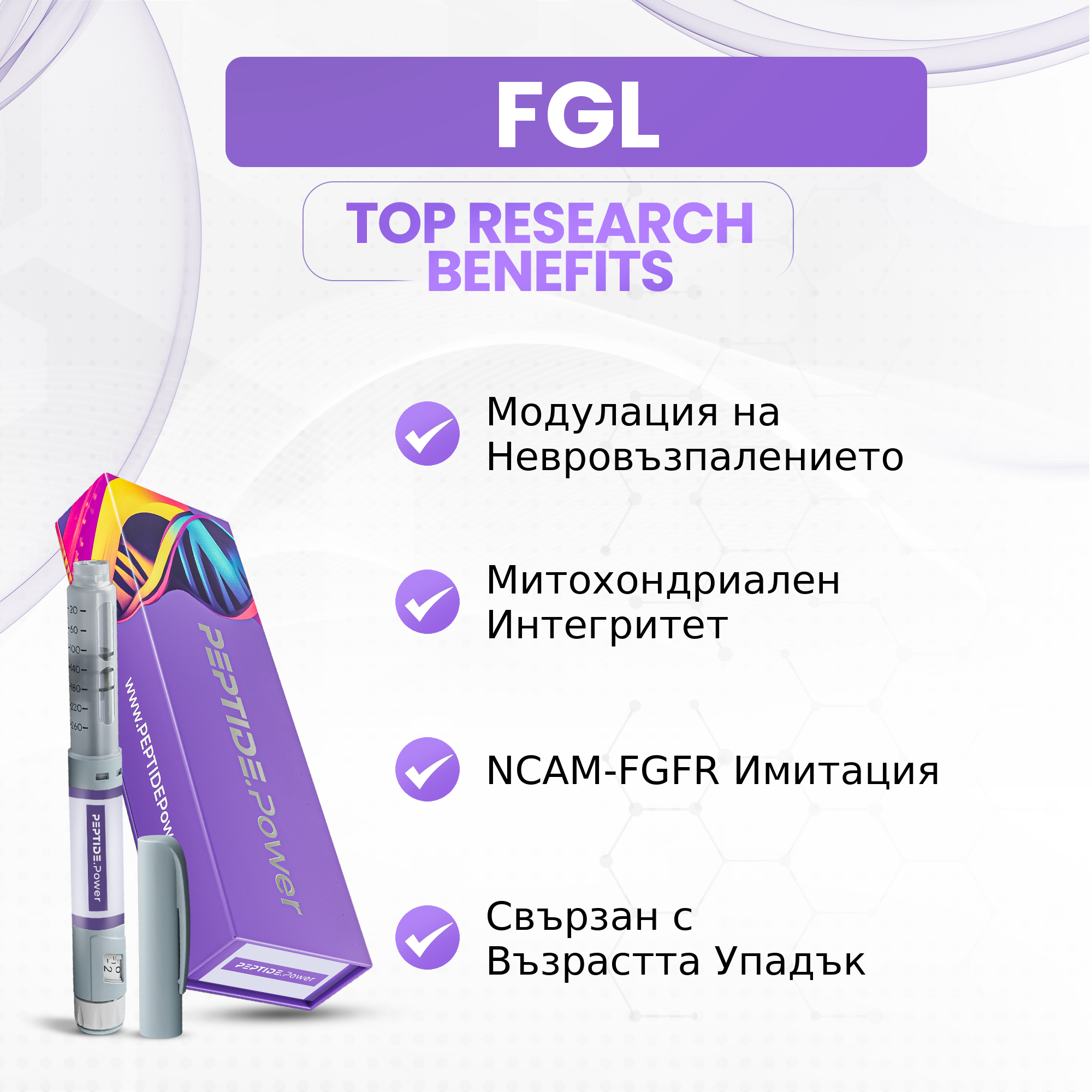
Потиска активирането на микроглията и намалява отделянето на провъзпалителни цитокини в централната нервна система
Запазва митохондриалната функция и намалява апоптотичните маркери в окислително увредени невронни популации
Синтетичен NCAM-производен пептид, възпроизвеждащ нативната FGFR-медиирана невротрофична сигнализация в изследователски модели
Изследва се като кандидат за когнитивна резилиентност и модели на свързано с възрастта синаптично влошаване
Описание
FGL е синтетичен миметичен пептид, получен от втория фибронектинов модул тип III на невралната клетъчна адхезионна молекула (NCAM), проектиран да взаимодейства с рецептора на фибробластния растежен фактор (FGFR). Изследван е за способността си да насърчава неврита, синаптичната пластичност и невроналното оцеляване в кортикални и хипокампални изследователски модели.
В експериментални условия FGL е наблюдаван да усилва дългосрочната потенциация (LTP), да подпомага консолидирането на пространствената памет и да насърчава хипокампалната неврогенеза чрез активиране на FGFR-зависими сигнални каскади, включително MAPK и PI3K/Akt пътищата. Тези механизми са свързани с подобрена когнитивна функция при възрастни гризачи и защита на невроналната архитектура след нараняване.
FGL също е изследван за своите противовъзпалителни и невропротективни свойства, с доклади за намалена активация на микроглията и редуцирана невронална апоптоза в модели на невродегенерация, исхемия и Алцхаймер-подобна патология.
Формулиран в предварително смесена, готова за употреба писалка, FGL е подходящ за експериментални протоколи, изследващи синаптичната функция, пътищата на паметта и невротрофичното сигнализиране при контролирани лабораторни условия.
Клиничен статус:
FGL е изследователски пептид, оценен в проучвания върху животни и in vitro за когнитивно подобряване, синаптична пластичност и невропротекция. Не е одобрен за медицинска употреба и остава ограничен до експериментални и лабораторни изследвания.
Тип доказателства:
Клинично проучване ☐ | Обсервационно ☐ | Животни ✔ | In vitro ✔ | Регулаторно ☐
Механизъм на действие
FGL действа чрез имитиране на взаимодействието NCAM-FGFR, селективно активирайки рецептор 1 на фибробластния растежен фактор (FGFR1) на невронната мембрана. Това ангажиране задейства низходящи сигнални каскади MAPK/ERK и PI3K-Akt, които регулират невритен растеж, синаптична пластичност и невронална преживяемост. Наблюдавано е също, че FGL модулира фосфорилирането на CREB и експресията на BDNF, подпомагайки дългосрочното потенциране и консолидацията на паметта в експериментални модели.
Ползи
- Подобрена синаптична пластичност:
FGL е наблюдаван да укрепва дългосрочната потенциация (LTP) в хипокампалните неврони, ключов клетъчен механизъм, лежащ в основата на ученето и паметта. Чрез активиране на FGFR1-медиираното сигнализиране, пептидът насърчава структурното и функционално ремоделиране на синапсите, увеличавайки плътността на дендритните шипчета и подобрявайки ефективността на сигналното предаване. Този ефект прави FGL виден кандидат в изследвания, фокусирани върху когнитивната устойчивост и свързания с възрастта синаптичен спад. - Подкрепа за консолидиране на паметта:
Експериментални модели при гризачи са показали, че приложението на FGL подобрява представянето в задачи за пространствена и контекстуална памет, включително парадигми като Морис воден лабиринт и страхово кондициониране. Пептидът изглежда улеснява хипокампус-зависимото консолидиране на паметта чрез устойчиво активиране на MAPK/ERK пътищата. Тези открития позиционират FGL като ценен изследователски инструмент за изучаване на мнемоничните процеси и когнитивния спад, свързан с невродегенерацията. - Стимулиране на невритен растеж:
FGL силно насърчава аксоналното и дендритно удължаване в култивирани неврони, имитирайки трофичните ефекти на естествените NCAM-FGFR взаимодействия. Това регенеративно действие подкрепя формирането на нови невронни връзки, което е особено релевантно в изследователски модели на мозъчно увреждане, възстановяване след инсулт и развойна невронаука. Наблюдаваният растеж е дозозависим и възпроизводим в множество in vitro системи. - Невропротекция срещу ексцитотоксичност:
В предклинични модели е съобщено, че FGL защитава невроните от глутамат-индуцирана ексцитотоксичност и оксидативен стрес. Чрез ангажиране на PI3K-Akt сигнализирането за оцеляване, пептидът намалява апоптотичните маркери и запазва митохондриалната цялост в стресирани невронални популации. Тези ефекти правят FGL ключова молекула в изследвания, насочени към исхемично увреждане, травматично мозъчно увреждане и невродегенеративни състояния. - Противовъзпалителна неврална модулация:
FGL е демонстрирал способността да намалява микроглиалната активация и да редуцира освобождаването на провъзпалителни цитокини в централната нервна система. Чрез модулиране на невровъзпалителните каскади, пептидът създава по-благоприятна среда за невроналното възстановяване и оцеляване. Този противовъзпалителен профил се изследва в проучвания за болестта на Алцхаймер, множествена склероза и хронични невровъзпалителни състояния. - Подобряване на когнитивната ефективност:
Проучвания при животни са съобщили за подобрения в скоростта на учене, вниманието и изпълнителните функции след приложение на FGL. Смята се, че тези когнитивни ефекти са резултат от комбинираното подобрение на синаптичната пластичност, невротрофичната подкрепа и намаленото неврално възпаление. Поради това FGL е широко изследван като моделен ноотропен пептид за изучаване на механизмите на когнитивно подобрение. - Намаляване на токсичността на амилоид-бета:
Изследователски модели на Алцхаймерова патология са показали, че FGL може да противодейства на амилоид-бета-индуцирана синаптична дисфункция и невронална загуба. Пептидът изглежда запазва LTP и функцията на паметта при наличие на Aβ олигомери, вероятно чрез FGFR1 активиране и низходящи пътища за оцеляване. Това прави FGL особено релевантен инструмент в изследванията на деменция и Алцхаймер. - Устойчивост на настроение и стрес:
Предклинични изследвания предполагат, че FGL може да модулира поведения, свързани със стрес и да подпомага емоционалната устойчивост чрез действията си върху хипокампалните и префронтални вериги. Подобреното невротрофично сигнализиране и намаленото невровъзпаление допринасят за подобрено представяне в поведенчески парадигми, свързани с тревожност и депресия. Тези наблюдения отварят пътища за изследване на афективни разстройства и стрес-индуцирано когнитивно увреждане.
Изследователски данни
| Проучване / Модел | Докладван ефект |
|---|---|
| Модел на памет при възрастни плъхове | ↑ пространствено обучение и задържане на паметта при задачи във воден лабиринт |
| Култура на хипокампални неврони | ↑ растеж на неврити и фосфорилиране на FGFR1 |
| Модел на Алцхаймер-подобно състояние при плъхове (инжектиране на Aβ) | ↓ невронална загуба; запазено когнитивно представяне |
| Модел на кортикална травма | ↑ невронална преживяемост и синаптична плътност след лезия |
| Гризачен модел на хроничен стрес | ↓ депресивно-подобно поведение; възстановена хипокампална пластичност |
| In vitro анализ на свързване NCAM-FGFR | Селективно активиране на FGFR1; ангажиране на MAPK/ERK пътя |
| Подкожно приложение при плъхове | Потвърдено преминаване през кръвно-мозъчната бариера; устойчива ЦНС активност |
Предложения за комбиниране
FGL често се комбинира в изследвания с:
- FGL + Semax → Допълваща невротрофична подкрепа чрез повишаване на BDNF и FGFR-медиирана синаптична пластичност.
- FGL + Cerebrolysin → Подобрено невронално оцеляване и когнитивно възстановяване в модели на невродегенерация.
- FGL + Selank → Подпомага консолидацията на паметта, като същевременно модулира пътищата, свързани с тревожността.
- FGL + Dihexa → Синергични ефекти върху синаптогенезата и дългосрочната потенциация.
⚠ Комбинациите са само за експериментален дизайн; не са препоръка за безопасност или ефикасност.
Таблица за дозиране на писалката
| FGL Pen 10 mg | |
| Обем | 2 mL |
| mg/mL | 5 mg/mL |
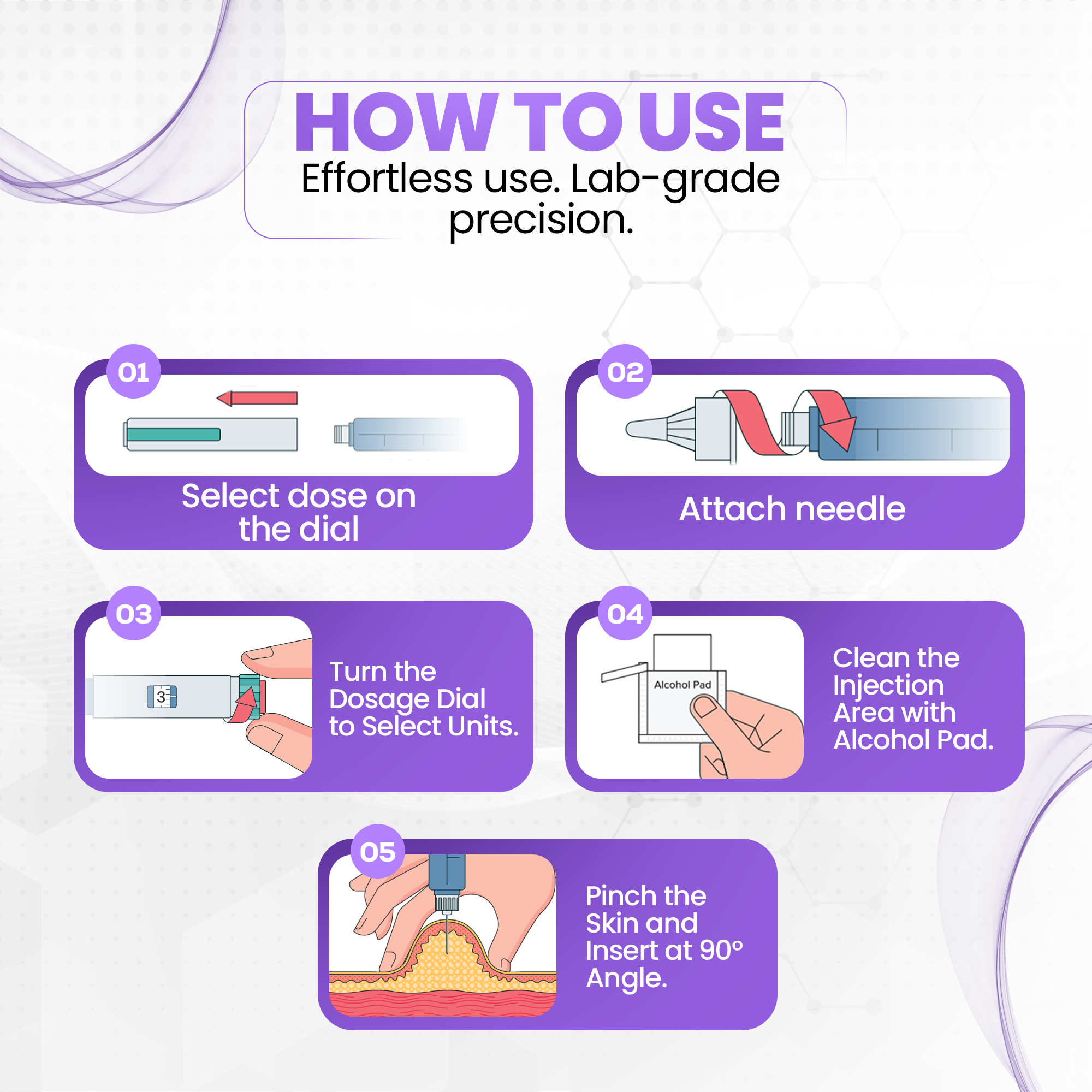
| Доза на клик | 1 клик = 0.05 mg |
| Пример(и) | 10 кликвания = 0.5 mg |
Дозировки и вариации на протоколи
Стандартен изследователски протокол
- Доза: 1 – 2 mg
- Продължителност: 2 – 4 седмици
- Честота: Ежедневно интраназално приложение
- Интервал между циклите: 2 – 4 седмици пауза преди повторение
- Цел / Описание: Базов протокол за изследователски модели на когнитивна и синаптична пластичност.
Терапевтичен изследователски протокол
- Доза: 2 – 4 mg
- Продължителност: 4 – 6 седмици
- Честота: Ежедневно
- Интервал между циклите: 4 седмици пауза преди повторение
- Цел / Описание: Модел с по-висока доза за изследвания на невропротекция и консолидиране на паметта.
Биохакерски протокол (експериментален)
- Доза: 0.5 – 1 mg
- Продължителност: 6 – 8 седмици
- Честота: Ежедневна микродоза
- Интервал между циклите: Непрекъснато с 1-седмични паузи на всеки 8 седмици
- Цел / Описание: Нискодозово непрекъснато излагане за дългосрочни невротрофични изследвания.
Възможни странични ефекти
FGL обикновено се понася добре в предклинични проучвания при животни и ограничени ранни човешки изследвания.
Докладваните странични ефекти са редки и леки:
- Преходно дразнене или зачервяване на мястото на инжектиране при модели с подкожно приложение.
- Лека умора или сънливост по време на началните периоди на дозиране.
- Случайно главоболие, докладвано в ранни човешки фармакокинетични проучвания.
- Лека стомашно-чревна чувствителност при малка подгрупа от субекти.
Не са наблюдавани доказателства за невротоксични, чернодробни или системни нежелани ефекти в наличните данни. Дългосрочните профили на безопасност остават обект на проучване, а ефектите извън краткосрочните експериментални протоколи не са напълно характеризирани.
Характеристики на продукта
- CAS номер: 868852-04-0
- Молекулна формула: C70H116N22O24
- Последователност (АК): EVYVVAENQQGKSKA
- Молекулно тегло: 1665.8 g/mol
- Период на полуразпад: ~2-4 часа
- Синоними: FG Loop пептид, NCAM-производен FGL пептид, FGLM
- Тип: Синтетичен миметичен пептид (NCAM-производен FGFR1 агонист)
- Изследователски фокус: Когниция и невропротекция, синаптична пластичност
Научни източници
- A peptide motif from the second fibronectin module of the neural cell adhesion molecule, NCAM, mimics the third fibronectin module Животни | In vitro
- The neural cell adhesion molecule-derived peptide FGL facilitates long-term plasticity in the dentate gyrus in vivo Животни
- A synthetic NCAM-derived mimetic peptide, FGL, exerts anti-inflammatory properties in microglial cells In vitro
- Neuroprotective and memory-enhancing effects of the NCAM-derived peptide FGL in aged rats Животни
- FGL promotes neuronal survival and synaptic plasticity through FGFR1 activation Животни | In vitro
- The NCAM mimetic peptide FGL modulates memory consolidation in the rat Животни
- Effects of an NCAM mimetic peptide FGL on impairments in spatial learning and plasticity Животни
Включено в кутията
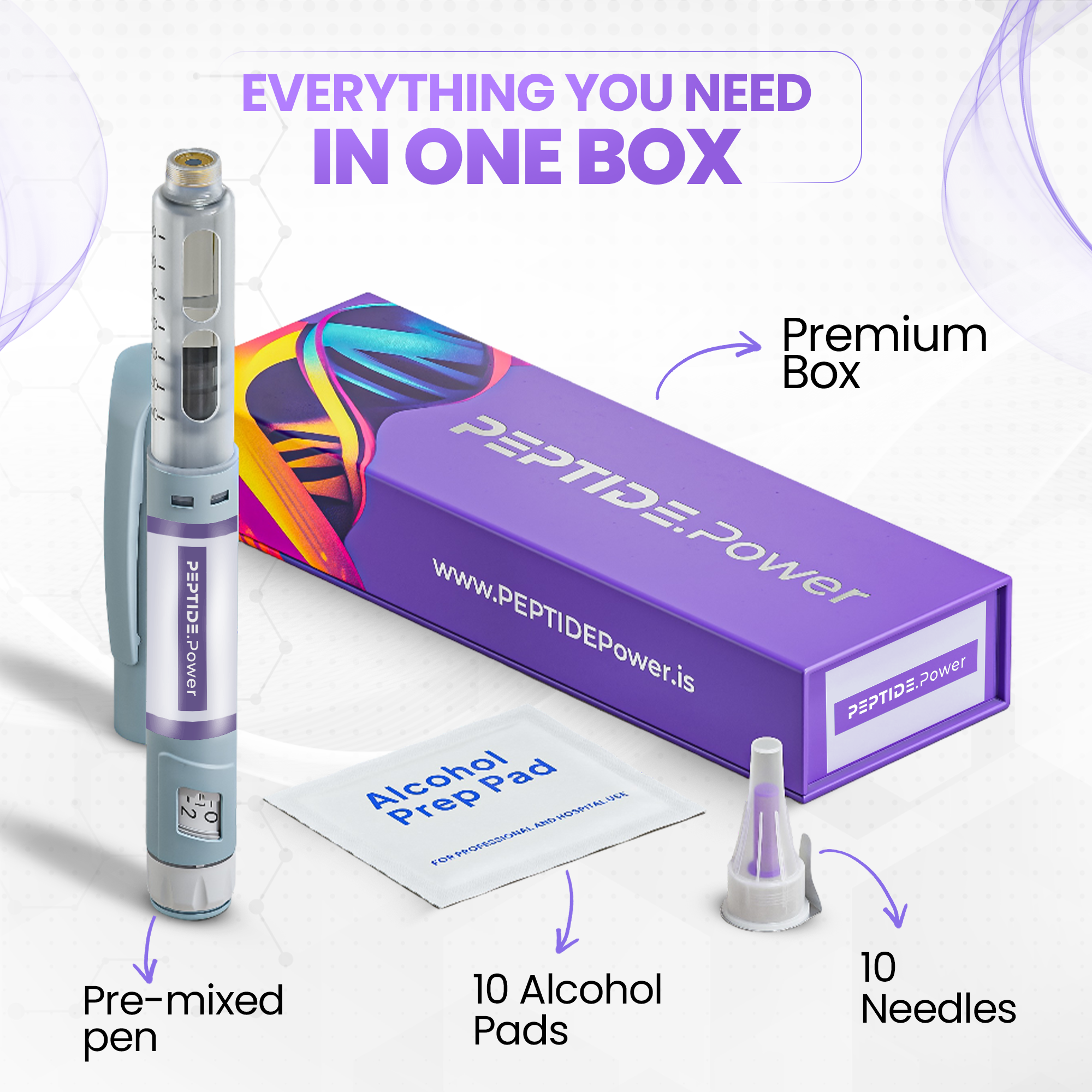
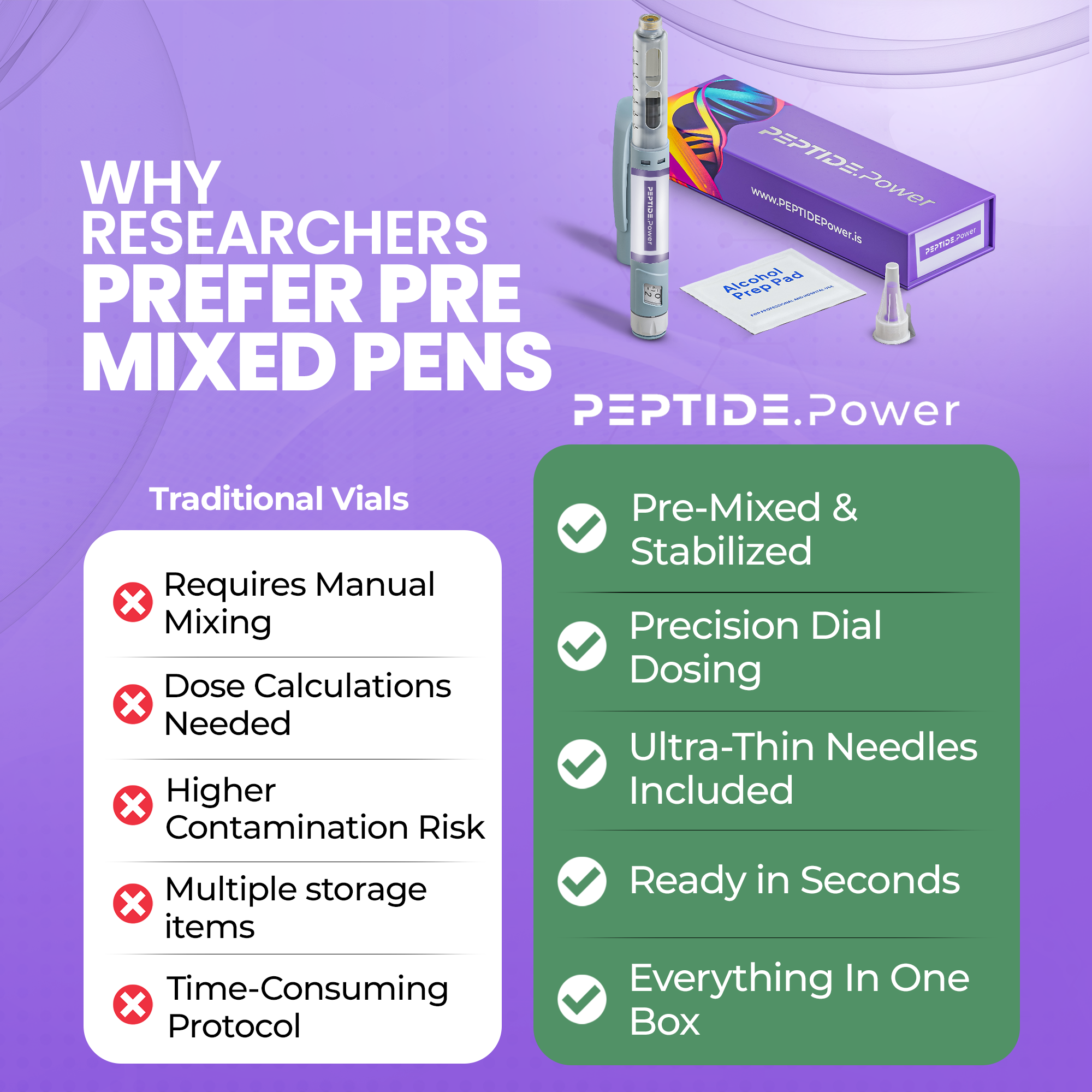
Всеки продукт пристига в премиум, специално проектирана кутия на PEPTIDE.Power, проектирана за удобство, хигиена и безопасно съхранение във вашия хладилник. Вътре ще намерите всичко необходимо за пълния ви изследователски протокол:
- 1× Еднократна предварително смесена инжекционна писалка
- Захранван от нашата патентована PSM Technology™ – прецизна система за стабилизация & смесване за постоянна ефикасност
- 10× Ултратънки игли (33G, 4 мм)
- 10× Спиртни тампони за стерилна подготовка
- Вътрешна стабилизираща дунапренова вложка за предотвратяване на разклащане по време на транспорт
- Панел с инструкции, отпечатан от вътрешната страна на кутията за бърза справка
- Стикер за защитен печат, гарантиращ, че опаковката не е отваряна или манипулирана
Съхранение
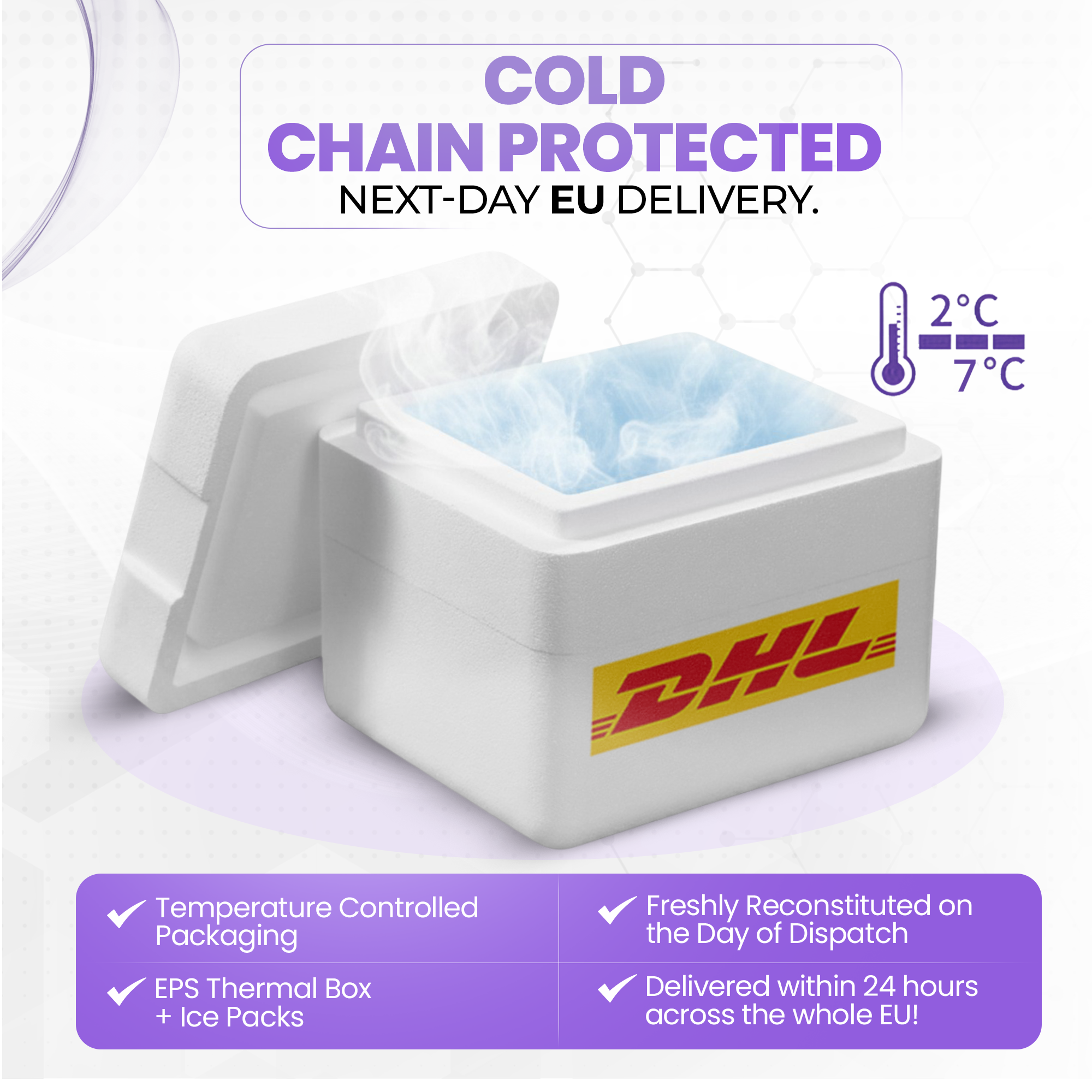
Съхранявайте продукта в хладилник при 1-7°C веднага след доставка. За да поддържате оптимална стабилност, дръжте писалката далеч от светлина и не я излагайте на повтарящи се температурни промени.
След като бъдат реконституирани (всички наши писалки са предварително смесени), изследователските съединения остават стабилни за 6-8 седмици при правилно съхранение в хладилник.
Не замразявайте след реконституция. Винаги дръжте кутията затворена, така че писалката, иглите и спиртните тампони да останат чисти и защитени.
За най-добри резултати използвайте продукта последователно в рамките на препоръчителния времеви прозорец и винаги следвайте вашия изследователски протокол.
Доставка
Изпращаме с Доставка в ЕС на следващия ден чрез DHL Express или UPS Express.
Всички поръчки се приготвят свежи в деня на изпращане, поставят се в EPS транспортни кутии за студена верига и се изпращат с охлаждащи елементи за поддържане на стабилна температура по време на целия път.
Нашият логистичен процес е проектиран така, че пратката да пристигне за една нощ, избягвайки митнически забавяния в рамките на Европейския съюз.
Продуктите се изпращат от нашето съоръжение в ЕС, осигурявайки без вносни мита, без митническо освобождаване и винаги бърза и сигурна доставка.
Плащане
Поради естеството на изследователските пептиди и категорията с висок риск, определена от платежните оператори, компаниите за кредитни карти не поддържат търговци в тази област.
Поради тази причина приемаме само банкови преводи.
В рамките на Европейския съюз, SEPA преводите са бързи, нискотарифни и обикновено пристигат в рамките на минути до няколко часа, което прави процеса на плащане гладък и прост.
След като преводът бъде получен, вашата поръчка се подготвя незабавно и се изпраща същия ден (в зависимост от часа на поръчка).
Този метод осигурява съответствие, сигурност и непрекъснатост на услугата за всички клиенти в целия ЕС.
Не намерихте отговор на въпроса си?
Вижте всички често задавани въпросиRELATED PRODUCTS


MOTS-c


