

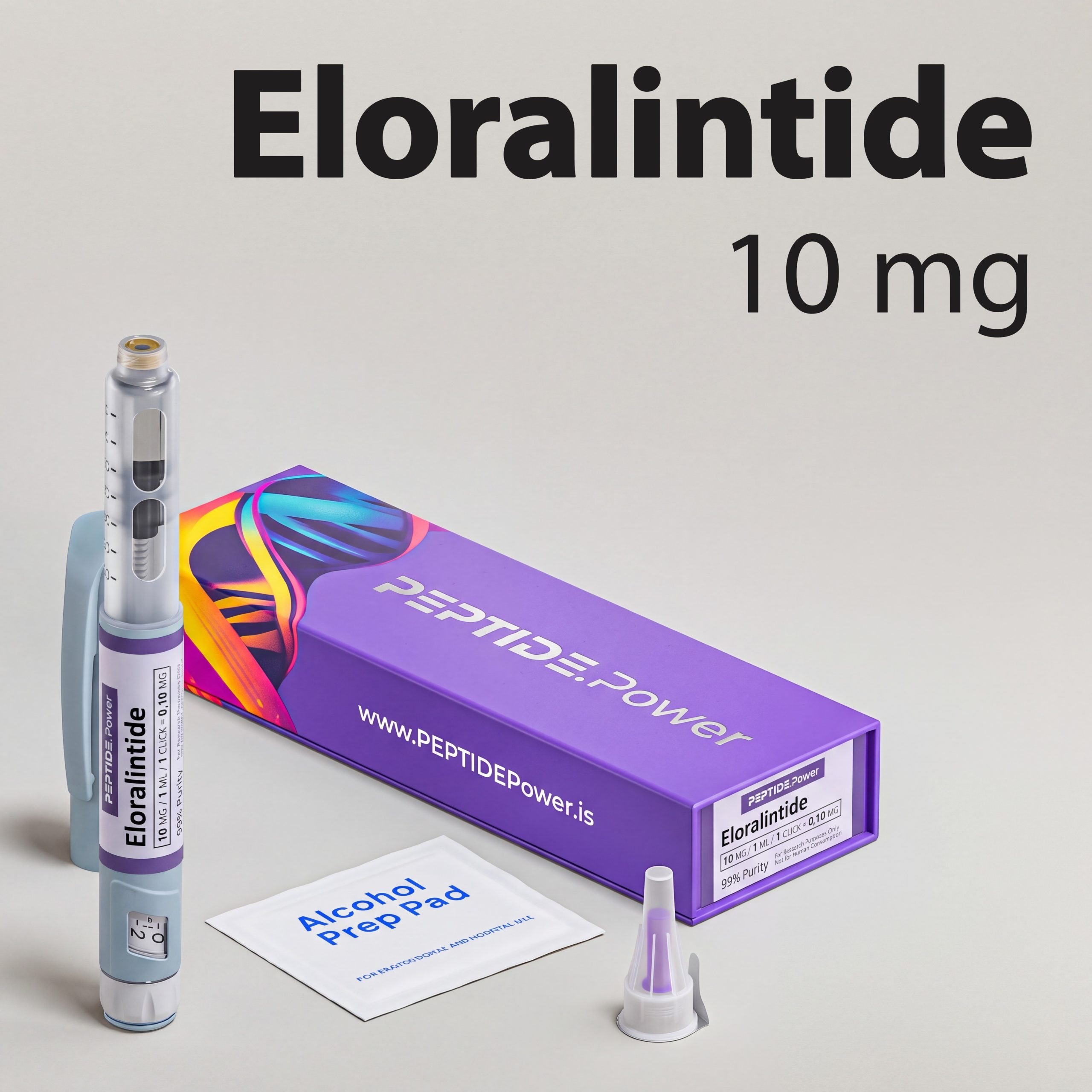


Eloralintide Research Peptide Pen (10 mg)
Eloralintide (LY3841136) is a synthetic, long-acting amylin analogue designed as a selective amylin 1 (AMY1) receptor agonist. It is studied for its role in appetite and food intake signalling and body weight regulation in research models, and its pharmacokinetic profile supports once-weekly dosing in research protocols. Supplied as a ready-to-use 10 mg pen for laboratory research.
Eloralintide - Selective Amylin Receptor Agonist Peptide
Preferentially activates human AMY1 receptor, roughly 12-fold over calcitonin and 11-fold over AMY3 in research assays
Investigated for dose-dependent reductions in food intake in diet-induced obese rat models
Studied for lowering body weight in diet-induced obese rats and in published once-weekly phase 2 data
Rat studies indicate body weight reduction derived primarily from loss of fat mass
Long-acting exposure in rats and monkeys supports sustained amylin receptor engagement across weekly research protocols
Phase 1 multiple ascending dose data show dose-proportional AUC and Cmax at steady state
Used to probe amylin action on area postrema and hindbrain pathways involved in meal termination
Serves as a reference compound for isolating amylin signalling distinct from GLP-1 receptor pharmacology
What is Eloralintide?
Description
Eloralintide is a modified 37-residue amylin derivative (C201H319N49O65S2, ~4526.1 g/mol) developed under the code LY3841136. Its chain contains non-standard residues that extend its duration of action. In cell assays it preferentially activated the human AMY1 receptor, about 12-fold over the calcitonin receptor and 11-fold over the AMY3 receptor.
In diet-induced obese rats, eloralintide reduced food intake and lowered body weight in a dose-dependent way, mainly through fat mass loss, and pharmacokinetic studies in rats and monkeys showed long-acting exposure.
In published human research, once-weekly subcutaneous eloralintide was evaluated in phase 1 studies and in a 48-week, placebo-controlled phase 2 trial in adults with obesity or overweight, which reported mean body weight changes of -9% to -20% across dose arms versus -0.4% with placebo. Nausea and fatigue were the most frequently reported adverse events.
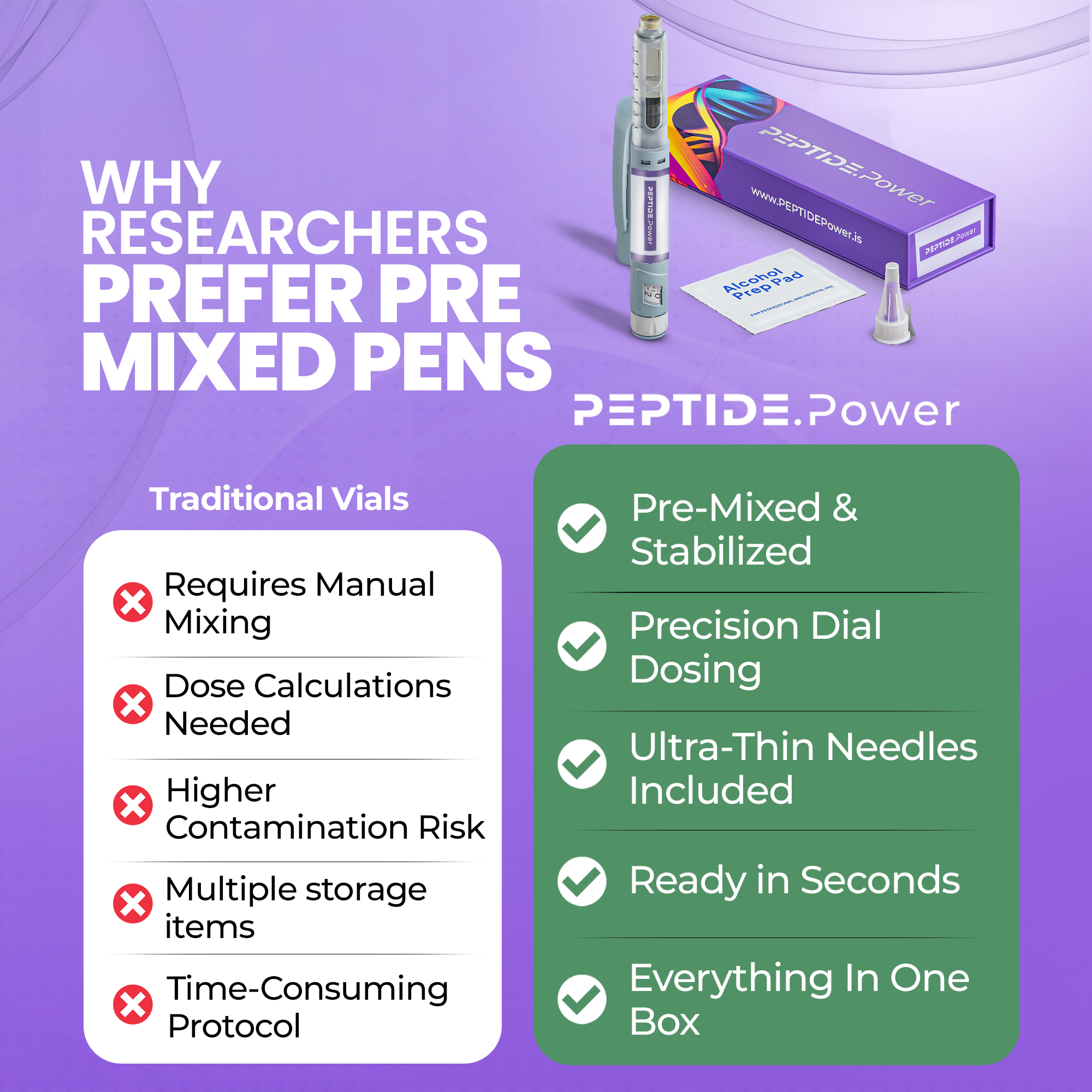
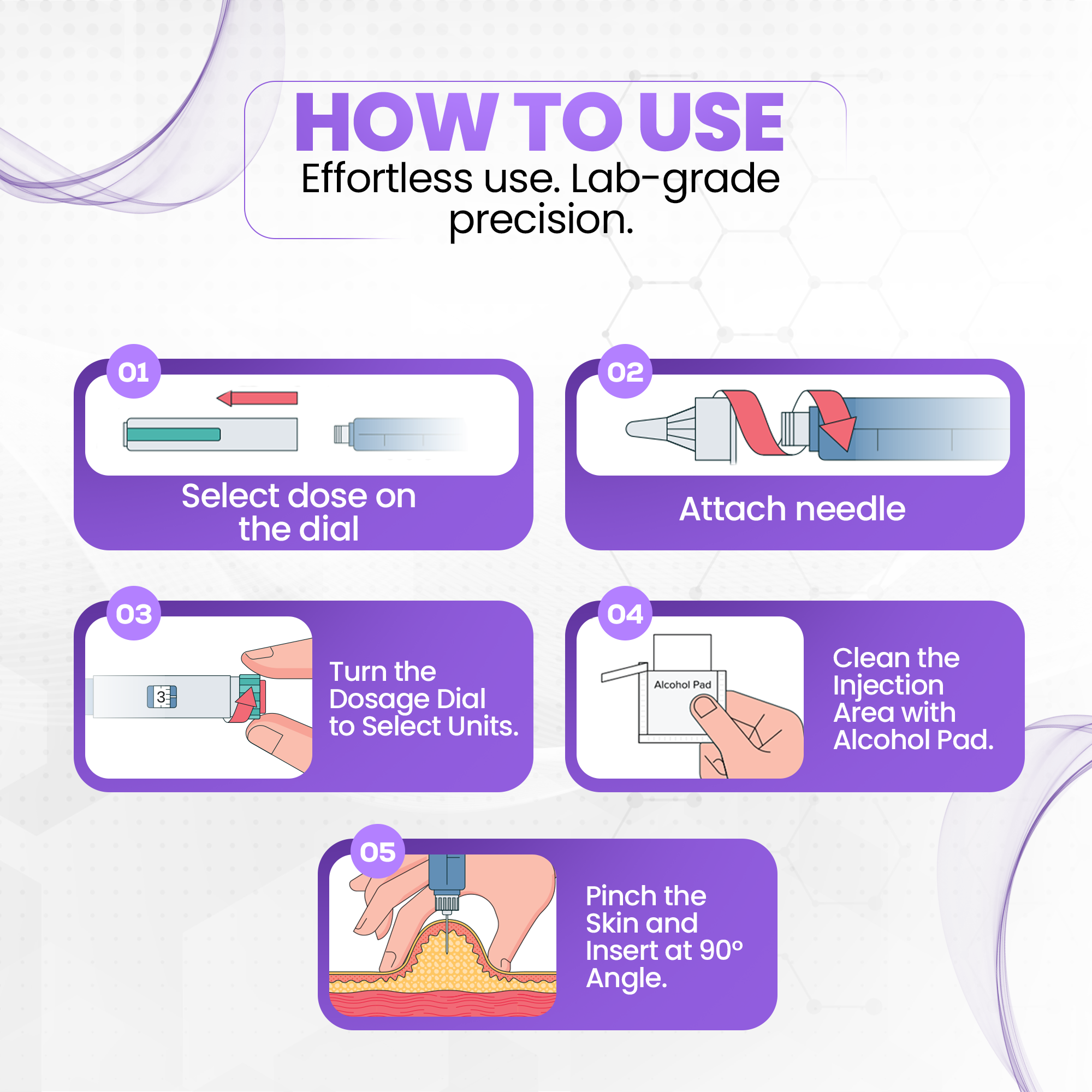
Supplied as a pre-mixed 10 mg / 1 mL injection pen for SubQ use in laboratory settings; 1 click delivers 0.1 mg.
Clinical Status:
Eloralintide is an investigational research peptide. It is not a GLP-1 receptor agonist and is not approved for medical use in any country; it remains restricted to experimental and laboratory research.
Evidence type:
Human RCT ✔ | Observational ☐ | Animal ✔ | In vitro ✔ | Regulatory ☐
Mechanism of Action
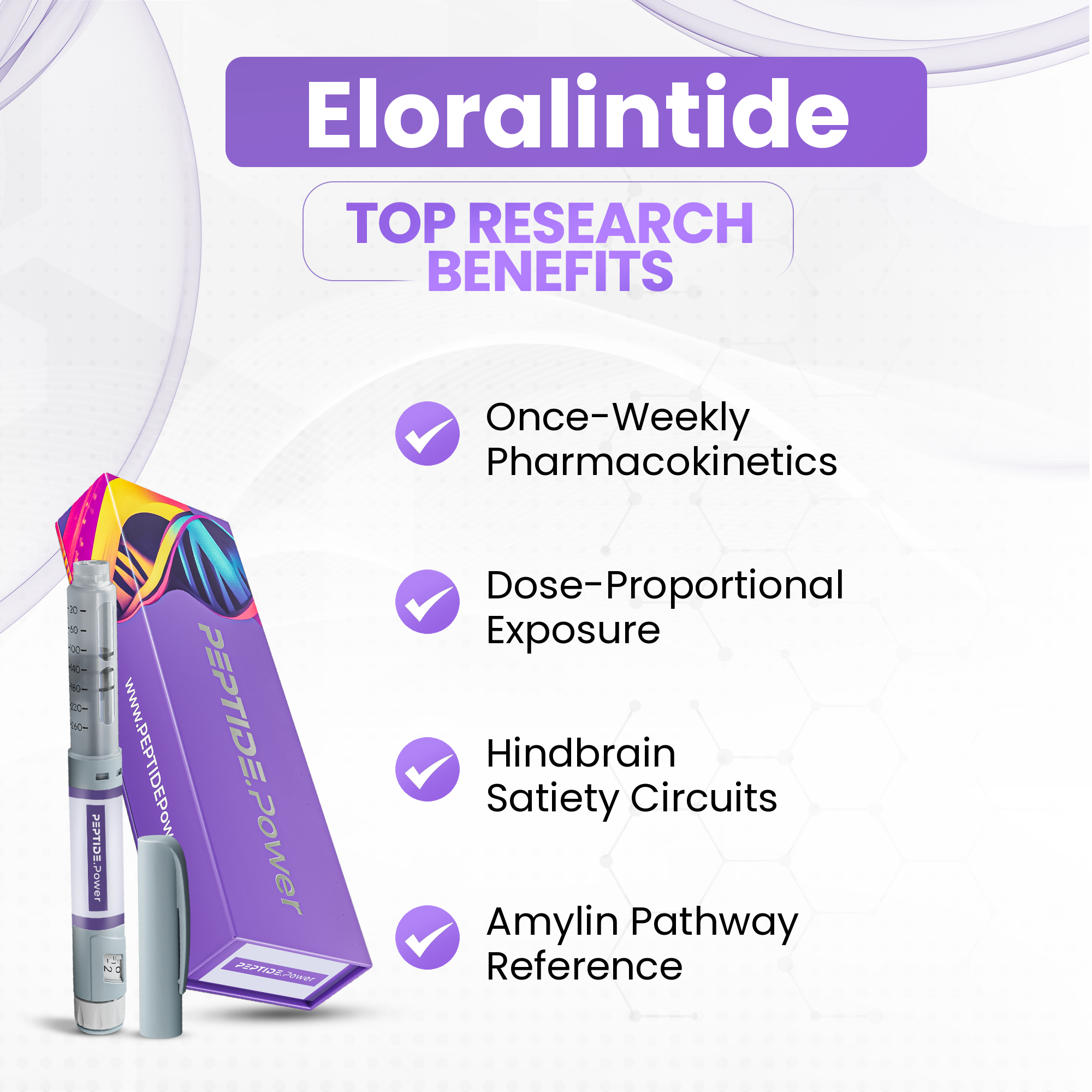
Eloralintide mimics the pancreatic hormone amylin, which is co-secreted with insulin by beta cells. Amylin receptors are complexes of the calcitonin receptor with receptor activity-modifying proteins (RAMPs); eloralintide preferentially activates the AMY1 complex (calcitonin receptor + RAMP1). Amylin receptor signalling in hindbrain areas such as the area postrema is studied for its role in satiety and meal size, and structural modifications give the peptide a duration of action consistent with once-weekly dosing.
Benefits
- Selective AMY1 Receptor Activation:
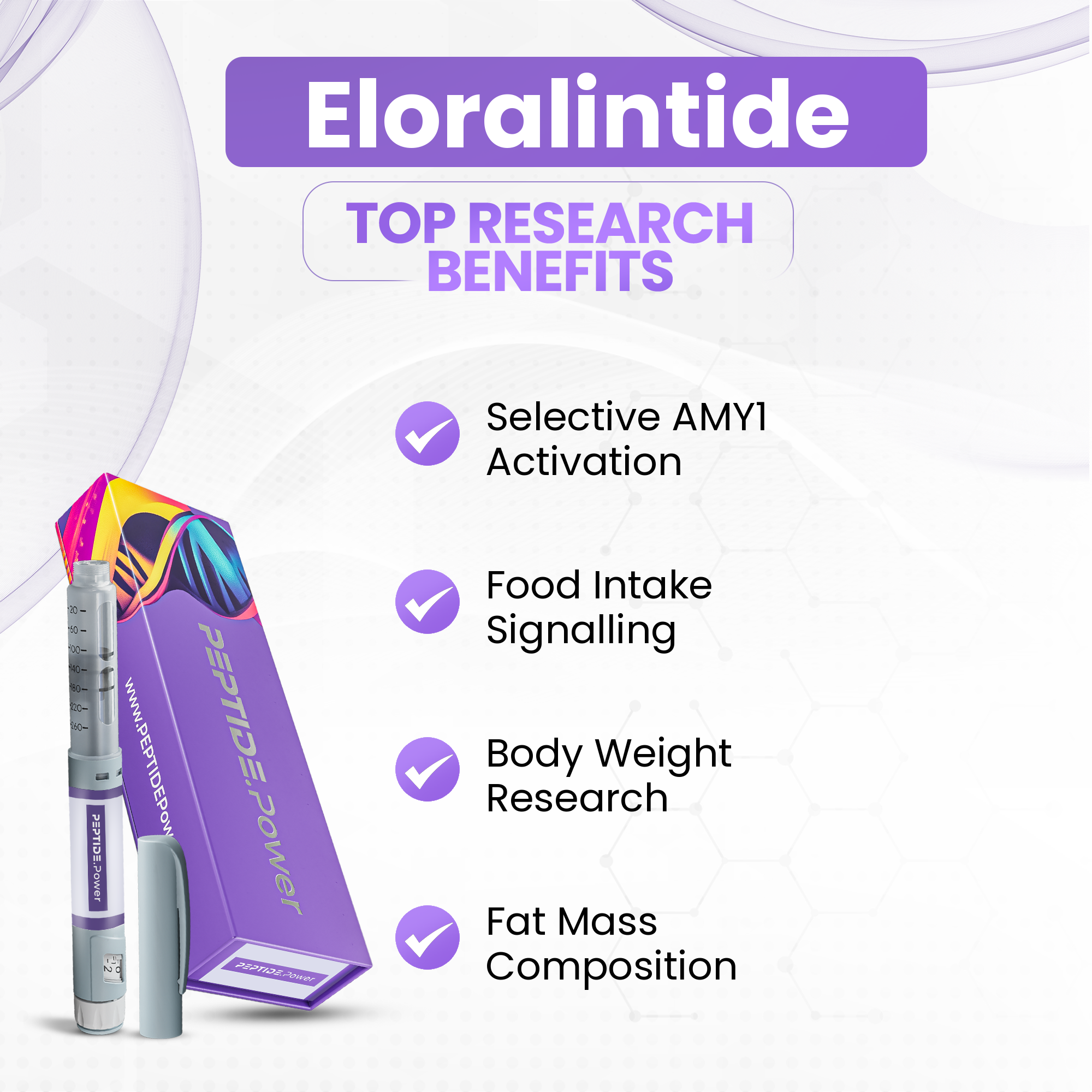
In cell lines expressing single receptor types, eloralintide preferentially activated the human AMY1 receptor, about 12-fold over the calcitonin receptor and 11-fold over the AMY3 receptor. This selectivity makes it a useful tool for studying amylin receptor signalling with less concurrent calcitonin receptor activity, as described in the discovery and translational work published in 2025. - Food Intake Research:
In diet-induced obese rats, eloralintide reduced food intake in a dose-dependent manner. Amylin acts on hindbrain satiety circuits, including the area postrema, that are involved in ending a meal, and eloralintide is used to study how selective amylin receptor activation shapes meal size and energy intake in animal models. - Body Weight Studies:
Eloralintide lowered body weight in diet-induced obese rats. In a published 48-week phase 2 trial with once-weekly dosing, mean body weight changes from baseline ranged from -9% to -20% across dose arms, compared with -0.4% with placebo. These are group averages from a controlled study and are cited here for research context only. - Fat Mass and Body Composition:
In the rat studies, the body weight reduction came primarily from loss of fat mass. This makes eloralintide relevant for research questions on body composition, on how reduced energy intake is distributed between fat and lean tissue, and on amylin signalling in adipose tissue regulation in animal models. - Once-Weekly Pharmacokinetics:
Pharmacokinetic studies in rats and monkeys showed long-acting exposure, and in a 12-week phase 1 multiple ascending dose study exposure (AUC and Cmax) was dose proportional at steady state. The profile supports once-weekly dosing, which allows research protocols with stable, sustained amylin receptor engagement between doses. - Tolerability Data for Study Design:
In the 12-week phase 1 study, gastrointestinal events such as diarrhoea (10%), nausea (8%) and vomiting (4%) were infrequent and most events were mild. In phase 2, nausea and fatigue were the most common events and varied with dose and escalation scheme, data that help researchers plan gradual dose steps. - Dose-Response Characterisation:
Published studies cover a wide dose range: single doses of 0.04-12 mg in phase 1, and once-weekly fixed doses of 1, 3, 6 and 9 mg plus 3-9 mg and 6-9 mg escalation schemes in phase 2. The resulting dose-dependent data give a well-described reference frame for dose-response research. - Amylin Pathway Reference Compound:
With published in vitro, animal, phase 1 and phase 2 data, eloralintide serves as a reference compound for amylin receptor pharmacology, receptor subtype selectivity and appetite signalling studies. Its mechanism is distinct from GLP-1 receptor agonists, which makes it suitable for research that isolates the amylin pathway.
Research data & references
Research Data
| Study / Model | Reported effect |
|---|---|
| In vitro receptor assays (human AMY1, AMY3, calcitonin receptor) | Preferential AMY1 activation: 12-fold over the calcitonin receptor, 11-fold over AMY3 |
| Diet-induced obese rats | Dose-dependent ↓ food intake and ↓ body weight, mainly from fat mass loss |
| Rats and monkeys (pharmacokinetics) | Long-acting exposure supporting once-weekly dosing |
| Phase 1 single ascending dose, 0.04-12 mg (n = 48) | Week 4 body weight change -2.5% (4 mg) and -4.4% (12 mg) vs +0.6% placebo; most adverse events mild |
| Phase 1 multiple ascending dose, 12 weeks (n = 100) | Dose-proportional exposure; body weight change -2.6% to -11.3% across dose groups; gastrointestinal events infrequent |
| Phase 2, once weekly, 48 weeks (n = 263) | Mean body weight change -9% to -20% across dose arms vs -0.4% placebo; nausea and fatigue most common adverse events |
Scientific References
- Briere DA et al. Mol Metab 2025 Preclinical + phase 1
- Billings LK et al. Lancet 2025 Phase 2 trial
- Bhattachar S et al. Diabetes Obes Metab 2026 Phase 1 trial
- Bailey CJ et al. Peptides 2026 Review
- Alhazmi A, le Roux CW. Diabetes Obes Metab 2026 Review
- PubChem CID 175663130 (Eloralintide) Registry
- KEGG DRUG D12886 (Eloralintide) Registry
- MedChemExpress datasheet HY-P10798 Datasheet
Pen dosing chart & research protocols
Pen Dosage Chart
| Eloralintide Pen 10 mg | |
|---|---|
| Volume | 1 mL |
| mg/mL | 10 mg/mL |
| Click-to-Dose | 1 click = 0.1 mg |
| Example(s) | 10 clicks = 1 mg |
Protocol variations
Low-dose weekly research protocol
- Dose: 1 mg (10 clicks)
- Duration: 10 weeks (one pen)
- Frequency: Once weekly, subcutaneous (SubQ) with the pen
- Cycle Interval: Pause of at least 4 weeks before a repeat course
- Pen Coverage: 1 pen = 10 weekly doses
- Goal / Description: Entry dose matching the lowest once-weekly arm of the published phase 2 study. Basis: derived from once-weekly doses used in published studies; not a validated dose recommendation.
Step-up weekly research protocol
- Dose: 1 - 2 mg (10 - 20 clicks)
- Duration: 7 weeks: 1 mg for weeks 1-4, then 2 mg for weeks 5-7 (one pen)
- Frequency: Once weekly, subcutaneous (SubQ) with the pen
- Cycle Interval: Pause of at least 4 weeks before a repeat course
- Pen Coverage: 1 pen = 5 - 10 weekly doses
- Goal / Description: Gradual dose escalation, the approach used in the phase 2 study to improve tolerability. Basis: derived from once-weekly doses used in published studies; not a validated dose recommendation.
Standard weekly research protocol
- Dose: 3 mg (30 clicks)
- Duration: 3 weeks per pen; studied courses run 12-48 weeks
- Frequency: Once weekly, subcutaneous (SubQ) with the pen
- Cycle Interval: Pause of at least 4 weeks before a repeat course
- Pen Coverage: 1 pen = 3 weekly doses
- Goal / Description: Matches the 3 mg once-weekly arm of the published phase 2 study. Basis: derived from once-weekly doses used in published studies; not a validated dose recommendation.
Stack Suggestions
No combination stack is suggested for Eloralintide in this catalogue:
- Eloralintide alone → the published phase 1 and phase 2 studies evaluated it as a single compound.
- Combination designs → no validated combination partner is offered in this catalogue.
⚠ Stacks are for experimental design only; not safety or efficacy guidance.
Safety notes
Eloralintide is an investigational compound. The effects below were reported in published research studies and are listed for research context only.
Effects reported in published studies:
- Nausea, the most common event in the phase 2 trial, more frequent at higher fixed doses and lower with gradual dose escalation.
- Fatigue, also among the most common events in the phase 2 trial.
- Decreased appetite, headache and fatigue in the 12-week phase 1 study.
- Diarrhoea, nausea and vomiting, reported as infrequent in phase 1.
- Most reported adverse events were mild in severity.
Long-term safety has not been established. Handle only under controlled laboratory research conditions.
Specifications
- CAS #: 2883634-40-8
- Molecular Formula: C201H319N49O65S2
- Sequence (AA): N/A
- Molecular Weight: ~4526.1 g/mol
- PubChem CID: 175663130
- Half-Life: Long-acting; pharmacokinetics support once-weekly dosing
- Synonyms: LY3841136, LY-3841136
- Type: Synthetic research peptide (long-acting amylin analogue)
- Research Focus: Selective amylin (AMY1) receptor agonist studied for appetite, food intake and body weight regulation
Included In The Box
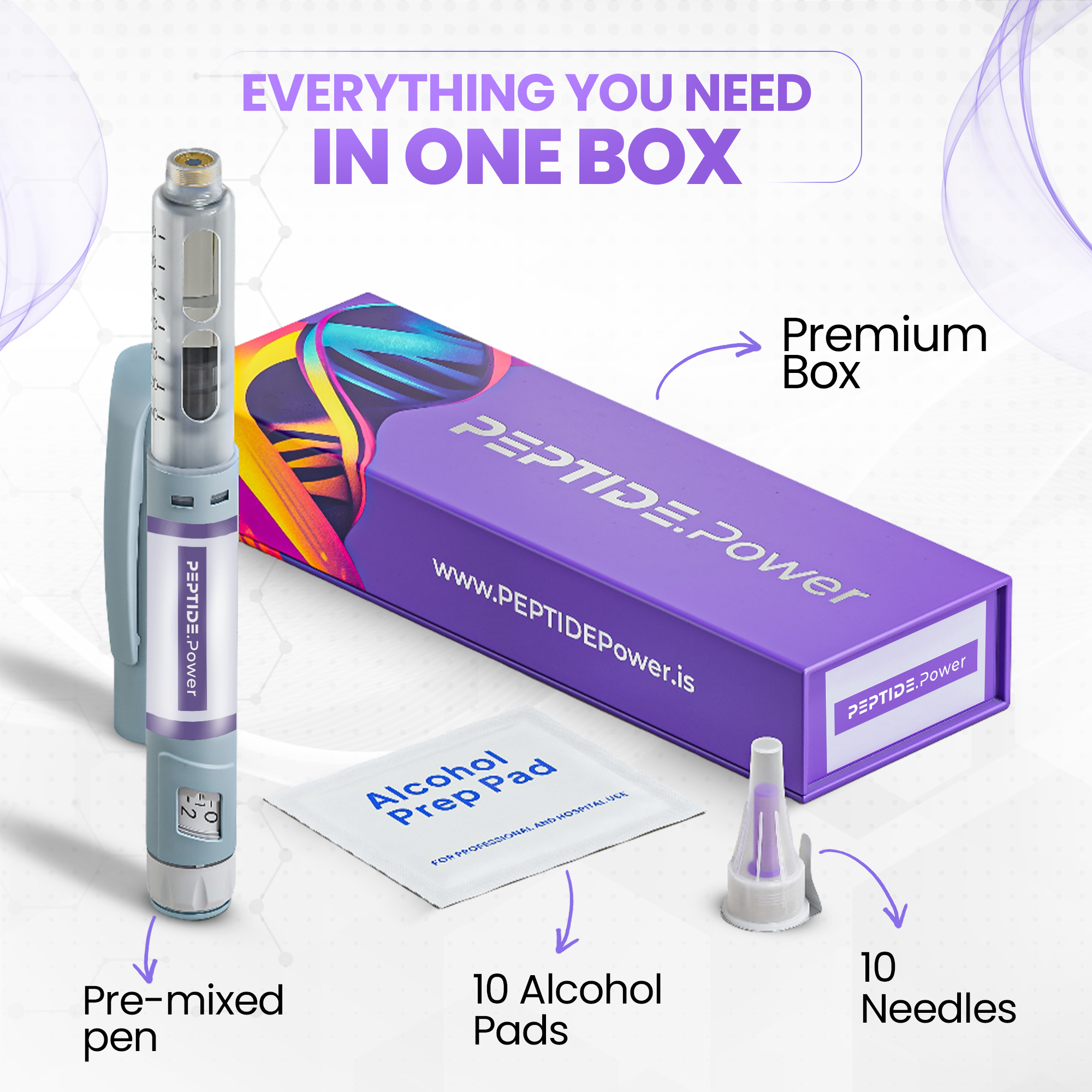
Every product arrives in a premium, custom-designed PEPTIDE.Power box, engineered for convenience, hygiene, and safe storage in your refrigerator. Inside, you will find everything needed for your full research protocol:
- 1× Disposable Pre-Mixed Injection Pen
- Powered by our proprietary PSM Technology™: precision stabilization & mixing system for consistent potency
- 10× Ultra-thin Needles (33G, 4 mm)
- 10× Alcohol Pads for sterile preparation
- Internal Stabilizing Foam Insert to prevent shaking during transport
- Instruction Panel printed on the inside of the box for quick reference
- Security Seal Sticker ensuring the package has not been opened or tampered with
Storage
Store the product in a refrigerator at 1-8°C immediately upon delivery. To maintain optimal stability, keep the pen away from light, and do not expose it to repeated temperature changes.
Once reconstituted (all our pens come pre-mixed), research compounds remain stable for 6-8 weeks under proper refrigeration.
Do not freeze after reconstitution. Always keep the box closed so the pen, needles, and alcohol pads stay clean and protected.
For best results, use the product consistently within the recommended time window and always follow your research protocol.
Delivery
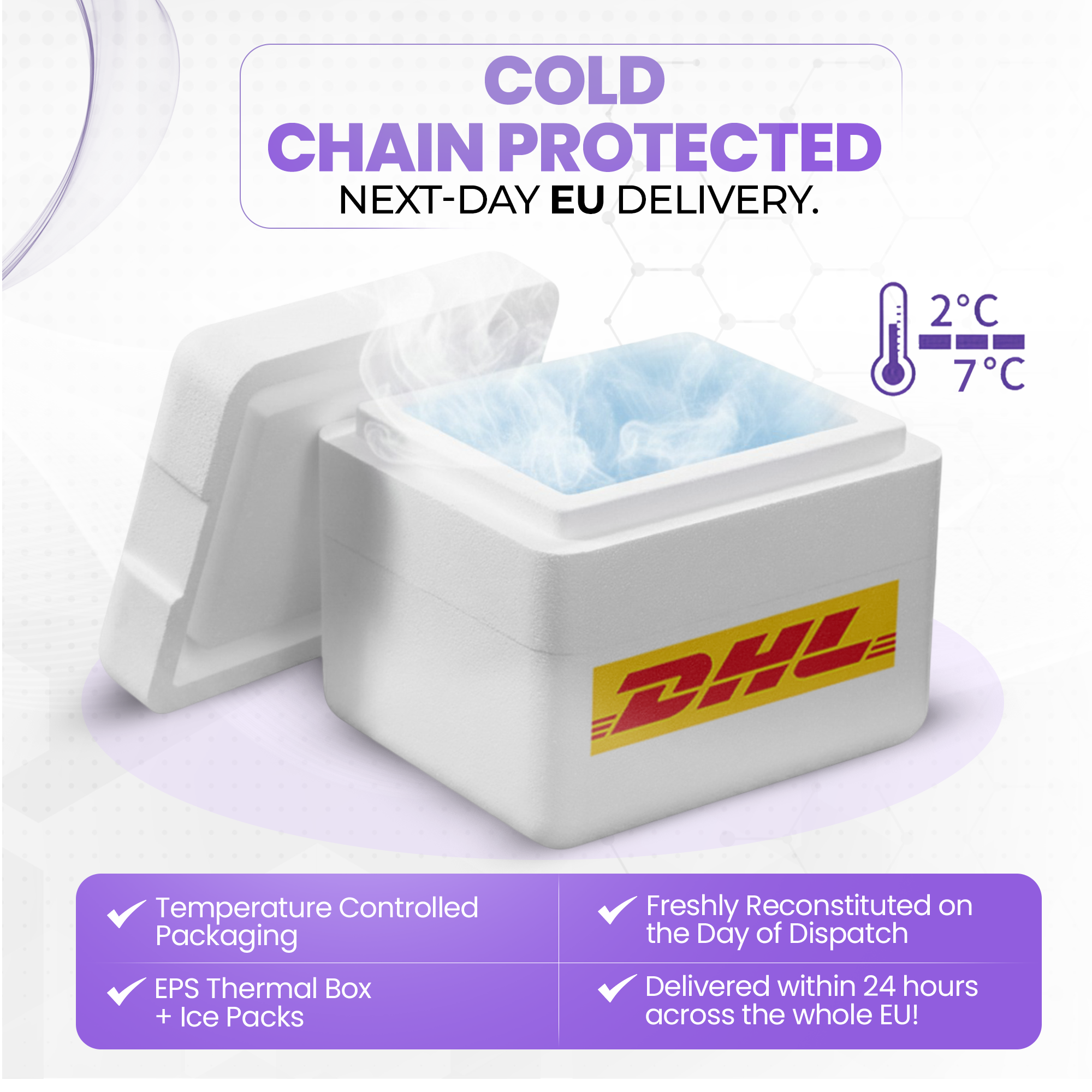
We ship with Next-Day EU Delivery via DHL Express or UPS Express.
All orders are prepared fresh on the day of dispatch, placed in EPS Cold-Chain Transport Boxes, and shipped with cooling elements to maintain a stable temperature throughout the journey.
Our logistics process is designed so the package arrives overnight, avoiding customs delays inside the European Union.
Products are shipped from our EU facility, ensuring no import duties, no customs clearance, and always fast and secure delivery.
Payment
Due to the nature of research peptides and the high-risk category assigned by payment processors, credit card companies do not generally support merchants in this field.
For this reason, we accept mainly Bank Transfers.
We also work with a crypto payment provider, and from time to time, card payments may be available depending on processor availability.
Within the European Union, SEPA transfers are fast, low-cost, and usually arrive within minutes to a few hours, making the payment process smooth and simple.
Once the transfer is received, your order is prepared immediately and dispatched the same day, depending on the daily cut-off time.
Please note that we do not dispatch shipments on Fridays or on days before official public holidays. This is done to ensure that parcels can be delivered on the next working day and are not held in transit over weekends or holidays.
This method ensures compliance, security, and continuity of service for all customers across the EU.
Didn't find the answer to your question?
View all frequently asked questions


