






Bioregulator – Advanced
Bioregulator Advanced broadens the foundation with Cartalax (musculoskeletal), Cardiogen (cardiac) and Cortagen (cerebral), assembling a six-peptide whole-systems panel of Khavinson bioregulators for comprehensive multi-tissue research.
Supplied at research-grade purity. For research purposes only; not for human consumption.
343,00 € Prețul inițial a fost: 343,00 €.257,00 €Prețul curent este: 257,00 €.
Fundația completă de bioregulatori — Thymalin, Pinealon, Vesugen, Cartalax, Cardiogen și Cortagen.
Ce include acest pachet


Bioregulator - Advanced - Comprehensive Systemic Research Stack
Thymalin for thymic function
Pinealon for pineal activity
Vesugen for vessel health
Cartalax for joint tissue
Cardiogen for heart support
Cortagen for stress response
Cortagen for tissue processes
Thymalin for broad support
Descriere
Mecanism de acțiune
This advanced bioregulator stack explores targeted peptide research to influence various physiological systems. Components are investigated for their roles in supporting cellular function, tissue regeneration, and systemic balance. Research pathways include modulating immune responses, vascular integrity, cartilage health, cardiac function, and neuroendocrine signaling, aiming to understand their complementary effects on organismal homeostasis.
Beneficii
- Immune System Research – Investigating Thymalin’s role in immune function.
- Vascular Health Studies – Exploring Vesugen for blood vessel integrity.
- Cardiac Function Support – Examining Cardiogen’s influence on heart tissue.
- Joint & Cartilage Research – Focusing on Cartalax for connective tissue.
- Neuroendocrine Regulation – Studying Pinealon’s impact on pineal gland activity.
- Cellular Stress Response – Investigating Cortagen for adrenal support.
Date de cercetare
Thymalin
| Study / Model | Reported effect |
|---|---|
| Aged murine models | ↑ thymic cellularity, ↑ CD4+/CD8+ ratio, restored T-cell output |
| Immunocompromised rodent studies | ↑ IL-2 and interferon-gamma expression, improved lymphocyte proliferation |
| Elderly human observational cohorts | Reduced incidence of respiratory infections and improved immune markers |
| Radiation-exposure animal models | Accelerated hematopoietic recovery and lymphocyte regeneration |
| Chronic inflammation models | ↓ pro-inflammatory cytokines (TNF-α, IL-6), normalized immune balance |
| In vitro thymocyte cultures | Enhanced T-cell maturation and differentiation signaling |
| Geriatric clinical observations | Improved telomerase activity and extended cellular longevity markers |
Pinealon
| Study / Model | Reported effect |
|---|---|
| Aged rat cognitive performance | ↑ memory retention and learning capacity in Morris water maze tasks |
| Cultured cortical neurons (in vitro) | ↓ oxidative stress markers; ↑ neuronal survival under hypoxic conditions |
| Accelerated aging mouse model (SAMP1) | Extended lifespan and preserved cognitive function compared to controls |
| Human fibroblast culture | ↑ telomerase activity and ↑ telomere length over multiple passages |
| Rotenone-induced neurotoxicity model | Reduced apoptosis and preserved mitochondrial integrity in dopaminergic neurons |
| Elderly cognitive decline observational study | Improved attention, memory recall, and psycho-emotional state markers |
| Ischemia-reperfusion brain injury (rat) | ↓ infarct volume; ↑ neuroprotective gene expression including Bcl-2 |
| Sleep-deprivation behavioral model | Normalized circadian markers and reduced stress-induced cognitive deficits |
Vesugen
| Study / Model | Reported effect |
|---|---|
| Aged rat vascular tissue | ↑ endothelial regeneration markers; improved capillary density |
| Human umbilical vein endothelial cell (HUVEC) culture | ↑ proliferation rate and ↓ senescence-associated markers |
| Atherosclerosis animal model | ↓ plaque progression; improved vascular wall integrity |
| Elderly cohort observational study | Improved microcirculation and reduced markers of vascular aging |
| In vitro telomere assay | Telomerase activity preservation in endothelial lineages |
| Hypertensive rat model | ↓ systolic pressure; ↑ nitric oxide bioavailability |
| Diabetic vascular complication model | Reduced endothelial dysfunction and oxidative stress markers |
Cartalax
| Study / Model | Reported effect |
|---|---|
| Cultured chondrocytes (in vitro) | ↑ proliferation rate and ↑ aggrecan and type II collagen expression |
| Aged rat cartilage tissue | ↓ apoptosis markers and partial restoration of cellular density |
| Osteoarthritis animal model | ↓ inflammatory cytokines (IL-1β, TNF-α) and improved joint mobility |
| Senescent fibroblast cultures | Modulated gene expression linked to extracellular matrix synthesis |
| Rat intervertebral disc model | ↑ proteoglycan content and reduced degenerative markers |
| Geroprotective rodent studies | Improved functional indices of connective tissue with age |
| In vitro genotoxicity assays | No mutagenic or cytotoxic effects observed at tested concentrations |
Cardiogen
| Study / Model | Reported effect |
|---|---|
| Aged rat cardiomyocyte cultures | ↑ protein synthesis, ↑ cellular viability, restored functional markers toward younger phenotype |
| Experimental myocardial ischemia (rat model) | ↓ infarct size, ↑ capillary density, improved post-ischemic contractile recovery |
| Endothelial cell cultures under oxidative stress | ↓ apoptosis markers, ↑ NO synthase activity, preserved monolayer integrity |
| Aging cardiovascular rodent model | ↑ lifespan indicators, ↓ age-related myocardial fibrosis markers |
| Observational human studies (elderly cohorts) | Improved ECG parameters and reported cardiac functional indices |
| In vitro gene expression assays | Modulation of cardiac-specific transcription factors and contractile protein genes |
| Post-infarction recovery models | Accelerated tissue remodeling and reduced inflammatory infiltration |
Cortagen
| Study / Model | Reported effect |
|---|---|
| Aged rat cortical neuron cultures | ↑ neurite outgrowth and ↑ expression of neurotrophic markers |
| Rodent traumatic brain injury models | Accelerated recovery of motor and cognitive function; ↓ neuroinflammatory markers |
| Aged rats (chronic administration) | ↑ learning and memory performance in maze-based tasks |
| In vitro fibroblast cultures | Normalization of gene expression patterns associated with cellular aging |
| Geriatric human observational studies | Reported improvements in cognitive performance, sleep quality, and mood in elderly subjects |
| Post-stroke rehabilitation observational research | ↑ recovery of higher cortical functions and ↓ asthenic symptoms |
| Cellular oxidative stress models | ↓ lipid peroxidation and ↑ endogenous antioxidant enzyme activity |
Sugestii de combinare
This research bundle is designed for investigators exploring multi-system bioregulation and cellular health. It suits studies focused on the complementary effects of peptides on immune, cardiovascular, joint, and neuroendocrine systems, particularly within systemic support research.
Tabel de dozare pentru stilou
Thymalin
| Thymalin Pen 20 mg | |
| Volume | 2 mL |
| mg/mL | 10 mg/mL |
| Click-to-Dose | 1 click = 0.1 mg |
| Example(s) | 10 clicks = 1 mg |
Pinealon
| Pinealon Pen 20 mg | |
| Volume | 2 mL |
| mg/mL | 10 mg/mL |
| Click-to-Dose | 1 click = 0.1 mg |
| Example(s) | 10 clicks = 1 mg |
Vesugen
| Vesugen Pen 20 mg | |
| Volume | 2 mL |
| mg/mL | 10 mg/mL |
| Click-to-Dose | 1 click = 0.1 mg |
| Example(s) | 10 clicks = 1 mg |
Cartalax
| Cartalax Pen 20 mg | |
| Volume | 2 mL |
| mg/mL | 10 mg/mL |
| Click-to-Dose | 1 click = 0.1 mg |
| Example(s) | 10 clicks = 1 mg |
Cardiogen
| Cardiogen Pen 20 mg | |
| Volume | 2 mL |
| mg/mL | 10 mg/mL |
| Click-to-Dose | 1 click = 0.1 mg |
| Example(s) | 10 clicks = 1 mg |
Cortagen
| Cortagen Pen 20 mg | |
| Volume | 2 mL |
| mg/mL | 10 mg/mL |
| Click-to-Dose | 1 click = 0.1 mg |
| Example(s) | 10 clicks = 1 mg |
Dozare și variații de protocol
Thymalin
Standard Research Protocol
- Dose: 5 – 10 mg
- Duration: 5 – 10 days
- Frequency: Daily intramuscular administration
- Cycle Interval: 4 – 6 months before repeating
- Goal / Description: Baseline immunomodulatory protocol used in aging and immune restoration models.
Therapeutic Research Protocol
- Dose: 10 – 20 mg
- Duration: 10 – 14 days
- Frequency: Daily
- Cycle Interval: 3 – 6 months off before repeating
- Goal / Description: Higher-dose protocol applied in immunocompromised and chronic inflammation models.
Biohacker Protocol (experimental)
- Dose: 2 – 5 mg
- Duration: 10 – 20 days
- Frequency: Every other day
- Cycle Interval: 2 – 3 times per year
- Goal / Description: Low-dose longevity-oriented schedule explored in epigenetic and thymic regeneration research.
Pinealon
Standard Research Protocol
- Dose: 1 – 3 mg
- Duration: 2 – 4 weeks
- Frequency: Daily
- Cycle Interval: 4 – 8 weeks off before repeating
- Goal / Description: Baseline protocol for neuroprotection and cognitive support models.
Therapeutic Research Protocol
- Dose: 3 – 5 mg
- Duration: 3 – 4 weeks
- Frequency: Daily
- Cycle Interval: 8 – 12 weeks off before repeating
- Goal / Description: Higher-dose regimen used in studies targeting age-related cognitive decline and oxidative stress.
Biohacker Protocol (experimental)
- Dose: 0.5 – 1 mg
- Duration: 6 – 8 weeks
- Frequency: 5× per week
- Cycle Interval: 4 weeks off before repeating
- Goal / Description: Low-dose continuous exposure for longevity and cellular preservation research.
Vesugen
Standard Research Protocol
- Dose: 100 – 200 mcg
- Duration: 4 – 6 weeks
- Frequency: Daily, sublingual or SubQ
- Cycle Interval: 4 – 8 weeks off before repeating
- Goal / Description: Baseline protocol for vascular function and endothelial integrity studies.
Therapeutic Research Protocol
- Dose: 200 – 400 mcg
- Duration: 6 – 8 weeks
- Frequency: Daily
- Cycle Interval: 8 weeks off before repeating
- Goal / Description: Extended protocol used in models targeting vascular aging and microcirculation.
Biohacker Protocol (experimental)
- Dose: 100 mcg
- Duration: 8 – 12 weeks
- Frequency: Daily, low-dose sublingual
- Cycle Interval: Continuous with 2-week pauses every 12 weeks
- Goal / Description: Microdose approach explored in longevity-oriented vascular research.
Cartalax
Standard Research Protocol
- Dose: 5 – 10 mg
- Duration: 10 – 20 days
- Frequency: Daily (SubQ or IM)
- Cycle Interval: 4 – 6 months off before repeating
- Goal / Description: Common protocol in cartilage and joint-tissue research models.
Therapeutic Research Protocol
- Dose: 10 – 20 mg
- Duration: 20 – 30 days
- Frequency: Daily, split into morning and evening administration
- Cycle Interval: 3 – 4 months off before repeating
- Goal / Description: Targeted regimen for advanced cartilage degeneration and osteoarthritis models.
Stacked Protocol (Cartalax + Pinealon)
- Dose: 5 – 10 mg Cartalax + 5 mg Pinealon
- Duration: 15 – 20 days
- Frequency: Daily
- Cycle Interval: 4 months off before repeating
- Goal / Description: Combined bioregulator approach for joint repair and systemic cellular renewal.
Cardiogen
Standard Research Protocol
- Dose: 2 – 4 mg
- Duration: 2 – 4 weeks
- Frequency: Daily
- Cycle Interval: 4 – 6 months off before repeating
- Goal / Description: Baseline protocol for cardiac and vascular tissue research models.
Therapeutic Research Protocol
- Dose: 4 – 6 mg
- Duration: 3 – 4 weeks
- Frequency: Daily
- Cycle Interval: 4 – 6 months off before repeating
- Goal / Description: Higher-dose protocol for targeted cardiomyocyte and endothelial repair studies.
Biohacker Protocol (experimental)
- Dose: 1 – 2 mg
- Duration: 4 – 6 weeks
- Frequency: 5× per week
- Cycle Interval: 2 – 3 months off before repeating
- Goal / Description: Microdose continuous approach for longevity and vascular maintenance research.
Cortagen
Standard Research Protocol
- Dose: 1 – 2 mg
- Duration: 10 – 20 days
- Frequency: Daily
- Cycle Interval: 4 – 6 months off before repeating
- Goal / Description: Baseline protocol for connective tissue and joint research models.
Therapeutic Research Protocol
- Dose: 2 – 4 mg
- Duration: 15 – 30 days
- Frequency: Daily
- Cycle Interval: 3 – 6 months off before repeating
- Goal / Description: Higher-dose protocol used in cartilage repair and post-injury recovery studies.
Biohacker Protocol (experimental)
- Dose: 0.5 – 1 mg
- Duration: 20 – 30 days
- Frequency: 3 – 4× per week
- Cycle Interval: 2 – 3 months off before repeating
- Goal / Description: Microdose continuous exploration for long-term connective tissue maintenance.
Posibile efecte secundare
Thymalin
Thymalin is generally well-tolerated in clinical and preclinical studies involving elderly and immunocompromised populations.
Reported side effects are infrequent and mild:
- Transient redness or mild swelling at the injection site.
- Occasional low-grade fever during initial dosing in immunocompromised models.
- Mild fatigue or drowsiness reported in early administration phases.
- Rare allergic-type reactions in sensitive subjects.
No evidence of hepatic, endocrine, or systemic toxicity has been observed in available research data.
Pinealon
Pinealon is generally well-tolerated in animal studies and limited human observational research.
Reported side effects are infrequent and mild:
- Transient mild headache during initial dosing.
- Localized irritation or redness at injection site.
- Occasional drowsiness or altered sleep patterns.
- Mild gastrointestinal discomfort in sensitive subjects.
No evidence of hormonal, hepatic, or neurotoxic adverse effects has been observed in available preclinical data. As a short tripeptide, Pinealon is rapidly metabolized into its constituent amino acids, which contributes to its favorable tolerability profile in experimental models.
Vesugen
Vesugen is generally well-tolerated in preclinical and limited observational studies.
Reported side effects are rare and mild:
- Mild localized irritation at the injection site.
- Transient headache during initial dosing periods.
- Occasional digestive sensitivity in sensitive subjects.
- Slight fatigue reported in early observational use.
No evidence of hormonal, hepatic, or systemic adverse effects has been observed in available research data. As a short tripeptide bioregulator, Vesugen is structurally similar to endogenous peptide fragments, which is associated with its low reported toxicity profile in experimental models.
Cartalax
Cartalax is generally well-tolerated in preclinical and limited human observational studies.
Reported side effects are rare and mild:
- Transient redness or irritation at the injection site.
- Mild local discomfort during initial administration.
- Occasional fatigue or drowsiness reported in sensitive subjects.
No evidence of hormonal, hepatic, or systemic adverse effects has been observed in available data.
Cardiogen
Cardiogen is generally well-tolerated in animal studies and limited human observational research within the Russian peptide bioregulator tradition.
Reported side effects are rare and mild:
- Localized irritation or redness at injection site.
- Transient mild headache during initial dosing period.
- Occasional fatigue or drowsiness reported in sensitive subjects.
- Mild gastrointestinal sensitivity when administered orally in sublingual formulations.
No evidence of cardiotoxic, hormonal, or systemic adverse effects has been observed in available data.
Cortagen
Cortagen is generally well-tolerated in preclinical and limited human observational studies.
Reported side effects are rare and mild:
- Localized redness or transient discomfort at the injection site.
- Mild drowsiness or fatigue during initial dosing.
- Occasional headache or lightheadedness in sensitive subjects.
- Transient changes in sleep patterns reported in early research models.
No evidence of hormonal, hepatic, or systemic adverse effects has been observed in available data.
Atribute produs
Referințe științifice
Thymalin
- Thymalin: clinical-experimental investigation in elderly and aged patients Observational | Animal
- Khavinson VK. Peptides and ageing Observational | Animal
- Anti-inflammatory and anti-aging effects of thymic peptide bioregulators in COVID-19 elderly patients Observational
- Peptide regulation of cell differentiation and gene expression in aging Animal | In vitro
- Short peptides and telomere length regulator hormone irisin: a novel approach to age-related diseases Observational | In vitro
- Effect of thymalin on the immune system and lifespan of mice Animal
- Peptide bioregulators: a novel direction of preventive gerontology Observational | Animal
- Influence of thymalin on functional activity of immune cells in patients with acute pneumonia Observational
Pinealon
- Short peptides stimulate cell regeneration in skin during aging Animal | In vitro
- Peptide regulation of cell differentiation Animal | In vitro
- Epigenetic aspects of peptidergic regulation of vascular endothelial cell proliferation during aging Animal | In vitro
- Tripeptides restore the number of neuronal spines under conditions of in vitro modeled Alzheimer’s disease In vitro
- Pinealon enhances resistance of cells of cerebral cortex of rat embryos to oxidative stress Animal | In vitro
- Peptidergic regulation of cell proliferation and renewal during aging Observational | Animal
- Neuroprotective effects of peptide bioregulators in experimental models of neurodegeneration Animal | In vitro
Vesugen
- Vascular wall peptide bioregulator prevents the H2O2-induced damage of endothelial cells Animal | In vitro
- Peptide KED: molecular-genetic aspects of neuroendocrine system regulation in aging In vitro
- Short peptides stimulate cell regeneration suppressed in elderly after stress exposure Animal | In vitro
- Peptidergic regulation of cell differentiation in 3D cell cultures In vitro
- Tripeptide KED induces vasoprotective and antioxidant gene expression in vascular endothelium In vitro
- Short peptides and telomere length regulator hTERT gene expression In vitro
- Geroprotective effects of short peptides in aging vascular research models Observational | Animal
- Molecular aspects of peptide bioregulation in vascular and endothelial tissue Observational | In vitro
Cartalax
- Peptidergic regulation of cell differentiation in 3D-cultures of tissues of skin, thymus, pancreas, and cartilage Animal | In vitro
- Peptide regulation of cell differentiation, proliferation, and renewal Animal | In vitro
- Short peptides regulate gene expression, protein synthesis and enhance life span Animal | In vitro
- Khavinson peptides regulate gene expression and protein synthesis: facts and hypotheses Observational | Animal | In vitro
- Tetrapeptide KED stimulates functional activity of vascular endothelial cells in monolayer In vitro
- Peptide bioregulation of aging: results and prospects Observational | Animal
- Short peptides and telomere length regulator hormone irisin Animal | In vitro
- Peptides and Aging Observational | Animal
Cardiogen
- Peptide regulation of cardiomyocyte functions during aging Animal | In vitro
- Cardiogen peptide effects on heart tissue regeneration in experimental models Animal
- Peptide bioregulators: a new class of geroprotectors. Khavinson review Observational | Animal | In vitro
- Short peptides regulate gene expression and protein synthesis in tissues In vitro
- Tetrapeptides as tissue-specific bioregulators: mechanisms and applications Animal | In vitro
- Peptide regulation of vascular endothelial function in aging models Animal
- Cytogens and short peptides in cardiovascular research: experimental evidence Observational | Animal
Cortagen
- Effect of the peptide Cortagen on regeneration of the sciatic nerve Animal
- Cortagen regulation of gene expression in the cerebral cortex Animal | In vitro
- Peptidergic regulation of gene expression in cortical neurons In vitro
- Short peptides as biological regulators of cellular activity Observational | In vitro
- Khavinson peptides: their role in the regulation of gene expression and protein synthesis Animal | In vitro
- Peptide regulation of cell differentiation, proliferation, and apoptosis In vitro
- Geroprotective effects of short peptides in experimental models Animal
- Epigenetic mechanisms of peptide-mediated neuroprotection Animal | In vitro
Inclus în cutie
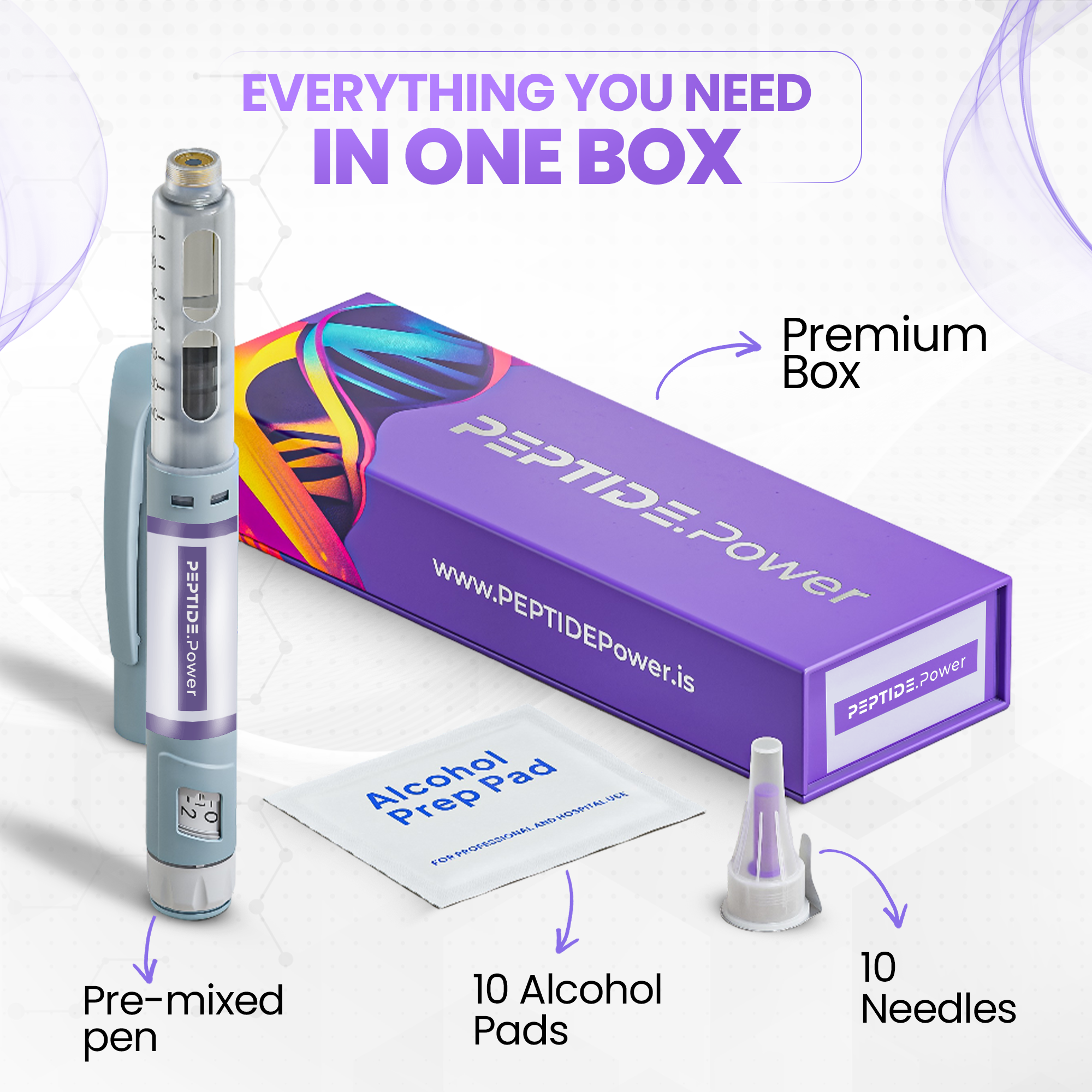
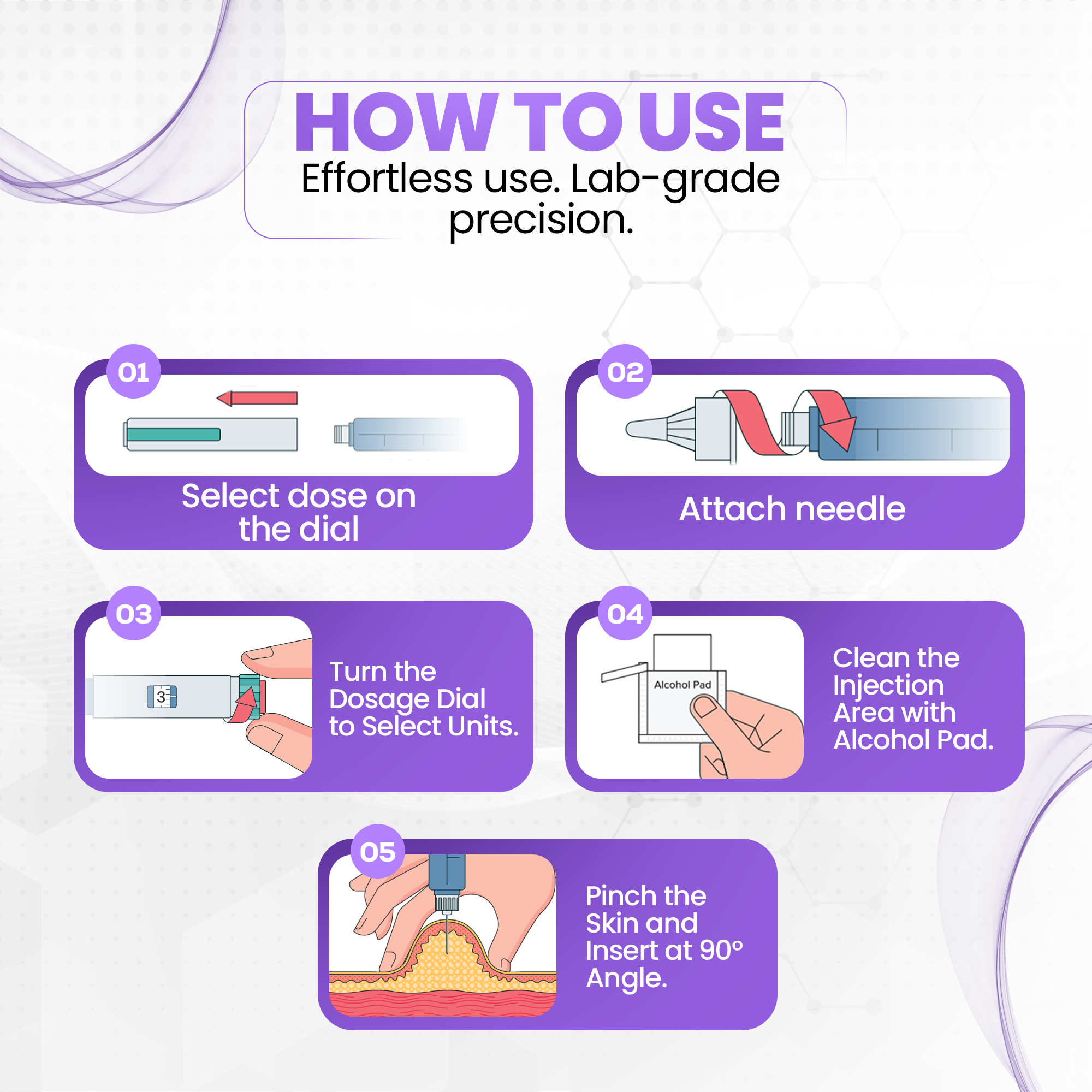
Fiecare produs sosește într-o cutie premium PEPTIDE.Power personalizată, proiectată pentru comoditate, igienă și depozitare sigură în frigider. În interior, veți găsi tot ce este necesar pentru protocolul dumneavoastră complet de cercetare:
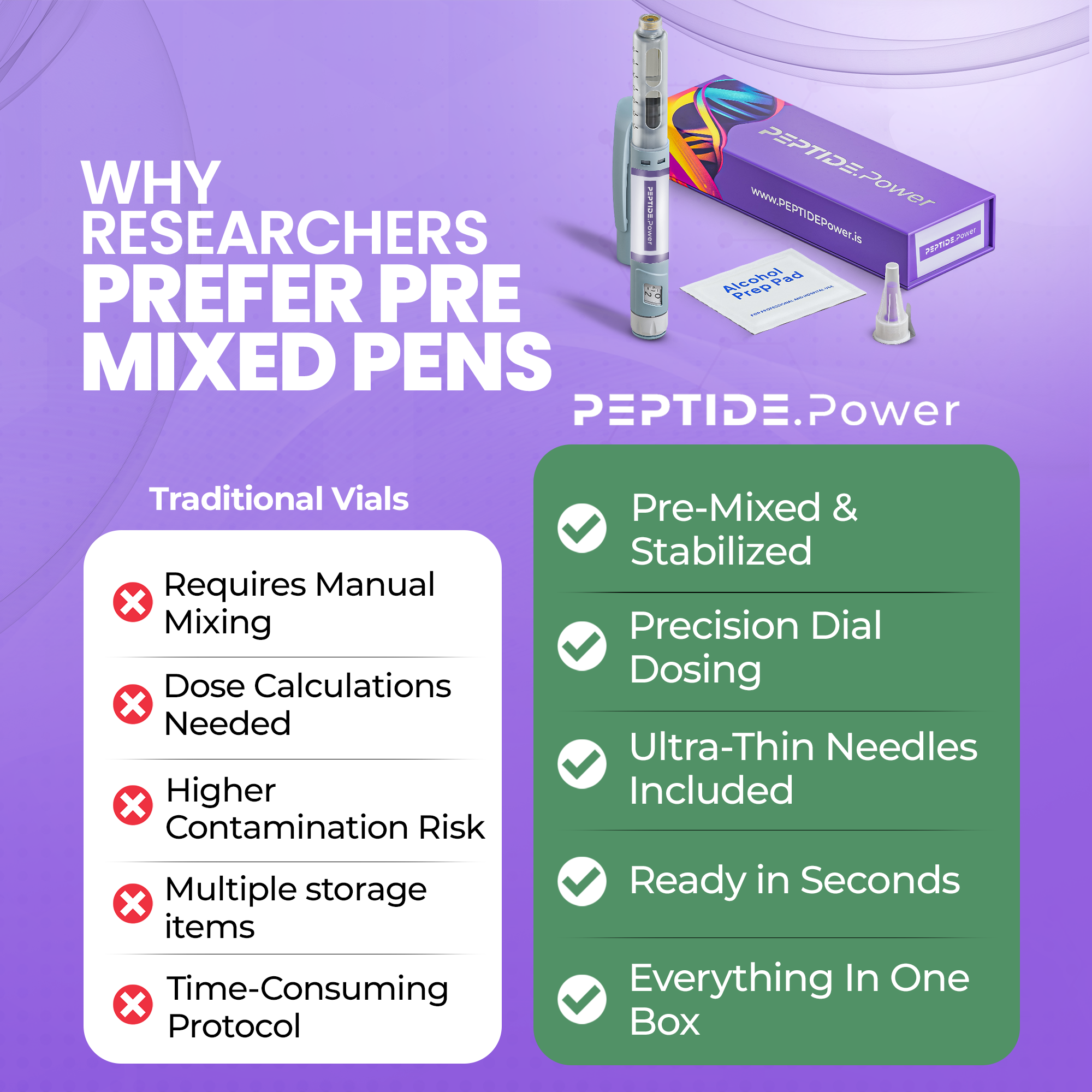
- 1× Stilou de injecție pre-amestecat de unică folosință
- Alimentat de Tehnologia PSM™ – sistem de stabilizare și amestecare de precizie pentru potență constantă
- 10× Ace ultra-subțiri (33G, 4 mm)
- 10× Tampoane cu alcool pentru pregătire sterilă
- Insert din spumă stabilizatoare internă pentru prevenirea agitării în timpul transportului
- Panou de instrucțiuni imprimat pe interiorul cutiei pentru referință rapidă
- Autocolant sigiliu de securitate care asigură că pachetul nu a fost deschis sau modificat
Depozitare
A se păstra produsul la frigider la 1 – 7°C imediat după livrare. Pentru a menține o stabilitate optimă, țineți stiloul ferit de lumină și nu îl expuneți la schimbări repetate de temperatură.
Odată reconstituite (toate stilourile noastre vin pre-amestecate), compușii de cercetare rămân stabili timp de 6 – 8 săptămâni sub refrigerare adecvată.
Nu congelați după reconstituire. Păstrați întotdeauna cutia închisă astfel încât stiloul, acele și tampoanele cu alcool să rămână curate și protejate.
Pentru cele mai bune rezultate, utilizați produsul în mod constant în intervalul de timp recomandat și urmați întotdeauna protocolul dumneavoastră de cercetare.
Livrare
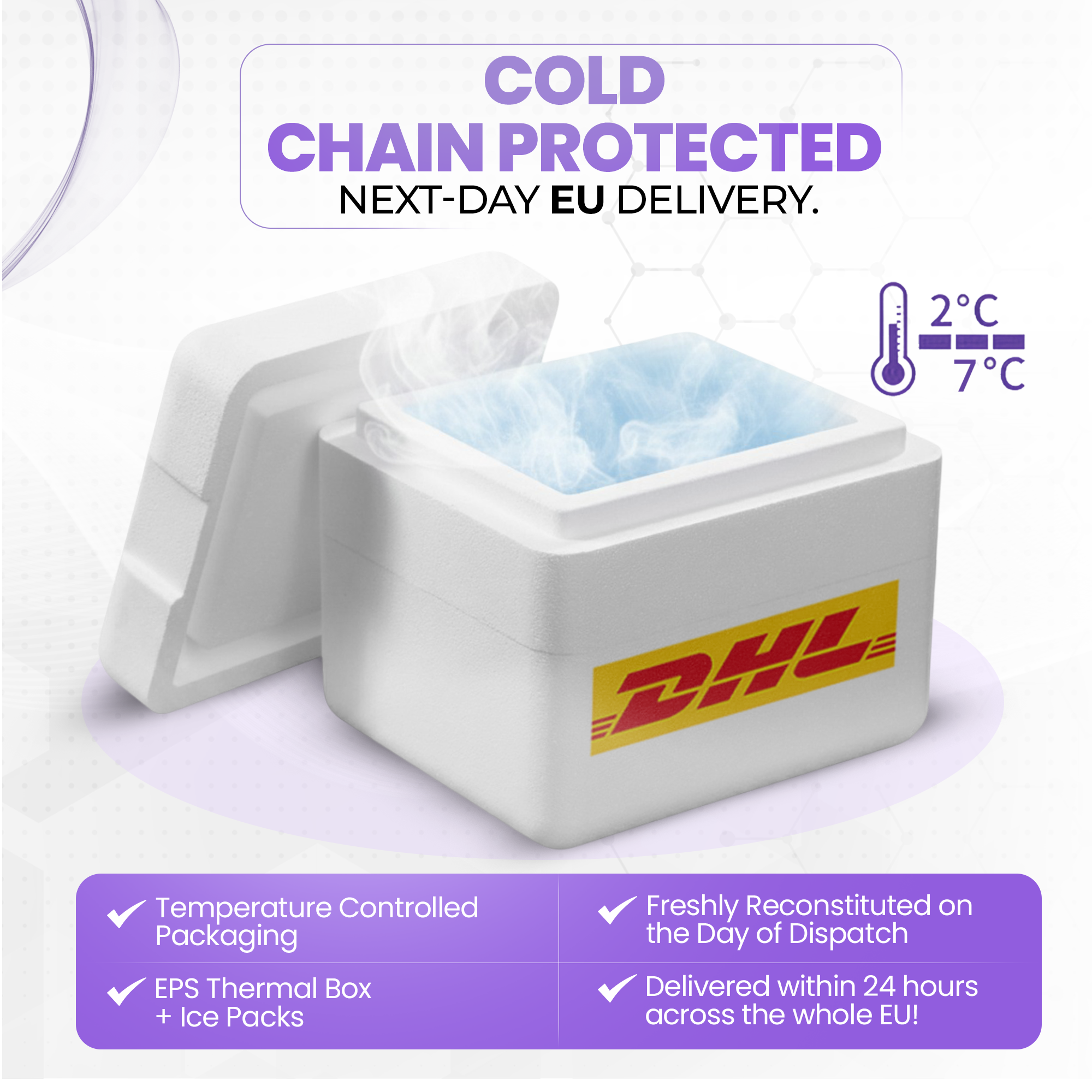
Expediem cu Livrare în UE în ziua următoare prin DHL Express sau UPS Express.
Toate comenzile sunt pregătite proaspăt în ziua expedierii, plasate în cutii de transport cu lanț de frig EPS și expediate cu elemente de răcire pentru a menține o temperatură stabilă pe tot parcursul călătoriei.
Procesul nostru logistic este conceput astfel încât pachetul să sosească a doua zi, evitând întârzierile vamale în interiorul Uniunii Europene.
Produsele sunt expediate din facilitatea noastră din UE, asigurând fără taxe de import, fără vămuire și întotdeauna livrare rapidă și sigură.
Plată
Din cauza naturii peptidelor de cercetare și a categoriei de risc ridicat atribuită de procesatorii de plăți, companiile de carduri de credit nu susțin comercianții din acest domeniu.
Din acest motiv, acceptăm doar transferuri bancare.
În cadrul Uniunii Europene, transferurile SEPA sunt rapide, cu costuri reduse și de obicei ajung în câteva minute până la câteva ore, făcând procesul de plată simplu și ușor.
Odată ce transferul este primit, comanda dumneavoastră este pregătită imediat și expediată în aceeași zi (în funcție de ora limită).
Această metodă asigură conformitatea, securitatea și continuitatea serviciului pentru toți clienții din UE.
Nu ați găsit răspunsul la întrebarea dvs.?
Vedeți toate întrebările frecventeRELATED PRODUCTS

Bioregulator – Start


Glow – Advanced


Lean Mass – Start


Repair Matrix – Start

