



BPC-157 Capsule
77,00 € – 130,00 €Interval de prețuri: 77,00 € până la 130,00 €
Temporar indisponibil. Lasă datele tale și te anunțăm imediat ce revine.
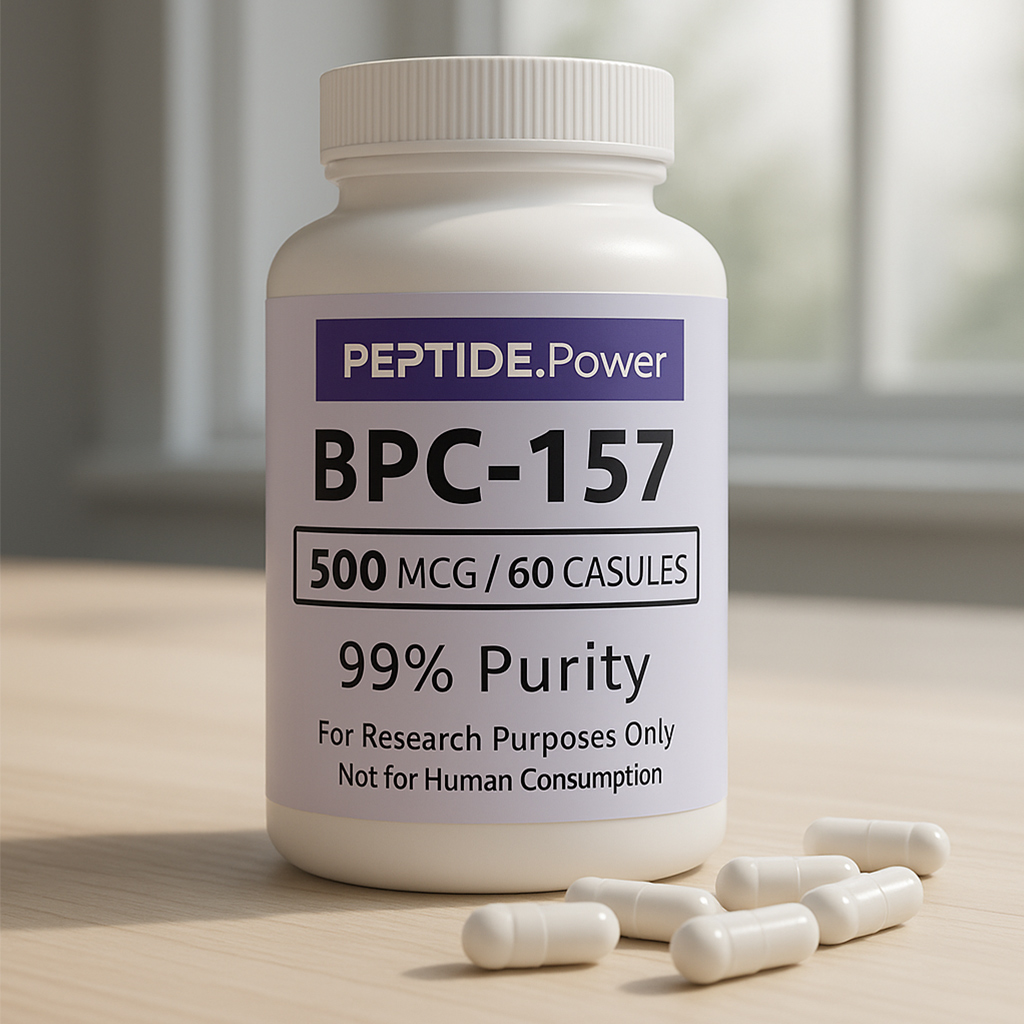
BPC-157 Capsules - Capsule BPC-157
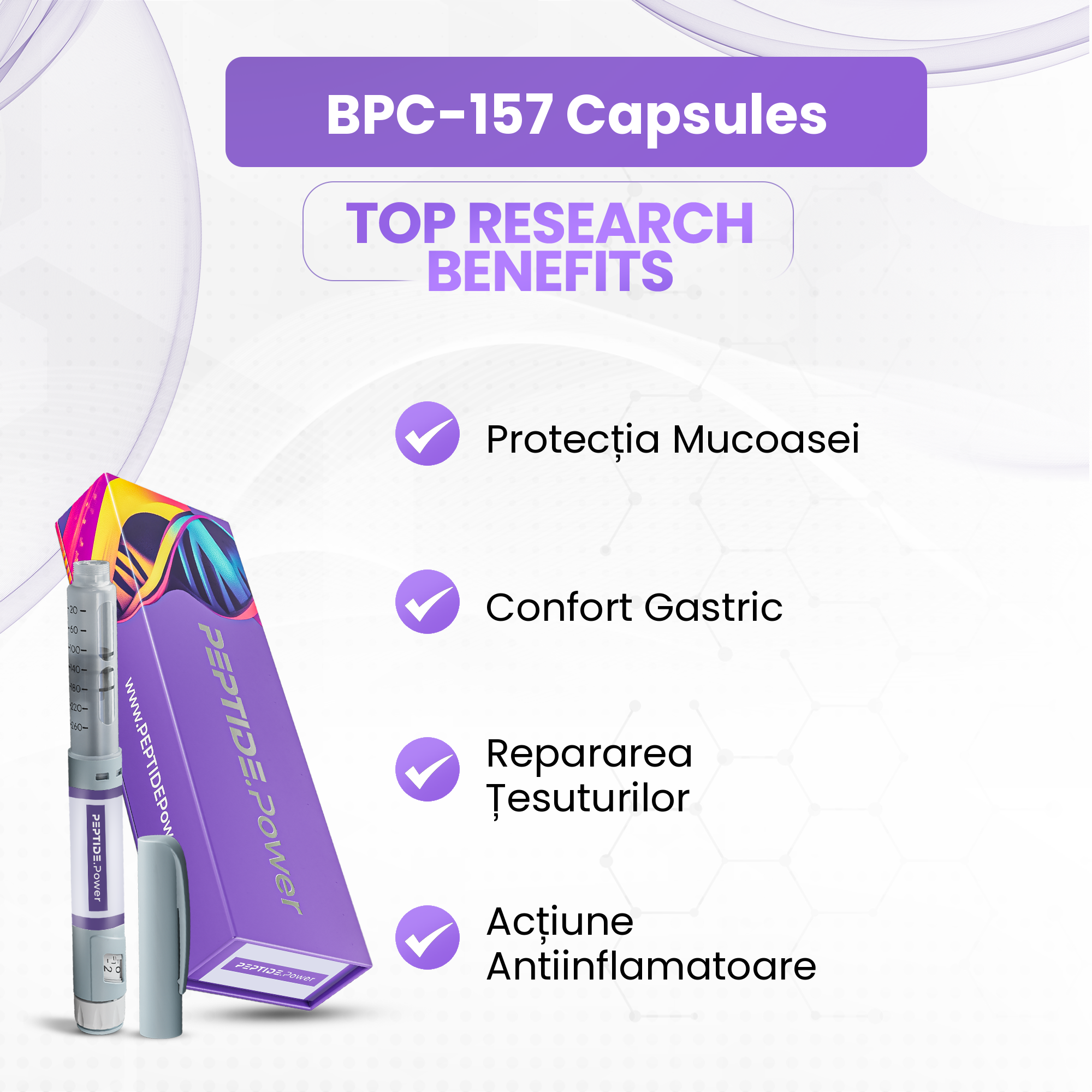
Studiată pentru susținerea integrității și reparării mucoasei gastrointestinale
Investigată pentru ameliorarea ulcerelor și iritațiilor tractului digestiv
Se observă accelerarea vindecării țesuturilor moi, tendoanelor și ligamentelor
Modulează semnalizarea inflamatorie pentru a susține recuperarea
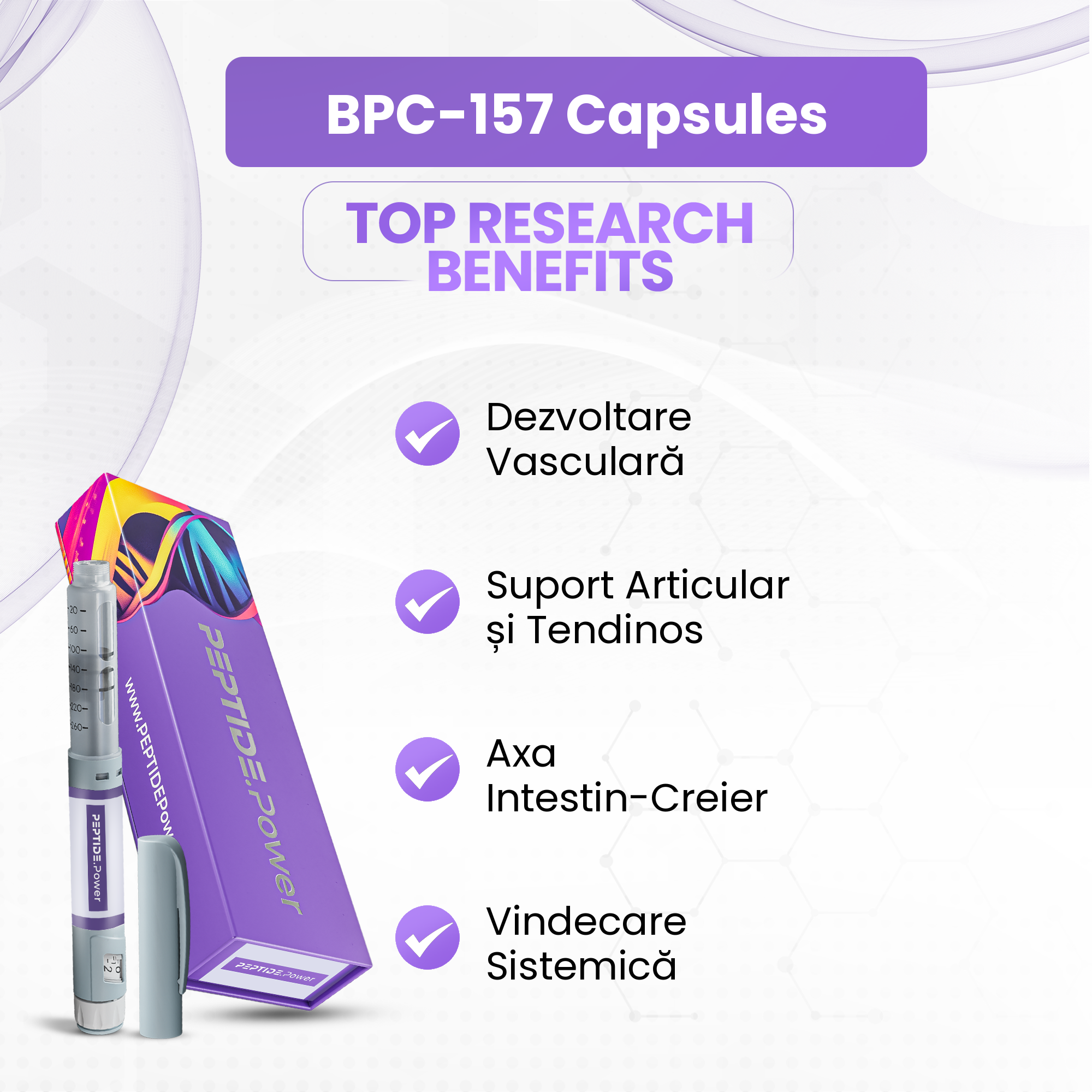
Promovează formarea de noi vase de sânge pentru a facilita vindecarea
Susține recuperarea articulațiilor, tendoanelor și țesutului conjunctiv
Cercetată pentru interacțiunile de-a lungul axei de semnalizare intestin-creier
Susține regenerarea țesuturilor și reziliența la nivelul întregului organism
Descriere
BPC-157 este o pentadecapeptidă sintetică derivată dintr-o secvență protectoare identificată în sucul gastric uman, compusă din 15 aminoacizi și studiată pe larg pentru proprietățile sale citoprotectoare și regenerative. Cercetările au explorat rolul său în repararea țesuturilor, angiogeneză și protecția gastrointestinală în multiple modele experimentale.
În studiile preclinice, s-a observat că BPC-157 accelerează vindecarea țesutului conjunctiv, reglează în sus expresia VEGF și modulează calea oxidului nitric (NO) pentru a susține integritatea vasculară. Cercetări suplimentare evidențiază influența sa asupra axei intestin-creier, cu efecte raportate asupra funcției barierei intestinale și regenerării mucoasei.
Mecanismele secundare includ modularea citokinelor inflamatorii și interacțiunea cu receptorii factorilor de creștere, contribuind la profilul său regenerativ amplu în modelele de cercetare axate pe țesuturile musculoscheletice, gastrointestinale și nervoase.
Formulat sub formă de capsule orale predozate, această prezentare oferă un format convenabil, gata de utilizare pentru aplicațiile de cercetare, cu o concentrație constantă per capsulă și manipulare facilă în condiții de laborator.
Statut clinic:
BPC-157 este o peptidă de cercetare evaluată în numeroase modele animale și în studii observaționale limitate pe oameni pentru vindecarea gastrointestinală, regenerarea musculoscheletică și modularea angiogenică. Nu este aprobată pentru uz medical și rămâne restricționată la cercetarea experimentală și de laborator.
Tip de dovezi:
Studiu clinic ☐ | Observațional ✔ | Animal ✔ | In vitro ✔ | Reglementare ☐
Mecanism de acțiune
În modele de laborator, BPC-157 este raportat să interacționeze cu mai multe căi de semnalizare legate de menținerea și repararea țesuturilor. Cercetările descriu o reglare crescută a receptorului hormonului de creștere și modularea semnalizării oxidului nitric, alături de efecte asupra angiogenezei mediate de VEGF care ar putea susține formarea de noi vase de sânge. Ca pentadecapeptidă administrată oral, capsula înghițită este studiată pentru stabilitatea sa remarcabilă în condiții gastrice, ceea ce o face un candidat pentru investigarea mecanismelor citoprotectoare asociate intestinului.
Beneficii
Următoarele proprietăți raportate în cercetare rezumă domeniile în care BPC-157 a fost examinat în contexte preclinice și experimentale. Aceste observații provin în principal din studii pe animale și in vitro și sunt prezentate doar pentru context de cercetare; ele descriu rezultate investigaționale și nu reprezintă rezultate terapeutice sau indicații aprobate la om.
- Protecție gastrointestinală: BPC-157 provine dintr-o proteină protectoare identificată în sucul gastric, iar un volum amplu de literatură preclinică a examinat efectul său de stabilizare asupra mucoasei intestinale supuse unor factori chimici sau fizici de stres. Formatul capsulei orale prezintă un interes deosebit în această zonă, întrucât peptida ingerată este livrată direct în tractul gastrointestinal, unde a fost localizată istoric o mare parte din această activitate de cercetare și unde stabilitatea raportată a compusului în condiții gastrice este cea mai relevantă.
- Repararea și vindecarea țesuturilor: Modelele experimentale au explorat BPC-157 în contextul reparării țesuturilor moi, tendoanelor, ligamentelor, mușchilor și oaselor. În aceste modele, cercetătorii au raportat o organizare mai rapidă a țesutului reparator, o recuperare structurală îmbunătățită și o activitate fibroblastică sporită la animalele lezate, care împreună formează baza profilului regenerativ studiat pe scară largă al acestui compus.
- Susținerea angiogenezei: Mai multe studii descriu reglarea în sus a factorului de creștere endotelial vascular (VEGF) și promovarea formării de noi vase de sânge. Se consideră că această activitate angiogenică stă la baza unei părți substanțiale a comportamentului regenerativ al compusului în lucrările de laborator, întrucât o aprovizionare vasculară îmbunătățită susține livrarea de nutrienți către țesutul în reparare.
- Citoprotecție: În cadrul mai multor sisteme de organe, BPC-157 a fost caracterizat ca un compus protector al organismului, cu efecte stabilizatoare raportate asupra celulelor expuse la factori de stres chimici, ischemici și fizici în experimente controlate. Această amprentă citoprotectoare amplă este proprietatea de la care compusul își ia numele.
- Modele intestin-creier și neurologice: O parte din literatura preclinică a examinat BPC-157 în modele ale sistemului nervos, investigând interacțiunile de-a lungul axei intestin-creier și raportând efecte asupra anumitor căi neurotransmițătoare, inclusiv sistemele dopaminergice și serotoninergice la rozătoare.
- Modele tendinoase și osoase: Cercetările au analizat comportamentul fibroblastelor și expresia factorilor de creștere asociați reparării în studii pe tendoane și oase, unde peptida a fost asociată cu o migrare celulară îmbunătățită și o organizare tisulară superioară in vitro.
- Format oral convenabil pentru cercetare: Furnizate sub formă de capsule pre-dozate de 500 mcg, această prezentare susține dozarea consecventă și repetabilă în protocoalele de cercetare. Formatul oral pre-dozat elimină etapele de manipulare necesare altor prezentări și simplifică proiectarea studiilor oriunde este preferată o cale orală de expunere.
Fiecare dintre aceste puncte reflectă constatări din literatura experimentală, mai degrabă decât indicații aprobate. Capsulele BPC-157 sunt destinate strict scopurilor de laborator și cercetare și nu sunt pentru uz uman sau veterinar.
Date de cercetare
| Domeniu de cercetare | Model / Context | Observație raportată |
|---|---|---|
| Protecție gastrointestinală | Modele gastrice la rozătoare | Efect protector asupra mucoasei intestinale expuse la factori chimici de stres |
| Reparare tendoane / ligamente | Leziuni ale țesuturilor moi la animale | Organizare mai rapidă a țesutului de reparare raportată |
| Angiogeneză | In vitro și pe animale | Expresie crescută a VEGF și formare de noi vase |
| Citoprotecție | Studii preclinice multi-organ | Efect stabilizator descris asupra celulelor supuse stresului |
| Modele neurologice | Studii intestin-creier la rozătoare | Modularea unor căi neurotransmițătoare selectate |
Datele de mai sus sunt sintetizate din literatura preclinică și in vitro și sunt furnizate doar pentru orientare în cercetare. Acestea nu constituie dovezi clinice de eficacitate la om.
Sugestii de combinare
În protocoalele de cercetare, BPC-157 este uneori studiat alături de alți compuși investigați pentru obiective legate de țesuturi și recuperare, evaluat pentru efecte aditive sau complementare în condiții controlate:
- BPC-157 → TB-500, asociat în modele de cercetare privind țesuturile moi și recuperarea.
- BPC-157 → GHK-Cu, examinat împreună în studii de remodelare tisulară.
- BPC-157 → KPV, explorat în cercetări gastrointestinale și inflamatorii.
⚠ Combinațiile sunt enumerate doar pentru context de cercetare și nu implică siguranță sau eficacitate la om. Toate asocierile trebuie să urmeze protocoale validate, cu controale adecvate.
Capsule Dosage Chart
| BPC-157 Capsule – 500 mcg | |
| Concentrație | 500 mcg (0,5 mg) per capsulă |
| Mărimi flacon | 30 sau 60 capsule |
| Porție standard | 1 capsulă o dată pe zi |
| Conținut total | 15 mg (30 capsule) / 30 mg (60 capsule) |
Dozare și variații de protocol
Capsulele BPC-157 conțin 500 mcg per capsulă (flacoane de 30 sau 60), dozate în incremente de capsulă întreagă și administrate oral cu apă.
Protocol Standard de Cercetare
- Doză: 500 mcg (1 capsulă)
- Durată: 4 – 6 săptămâni
- Frecvență: 1 capsulă o dată pe zi cu apă
- Interval de ciclu: 2 – 4 săptămâni pauză înainte de repetare
- Obiectiv / Descriere: Dozare orală de bază investigată în modele de recuperare gastrointestinală și a țesutului conjunctiv.
Protocol Terapeutic de Cercetare
- Doză: 1000 mcg / 1 mg (2 capsule)
- Durată: 6 – 8 săptămâni
- Frecvență: 1 capsulă de două ori pe zi, dimineața și seara
- Interval de ciclu: 4 săptămâni pauză înainte de repetare
- Obiectiv / Descriere: Regim oral cu doză mai mare evaluat în modele care vizează repararea tendoanelor, ligamentelor și barierei intestinale.
Protocol Biohacker (experimental)
- Doză: 500 mcg (1 capsulă)
- Durată: 8 – 12 săptămâni
- Frecvență: 1 capsulă o dată pe zi, doză mică continuă
- Interval de ciclu: Pauze periodice de 2 săptămâni
- Obiectiv / Descriere: Protocol de microdozare pe termen lung explorat pentru observații citoprotectoare susținute.
Posibile efecte secundare
BPC-157 a fost descris în literatura preclinică drept bine tolerat în intervalele de doze studiate în modele animale, cu un profil de siguranță în general favorabil raportat în condiții experimentale. Deoarece nu sunt stabilite date cuprinzătoare și controlate privind siguranța la om, orice concluzii referitoare la tolerabilitatea la oameni rămân neconfirmate.
În observațiile de cercetare, au fost ocazional remarcate constatări nespecifice, precum tulburări gastrointestinale ușoare, în cazul administrării orale a compușilor peptidici în general. Ca în cazul oricărei substanțe de investigație, nu pot fi excluse răspunsuri necunoscute sau idiosincratice, iar siguranța pe termen lung a BPC-157 nu a fost caracterizată în mod oficial.
Acest produs este destinat strict utilizării în laborator și în scopuri de cercetare. Nu este un medicament, nu este destinat consumului uman sau veterinar și trebuie manipulat doar de personal calificat, respectând practicile de siguranță adecvate.
Atribute produs
- Clasă de compus: Pentadecapeptidă sintetică (Body Protection Compound)
- CAS #: 137525-51-0
- Formulă moleculară: C62H98N16O22
- Greutate moleculară: ~1419 g/mol
- Lungimea secvenței: 15 aminoacizi
- Format: Capsulă orală, 500 mcg per capsulă
- Status: Exclusiv pentru uz în cercetare de laborator
Referințe științifice
- Sikiric P, Seiwerth S, et al. Brain-gut Axis and Pentadecapeptide BPC 157: Theoretical and Practical Implications. Curr Neuropharmacol. 2016.
- Sikiric P, Seiwerth S, et al. Toxicity by NSAIDs. Counteraction by stable gastric pentadecapeptide BPC 157. Curr Pharm Des. 2013.
- Chang CH, Tsai WC, et al. The promoting effect of pentadecapeptide BPC 157 on tendon healing involves tendon outgrowth, cell survival, and cell migration. J Appl Physiol (1985). 2011.
- Cerovecki T, Bojanic I, et al. Pentadecapeptide BPC 157 (PL 14736) improves ligament healing in the rat. J Orthop Res. 2010.
- Gwyer D, Wragg NM, Wilson SL. Gastric pentadecapeptide body protection compound BPC 157 and its role in accelerating musculoskeletal soft tissue healing. Cell Tissue Res. 2019.
Referințele sunt furnizate doar pentru orientare în cercetare și descriu activitate preclinică sau experimentală.
Included In The Box
Every order arrives in a premium, custom-designed PEPTIDE.Power box, engineered for convenience, hygiene, and safe storage. Inside, you will find everything needed for your full research protocol:
- 1× Sealed bottle of capsules, tamper-evident and ready to use — no preparation required
- Desiccant pack included to keep the capsules dry and stable
- Internal Stabilizing Foam Insert to protect the bottle during transport
- Instruction Panel printed on the inside of the box for quick reference
- Security Seal Sticker ensuring the package has not been opened or tampered with
Storage
Store the bottle in a cool, dry place away from direct light, and keep it tightly closed between uses. No refrigeration is required.
Avoid exposure to heat, humidity, and repeated temperature changes to preserve potency. Keep the desiccant pack inside the bottle.
For best results, use the product consistently within the recommended time window and always follow your research protocol.
Delivery
We ship with Next-Day EU Delivery via DHL Express or UPS Express.
All orders are prepared fresh on the day of dispatch, placed in EPS Cold-Chain Transport Boxes, and shipped with cooling elements to maintain a stable temperature throughout the journey.
Our logistics process is designed so the package arrives overnight, avoiding customs delays inside the European Union.
Products are shipped from our EU facility, ensuring no import duties, no customs clearance, and always fast and secure delivery.
Payment
Due to the nature of research peptides and the high-risk category assigned by payment processors, credit card companies do not generally support merchants in this field.
For this reason, we accept mainly Bank Transfers.
We also work with a crypto payment provider, and from time to time, card payments may be available depending on processor availability.
Within the European Union, SEPA transfers are fast, low-cost, and usually arrive within minutes to a few hours, making the payment process smooth and simple.
Once the transfer is received, your order is prepared immediately and dispatched the same day, depending on the daily cut-off time.
Please note that we do not dispatch shipments on Fridays or on days before official public holidays. This is done to ensure that parcels can be delivered on the next working day and are not held in transit over weekends or holidays.
This method ensures compliance, security, and continuity of service for all customers across the EU.
Nu ați găsit răspunsul la întrebarea dvs.?
Vedeți toate întrebările frecventeRELATED PRODUCTS


BPC 157


Melanotan II


NAD+


Selank


Thymalin
Thymalin este un peptid bioregulator de cercetare extras din glanda timus, investigat pentru proprietățile sale imunomodulatoare și regenerative în modele experimentale. A fost studiat pentru capacitatea sa de a restabili funcția timică, de a regla diferențierea limfocitelor T și de a susține imunitatea celulară în contexte de cercetare legate de îmbătrânire și stres.