





Brain – Start
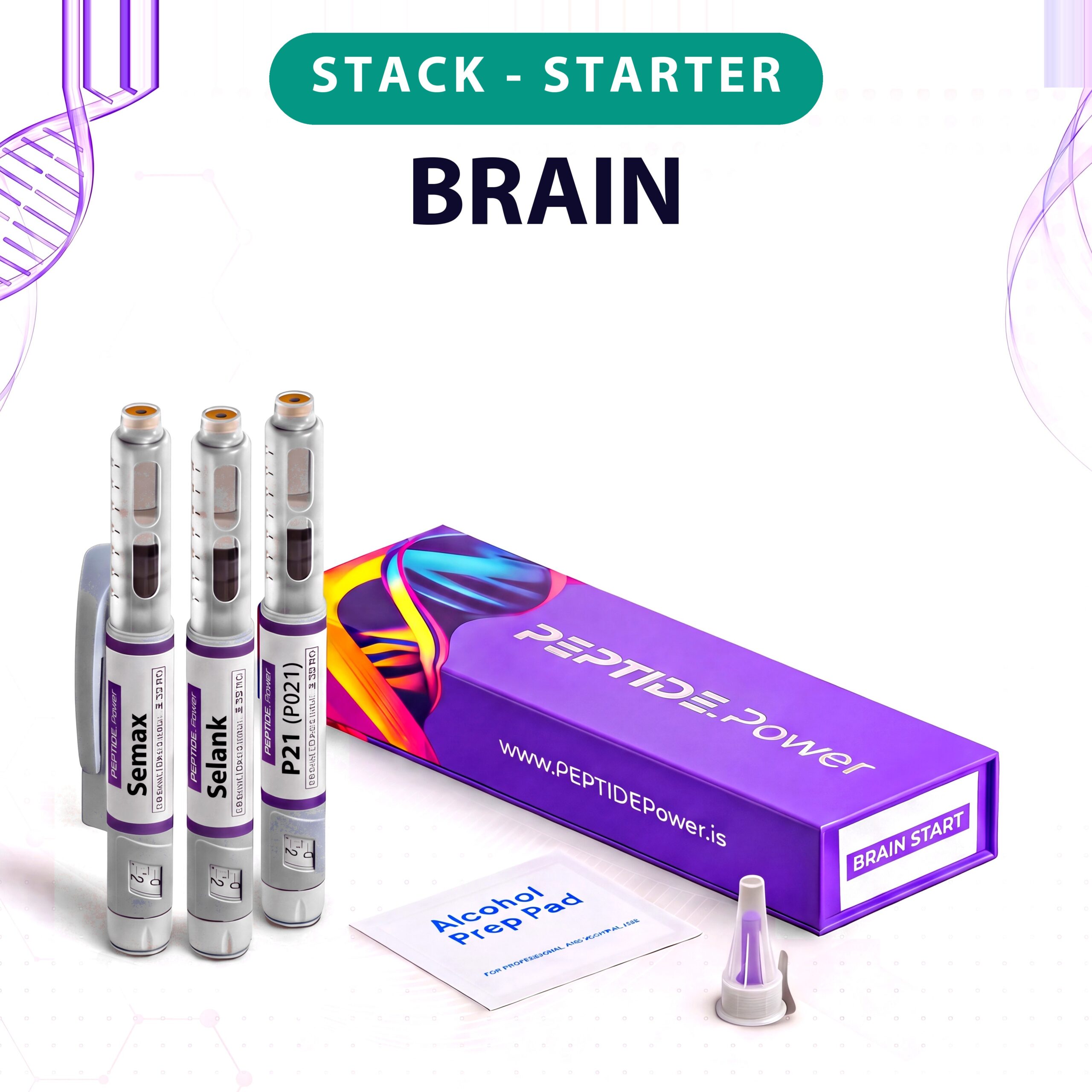
The Brain Start stack pairs three widely studied neuropeptides, Semax, Selank and P21, into one curated kit for cognitive and neuroplasticity research. It supports work on attention, stress modulation and BDNF-linked signalling.
Each peptide is supplied at research-grade purity for laboratory use. For research purposes only; not for human consumption.
209,00 € Ursprünglicher Preis war: 209,00 €178,00 €Aktueller Preis ist: 178,00 €.
Ein nootropisches Forschungs-Kit, das Semax, Selank und P21 für Studien über Kognition, Fokus und Neuroplastizität kombiniert.
Was dieses Set enthält


Brain - Start - Foundational Cognitive Research Stack
Explored with Semax
Investigated with Semax
Studied with Selank
Focus of P21 (P021) research
Explored with P21 (P021)
Potential with Selank
Research with Semax
Key area for Selank
Beschreibung
Wirkmechanismus
Semax, a synthetic peptide, is researched for its neuroprotective and nootropic properties, potentially modulating BDNF and neurotransmitter activity. Selank, an anxiolytic peptide, is studied for its impact on stress response and immune function, complementing cognitive research. P21 (P021), a neurotrophic factor mimic, is explored for promoting neurogenesis, synaptic plasticity, and neuronal survival, offering a multi-faceted approach to brain health research.
Vorteile
- Cognitive Enhancement – Investigated with Semax for focus and memory.
- Stress Modulation – Explored with Selank for anxiolytic effects.
- Neuroprotection Research – Supported by Semax and P21’s potential.
- Synaptic Plasticity – A key area of study for P21 (P021).
- Mood Regulation – Potential research focus with Selank.
- Neuronal Growth – P21 (P021) is studied for its role in neurogenesis.
Forschungsdaten
Semax
| Study / Model | Reported effect |
|---|---|
| Ischemic stroke patients (clinical study) | Improved neurological recovery and reduced infarct progression when administered within acute window |
| Rat middle cerebral artery occlusion model | ↓ Infarct volume; ↑ neuronal survival in penumbra region |
| Rat hippocampal tissue assay | ↑ BDNF and NGF expression within hours of administration |
| Healthy human cognitive trials | ↑ Attention, memory consolidation, and operator performance under fatigue |
| Chronic stress rodent model | Reduced anxiety-related behaviors; normalized HPA-axis activity |
| In vitro neuronal culture | Enhanced dopaminergic and serotonergic signaling; protection against oxidative injury |
| Optic nerve atrophy model | ↑ Retinal ganglion cell survival and improved visual response markers |
Selank
| Study / Model | Reported effect |
|---|---|
| Generalized anxiety disorder clinical trials | ↓ anxiety scores comparable to medazepam without sedation or withdrawal |
| Rat elevated plus-maze model | ↓ anxiety-like behavior; ↑ open-arm exploration time |
| Cortical neurotransmitter analysis (rodent) | Normalized GABA turnover; ↑ serotonin and dopamine metabolism |
| BDNF expression studies in hippocampus | ↑ BDNF mRNA expression supporting neuroplasticity |
| Stress-induced immunosuppression models | Restored interferon and cytokine balance; ↑ immune resilience |
| Cognitive performance tasks in healthy volunteers | ↑ attention, memory consolidation, and mental endurance |
| Enkephalin degradation assays | Inhibition of enkephalin breakdown; prolonged endogenous opioid activity |
P21 (P021)
| Study / Model | Reported effect |
|---|---|
| Aged rat hippocampus | ↑ BDNF expression, ↑ neurogenesis, improved spatial memory performance |
| 3xTg-AD Alzheimer’s mouse model | ↓ tau hyperphosphorylation, ↓ amyloid-β pathology, preserved cognitive function |
| Down syndrome mouse model (Ts65Dn) | Restored dentate gyrus neurogenesis and rescued learning deficits |
| Streptozotocin-induced cognitive impairment (rats) | ↑ synaptic plasticity markers, ↓ neuroinflammation, improved memory retention |
| In vitro neuronal cultures | ↑ CREB phosphorylation and BDNF/TrkB signaling activity |
| Traumatic brain injury rodent model | ↓ neuronal loss, ↑ dendritic spine density in hippocampal regions |
Stack-Empfehlungen
This research bundle is designed for investigators exploring foundational cognitive support, stress response modulation, and neurotrophic pathways. It offers a synergistic approach to understanding brain health and resilience in research models.
Pen-Dosierungstabelle
Semax
| Semax Pen 30 mg | |
|---|---|
| Volume | 3.0 mL (after reconstitution) |
| mg/mL | 10 mg/mL |
| Click-to-Dose | 1 click = 0.1 mg |
| Example(s) | 3 clicks = 0.3 mg; 6 clicks = 0.6 mg |
Selank
| Selank Pen 10 mg | |
|---|---|
| Volume | 2.0 mL (after reconstitution) |
| mg/mL | 5.0 mg/mL |
| Click-to-Dose | 1 click = 0.05 mg |
| Example(s) | 30 clicks = 1.5 mg; 60 clicks = 3 mg |
P21 (P021)
| P21 Pen 10 mg | |
| Volume | 2 mL |
| mg/mL | 5 mg/mL |
| Click-to-Dose | 1 click = 0.05 mg |
| Example(s) | 10 clicks = 0.5 mg |
Dosierung und Protokollvarianten
Semax
Standard Research Protocol
- Dose: 0.3 – 0.6 mg (= 3-6 clicks)
- Duration: 2 – 4 weeks
- Frequency: Daily
- Cycle Interval: 2 – 4 weeks off before repeating
- Goal / Description: Baseline cognitive and neurotrophic research applications.
Therapeutic Research Protocol
- Dose: 0.6 – 1.2 mg (= 6-12 clicks)
- Duration: 1 – 2 weeks
- Frequency: Daily, divided into 2 – 3 doses
- Cycle Interval: 3 – 4 weeks off before repeating
- Goal / Description: Higher-dose protocol used in stroke recovery and neuroprotection models.
Biohacker Protocol (experimental)
- Dose: 0.1 – 0.3 mg (= 1-3 clicks)
- Duration: 4 – 6 weeks
- Frequency: Daily, morning administration
- Cycle Interval: 2 weeks off before repeating
- Goal / Description: Low-dose continuous exposure for cognitive and focus research.
Selank
Standard Research Protocol
- Dose: 0.25 – 0.5 mg (= 5-10 clicks)
- Duration: 2 – 3 weeks
- Frequency: Daily (SubQ)
- Cycle Interval: 2 – 4 weeks off before repeating
- Goal / Description: Baseline protocol for anxiolytic and cognitive stability models.
Therapeutic Research Protocol
- Dose: 0.5 – 0.9 mg (= 10-18 clicks)
- Duration: 3 – 4 weeks
- Frequency: 2× daily, divided doses
- Cycle Interval: 4 weeks off before repeating
- Goal / Description: Higher-dose protocol used in stress-response and GABAergic modulation studies.
Biohacker Protocol (experimental)
- Dose: 0.1 – 0.2 mg (= 2-4 clicks)
- Duration: 4 – 6 weeks
- Frequency: Daily microdose
- Cycle Interval: 2 weeks off before repeating
- Goal / Description: Low-dose continuous exposure for cognitive and mood-balance research.
Stacked Protocol (Selank + Semax)
- Dose: 0.3 mg Selank + 0.3 mg Semax (= 6 clicks)
- Duration: 2 – 3 weeks
- Frequency: Daily
- Cycle Interval: 3 – 4 weeks off before repeating
- Goal / Description: Combined neuropeptide protocol for cognitive and anxiolytic research models.
P21 (P021)
Standard Research Protocol
- Dose: 0.5 – 1.0 mg
- Duration: 4 – 8 weeks
- Frequency: Daily, oral or intranasal
- Cycle Interval: 2 – 4 weeks off before repeating
- Goal / Description: Baseline cognitive and neurotrophic research applications.
Neuroprotective Research Protocol
- Dose: 1.0 – 2.0 mg
- Duration: 8 – 12 weeks
- Frequency: Daily
- Cycle Interval: 4 weeks off before repeating
- Goal / Description: Extended-duration models targeting BDNF upregulation and neurogenesis.
Biohacker Protocol (experimental)
- Dose: 0.25 – 0.5 mg
- Duration: Continuous
- Frequency: 5 days on, 2 days off
- Cycle Interval: Continuous with weekly pause
- Goal / Description: Low-dose continuous exposure for long-term cognitive research models.
Mögliche Nebenwirkungen
Semax
Semax is generally well-tolerated in clinical and preclinical research, including intranasal and subcutaneous administration studies.
Reported side effects are infrequent and typically mild:
- Mild nasal irritation or transient burning sensation with intranasal use.
- Headache or lightheadedness during initial dosing.
- Temporary changes in alertness or sleep patterns.
- Mild fatigue or restlessness in sensitive subjects.
- Localized redness at subcutaneous injection sites.
No evidence of hormonal, cardiovascular, or systemic adverse effects has been observed in available research data. Long-term safety beyond standard study durations remains under investigation in experimental models.
Selank
Selank is generally well-tolerated in animal and limited human clinical studies, with no significant adverse effects reported at standard research doses.
Reported observations include:
- Mild transient drowsiness or fatigue during initial dosing.
- Occasional headache or lightheadedness in sensitive subjects.
- Localized irritation or redness at the injection site.
- Rare reports of mild nasal discomfort with intranasal administration.
Unlike classical anxiolytics, Selank has not been observed to produce sedation, dependence, withdrawal, or cognitive impairment in available research data. No evidence of hormonal, hepatic, or cardiovascular adverse effects has been documented.
P21 (P021)
P21 is generally well-tolerated in preclinical and animal studies.
Reported side effects are rare and mild:
- Mild transient fatigue or drowsiness during initial dosing periods.
- Localized irritation or redness at injection site.
- Occasional headache or lightheadedness reported in sensitive subjects.
- Subtle mood fluctuations during early adaptation phase.
No evidence of neurotoxic, hepatic, or systemic adverse effects has been observed in available research data.
Produktmerkmale
Wissenschaftliche Quellen
Semax
- Semax, an analogue of ACTH(4-10) with cognitive effects, regulates BDNF and trkB expression in the rat hippocampus Animal | In vitro
- Semax, an analog of ACTH(4-7), regulates expression of immune response genes during ischemic brain injury in rats Animal
- Heptapeptide Semax Effects on Expression of Genes Related to Neurotransmitter Systems Animal | In vitro
- Heptapeptide semax attenuates the effects of chronic unpredictable stress in rats Animal
- The nootropic and analgesic effects of Semax following different routes of administration Animal
- Effect of Semax and its C-terminal fragment PGP on the in vivo dopamine release in the nucleus accumbens of rats Animal
- Semax, an analog of ACTH(4-7), regulates expression of immune response genes in ischemic rat brain Animal
- Semax: research overview, mechanisms, and effects Observational | Animal
Selank
- Anxiolytic activity of the heptapeptide Selank in clinical trials Human RCT | Observational
- Effects of Selank on the expression of genes encoding inflammatory factors and BDNF Animal | In vitro
- Selank enhances the expression of BDNF and the trkB receptor in the hippocampus Animal
- Comparative study of the anxiolytic effects of Selank and medazepam in patients with generalized anxiety disorder Human RCT
- Effect of Selank on monoamine neurotransmitter metabolism in the brain of rats Animal
- Selank and its analogs modulate GABAergic transmission in experimental anxiety models Animal | In vitro
- Peptide Selank as a candidate for the correction of cognitive deficits Animal
- Immunomodulatory and anxiolytic properties of the synthetic peptide Selank Observational | Animal
P21 (P021)
- Neurogenic and neurotrophic effects of BDNF peptides in mouse hippocampal primary neuronal cell cultures Animal | In vitro
- A small molecule peptide inhibitor of amyloid plaque, oxidative stress, and neuronal loss Animal | In vitro
- Ciliary neurotrophic factor derived peptide P021 ameliorates plaque pathology and improves cognition in Alzheimer disease mouse model Animal
- Neurotrophic peptide P021 rescues hippocampal neurogenesis and synaptic plasticity in a tauopathy mouse model Animal | In vitro
- P021 rescues tau pathology and behavioral deficits in a mouse model of tauopathy by inhibiting GSK-3β Animal
- Neurotrophic compound P021 reduces neuroinflammation and enhances cognitive function in aged rats Animal
- Peptidomimetic P021 promotes neurogenesis and reduces glycogen synthase kinase-3 activity in Down syndrome models Animal | In vitro
- CNTF-derived peptide rescues synaptic and cognitive deficits in a 3xTg-AD model Animal
Lieferumfang
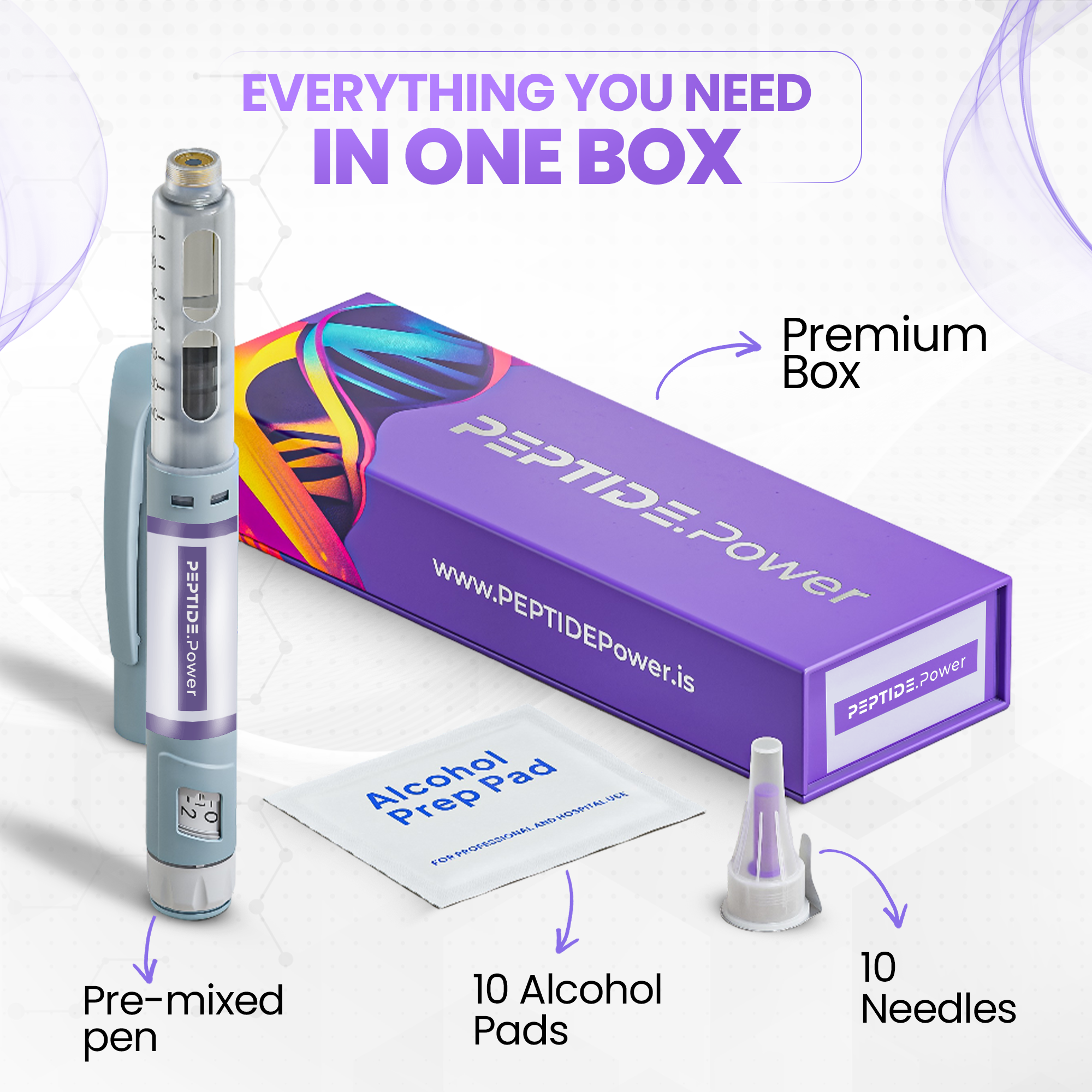
Jedes Produkt wird in einer hochwertigen, speziell entwickelten PEPTIDE.Power-Box geliefert, die für Komfort, Hygiene und sichere Aufbewahrung im Kühlschrank konzipiert wurde. Im Inneren finden Sie alles, was Sie für Ihr vollständiges Forschungsprotokoll benötigen:
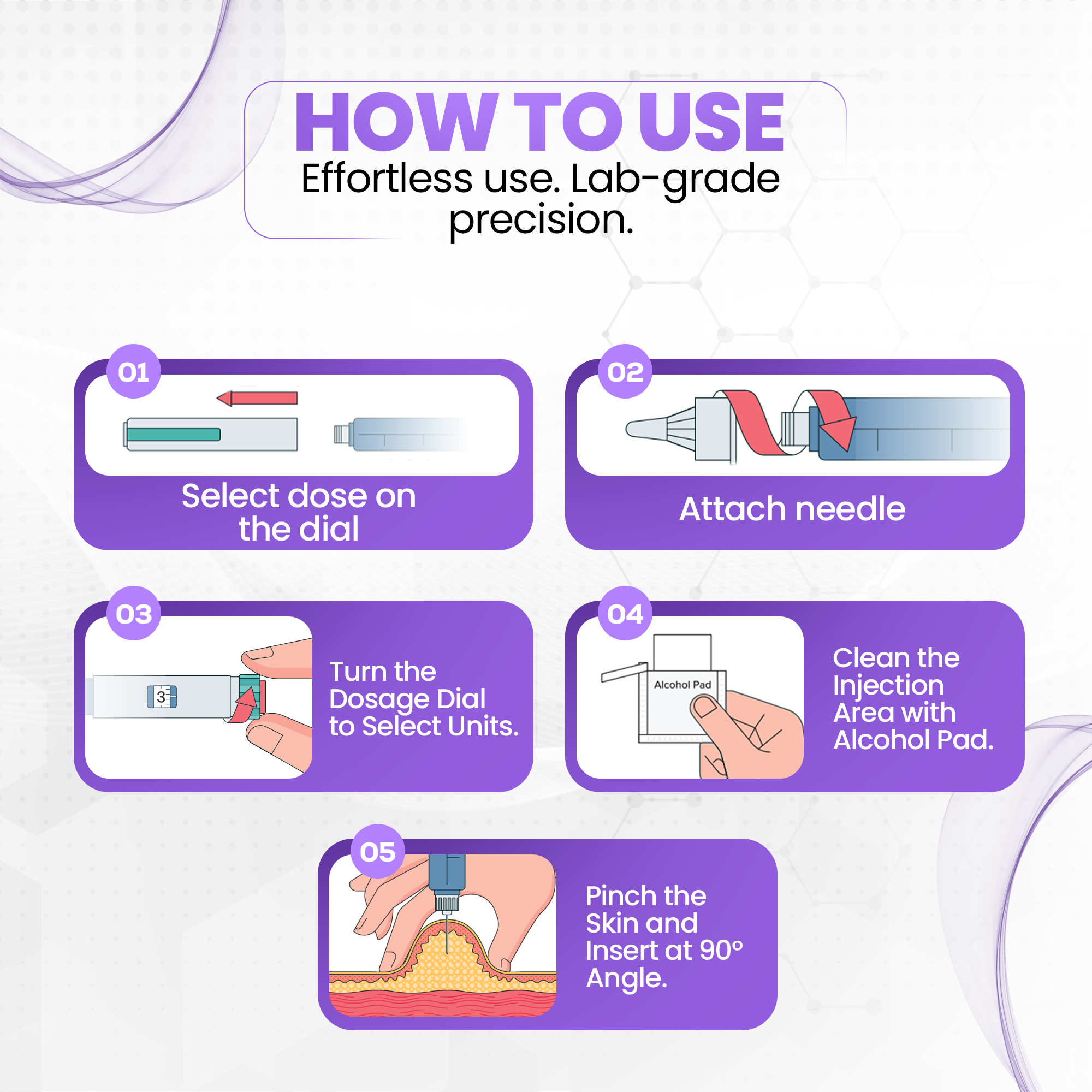
- 1× Einweg-Fertigspritze
- Mit unserer patentierten PSM Technology™ – einem präzisen Stabilisierungs- und Mischsystem für gleichbleibende Wirksamkeit
- 10× Ultradünne Nadeln (33G, 4 mm)
- 10 Alkoholtupfer zur sterilen Vorbereitung
- Interne Stabilisierungsschaumstoffeinlage zur Verhinderung von Erschütterungen während des Transports
- Eine Bedienungsanleitung ist zur schnellen Orientierung auf der Innenseite der Verpackung aufgedruckt.
- Sicherheitssiegelaufkleber, der bestätigt, dass die Verpackung nicht geöffnet oder manipuliert wurde.
Lagerung
Lagern Sie das Produkt unmittelbar nach Erhalt im Kühlschrank bei 1-7 °C . Um eine optimale Stabilität zu gewährleisten, sollte der Stift vor Licht geschützt und keinen wiederholten Temperaturschwankungen ausgesetzt werden.
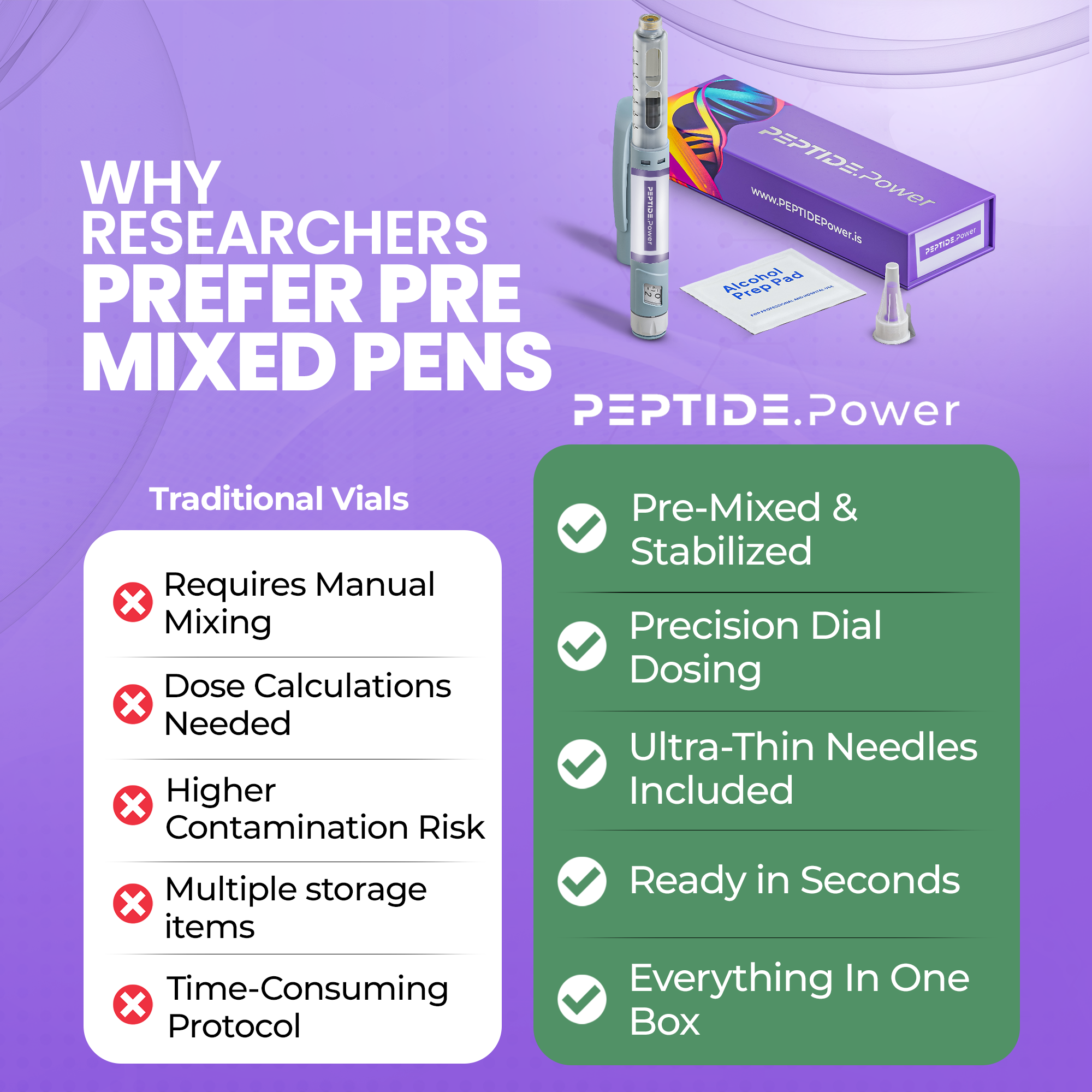
Nach der Rekonstitution (alle unsere Pens werden vorgemischt geliefert) bleiben die Forschungssubstanzen bei sachgemäßer Kühlung 6 bis 8 Wochen lang stabil.
Nach dem Anrühren nicht einfrieren. Die Packung stets geschlossen halten, damit Pen, Nadeln und Alkoholtupfer sauber und geschützt bleiben.
Für optimale Ergebnisse verwenden Sie das Produkt konsequent innerhalb des empfohlenen Zeitraums und halten Sie sich stets an Ihr Forschungsprotokoll.
Lieferung
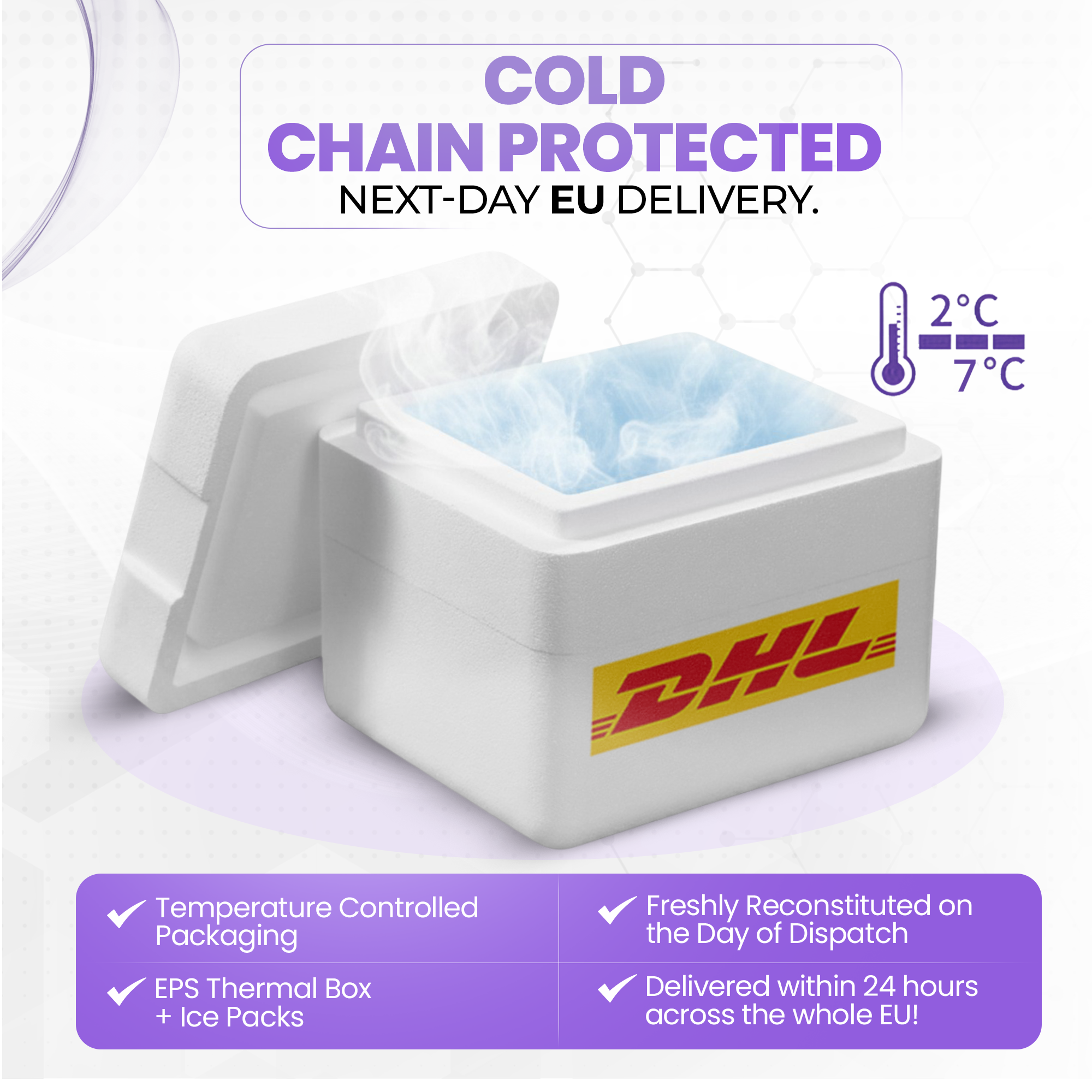
Wir versenden mit EU-Express-Lieferung am nächsten Tag per DHL Express oder UPS Express .
Alle Bestellungen werden am Versandtag frisch zubereitet, in EPS-Kühltransportboxen verpackt und mit Kühlelementen versendet, um eine stabile Temperatur während des gesamten Transports zu gewährleisten.
Unser Logistikprozess ist so ausgelegt, dass das Paket über Nacht ankommt und somit Verzögerungen durch den Zoll innerhalb der Europäischen Union vermieden werden.
Die Produkte werden von unserem EU-Standort aus versandt, wodurch Einfuhrzölle und Zollabfertigung entfallen und eine stets schnelle und sichere Lieferung gewährleistet ist.
Zahlung
Aufgrund der Beschaffenheit von Forschungspeptiden und der von Zahlungsabwicklern zugewiesenen Hochrisikokategorie unterstützen Kreditkartenunternehmen Händler in diesem Bereich nicht .
Aus diesem Grund akzeptieren wir ausschließlich Banküberweisungen .
Innerhalb der Europäischen Union sind SEPA-Überweisungen schnell, kostengünstig und treffen in der Regel innerhalb von Minuten bis wenigen Stunden ein , wodurch der Zahlungsvorgang reibungslos und einfach abläuft.
Sobald die Überweisung eingegangen ist, wird Ihre Bestellung umgehend vorbereitet und noch am selben Tag versandt (abhängig vom Annahmeschluss).
Dieses Verfahren gewährleistet die Einhaltung der Vorschriften, die Sicherheit und die Kontinuität der Dienstleistungen für alle Kunden in der gesamten EU.
Keine Antwort auf Ihre Frage gefunden?
Alle häufig gestellten Fragen ansehenRELATED PRODUCTS


Bioregulator – Start

Brain – Advanced


Cell Renewal – Start


Energy – Start

