




Longevity – Start
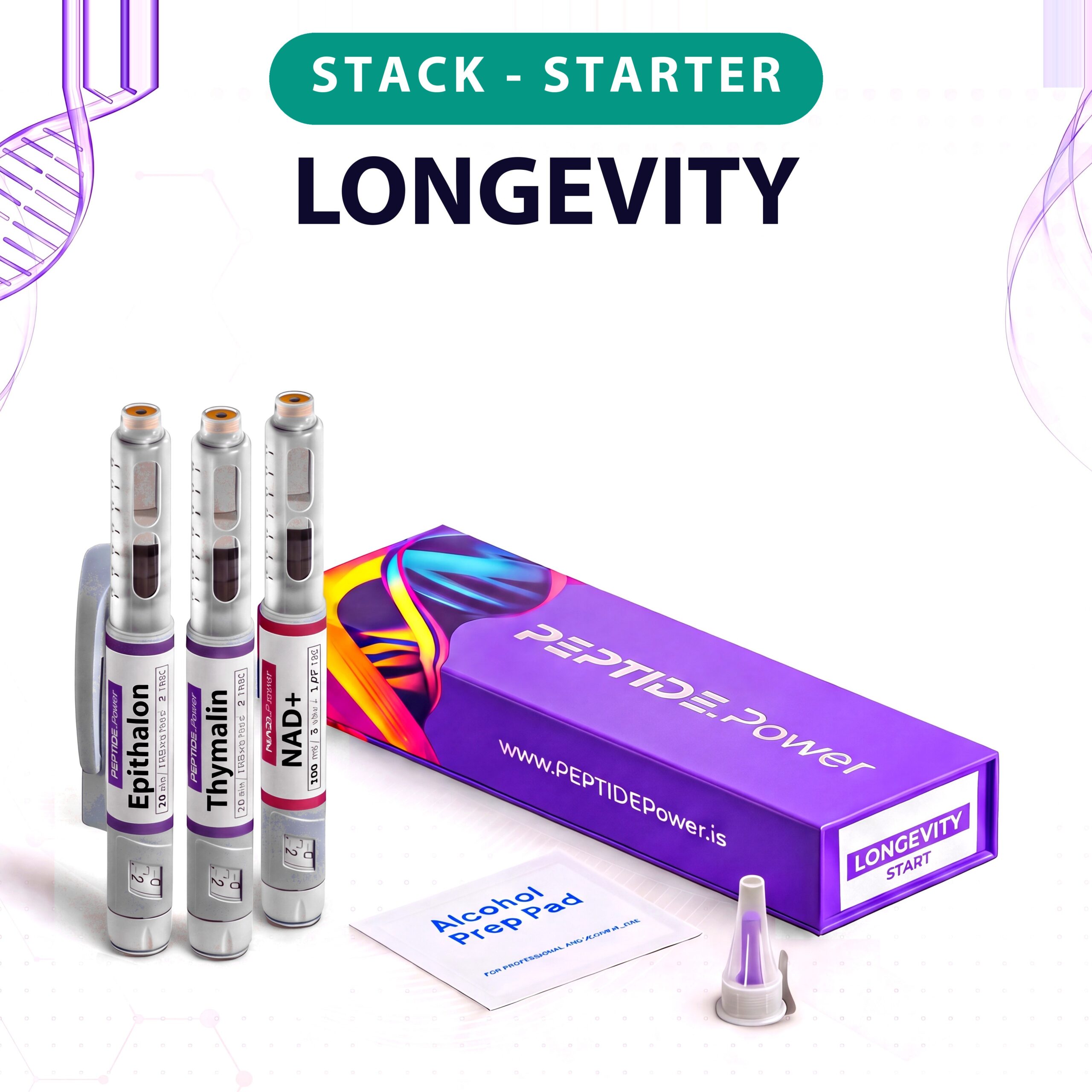
The Longevity Start stack brings together three of the most studied research peptides in the aging field, Epithalon, Thymalin and NAD+, in one curated kit. It is assembled for researchers exploring telomere biology, immune regulation and NAD-dependent cellular pathways.
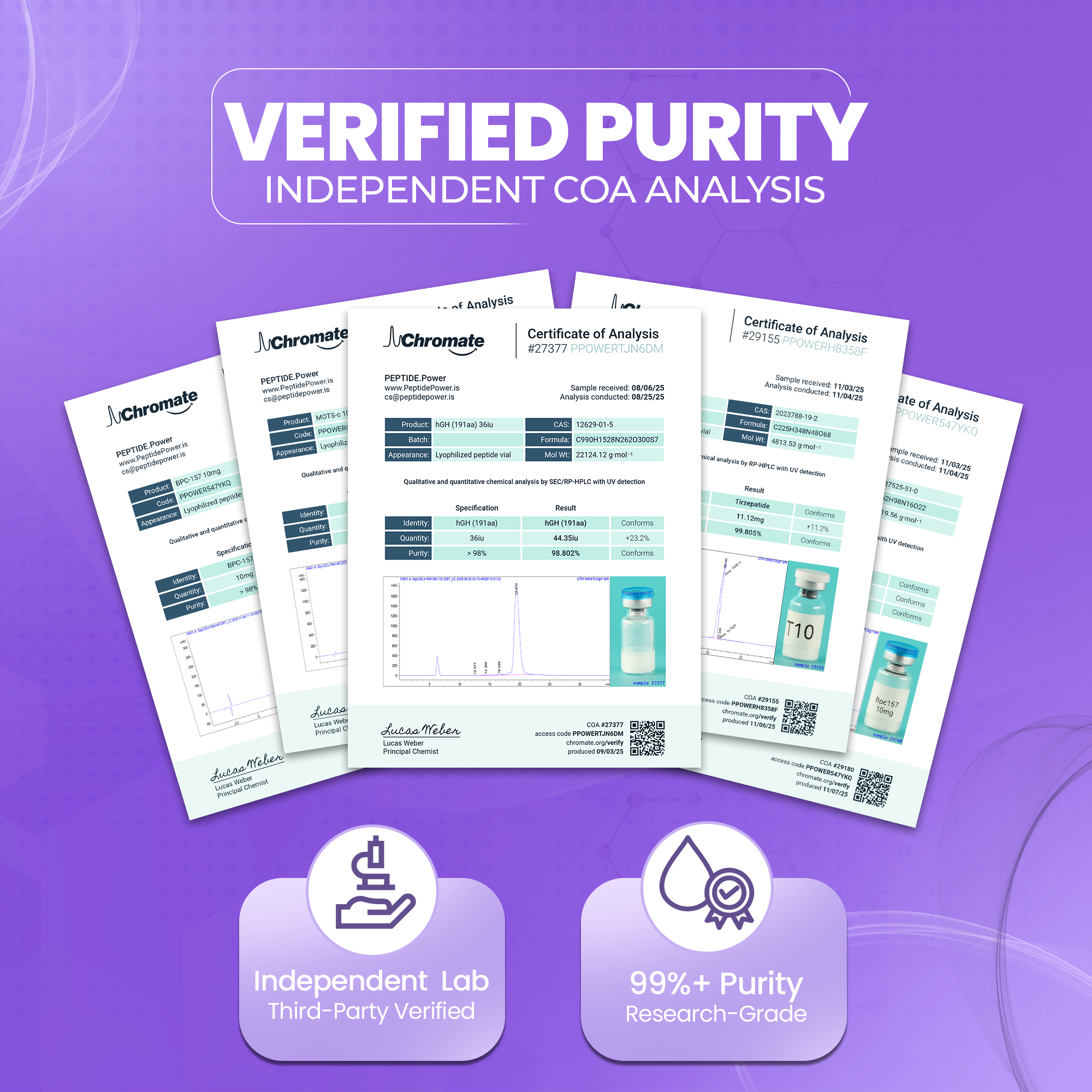
Every component is supplied at research-grade purity for laboratory work. For research purposes only; not for human consumption.
345,00 € Original price was: 345,00 €.293,00 €Текущата цена е: 293,00 €.
Основополагащ комплект за изследване на дълголетието, съчетаващ Epithalon, Thymalin и NAD+ за проучвания върху клетъчното и системното стареене.
Какво включва този стек


Longevity - Start - Foundational Longevity Research Stack
Epithalon's cellular impact studies
Thymalin peptide investigations
NAD+ precursor research
Exploring NAD+ roles
Epithalon's endocrine studies
Thymalin peptide insights
NAD+ precursor research
Epithalon's impact research
Описание
Механизъм на действие
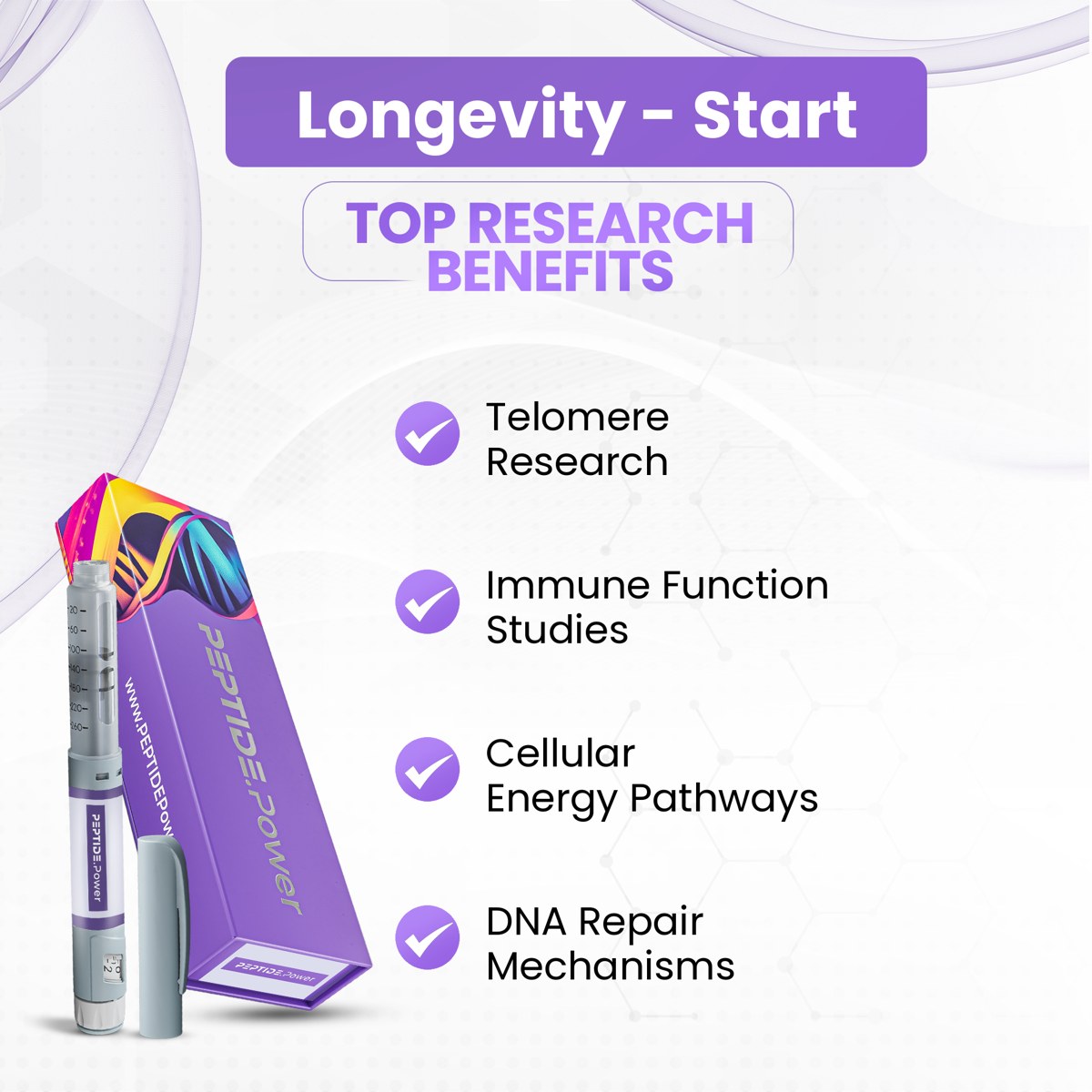
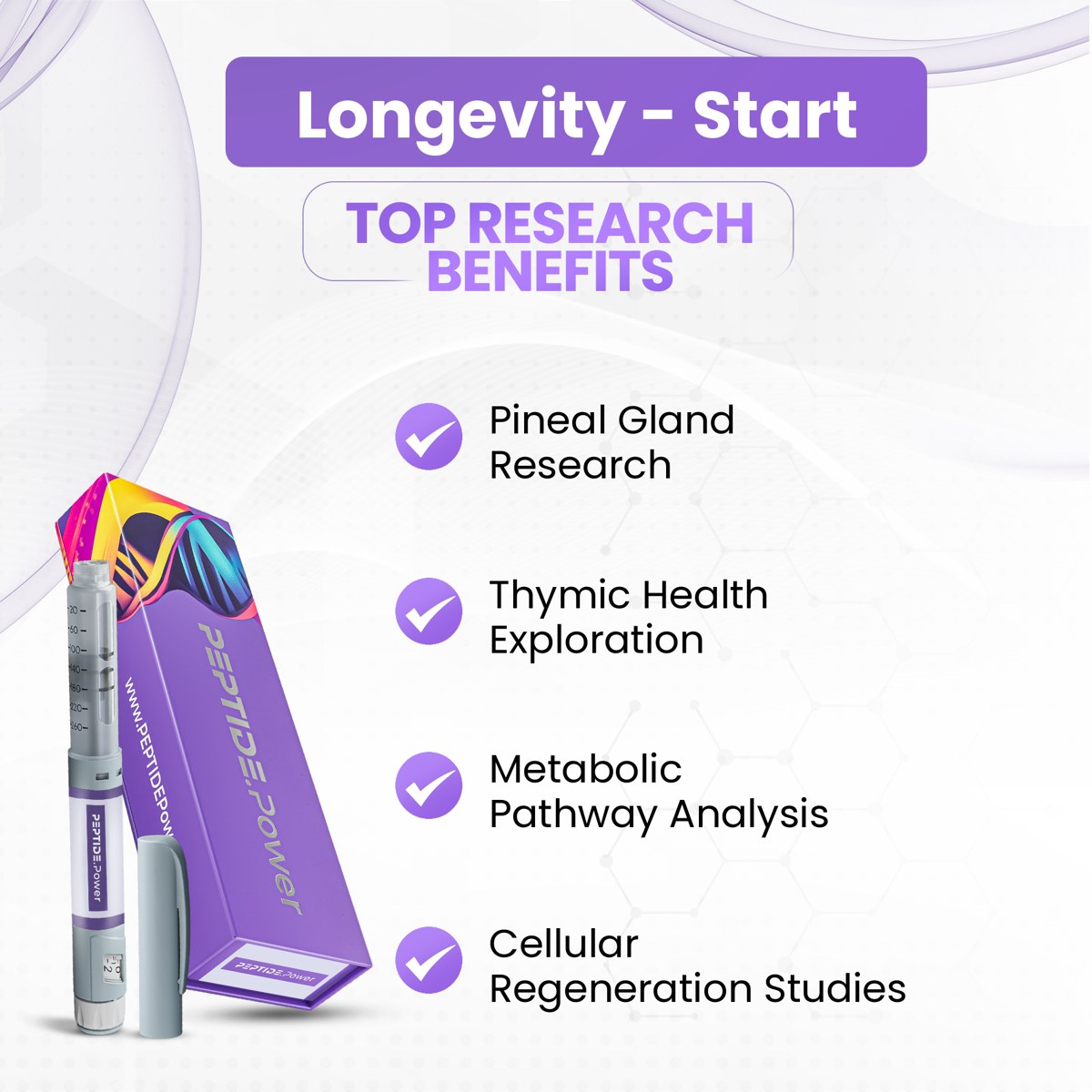
This research stack explores complementary pathways in cellular longevity. Epithalon is studied for its potential role in telomerase activity and pineal gland function. Thymalin research investigates its influence on immune system modulation and thymic peptide signaling. NAD+ precursors are examined for their involvement in cellular energy metabolism, DNA repair mechanisms, and sirtuin activation, offering a multi-faceted approach to age-related research.
Ползи
- Telomere Dynamics Research – Investigating cellular aging with Epithalon
- Immune System Modulation – Exploring thymic peptide studies with Thymalin
- Cellular Energy Metabolism – Examining NAD+ precursors for mitochondrial function
- DNA Integrity Studies – Researching NAD+’s role in genomic stability
- Endocrine System Exploration – Studying Epithalon’s impact on pineal function
- Thymic Health Research – Understanding T-cell development with Thymalin
Изследователски данни
Epithalon
| Study / Model | Reported effect |
|---|---|
| Human somatic cell culture | ↑ Telomerase activity, ↑ telomere length in dividing cells |
| Aged mice longevity studies | Extended median lifespan, ↓ age-related tumor incidence |
| Pineal gland animal models | Restored melatonin secretion rhythm, normalized circadian markers |
| Elderly human observational cohort | Improved sleep architecture, ↑ nocturnal melatonin levels |
| Retinal degeneration rat model | ↓ Photoreceptor loss, preserved retinal pigment epithelium |
| Oxidative stress in vitro assays | ↓ Lipid peroxidation, ↑ antioxidant enzyme expression |
| Immunosenescence rodent studies | Restored T-cell function, normalized thymic activity |
Thymalin
| Study / Model | Reported effect |
|---|---|
| Aged murine models | ↑ thymic cellularity, ↑ CD4+/CD8+ ratio, restored T-cell output |
| Immunocompromised rodent studies | ↑ IL-2 and interferon-gamma expression, improved lymphocyte proliferation |
| Elderly human observational cohorts | Reduced incidence of respiratory infections and improved immune markers |
| Radiation-exposure animal models | Accelerated hematopoietic recovery and lymphocyte regeneration |
| Chronic inflammation models | ↓ pro-inflammatory cytokines (TNF-α, IL-6), normalized immune balance |
| In vitro thymocyte cultures | Enhanced T-cell maturation and differentiation signaling |
| Geriatric clinical observations | Improved telomerase activity and extended cellular longevity markers |
NAD+
| Study/model | Reported effect |
| Human clinical trials (IV NAD+ administration) | ↑ plasma NAD+ by 4-6×; improved fatigue and alertness scores |
| Animal models (aged mice) | Restored mitochondrial function and ↑ lifespan by 15-20% |
| Cellular aging models | Activation of SIRT1 and PARP1 → enhanced DNA repair and mitochondrial biogenesis |
| Human observational studies | Correlation between low NAD+ and metabolic dysfunction, insulin resistance |
| In vitro neuronal cultures | Protection from oxidative and excitotoxic stress; improved neurite outgrowth |
| Metabolic disorder models | ↓ triglycerides and hepatic steatosis via AMPK activation |
| Exercise recovery studies | ↑ muscle NAD+/NADH ratio and improved endurance performance |
| Brain ischemia models | ↓ infarct size and enhanced neuronal survival post-injury |
Предложения за комбиниране
This research bundle is ideal for investigators initiating studies into foundational longevity mechanisms. It suits researchers exploring cellular health, immune system function, and metabolic pathways related to age-associated processes.
Таблица за дозиране на писалката
Epithalon
| Epithalon Pen 20 mg | |
|---|---|
| Volume | 2 mL |
| mg/mL | 10 mg/mL |
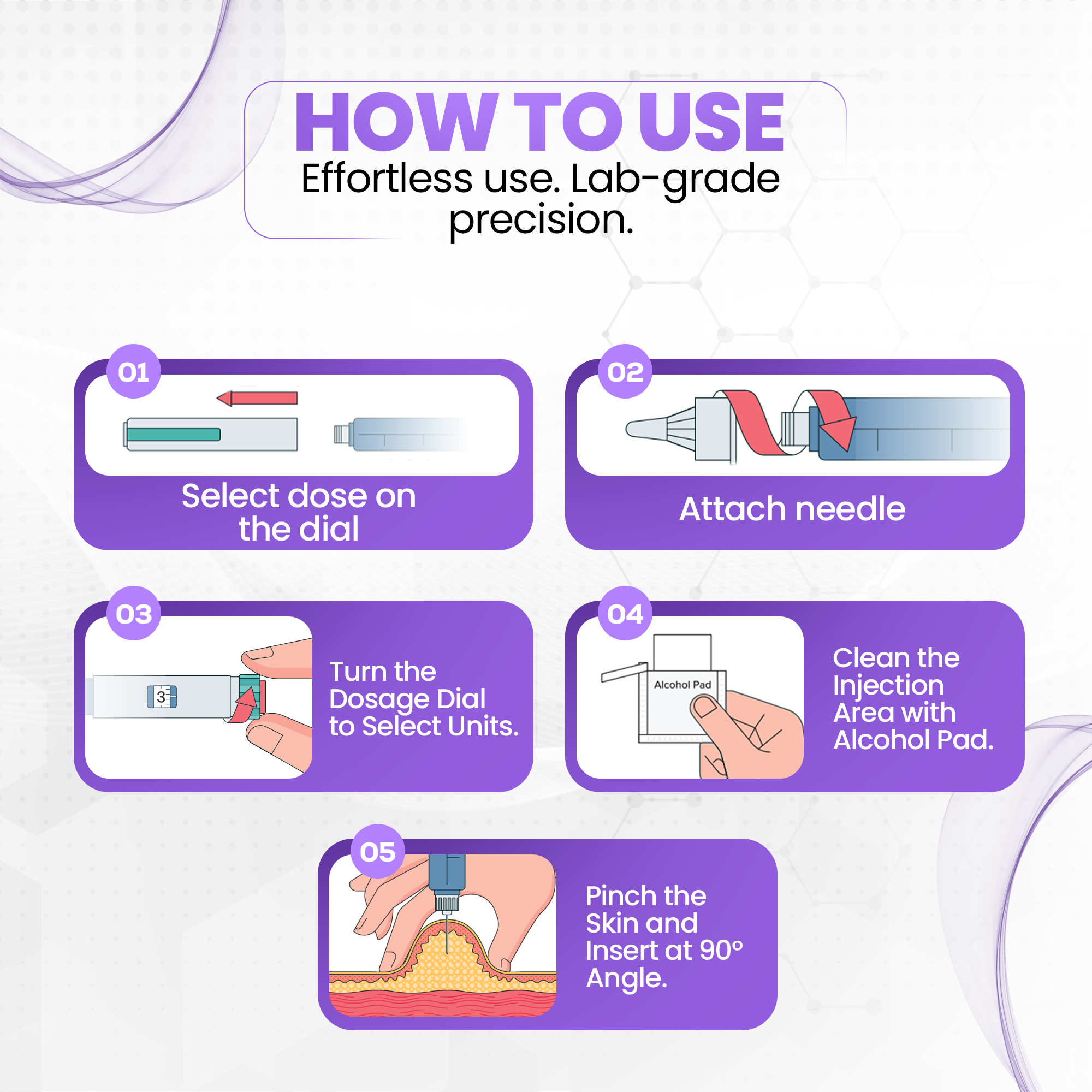
| Click-to-Dose | 1 click = 0.1 mg |
| Example(s) | 10 clicks = 1 mg |
Thymalin
| Thymalin Pen 20 mg | |
| Volume | 2 mL |
| mg/mL | 10 mg/mL |
| Click-to-Dose | 1 click = 0.1 mg |
| Example(s) | 10 clicks = 1 mg |
NAD+
| NAD+ Pen 500 mg | |
| Volume | 3.0 mL |
| mg/mL | 166.67 mg/mL |
| Click-to-Dose | 1 click = 1.67 mg |
| Example(s) | 30 clicks = 50 mg |
| NAD+ Pen 1000 mg | |
| Volume | 3.0 mL |
| mg/mL | 333.33 mg/mL |
| Click-to-Dose | 1 click = 3.33 mg |
| Example(s) | 15 clicks = 50 mg |
Дозировки и вариации на протоколи
Epithalon
Standard Research Protocol
- Dose: 5 – 10 mg (= 50-100 clicks)
- Duration: 2 – 3 weeks
- Frequency: Daily
- Cycle Interval: 4 – 6 months off before repeating
- Goal / Description: Baseline protocol used in telomerase activation and cellular aging models.
Therapeutic Research Protocol
- Dose: 10 – 20 mg (= 100-200 clicks)
- Duration: 10 – 20 days
- Frequency: Daily or split into two administrations
- Cycle Interval: 3 – 6 months off before repeating
- Goal / Description: Higher-dose schedule explored in longevity and pineal signaling research.
Biohacker Protocol (experimental)
- Dose: 2 – 5 mg (= 20-50 clicks)
- Duration: 4 – 6 weeks
- Frequency: 5 days per week
- Cycle Interval: 2 – 3 months off before repeating
- Goal / Description: Microdose continuous approach in experimental aging models.
Thymalin
Standard Research Protocol
- Dose: 5 – 10 mg
- Duration: 5 – 10 days
- Frequency: Daily intramuscular administration
- Cycle Interval: 4 – 6 months before repeating
- Goal / Description: Baseline immunomodulatory protocol used in aging and immune restoration models.
Therapeutic Research Protocol
- Dose: 10 – 20 mg
- Duration: 10 – 14 days
- Frequency: Daily
- Cycle Interval: 3 – 6 months off before repeating
- Goal / Description: Higher-dose protocol applied in immunocompromised and chronic inflammation models.
Biohacker Protocol (experimental)
- Dose: 2 – 5 mg
- Duration: 10 – 20 days
- Frequency: Every other day
- Cycle Interval: 2 – 3 times per year
- Goal / Description: Low-dose longevity-oriented schedule explored in epigenetic and thymic regeneration research.
NAD+
Standard Cellular Support
- Dose: 50 – 100 mg (variant 500 mg pen = 30-60 clicks / variant 1000 mg pen = 15-30 clicks)
- Duration: 8 – 12 weeks
- Frequency: Every Other Day
- Cycle Interval: 4-week rest
- Goal / Description: Common research design for mitochondrial and energy studies
Intensive Regeneration Protocol
- Dose: 100 – 250 mg (variant 500 mg pen = 60-150 clicks / variant 1000 mg pen = 30-75 clicks)
- Duration: 8 – 12 weeks
- Frequency: 1× daily
- Cycle Interval: 8-week rest
- Goal / Description: Applied in models focusing on recovery and DNA repair
Neurocognitive Focus Protocol
- Dose: 50 mg (variant 500 mg pen = 30 clicks / variant 1000 mg pen = 15 clicks)
- Duration: 8 – 12 weeks
- Frequency: 1× daily (morning)
- Cycle Interval: 4-week rest
- Goal / Description: Studied for neuronal resilience and alertness optimization
Longevity & Metabolic Protocol
- Dose: 50 – 150 mg (variant 500 mg pen = 30-90 clicks / variant 1000 mg pen = 15-45 clicks)
- Duration: 8 – 12 weeks
- Frequency: Every Other Day
- Cycle Interval: 8-week rest
- Goal / Description: Designed for long-term metabolic and aging research
Възможни странични ефекти
Epithalon
Epithalon is generally well-tolerated in preclinical and limited human observational studies.
Reported side effects are rare and typically mild:
- Transient drowsiness or mild fatigue following administration.
- Localized irritation, redness, or tenderness at injection site.
- Occasional mild headache during initial dosing periods.
- Temporary changes in sleep patterns linked to pineal signaling modulation.
No evidence of hormonal, hepatic, or systemic adverse effects has been observed in available research data.
Thymalin
Thymalin is generally well-tolerated in clinical and preclinical studies involving elderly and immunocompromised populations.
Reported side effects are infrequent and mild:
- Transient redness or mild swelling at the injection site.
- Occasional low-grade fever during initial dosing in immunocompromised models.
- Mild fatigue or drowsiness reported in early administration phases.
- Rare allergic-type reactions in sensitive subjects.
No evidence of hepatic, endocrine, or systemic toxicity has been observed in available research data.
NAD+
NAD+, as a research coenzyme boosting metabolism, may induce mild side effects in experimental models, primarily during initial administration. These are dose-dependent and often transient. It’s crucial to monitor for subcutaneous reactions.
Headache: Commonly observed at higher doses, manifesting as mild pressure, linked to vascular changes. It typically resolves within days.
Nausea: Occasional gastrointestinal upset, especially with rapid escalation. Frequency decreases with slower protocols.
Dizziness: Lightheadedness reported early on, possibly from energy shifts. Resolves as models adapt.
Flushing: Warm sensation or skin redness, attributed to niacin-like effects.
Fatigue: Paradoxical tiredness initially, due to metabolic adjustments.
Most side effects are minor and manageable through dose titration. Prolonged exposure warrants vigilance for rare issues like hypersensitivity, though uncommon in controlled settings.
Характеристики на продукта
Научни източници
Epithalon
- Peptide promotes overcoming of the division limit in human somatic cell In vitro
- Epithalon peptide induces telomerase activity and telomere elongation in human somatic cells In vitro
- Inhibition of development of spontaneous mammary tumors in mice by Epithalon Animal
- Effect of Epithalon on biomarkers of aging, life span and spontaneous tumor incidence in female rats Animal
- Pineal peptide preparation Epithalamin and tetrapeptide Epitalon: results of clinical use in humans Observational
- Peptides and aging: relevance to cancer prevention and longevity research Animal | In vitro
- Epithalon and aging: experimental and clinical perspectives Observational | Animal
- Telomerase activation and senescence pathways in peptide research In vitro
Thymalin
- Thymalin: clinical-experimental investigation in elderly and aged patients Observational | Animal
- Khavinson VK. Peptides and ageing Observational | Animal
- Anti-inflammatory and anti-aging effects of thymic peptide bioregulators in COVID-19 elderly patients Observational
- Peptide regulation of cell differentiation and gene expression in aging Animal | In vitro
- Short peptides and telomere length regulator hormone irisin: a novel approach to age-related diseases Observational | In vitro
- Effect of thymalin on the immune system and lifespan of mice Animal
- Peptide bioregulators: a novel direction of preventive gerontology Observational | Animal
- Influence of thymalin on functional activity of immune cells in patients with acute pneumonia Observational
NAD+
- NAD+ therapy in age-related degenerative disorders: A benefit/risk … Review
- The efficacy and safety of β-nicotinamide mononucleotide (NMN … Human RCT
- NAD + Supplementation Normalizes Key Alzheimer’s Features and … Animal
- Effect of Nicotinamide Adenine Dinucleotide on Heart Failure … Review
- Nicotinamide riboside Induced Energy Stress and Metabolic … Animal
- Oral nicotinamide riboside raises NAD+ and lowers biomarkers of … Human RCT
- Nicotinamide riboside, a trace nutrient in foods, is a vitamin B3 with … Review
- safety, insulin-sensitivity, and lipid-mobilizing effects – PubMedHuman RCT
- NAD+ Metabolism in Cardiac Health, Aging, and Disease – PubMed Review
- NAD + -boosting molecules suppress mast cell degranulation and … Animal
Включено в кутията
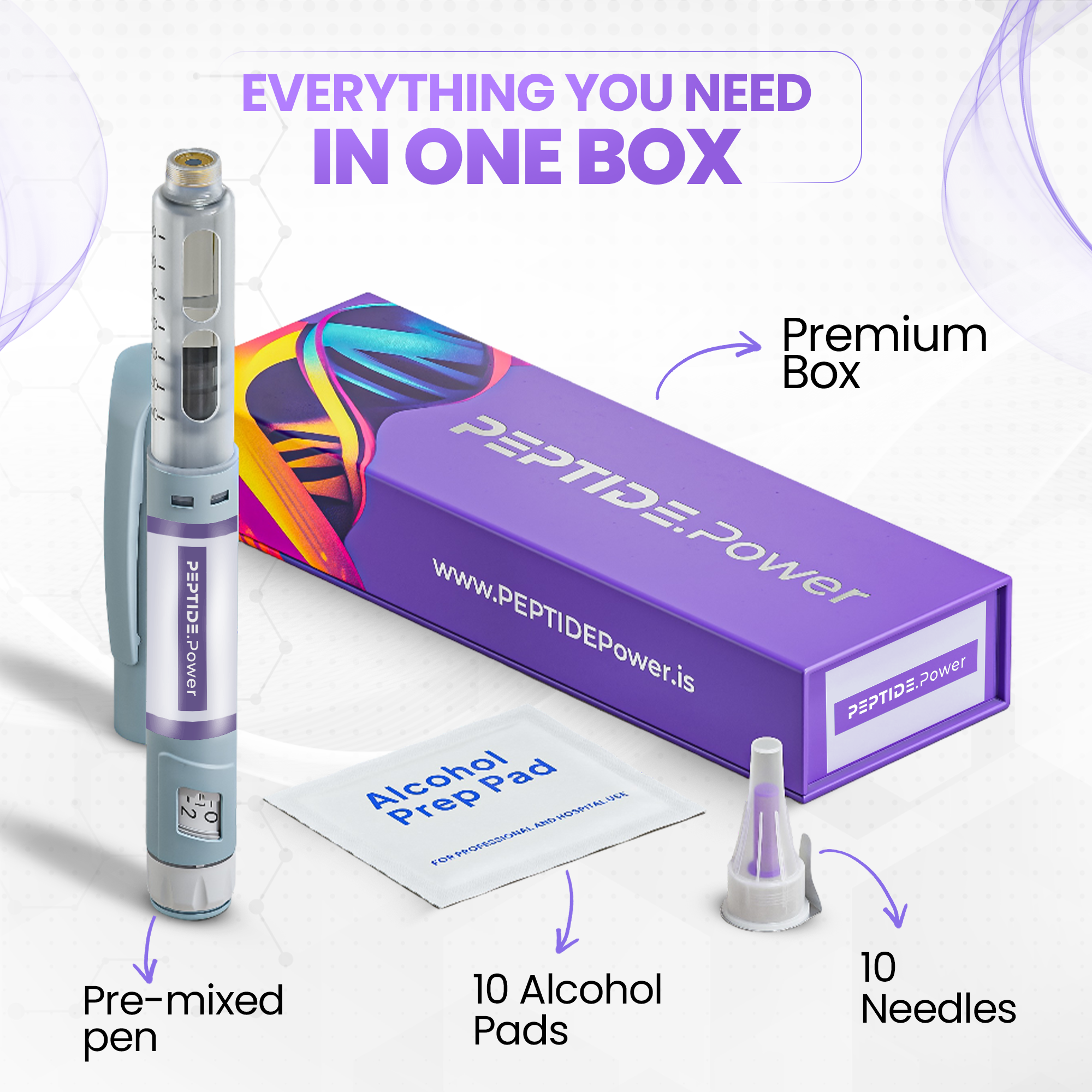
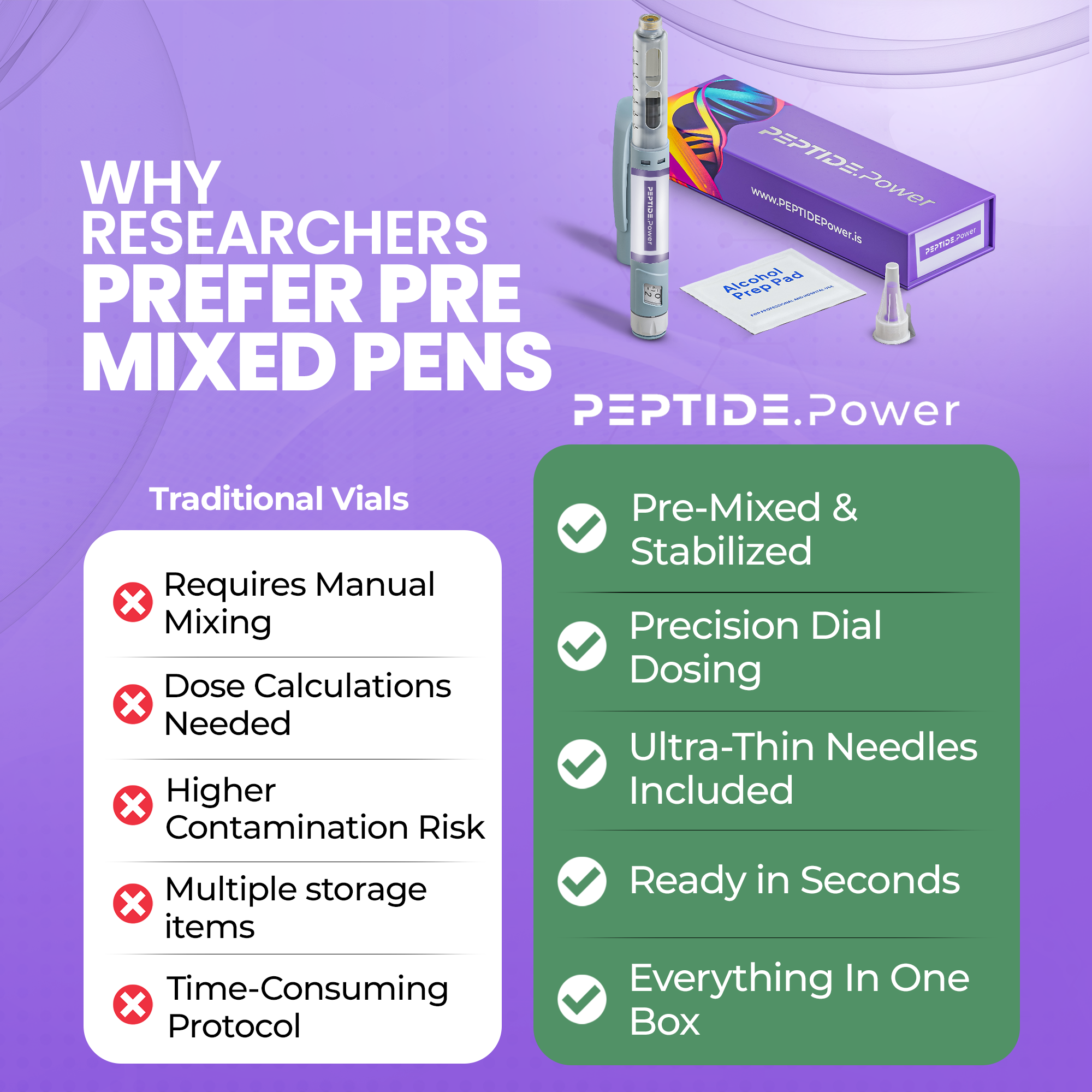
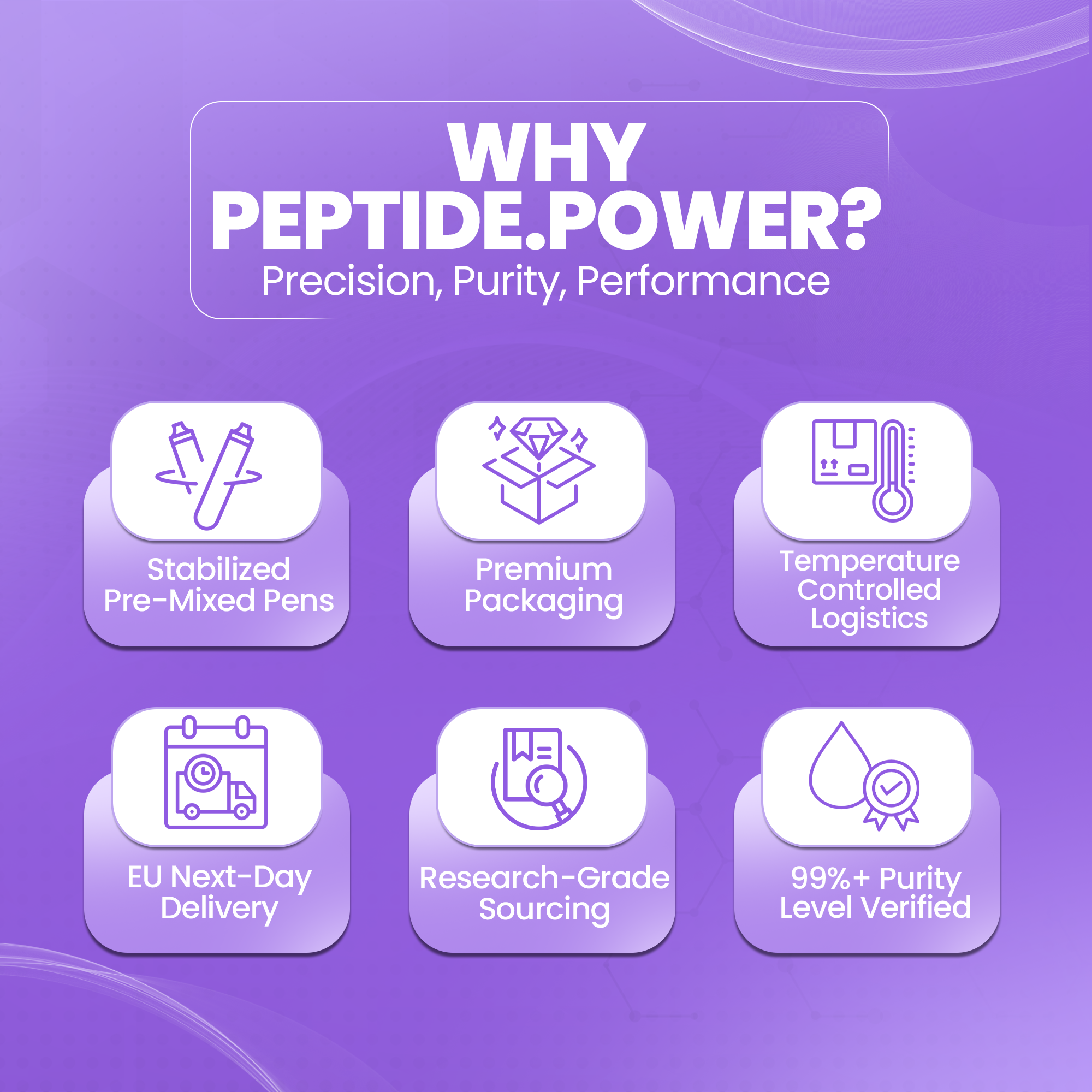
Всеки продукт пристига в премиум, специално проектирана кутия на PEPTIDE.Power, проектирана за удобство, хигиена и безопасно съхранение във вашия хладилник. Вътре ще намерите всичко необходимо за пълния ви изследователски протокол:
- 1× Еднократна предварително смесена инжекционна писалка
- Захранван от нашата патентована PSM Technology™ – прецизна система за стабилизация & смесване за постоянна ефикасност
- 10× Ултратънки игли (33G, 4 мм)
- 10× Спиртни тампони за стерилна подготовка
- Вътрешна стабилизираща дунапренова вложка за предотвратяване на разклащане по време на транспорт
- Панел с инструкции, отпечатан от вътрешната страна на кутията за бърза справка
- Стикер за защитен печат, гарантиращ, че опаковката не е отваряна или манипулирана
Съхранение
Съхранявайте продукта в хладилник при 1-7°C веднага след доставка. За да поддържате оптимална стабилност, дръжте писалката далеч от светлина и не я излагайте на повтарящи се температурни промени.
След като бъдат реконституирани (всички наши писалки са предварително смесени), изследователските съединения остават стабилни за 6-8 седмици при правилно съхранение в хладилник.
Не замразявайте след реконституция. Винаги дръжте кутията затворена, така че писалката, иглите и спиртните тампони да останат чисти и защитени.
За най-добри резултати използвайте продукта последователно в рамките на препоръчителния времеви прозорец и винаги следвайте вашия изследователски протокол.
Доставка
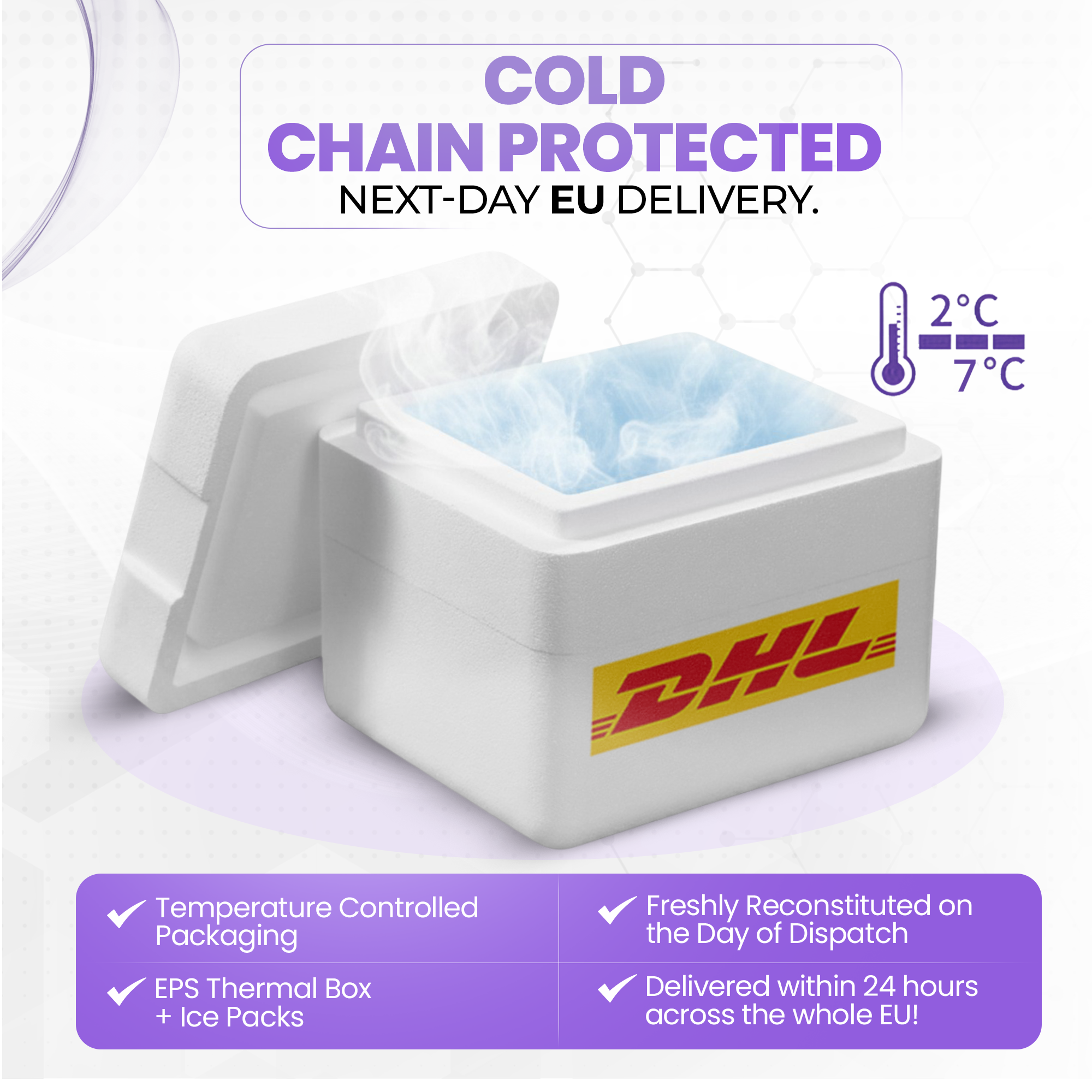
Изпращаме с Доставка в ЕС на следващия ден чрез DHL Express или UPS Express.
Всички поръчки се приготвят свежи в деня на изпращане, поставят се в EPS транспортни кутии за студена верига и се изпращат с охлаждащи елементи за поддържане на стабилна температура по време на целия път.
Нашият логистичен процес е проектиран така, че пратката да пристигне за една нощ, избягвайки митнически забавяния в рамките на Европейския съюз.
Продуктите се изпращат от нашето съоръжение в ЕС, осигурявайки без вносни мита, без митническо освобождаване и винаги бърза и сигурна доставка.
Плащане
Поради естеството на изследователските пептиди и категорията с висок риск, определена от платежните оператори, компаниите за кредитни карти не поддържат търговци в тази област.
Поради тази причина приемаме само банкови преводи.
В рамките на Европейския съюз, SEPA преводите са бързи, нискотарифни и обикновено пристигат в рамките на минути до няколко часа, което прави процеса на плащане гладък и прост.
След като преводът бъде получен, вашата поръчка се подготвя незабавно и се изпраща същия ден (в зависимост от часа на поръчка).
Този метод осигурява съответствие, сигурност и непрекъснатост на услугата за всички клиенти в целия ЕС.
Не намерихте отговор на въпроса си?
Вижте всички често задавани въпросиRELATED PRODUCTS


Bioregulator – Start


Brain – Advanced


Energy – Start

