

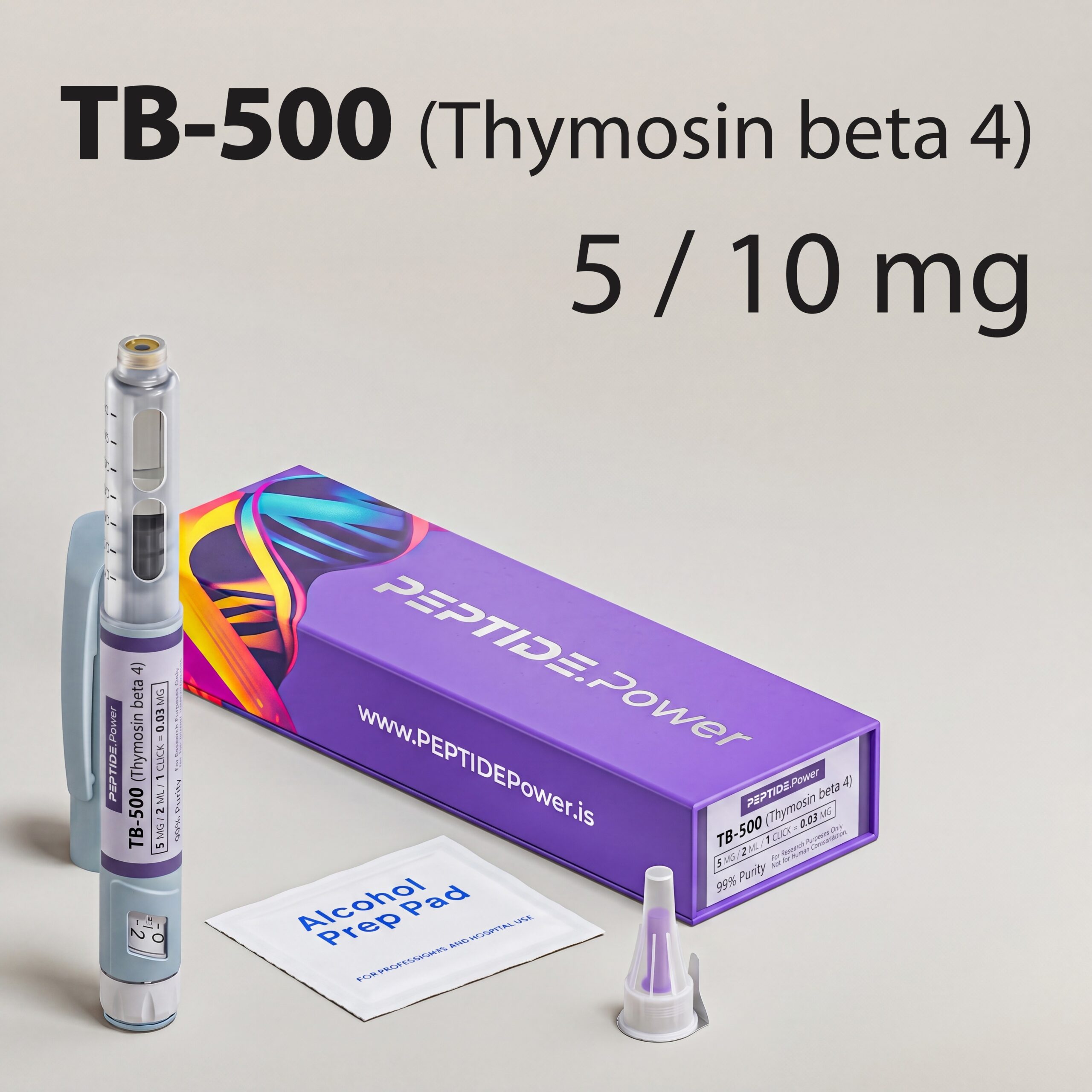


TB-500 (Thymosin beta 4)
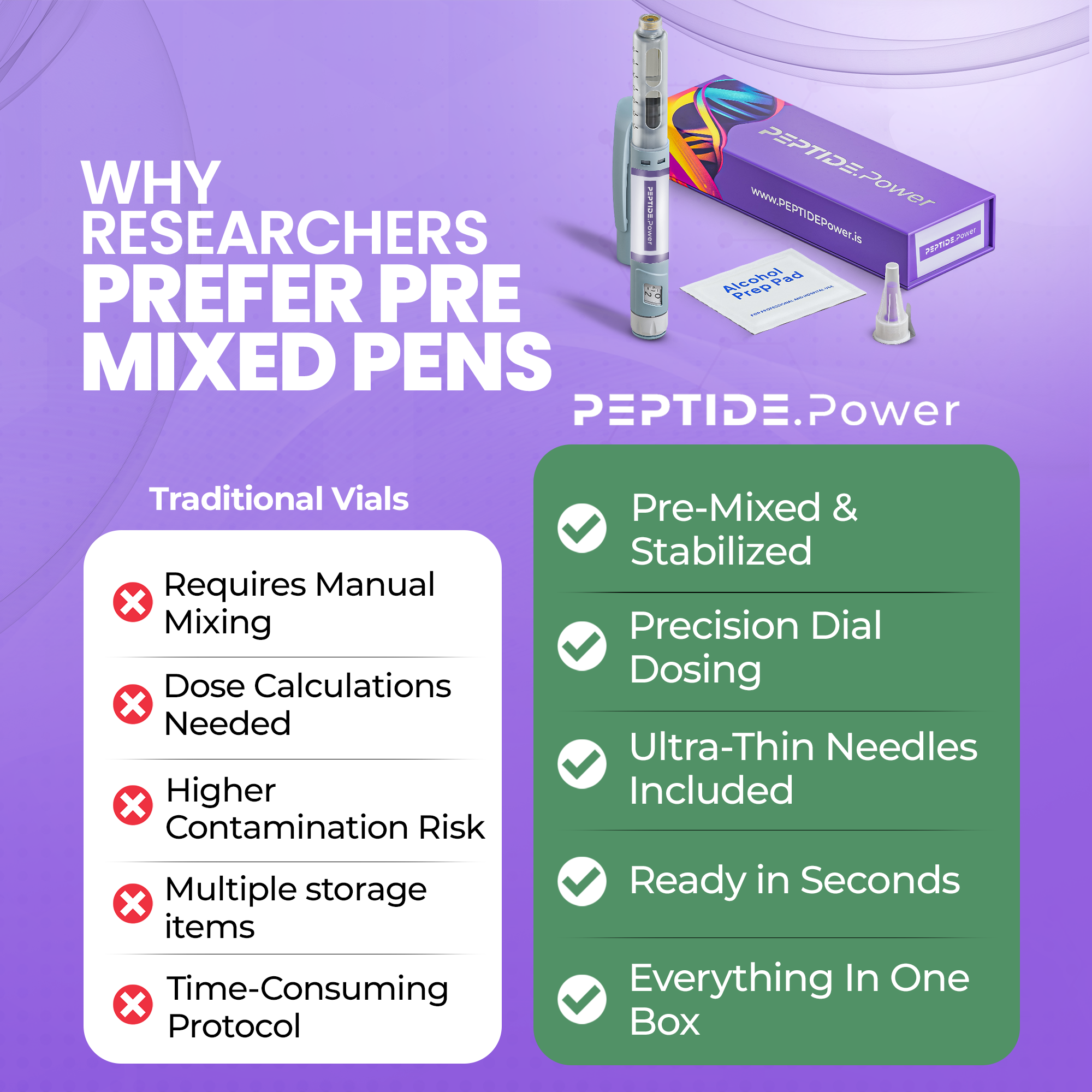
TB 500 (Thymosin Beta 4) е синтетичен пептид, изследван за ролята си в миграцията на клетките и регенерацията на тъканите. В предклинични модели е наблюдавано, че подпомага ангиогенезата и процесите на структурно възстановяване. Прилаган подкожно, TB 500 демонстрира системно разпределение и активност за модулиране на актина в експериментални условия. Формулиран само за изследователски цели в стабилизирана предварително смесена инжекционна писалка за контролирани лабораторни протоколи.
61,00 € – 109,00 €Ценови диапазон: 61,00 € до 109,00 €
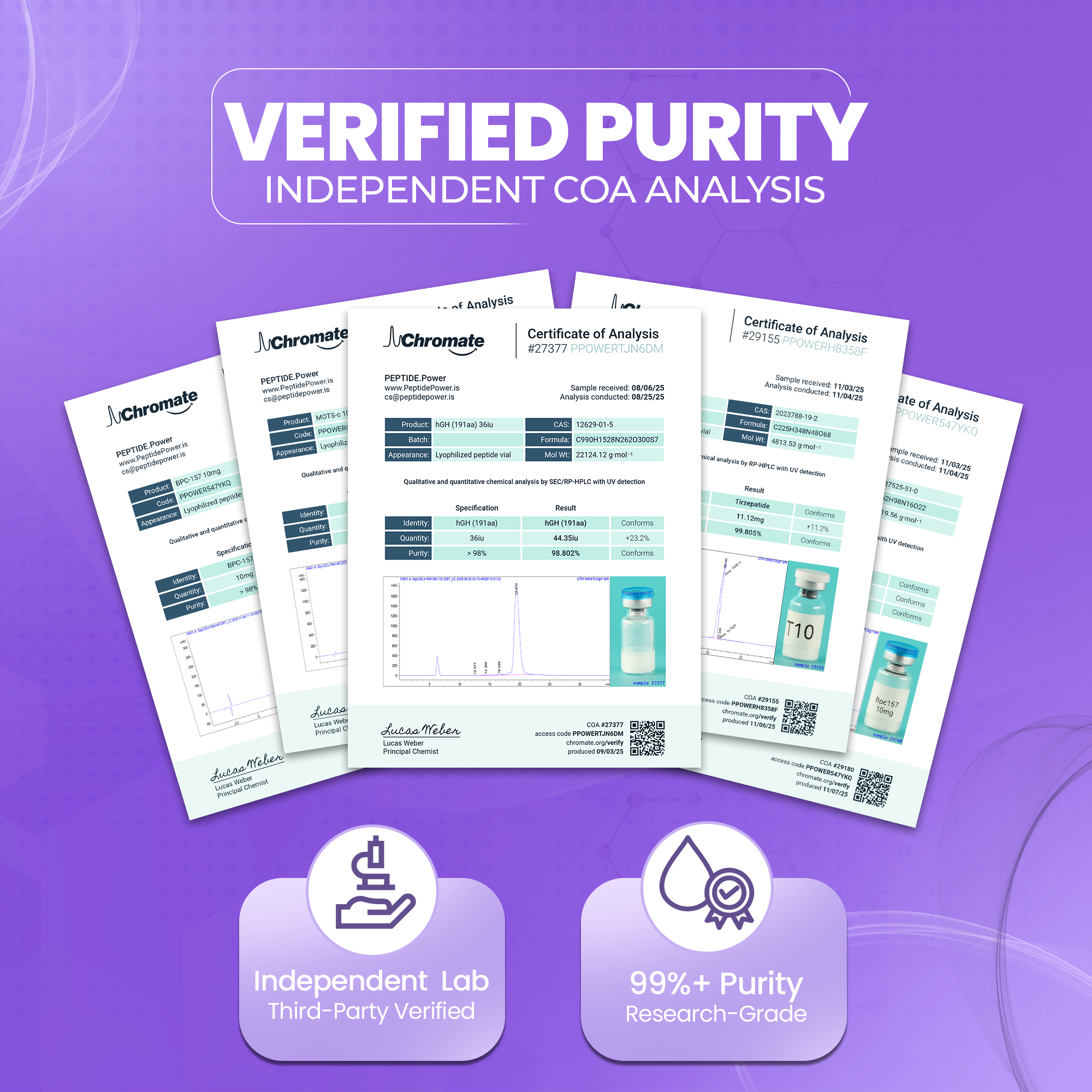
Сертификати за качество
Независим лабораторен анализ от трета страна (CoA) - от нашата собствена марка.
📦Влиза и в стек · спести до 28,00 €
Repair Matrix - Startспести 28,00 €Виж стека →TB 500 (Thymosin Beta 4) - Подкрепа за възстановяване и регенерация на тъканите
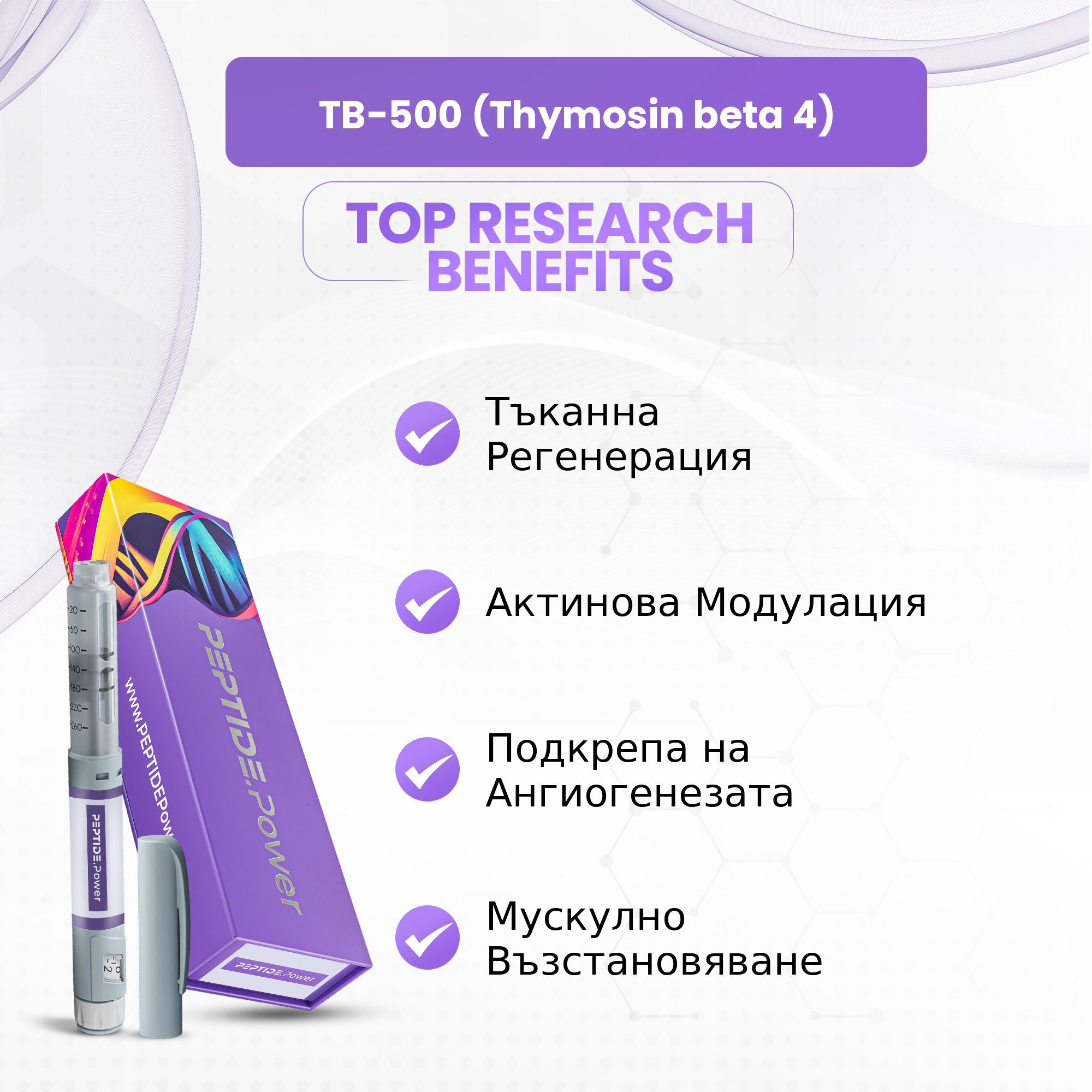
Подпомага структурната регенерация и процесите на възстановяване
Регулира цитоскелетната динамика за клетъчна миграция
Стимулира образуването на нови кръвоносни съдове
Подпомага регенерацията на мускулните влакна
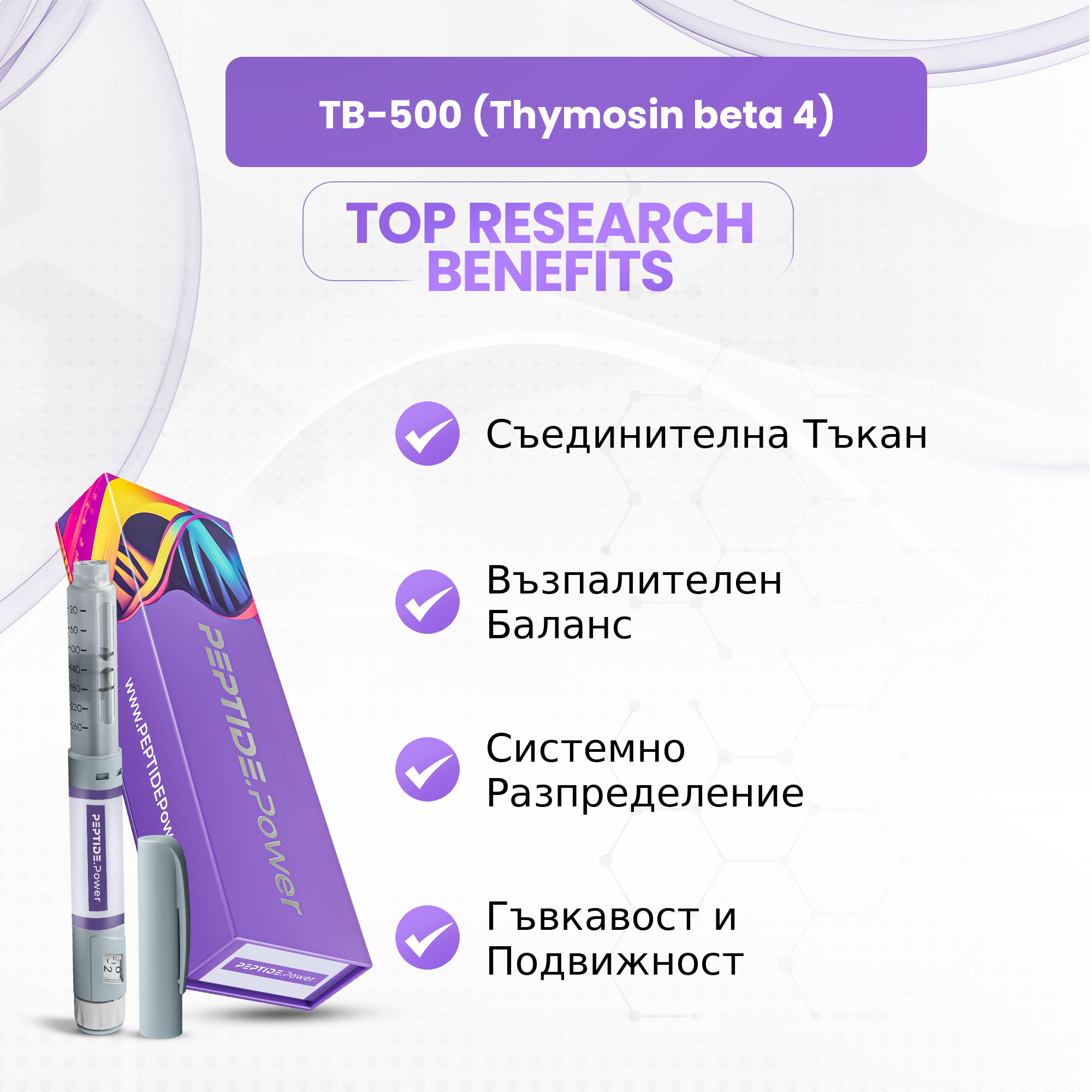
Съдейства за организацията и ремоделирането на колагена
Модулира възпалителните сигнални пътища
Демонстрира широко тъканно проникване в експериментални модели
Подпомага еластичността на тъканите и ставната подвижност при изследвания на възстановяването
Описание
TB 500 (Thymosin Beta 4) е синтетичен аналог на естествено срещащ се тимусен пептид, изследван предимно в изследванията на тъканното възстановяване и регенеративната биология. Той принадлежи към класа на актин-свързващите пептиди и се проучва в модели на мускулно-скелетното възстановяване, съединителната тъкан и системното възстановяване. В предклинични проучвания е наблюдавано, че TB 500 регулира клетъчната миграция и процесите на структурно ремоделиране. Тези свойства го нареждат сред най-изследваните пептиди в областите на експерименталната тъканна регенерация.
Нашата формула се предлага в стабилизирана предварително смесена инжекционна писалка за приложение на SubQ. Подкожното приложение поддържа висока бионаличност и постоянна системна експозиция в изследователски условия. Всяка единица е прясно приготвена, за да се гарантира ефикасност и стандартизирано дозиране в рамките на експерименталните протоколи. Този формат елиминира многоетапното разтваряне във флакона и опростява лабораторната работа. Продуктът е формулиран строго само за изследователска употреба.
В изследователски модели е наблюдавано, че TB 500 влияе върху полимеризацията на актина, критичен механизъм за движението на клетките и структурното възстановяване. Предклиничните проучвания показват повишаване на VEGF сигнализацията → ↑ ангиогенеза и подобрена васкуларизация в модели на нараняване. Документирана е и модулация на NF-κB пътищата → ↓ възпалителната сигнализация в определени експериментални контексти. Хистологичният анализ при проучвания върху животни показва подобрено подреждане на колагена и намалено образуване на фиброзна тъкан. Тип доказателства: предимно данни от животни и in vitro, с ограничени проучвателни изследвания при хора.
Клинично състояние
Човешки рандомизирани контролирани проучвания ▣ | Наблюдателни проучвания ▣ | Животни ✔ | In vitro ✔
Изучаван предимно в контекста на предклинични изследвания за тъканно възстановяване и ангиогенеза.
Механизъм на действие
TB 500 действа предимно чрез регулация на актина, структурен протеин, който е от съществено значение за клетъчното движение и тъканното възстановяване. В изследователски модели е наблюдавано, че се свързва с G-актинови мономери и подпомага динамичното преструктуриране на цитоскелета. Това улеснява миграцията на клетките към области на тъканен стрес или увреждане. Предклинични проучвания показват ↑ експресия на васкуларен ендотелен растежен фактор (VEGF) → ↑ ангиогенеза и подобрена микроциркулация в увредените тъкани. Тези координирани ефекти допринасят за структурното ремоделиране и регенерацията в експериментални модели.
Ползи
- Ускорено възстановяване и регенерация на тъканите: TB 500 е изследван за ролята му в клетъчната миграция и тъканната регенерация в множество предклинични модели на нараняване. Изследванията показват, че той подпомага регулирането на актина, което е от съществено значение за движението на клетките и структурното възстановяване. В животински модели е наблюдавано подобрено възстановяване на мускулните влакна и съединителната тъкан. Документирани са също повишена ангиогенеза и подобрена организация на колагена. Тези механизми позиционират TB 500 като централен пептид в изследванията на регенеративната биология. Тип доказателства: Животни ▣ | In vitro ▣.
- Модулация на актиновия цитоскелет: TB 500 е синтетичен аналог на Thymosin Beta 4, естествено срещащ се пептид, участващ в динамиката на свързване на актина. Лабораторните изследвания показват, че той регулира полимеризацията на G-актина, подпомагайки ремоделирането на цитоскелета. Този процес е критичен за затварянето на рани, клетъчната миграция и структурното възстановяване. In vitro изследванията демонстрират подобрена клетъчна подвижност след експозиция. Актин-свързаната активност на пептида се счита за един от основните му механистични аспекти.
- Засилена ангиогенеза и образуване на кръвоносни съдове: Предклиничните проучвания показват повишена експресия на VEGF в модели на тъканни увреждания. Тази повишена експресия допринася за образуването на нови кръвоносни съдове и подобрено доставяне на кислород до увредените области. В изследвания върху животни е наблюдавана повишена капилярна плътност след приложение. Подобрената васкуларизация подпомага транспорта на хранителни вещества и процесите на ремоделиране на тъканите. Доказателствата произтичат предимно от животински и лабораторни модели.
- Подкрепа за модели на мускулно възстановяване: В експериментални модели на мускулни наранявания е наблюдавано, че TB 500 ускорява регенерацията на увредените влакна. Проучванията съобщават за подобрена организация на архитектурата на мускулната тъкан. В определени изпитвания върху животни е документирано намалено образуване на белези. Изследвано е и засилено активиране на сателитните клетки. Тези констатации допринасят за включването му в изследователски протоколи за физическо представяне и възстановяване.
- Приложения в изследванията на съединителната тъкан и сухожилията: TB 500 е изследван в модели на наранявания на сухожилия и връзки. Предклиничните данни показват подобрено подреждане на колагеновите влакна и структурна здравина. Документирана е засилена миграция на фибробласти in vitro. Тези клетъчни процеси са от съществено значение за ремоделирането на съединителната тъкан. Регенеративният профил на пептида го прави релевантен в мускулно-скелетните изследвания.
- Модулация на антиинфламаторната сигнализация: В животински модели на тъканно нараняване са наблюдавани намалени възпалителни маркери като TNF-α и IL-6. Изследванията показват, че TB 500 може да модулира NF-κB пътищата, участващи във възпалителната сигнализация. Това изглежда поддържа балансирана среда за възстановяване, вместо прекомерно възпаление. Лабораторните констатации показват по-скоро регулиране, отколкото потискане на имунната активност. Тип доказателства: Животни ▣ | In vitro ▣.
- Намалена фиброза в експериментални модели: Някои предклинични проучвания показват намалено образуване на фиброзна тъкан след нараняване. Подобрена организация на колагеновия матрикс е измерена при хистологични оценки. Наблюдавана е намалена плътност на белеговата тъкан в сравнителните групи. Тези открития показват потенциална значимост в изследванията, свързани с фиброзата. Данните остават предимно предклинични.
- Профил на системно разпределение: Изследванията показват, че TB 500 може да проявява системно разпределение извън мястото на приложение. Фармакокинетичните модели при животни показват широко проникване в тъканите. Тази характеристика го отличава от локализираните подходи с растежни фактори. Профилът на системния ефект подкрепя включването му в изследователски модели за възстановяване на цялото тяло.
- Изследвания на сърдечната и органната тъкан: TB 500 е оценяван в експериментални модели на сърдечни увреждания. Предклиничните данни показват подобрена клетъчна преживяемост и намалена некротична област след исхемичен стрес. В лабораторни условия е документирана засилена миграция на ендотелни клетки. Тези констатации са проучвателни и остават в рамките на контекста на изследвания върху животни и in vitro.
- Висока бионаличност чрез подкожно приложение: Доставя се в стабилизирана предварително смесена инжекционна писалка за приложение на SubQ, което поддържа последователно експериментално дозиране. Подкожното приложение позволява надеждна системна експозиция в изследователски модели. Формулировката избягва многоетапно разтваряне във флакона и поддържа стандартизирани протоколи. Всяка единица се приготвя прясно и е предназначена строго само за изследователска употреба.
Изследователски данни
| Изследване / Модел | Наблюдаван ефект |
|---|---|
| Модел на пълнодебелинна кожна рана при плъхове | ↑ Скорост на затваряне на раната, ↑ миграция на кератиноцити, ускорена ре-епителизация |
| Миши модел на сърдечен инфаркт | ↓ Образуване на белег, ↑ преживяемост на кардиомиоцитите и активиране на епикардиални прогениторни клетки |
| Увреждане на Ахилесово сухожилие при плъхове | ↑ Организация на колагеновите влакна и якост на опън по време на възстановителната фаза |
| Модели на роговична увреда (заек) | Ускорена епителна регенерация и намален възпалителен инфилтрат |
| In vitro култура на ендотелни клетки | ↑ Ангиогенно образуване на тубули и VEGF-медиирано съдово разклоняване |
| Миши модел на увреждане на ЦНС | ↑ Диференциация на олигодендроцити и неврологично функционално възстановяване |
| Смачкваща травма на скелетен мускул (плъх) | ↑ Активиране на сателитни клетки, ↓ отлагане на фиброзна тъкан |
Предложения за комбиниране
TB-500 често се комбинира в изследванията с:
- TB-500 + BPC-157 → Синергично тъканно възстановяване, съчетаващо актиновото ремоделиране с ангиогенни и цитопротективни пътища за репарация.
- TB-500 + GHK-Cu → Подсилва ремоделирането на съединителната тъкан и синтеза на извънклетъчен матрикс в модели на кожа и рани.
- TB-500 + IGF-1 LR3 → Комбинира подкрепата за клетъчна миграция с анаболна сигнализация при изследвания на мускулно-скелетното възстановяване.
- TB-500 + Epitalon → Съчетава структурната репарация с пътища, свързани с теломерите и дълголетието, в регенеративни модели.
⚠ Комбинациите са само за експериментален дизайн; не са препоръка за безопасност или ефикасност.
Таблица за дозиране на писалката
| TB-500 Писалка 5 mg | |
|---|---|
| Обем | 2.0 mL (след разтваряне) |
| mg/mL | 2.5 mg/mL |
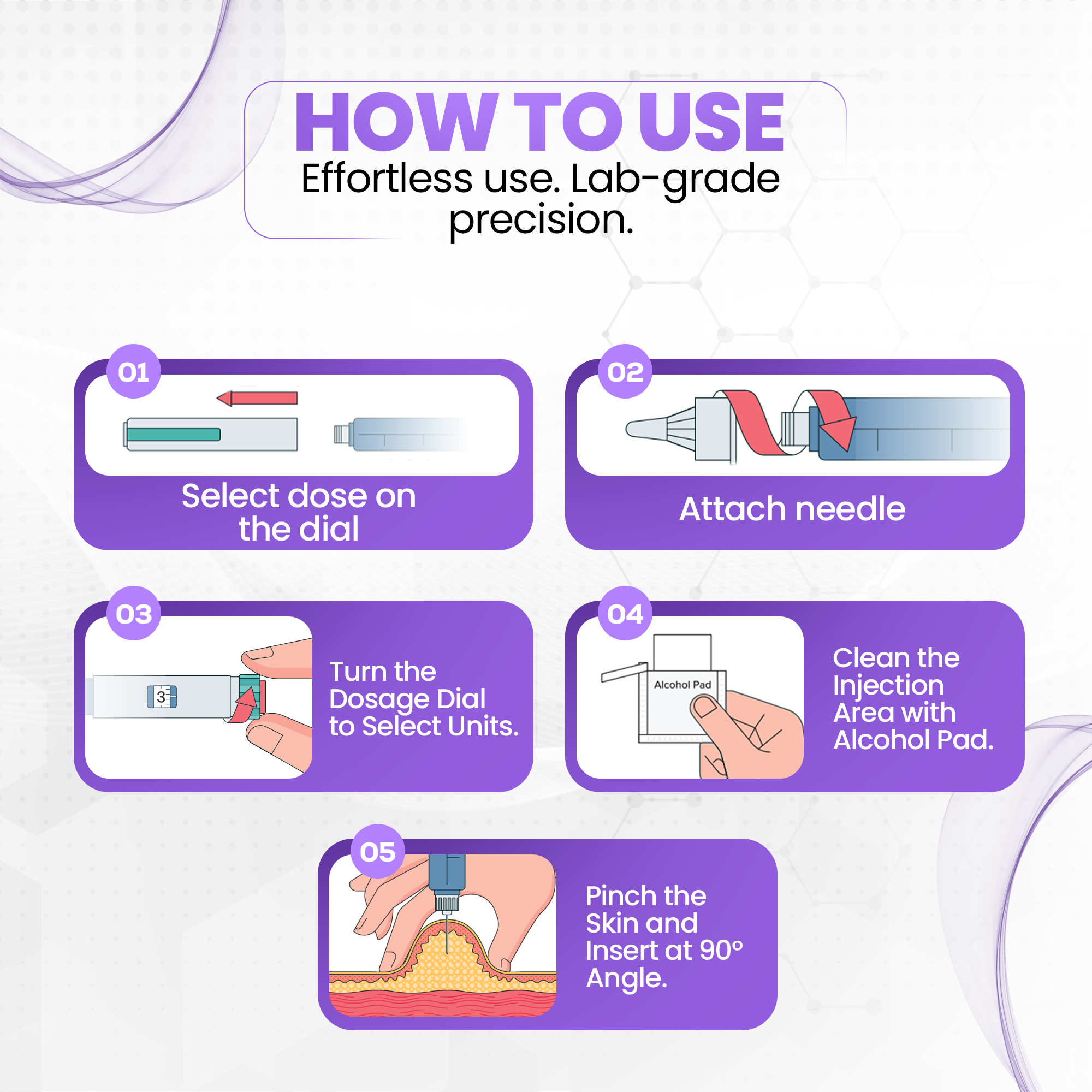
| Кликване за дозиране | 1 кликване = 0.025 mg |
| Пример(и) | 20 кликвания = 0.5 mg; 40 кликвания = 1 mg |
| TB-500 Писалка 10 mg | |
|---|---|
| Обем | 2.0 mL (след разтваряне) |
| mg/mL | 5.0 mg/mL |
| Кликване за дозиране | 1 кликване = 0.05 mg |
| Пример(и) | 20 кликвания = 1 mg; 40 кликвания = 2 mg |
Дозировки и вариации на протоколи
Стандартен изследователски протокол
- Доза: 2 – 2.5 mg (вариант 5 mg писалка = 80-100 кликвания / вариант 10 mg писалка = 40-50 кликвания)
- Продължителност: 4 – 6 седмици
- Честота: 2× седмично
- Интервал на цикъла: 4 седмици почивка преди повторение
- Цел / Описание: Базов протокол за изследователски модели на системно тъканно възстановяване и регенерация.
Терапевтичен изследователски протокол
- Доза: 5 – 10 mg (вариант 10 mg писалка = 100-200 кликвания)
- Продължителност: 4 – 6 седмици натоварваща фаза, последвана от постепенно намаляване
- Честота: Разделено на 2 – 3 седмични инжекции
- Интервал на цикъла: 4 – 6 седмици почивка преди повторение
- Цел / Описание: Протокол с по-висока доза, използван в модели на наранявания на съединителната тъкан и мускулно-скелетната система.
Комбиниран протокол (TB-500 + BPC-157)
- Доза: 2 mg TB-500 + 0.25 mg BPC-157 (вариант 5 mg писалка = 80 кликвания / вариант 10 mg писалка = 40 кликвания)
- Продължителност: 4 седмици
- Честота: TB-500 2× седмично, BPC-157 ежедневно
- Интервал на цикъла: 4 седмици почивка преди повторение
- Цел / Описание: Комбиниран регенеративен протокол, изследван за синергично възстановяване на сухожилия и връзки.
Възможни странични ефекти
TB-500 като цяло се понася добре в проучвания върху животни и ограничени човешки обсервационни доклади.
Докладваните странични ефекти в изследователски контекст са редки и обикновено леки:
- Локализирано зачервяване, чувствителност или раздразнение на мястото на инжектиране.
- Преходна умора или летаргия по време на началния период на прилагане.
- Леко главоболие или замайване, докладвано при някои субекти.
- Временни грипоподобни усещания малко след прилагане.
- Случайна храносмилателна чувствителност или леко гадене.
Няма данни за хормонални, чернодробни или системни неблагоприятни ефекти в наличните предклинични данни. Тъй като TB-500 се изследва за своите ангиогенни свойства и свойства, свързани с клетъчната миграция, текущите изследвания продължават да оценяват неговия дългосрочен профил на безопасност в експериментални модели.
Характеристики на продукта
- CAS номер: 77591-33-4
- Молекулна формула: C212H350N56O78S
- Последователност (АК): SDKPDMAEIEKFDKSKLKKTETQEKNPLPSKETIEQEKQAGES
- Молекулно тегло: 4963.4 g/mol
- PubChem CID: 16132341
- Период на полуразпад: ~2-3 часа (системно разпределение, наблюдавано в продължение на няколко дни)
- Синоними: Thymosin Beta 4, TB4, TMSB4X, Tβ4
- Тип: Синтетичен изследователски пептид (актин-свързващ регенеративен фрагмент)
- Изследователски фокус: Възстановяване и представяне, Регенерация на тъкани, Ангиогенеза
Научни източници
- Thymosin beta4: a multi-functional regenerative peptide. Basic properties and clinical applications Обсервационно | Животни | In vitro
- Thymosin beta4 and cardiac regeneration: are we missing a beat? Животни | In vitro
- Thymosin beta4 induces angiogenesis through Notch signaling in endothelial cells Животни | In vitro
- Thymosin beta4 promotes cardiac cell survival and tissue repair Животни | In vitro
- Thymosin beta4 activates integrin-linked kinase and promotes cardiac cell migration, survival and cardiac repair Животни | In vitro
- Thymosin beta4 and tissue regeneration: a review of its therapeutic potential in wound healing Обсервационно | Животни
- Thymosin beta-4: a multi-faceted tissue repair stimulating protein in heart injury Животни | In vitro
- Thymosin beta4 in the eye: from bench to bedside Обсервационно | Животни | In vitro
Включено в кутията
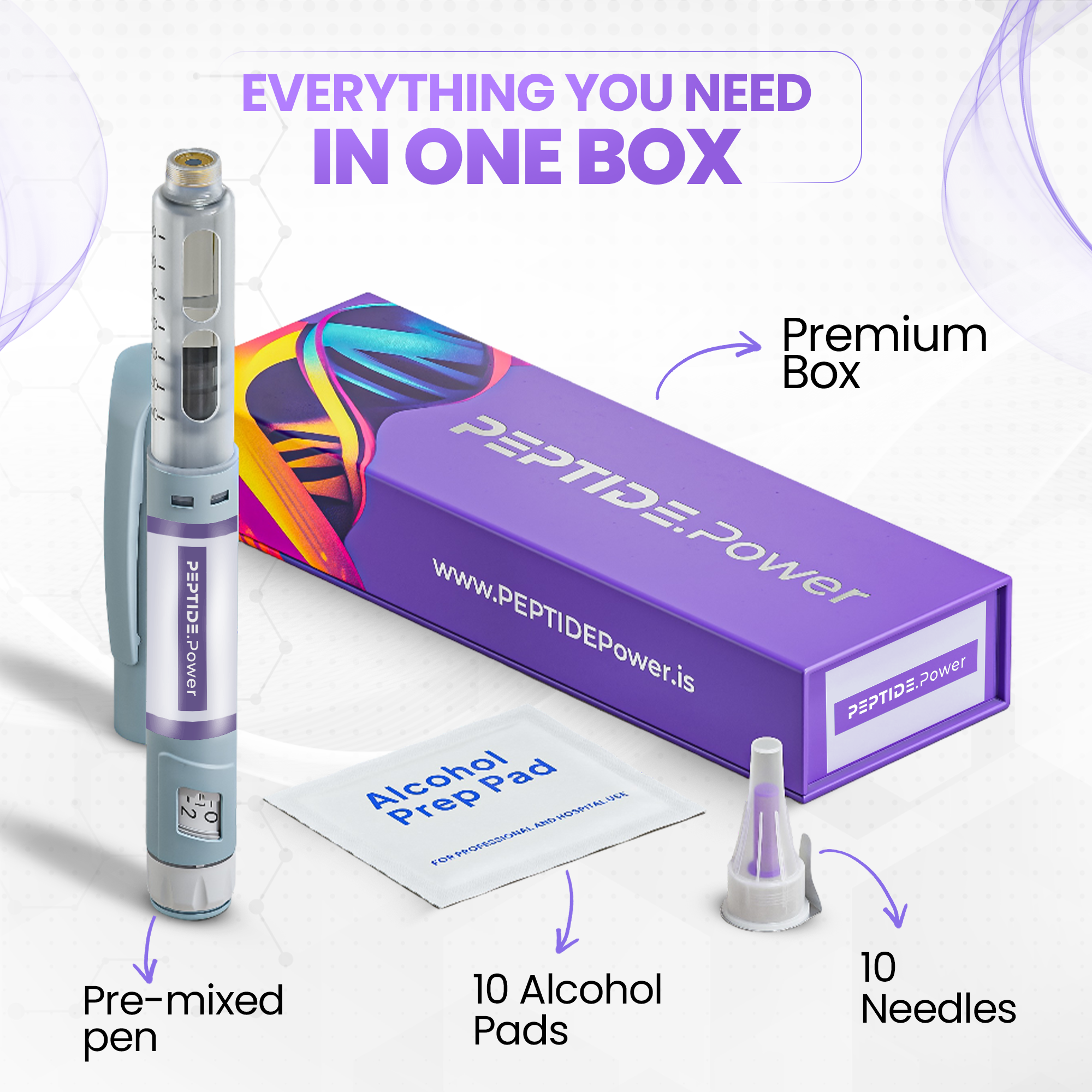
Всеки продукт пристига в премиум, специално проектирана кутия на PEPTIDE.Power, проектирана за удобство, хигиена и безопасно съхранение във вашия хладилник. Вътре ще намерите всичко необходимо за пълния ви изследователски протокол:
- 1× Еднократна предварително смесена инжекционна писалка
- Захранван от нашата патентована PSM Technology™ – прецизна система за стабилизация & смесване за постоянна ефикасност
- 10× Ултратънки игли (33G, 4 мм)
- 10× Спиртни тампони за стерилна подготовка
- Вътрешна стабилизираща дунапренова вложка за предотвратяване на разклащане по време на транспорт
- Панел с инструкции, отпечатан от вътрешната страна на кутията за бърза справка
- Стикер за защитен печат, гарантиращ, че опаковката не е отваряна или манипулирана
Съхранение
Съхранявайте продукта в хладилник при 1-7°C веднага след доставка. За да поддържате оптимална стабилност, дръжте писалката далеч от светлина и не я излагайте на повтарящи се температурни промени.
След като бъдат реконституирани (всички наши писалки са предварително смесени), изследователските съединения остават стабилни за 6-8 седмици при правилно съхранение в хладилник.
Не замразявайте след реконституция. Винаги дръжте кутията затворена, така че писалката, иглите и спиртните тампони да останат чисти и защитени.
За най-добри резултати използвайте продукта последователно в рамките на препоръчителния времеви прозорец и винаги следвайте вашия изследователски протокол.
Доставка
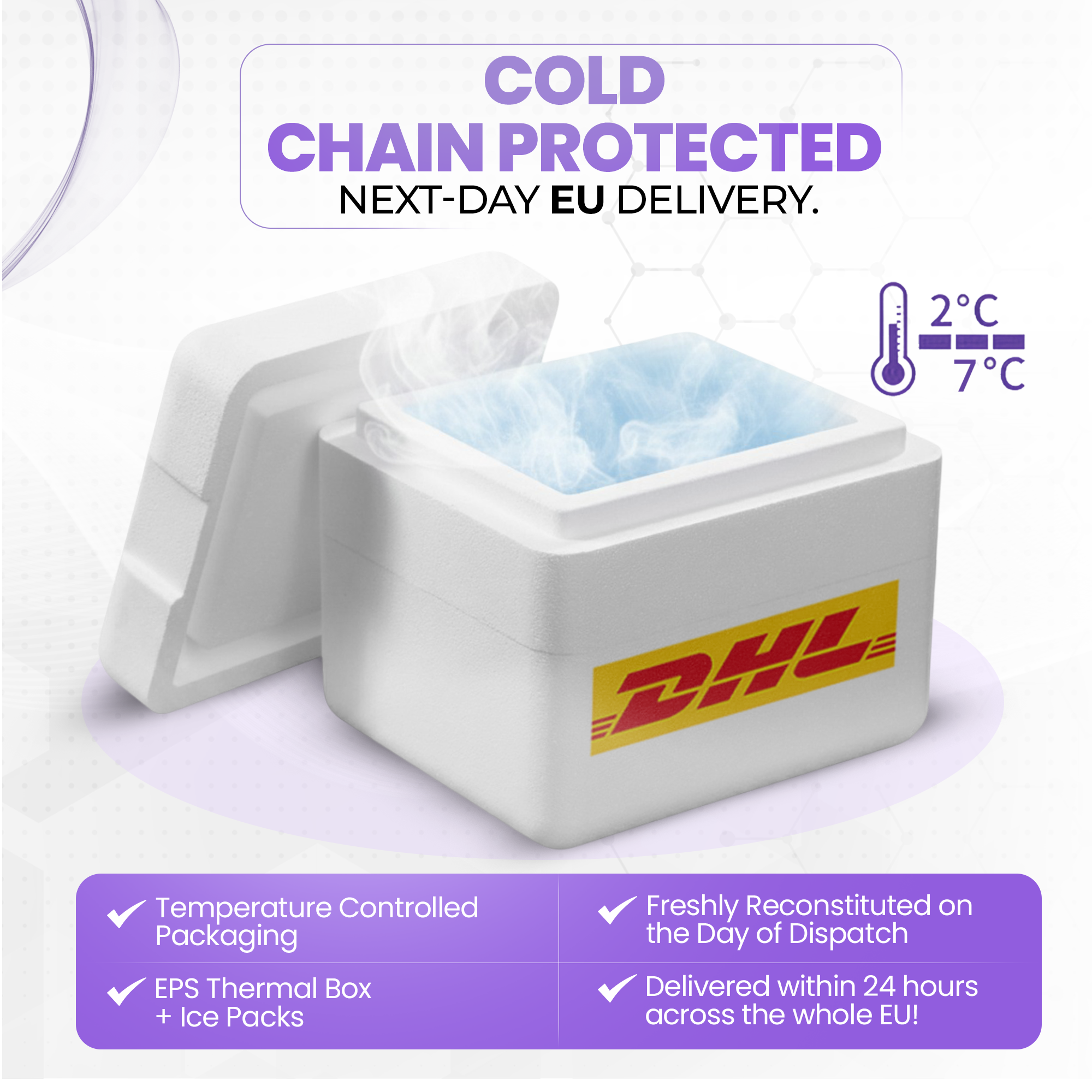
Изпращаме с Доставка в ЕС на следващия ден чрез DHL Express или UPS Express.
Всички поръчки се приготвят свежи в деня на изпращане, поставят се в EPS транспортни кутии за студена верига и се изпращат с охлаждащи елементи за поддържане на стабилна температура по време на целия път.
Нашият логистичен процес е проектиран така, че пратката да пристигне за една нощ, избягвайки митнически забавяния в рамките на Европейския съюз.
Продуктите се изпращат от нашето съоръжение в ЕС, осигурявайки без вносни мита, без митническо освобождаване и винаги бърза и сигурна доставка.
Плащане
Поради естеството на изследователските пептиди и категорията с висок риск, определена от платежните оператори, компаниите за кредитни карти не поддържат търговци в тази област.
Поради тази причина приемаме само банкови преводи.
В рамките на Европейския съюз, SEPA преводите са бързи, нискотарифни и обикновено пристигат в рамките на минути до няколко часа, което прави процеса на плащане гладък и прост.
След като преводът бъде получен, вашата поръчка се подготвя незабавно и се изпраща същия ден (в зависимост от часа на поръчка).
Този метод осигурява съответствие, сигурност и непрекъснатост на услугата за всички клиенти в целия ЕС.
Не намерихте отговор на въпроса си?
Вижте всички често задавани въпросиRELATED PRODUCTS


CJC 1295 (без DAC)


Crystagen
Crystagen е синтетичен трипептиден биорегулатор, съставен от аминокиселинната последователност Glu-Asp-Pro (EDP), проектиран да имитира ендогенни регулаторни пептиди, участващи в имунната


