


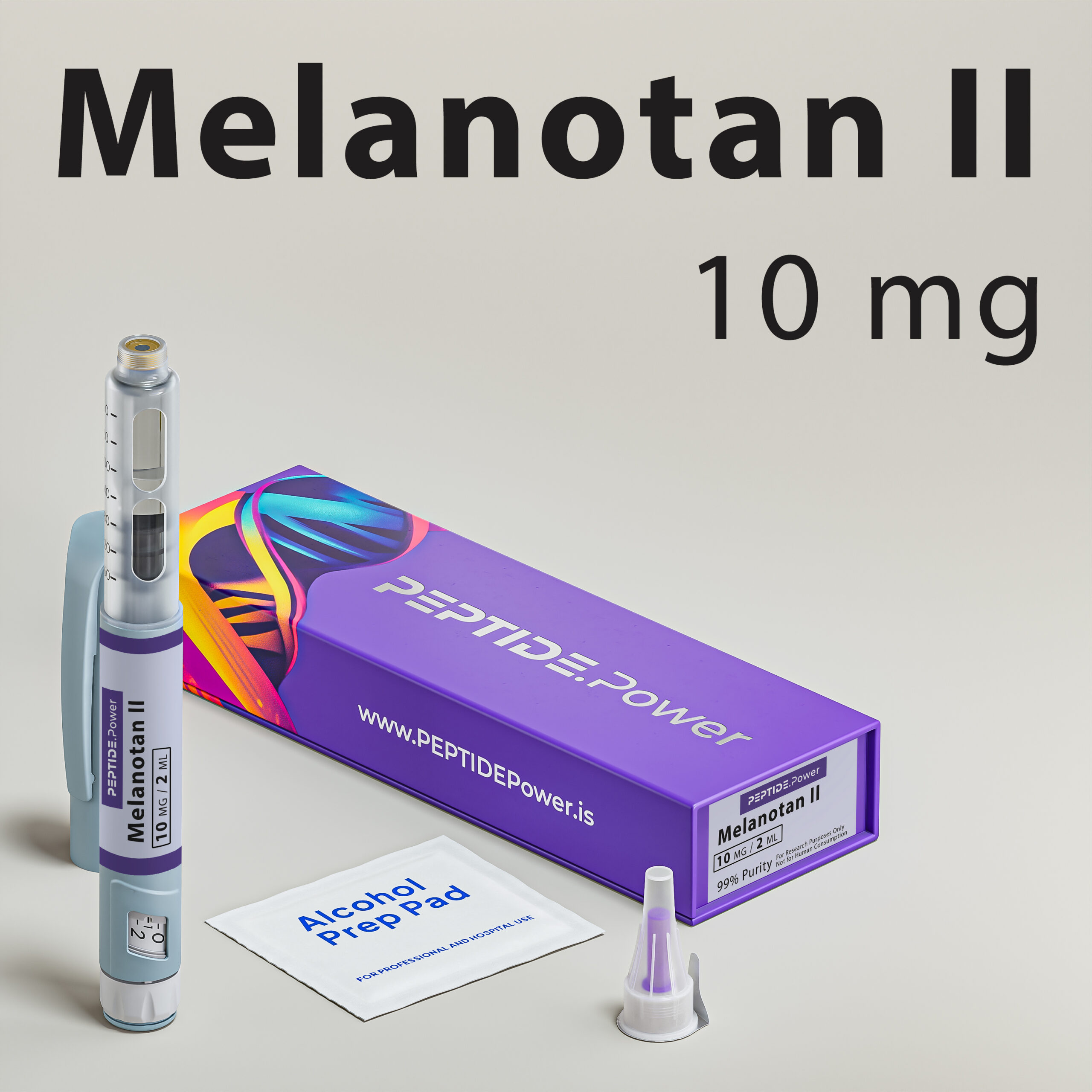


Melanotan II
Melanotan II is a synthetic analog of alpha-melanocyte-stimulating hormone (α-MSH), developed to explore its effects on melanogenesis, sexual function, and energy metabolism. In research settings, it has been observed to increase pigmentation and modulate central pathways influencing libido and appetite.
58,00 €
- Skin Pigmentation & Libido
Description
Melanotan II is a synthetic analog of alpha-melanocyte-stimulating hormone (α-MSH) studied for its ability to stimulate melanogenesis and skin pigmentation through activation of melanocortin receptors, particularly MC1R and MC4R. It is a well-researched compound in pigmentation, photoprotection, and neuroendocrine modulation studies.
In experimental models, Melanotan II has been observed to increase melanin production, enhancing natural UV protection and reducing oxidative stress in skin cells. Beyond pigmentation, it influences the melanocortin system in the brain, modulating appetite, libido, and energy balance. Its activity on MC3R and MC4R receptors has also made it a target of research in metabolic and neurobehavioral studies.
Melanotan II exhibits neuroprotective and anti-inflammatory properties by regulating cytokine activity and reducing reactive oxygen species formation. It also supports improved vascular and tissue protection, expanding its study beyond dermatological research to include systemic recovery and homeostatic regulation.
Formulated in a stabilized pre-mixed injection pen for SubQ administration, Melanotan II ensures high bioavailability and consistent delivery in controlled research settings. It is suitable for advanced experimental work in pigmentation, metabolic regulation, and neuroendocrine pathways.
Clinical Status:
Melanotan II is a research peptide analog evaluated in human and animal models for pigmentation and metabolic research. It is not approved for therapeutic use and is intended solely for laboratory and experimental applications.
Evidence type:
Human RCT ✔ | Observational ✔ | Animal ✔ | In vitro ✔ | Regulatory ☐
Mechanism of Action
Melanotan II binds to melanocortin receptor subtypes (MC1R-MC5R), mimicking the activity of endogenous α-MSH. Activation of MC1R promotes cAMP accumulation in melanocytes, upregulating tyrosinase activity and accelerating melanin synthesis. Central actions via MC3R and MC4R affect hypothalamic neurons, modulating feeding behavior and sexual arousal. Peripheral MC receptors also participate in energy homeostasis and lipid oxidation. The peptide’s cyclic heptapeptide structure confers increased metabolic stability and receptor affinity compared to native α-MSH, extending its bioactivity in systemic models.
Benefits
- Stimulation of Melanogenesis and Skin Pigmentation:
Melanotan II is a synthetic analog of alpha-melanocyte-stimulating hormone (α-MSH), studied for its ability to activate the melanocortin-1 receptor (MC1R) in melanocytes. This receptor activation increases melanin synthesis, resulting in a gradual darkening of skin tone. Research indicates enhanced UV protection through elevated eumelanin levels, supporting investigations into photoprotection and pigmentation modulation. - Enhanced UV Protection and Skin Health:
By promoting natural melanin production, Melanotan II enhances cellular defense against ultraviolet damage. Studies demonstrate that increased melanin density helps absorb harmful UV radiation and reduce oxidative DNA damage in skin cells. This protective mechanism makes it a valuable subject in research related to skin photoprotection and anti-aging dermatology. - Appetite and Energy Regulation Through MC4R Pathways:
Melanotan II also acts on the melanocortin-4 receptor (MC4R) within the hypothalamus, influencing appetite control and energy balance. Preclinical studies show reductions in caloric intake and fat accumulation, suggesting its role in experimental research on metabolic regulation, obesity, and neuroendocrine energy homeostasis. - Improved Libido and Sexual Function:
Research on Melanotan II has demonstrated a strong influence on sexual arousal and erectile function through central melanocortin receptor activation (particularly MC3R and MC4R). It stimulates pathways associated with libido and reproductive behavior in both male and female models, leading to its recognition as a subject of interest in sexual function research. - Neuroprotective and Mood-Enhancing Effects:
Studies suggest that Melanotan II exerts neuroprotective and mood-modulating actions through the melanocortin system’s influence on dopamine and serotonin pathways. This neuroendocrine activity may contribute to improved mood stability, motivation, and stress resilience, making it a focus of investigation in neuropeptide research. - Reduction of Inflammation and Oxidative Stress:
Melanocortin activation by Melanotan II leads to suppression of pro-inflammatory cytokines such as TNF-α and IL-1β, along with enhanced antioxidant enzyme activity. These combined effects provide systemic anti-inflammatory protection, supporting research in inflammatory regulation, wound recovery, and cellular stress adaptation. - Potential Support for Metabolic Optimization:
By influencing hypothalamic signaling and lipid metabolism, Melanotan II may contribute to increased energy expenditure and improved insulin sensitivity. This has led to growing research interest in its metabolic regulatory effects, particularly in models examining obesity, glucose tolerance, and lipid homeostasis. - Synergy in Photoprotection and Skin Repair Research:
When combined with peptides such as GHK-Cu or BPC-157, Melanotan II enhances outcomes in experimental skin health and regenerative protocols. The synergistic stimulation of melanogenesis and collagen synthesis supports advanced studies in dermatological recovery and post-inflammatory hyperpigmentation control. - Long-Lasting Pigmentation Maintenance:
Melanotan II provides prolonged melanin retention even after cessation of administration, attributed to its stable receptor binding and extended activation of melanogenic pathways. This makes it ideal for research into long-term pigmentation stability and protective adaptation against environmental stressors. - Exploration in Neuroendocrine and Behavioral Pathways:
Beyond pigmentation and libido research, Melanotan II is studied for its central nervous system regulatory effects via the melanocortin network. Its influence on reward circuits, satiety, and emotional regulation suggests wider potential for understanding neuroendocrine integration and behavioral modulation mechanisms.
Research Data
| Study/model | Reported effect |
| Human clinical trials (Phase 1-2) |
↑ Skin pigmentation intensity and duration via increased melanin synthesis
|
| Human observational studies |
Improved erectile response and libido activation through MC4R signaling
|
| Rodent hypothalamic models |
↓ Food intake and body weight via central melanocortin pathway modulation
|
| In vitro melanocyte cultures |
↑ Tyrosinase activity and melanin production without UV exposure
|
| Rat metabolic studies |
↑ Energy expenditure and lipid oxidation through MC3R/MC4R activation
|
| Pharmacokinetic studies |
Extended plasma half-life and receptor binding stability vs α-MSH
|
| Behavioral neurobiology models |
Altered dopaminergic response associated with mood and arousal
|
Stack Suggestions
Melanotan II is often combined with PT-141 (Bremelanotide) for enhanced libido research, as both act on related melanocortin receptor pathways.
It may also be stacked with GHK-Cu in skin pigmentation or photoprotection studies for synergistic aesthetic research outcomes.
Stacks discussed are for experimental design purposes only, not for safety or efficacy guidance.
Pen Dosage Chart
| Melanotan II Pen 10 mg | |
| Volume | 2.0 mL |
| mg/mL | 5 mg/mL |
| Click-to-Dose | 1 click = 0.05 mg |
| Example(s) | 20 clicks = 1 mg |
Dosage & Protocols Variations
Standard Pigmentation Protocol
- Dose: 0.25 – 1 mg
- Duration: 8 – 12 weeks
- Frequency: 1× daily
- Cycle Interval: 4-week rest
- Goal / Description: Typical research dosing aimed at gradual melanocyte activation
Libido Research Protocol
- Dose: 0.5 – 1 mg
- Duration: 4 – 6 weeks
- Frequency: Every Other Day
- Cycle Interval: 4-week rest
- Goal / Description: Investigational design for central melanocortin stimulation
Metabolic Regulation Protocol
- Dose: 0.25 – 0.5 mg
- Duration: 6 – 8 weeks
- Frequency: 1× daily
- Cycle Interval: 4-week rest
- Goal / Description: Studied for appetite and thermogenic pathway modulation
Maintenance Protocol
- Dose: 0.25 mg
- Duration: ongoing
- Frequency: 2× weekly
- Cycle Interval: 8-week rest
- Goal / Description: Sustains melanin expression post-induction phase
Possible Side Effects
Melanotan II may cause side effects, although these do not occur in all research subjects. Most common adverse reactions are transient and typically subside as the subject adapts to the compound. It is crucial to start with the lowest possible dose to gauge subject tolerance.
Nausea and Vomiting: This is the most frequently reported initial side effect, especially when higher doses are introduced rapidly. Nausea is often mild to moderate and tends to decrease over the first week of administration.
Facial Flushing/Warmth: Subjects may experience a temporary sensation of warmth and redness in the face or body shortly after injection. This is often linked to transient changes in blood pressure.
Appetite Suppression: Consistent with the MC4R agonism, a noticeable reduction in appetite and food cravings is common, which may lead to weight loss over longer research cycles.
Hyperpigmentation of Moles/Freckles: Existing moles or freckles may darken faster and become more pronounced than the surrounding skin. Researchers should document all dermatological changes carefully.
Injection Site Reactions: As with any SubQ injection, minor redness, swelling, or irritation may occur at the injection site.
Spontaneous Erections (Male Subjects): Due to the potent MC4R activity, male subjects may experience unexpected and prolonged erections during the initial research phase.
It is important to emphasize that most side effects of Melanotan II are dose-dependent, reversible, and manageable with careful dose titration.
Product Attributes
- CAS #: 121062-08-6
- Molecular Formula: C50H69N15O9
- Sequence (AA): Ac-Nle-cyclo[Asp-His-D-Phe-Arg-Trp-Lys]-NH2
- Molecular Weight: 1024.18 g/mol
- PubChem CID: 16132396
- Half-Life: ~30 – 60 min
- Synonyms: MT-2, Melanotan-II, Melanocortin Analog, NDP – α-MSH
- Type: Synthetic cyclic peptide analog of α-MSH
- Research Focus: Beauty & Skin, Libido & Reproduction
Scientific References
- Evaluation of melanotan-II, a superpotent cyclic melanotropic peptide in a pilot phase-I clinical study Human RCT
- Melanotan II user experience: a qualitative study of online discussion Observational
- Melanotan II injection resulting in systemic toxicity and rhabdomyolysis Observational
- Melanotan II: a possible cause of renal infarction: review of the literature and case report Observational
- Evidence that melanocortin receptor agonist melanotan-II synergistically augments the ability of naltrexone to blunt binge-like ethanol intake in male C57BL/6J mice Animal
- Identification and characterization by LC-UV-MS/MS of melanotan II skin-tanning products sold illegally on the internet In vitro
- Preformulation studies with melanotan-II: a potential skin cancer chemopreventive peptide In vitro
- Effects of a superpotent melanotropic peptide in combination with solar UV radiation on tanning of the skin in human volunteers Human RCT
- Melanotan II – an overview Animal
- A glimpse into the underground market of melanotan Observational
- Case report melanotan tanning injection: a rare cause of priapism Observational
- Melanotan | Actas dermo-sifiliográficas In vitro
Included In The Box
Every product arrives in a premium, custom-designed PEPTIDE.Power box, engineered for convenience, hygiene, and safe storage in your refrigerator. Inside, you will find everything needed for your full research protocol:
- 1× Disposable Pre-Mixed Injection Pen
- Powered by our proprietary PSM Technology™ – precision stabilization & mixing system for consistent potency
- 10× Ultra-thin Needles (33G, 4 mm)
- 10× Alcohol Pads for sterile preparation
- Internal Stabilizing Foam Insert to prevent shaking during transport
- Instruction Panel printed on the inside of the box for quick reference
- Security Seal Sticker ensuring the package has not been opened or tampered with
Storage
Store the product in a refrigerator at 1 – 7°C immediately upon delivery. To maintain optimal stability, keep the pen away from light, and do not expose it to repeated temperature changes.
Once reconstituted (all our pens come pre-mixed), research compounds remain stable for 6 – 8 weeks under proper refrigeration.
Do not freeze after reconstitution. Always keep the box closed so the pen, needles, and alcohol pads stay clean and protected.
For best results, use the product consistently within the recommended time window and always follow your research protocol.
Delivery
We ship with Next-Day EU Delivery via DHL Express or UPS Express.
All orders are prepared fresh on the day of dispatch, placed in EPS cold-chain transport boxes, and shipped with cooling elements to maintain a stable temperature throughout the journey.
Our logistics process is designed so the package arrives overnight, avoiding customs delays inside the European Union.
Products are shipped from our EU facility, ensuring no import duties, no customs clearance, and always fast and secure delivery.
Payment
Due to the nature of research peptides and the high-risk category assigned by payment processors, credit card companies do not support merchants in this field.
For this reason, we accept bank transfers only.
Within the European Union, SEPA transfers are fast, low-cost, and usually arrive within minutes to a few hours, making the payment process smooth and simple.
Once the transfer is received, your order is prepared immediately and dispatched the same day (cut-off dependent).
This method ensures compliance, security, and continuity of service for all customers across the EU.
RELATED PRODUCTS
CJC-1295 (No-DAC) + Ipamorelin

GHRP-2

HCG (Choriomon)
MGF

