HEP-1

HEP-1 is a synthetic 14-amino acid peptide corresponding to the ezrin (324-337) fragment, investigated for its immunomodulatory activity in cell and animal models. Research has evaluated its influence on cytokine and interferon signaling, macrophage function, and fibroblast differentiation. Suitable for experimental models focused on immune regulation, mucosal immunity, and inflammatory colitis research.

77,00 €

SKU: HEP-1 Categories: ,

HEP-1 - Immunomodulatory Ezrin-Derived Peptide

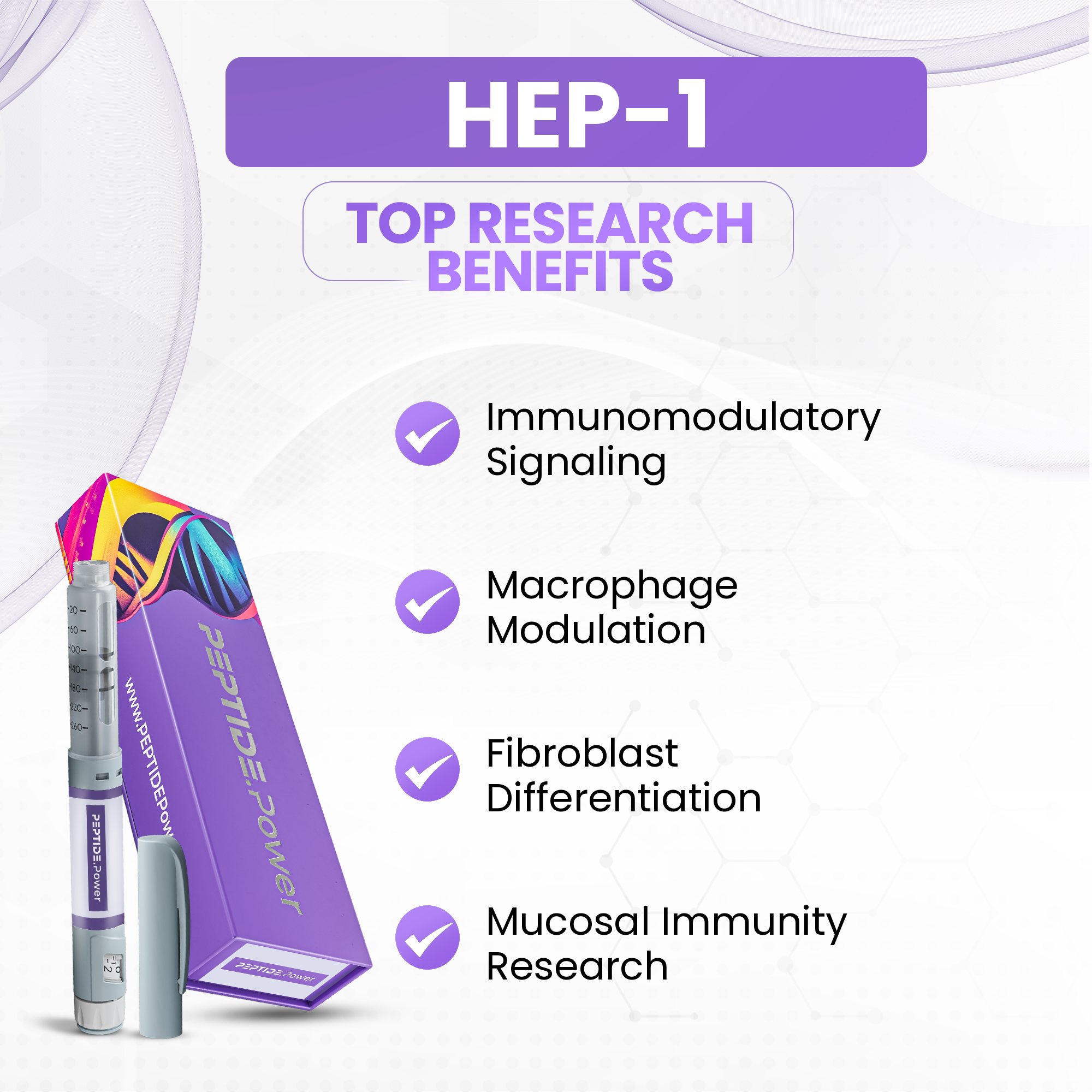
Immunomodulatory Signaling

Investigated for modulating cytokine production and interferon-gamma expression profiles in experimental immune cell models

Macrophage Modulation

Reported to influence macrophage phagocytic activity, oxidative burst capacity and chemotactic responses in culture studies

Fibroblast Differentiation

Evaluated for effects on fibroblast differentiation and interferon pathway activity in cultured cell models

Mucosal Immunity Research

Studied for influence on secretory IgA levels and mucosal cytokine profiles in gastrointestinal tissue models

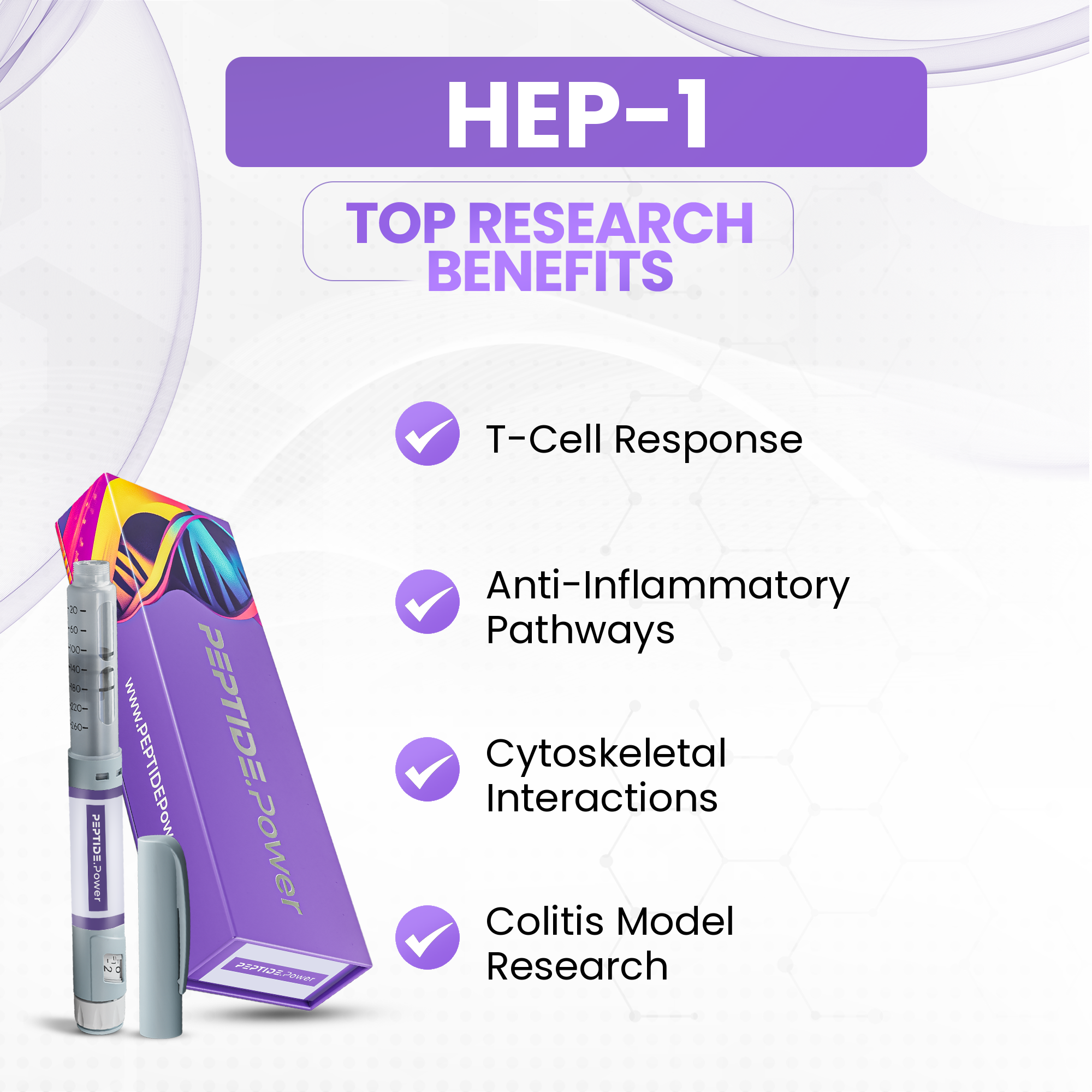
T-Cell Response

Observed to shift CD4+/CD8+ ratios and modulate regulatory T-cell markers in experimental adaptive immunity studies

Anti-Inflammatory Pathways

Reported to modulate TNF-alpha, IL-6 release and NF-kB-related signaling cascades in preclinical inflammation models

Cytoskeletal Interactions

Studied for interactions with membrane-cytoskeleton signaling complexes and cell-surface receptor organization in research models

Colitis Model Research

Suitable reference peptide for experimental inflammatory colitis investigations and barrier-tissue immune regulation studies

Description

HEP-1 is a synthetic 14-amino-acid peptide derived from the 324-337 fragment of human ezrin, a cytoskeletal protein involved in membrane-cytoskeleton linkage and intracellular signaling. It is investigated primarily for its immunomodulatory activity, with research models exploring effects on cytokine balance, interferon signaling, and mucosal immune responses.

In experimental systems, HEP-1 has been reported to modulate Th1/Th2 cytokine profiles, influence interferon signaling, and support macrophage and NK-cell activity. Research in cell and animal models has observed restoration of impaired immune responses under conditions of immunosuppression, along with modulation of inflammatory mediators at mucosal surfaces.

Secondary investigations have examined HEP-1 in the context of fibroblast differentiation (Chulkina 2017) and mucosal inflammation in the DSS colitis mouse model (Chulkina 2020), with observed effects on local immune activation in gastrointestinal research models. These findings have driven interest in ezrin-derived peptides as candidates for studying host-directed immune modulation.

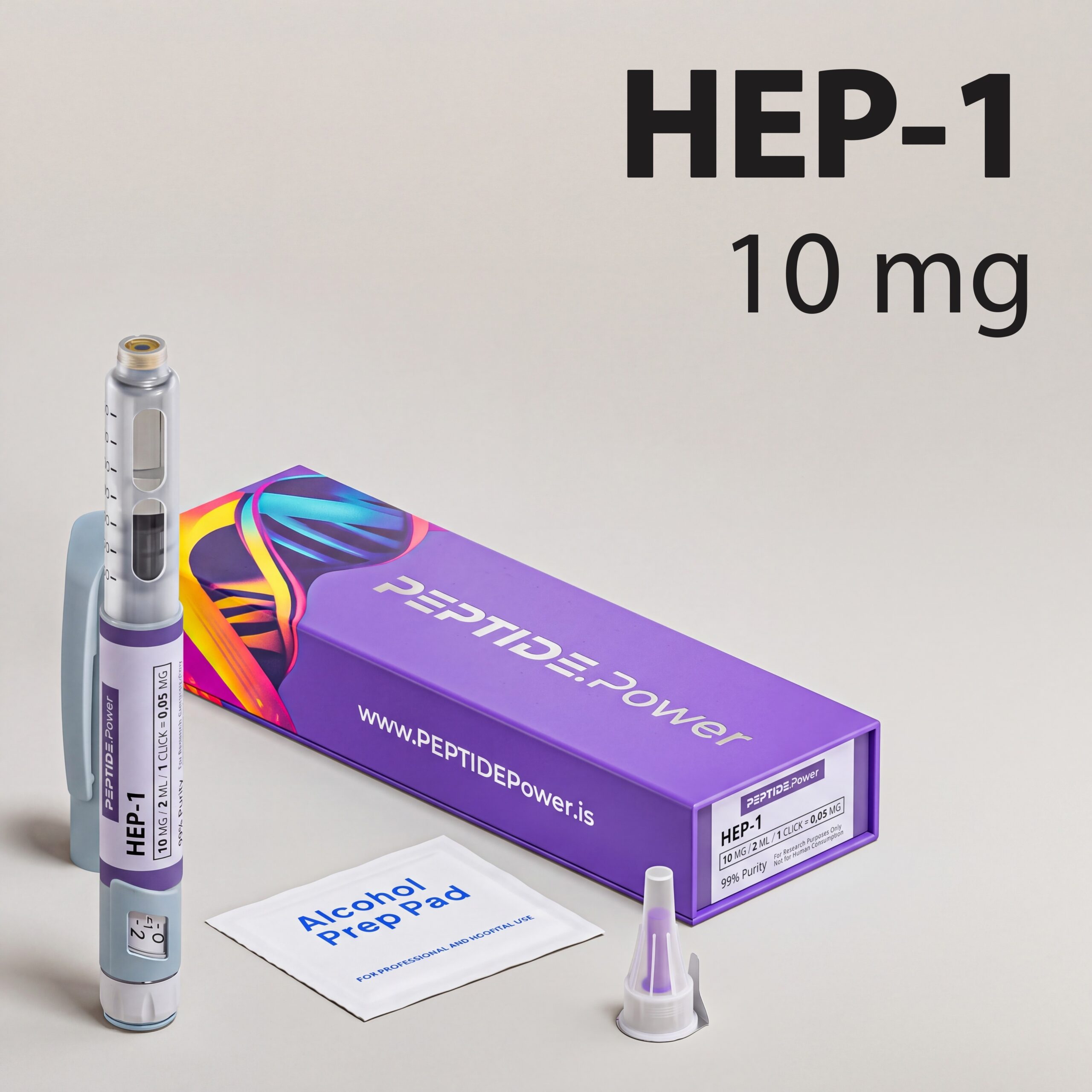
Supplied as a ready-to-use injection pen (2 mL solution, 1 click = 0.01 mL) with >98% HPLC purity, HEP-1 is formulated for subcutaneous research administration with precise click-based dosing. Its small size and defined sequence make it suitable for controlled dosing in in vitro and in vivo immunology research.

Clinical Status:
HEP-1 is a research peptide evaluated in cell culture and animal models for immunomodulatory activity and mucosal immune research. While related ezrin-derived preparations have been studied in observational human contexts abroad, HEP-1 is not approved for medical use and remains restricted to experimental and laboratory research.

Evidence type:
Human RCT ☐ | Observational ✔ | Animal ✔ | In vitro ✔ | Regulatory ☐

Mechanism of Action​

HEP-1 is a 14-amino-acid fragment derived from residues 324-337 of human ezrin, a cytoskeletal linker protein involved in membrane-cytoskeleton signaling and immune cell function. In experimental models, HEP-1 has been observed to modulate innate and adaptive immune responses, influencing cytokine balance and leukocyte activity. Research suggests upregulation of interferon-α and interferon-γ expression, enhanced macrophage activation, and restoration of impaired T-cell and NK-cell function in immunocompromised states.

Benefits

  • Immunomodulatory Signaling Activity:
    HEP-1, a 14-amino-acid fragment derived from the ezrin protein (residues 324-337), has been investigated for its ability to modulate immune cell signaling in experimental models. Research suggests the peptide influences cytokine production patterns, particularly affecting interferon-gamma and interleukin expression profiles. These observations have positioned HEP-1 as a reference compound for studying ezrin-dependent immune regulation in both in vitro and preclinical settings.
  • Macrophage and Phagocyte Modulation:
    In cell culture studies, HEP-1 has been reported to influence macrophage activity and phagocytic function. Research models have observed changes in oxidative burst capacity and chemotactic responses following peptide exposure. This activity profile makes HEP-1 a frequently studied tool for investigating innate immune cell behavior and the role of ezrin-derived sequences in phagocyte-mediated signaling pathways.
  • Fibroblast Differentiation Research:
    HEP-1 has been evaluated in experimental cell models for its influence on fibroblast differentiation and signaling, as reported by Chulkina et al. (2017). Observed effects include modulation of interferon pathway activity and alterations in cytokine expression profiles in cultured cells. These findings have made HEP-1 a subject of continued investigation in ezrin-derived peptide mechanism research and host-cell signaling studies.
  • Mucosal Immunity Investigation:
    Research has explored HEP-1 for its reported effects on mucosal immune function, with experimental models examining its influence on secretory IgA levels and local inflammatory markers. Studies in animal models have observed modulation of mucosal cytokine profiles in gastrointestinal tissue systems. This activity makes HEP-1 a reference peptide in research focused on barrier-tissue immune regulation.
  • T-Cell and Lymphocyte Response Modulation:
    HEP-1 has been studied for its ability to influence T-lymphocyte populations and overall adaptive immune balance in experimental conditions. Research observations include shifts in CD4+/CD8+ ratios and modulation of regulatory T-cell markers following peptide exposure. These effects support its use as a research compound for exploring ezrin-dependent adaptive immunity mechanisms and lymphocyte signaling pathways.
  • Anti-Inflammatory Pathway Research:
    Experimental studies have observed that HEP-1 modulates pro-inflammatory cytokine release, including TNF-alpha and IL-6, in various cell-based and animal models. The peptide appears to influence NF-kB-related signaling cascades, contributing to its investigation as a modulator of inflammatory response pathways. This profile positions HEP-1 as a useful tool for studying ezrin-derived peptides in inflammation research contexts.
  • Cell Membrane and Cytoskeletal Interactions:
    As a fragment derived from the ezrin cytoskeletal linker protein, HEP-1 is studied for its interactions with membrane-cytoskeleton signaling complexes. Research models have examined its influence on cell-surface receptor organization and membrane-associated signaling dynamics. These structural-functional observations provide a mechanistic basis for the peptide’s broader immunomodulatory activity profile in experimental systems.
  • DSS Colitis Model Observations:
    Animal studies, including the DSS-induced colitis mouse model reported by Chulkina et al. (2020), have investigated HEP-1 for its influence on intestinal tissue parameters under experimental inflammatory challenge. Research models have reported modulation of mucosal cytokine markers and inflammatory indicators in challenged tissue systems. These preclinical observations have expanded HEP-1 research into gut-associated immune-modulation pathways, though findings remain confined to animal and in vitro models with no established clinical application.

Research Data​

Study / Model Reported effect
Murine opportunistic infection models ↑ resistance to intracellular pathogens; enhanced macrophage activation and cytokine response.
Human peripheral blood mononuclear cells (in vitro) ↑ IFN-α and IFN-γ production; modulation of Th1/Th2 cytokine balance.
Immunocompromised animal models Restored NK cell cytotoxicity and improved lymphocyte proliferation markers.
Mucosal immunity studies ↑ secretory IgA levels and strengthened mucosal barrier response.
Fibroblast differentiation assays (Chulkina 2017) Modulation of myofibroblast markers and interferon-mediated signalling pathways.
DSS colitis mouse model (Chulkina 2020) Reduced mucosal inflammation and improved epithelial barrier recovery.
Chronic inflammation rodent models Normalization of pro-inflammatory cytokine profile (TNF-α, IL-6) without immunosuppression.
Cell culture studies on phagocytes ↑ phagocytic activity of neutrophils and monocytes.

Stack Suggestions​

HEP-1 is often combined in research with:

  • HEP-1 + Thymosin Alpha-1 → Complementary immunomodulation targeting innate and adaptive responses in infection models.
  • HEP-1 + BPC-157 → Pairs mucosal immune regulation with gastrointestinal tissue repair pathways.
  • HEP-1 + LL-37 → Combines ezrin-derived cytokine modulation with antimicrobial peptide activity.
  • HEP-1 + Thymulin → Supports broader T-cell maturation alongside macrophage activation studies.

⚠ Stacks are for experimental design only; not safety or efficacy guidance.

Pen Dosage Chart​

HEP-1 Pen 10 mg
Volume 2 mL
mg/mL 5 mg/mL
Click-to-Dose 1 click = 0.05 mg
Example(s) 10 clicks = 0.5 mg

Dosage & Protocols Variations​

Standard research protocol

  • Dose: 0.75 – 1 mg (15 – 20 clicks)
  • Duration: 10 days
  • Frequency: Once daily, subcutaneous (SubQ) with the pen
  • Cycle Interval: Pause of at least 4 weeks before a repeat course (no off-interval is defined in the literature)
  • Pen Coverage: 1 pen = 10 – 13 days
  • Goal / Description: Immunomodulatory research in cell and animal models. Basis: derived from a published or patent dose range; not a validated human dose.

Extended low-dose protocol

  • Dose: 0.4 – 0.5 mg (8 – 10 clicks)
  • Duration: 20 days
  • Frequency: Once daily, subcutaneous (SubQ) with the pen
  • Cycle Interval: Pause of at least 4 weeks before a repeat course
  • Pen Coverage: 1 pen = 20 – 25 days
  • Goal / Description: Longer, lower-dose course for immunomodulatory research models. Basis: derived from a published or patent dose range; not a validated human dose.

Research stack with BPC-157 10 mg

  • Dose: 0.5 – 0.7 mg (10 – 14 clicks) + 0.25 – 0.5 mg BPC 157 (BPC 157 Pen 10 mg: 5 – 10 clicks)
  • Duration: 14 days
  • Frequency: Once daily, subcutaneous (SubQ) with the pen
  • Cycle Interval: Pause of at least 4 weeks before a repeat course
  • Pen Coverage: 1 pen = 14 – 20 days
  • Goal / Description: Combined research in fibroblast and tissue-repair models. Basis: vendor/community convention only; no published dosing study.

Possible Side Effects​

HEP-1 is generally well-tolerated in preclinical and limited human observational studies.

Reported side effects are rare and mild:

  • Transient local reaction at the injection site in parenteral research models.
  • Mild redness or tenderness at the subcutaneous administration site in research observations.
  • Occasional short-lived headache or fatigue noted during initial dosing periods.
  • Minor gastrointestinal sensitivity reported in a small subset of experimental observations.

No evidence of hepatic, renal, hormonal, or systemic adverse effects has been observed in available data. Long-term toxicological profiling remains limited, and HEP-1 is restricted to experimental and laboratory research use only.

Product Attributes​

  • CAS #: 174641-44-2
  • Molecular Formula: C74H132N26O27
  • Sequence (AA): TEKKRRETVEREKE
  • Molecular Weight: ~1818.0 g/mol
  • PubChem CID: 25078222
  • Half-Life: N/A (not established)
  • Synonyms: HEP1, Human Ezrin Peptide 1, human ezrin (324-337), Gepon, Hepon
  • Type: Synthetic research peptide (ezrin-derived 14-mer)
  • Research Focus: Ezrin (324-337) peptide studied for immunomodulatory activity in cell and animal models

Scientific References​

Included In The Box

Every product arrives in a premium, custom-designed PEPTIDE.Power box, engineered for convenience, hygiene, and safe storage in your refrigerator. Inside, you will find everything needed for your full research protocol:

  • 1× Disposable Pre-Mixed Injection Pen
  • Powered by our proprietary PSM Technology™: precision stabilization & mixing system for consistent potency
  • 10× Ultra-thin Needles (33G, 4 mm)
  • 10× Alcohol Pads for sterile preparation
  • Internal Stabilizing Foam Insert to prevent shaking during transport
  • Instruction Panel printed on the inside of the box for quick reference
  • Security Seal Sticker ensuring the package has not been opened or tampered with

Store the product in a refrigerator at 1-8°C immediately upon delivery. To maintain optimal stability, keep the pen away from light, and do not expose it to repeated temperature changes.

Once reconstituted (all our pens come pre-mixed), research compounds remain stable for 6-8 weeks under proper refrigeration.

Do not freeze after reconstitution. Always keep the box closed so the pen, needles, and alcohol pads stay clean and protected.

For best results, use the product consistently within the recommended time window and always follow your research protocol.

We ship with Next-Day EU Delivery via DHL Express or UPS Express.

All orders are prepared fresh on the day of dispatch, placed in EPS Cold-Chain Transport Boxes, and shipped with cooling elements to maintain a stable temperature throughout the journey.

Our logistics process is designed so the package arrives overnight, avoiding customs delays inside the European Union.

Products are shipped from our EU facility, ensuring no import duties, no customs clearance, and always fast and secure delivery.

Due to the nature of research peptides and the high-risk category assigned by payment processors, credit card companies do not generally support merchants in this field.

For this reason, we accept mainly Bank Transfers.

We also work with a crypto payment provider, and from time to time, card payments may be available depending on processor availability.

Within the European Union, SEPA transfers are fast, low-cost, and usually arrive within minutes to a few hours, making the payment process smooth and simple.

Once the transfer is received, your order is prepared immediately and dispatched the same day, depending on the daily cut-off time.

Please note that we do not dispatch shipments on Fridays or on days before official public holidays. This is done to ensure that parcels can be delivered on the next working day and are not held in transit over weekends or holidays.

This method ensures compliance, security, and continuity of service for all customers across the EU.

Didn't find the answer to your question?

View all frequently asked questions

RELATED PRODUCTS