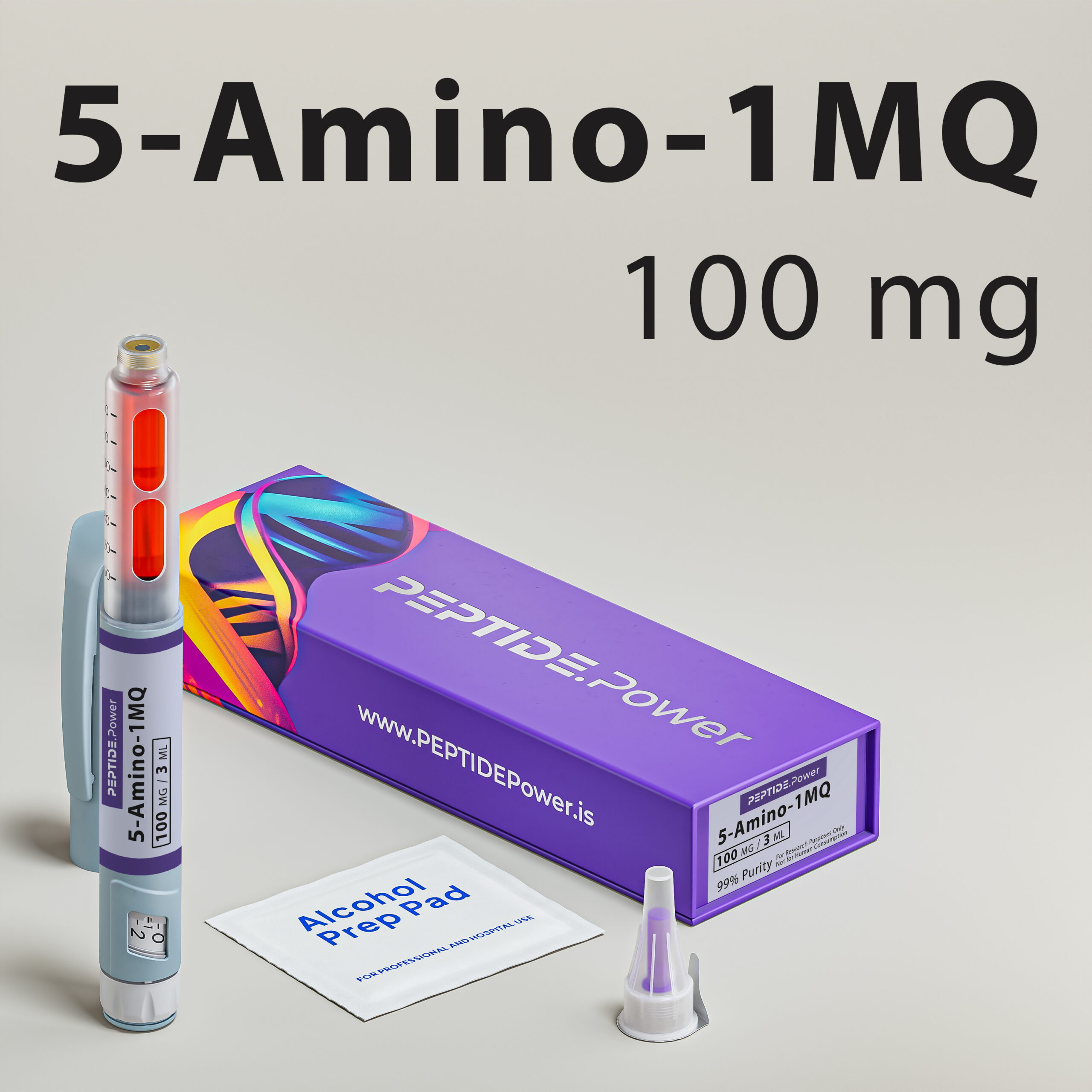


5-Amino-1MQ
5-Amino-1MQ is a small molecule derivative of nicotinamide designed to inhibit NNMT, an enzyme that regulates NAD+ levels and energy metabolism. In research models, it has been shown to enhance fat oxidation, reduce adiposity, and improve insulin sensitivity.
65,00 €
- Fat Metabolism & NAD+ Pathway Modulator
Description
5-Amino-1MQ is a small molecule NNMT inhibitor studied for its ability to modulate cellular metabolism through methylation and NAD+ salvage pathways. By selectively inhibiting nicotinamide N-methyltransferase (NNMT), 5-Amino-1MQ helps preserve intracellular NAD+ levels and redirect cellular energy metabolism toward enhanced fat oxidation and mitochondrial efficiency.
In research models, 5-Amino-1MQ has been observed to reduce white adipose tissue mass and improve glucose and lipid regulation without altering caloric intake. Through its modulation of the NNMT-SAM-NAD+ axis, it enhances energy expenditure and supports more efficient utilization of fat stores for energy, making it a strong candidate in studies exploring metabolic optimization and obesity control.
Beyond adipose metabolism, 5-Amino-1MQ contributes to increased intracellular NAD+ availability, improving mitochondrial respiration and ATP synthesis. This mechanism supports studies in cellular rejuvenation, energy production, and metabolic resilience. By influencing S-adenosylmethionine (SAM) levels, it also plays a role in epigenetic regulation and longevity-related gene expression, linking energy metabolism with cellular lifespan.
Formulated in a stabilized pre-mixed injection pen for SubQ administration, 5-Amino-1MQ ensures high systemic bioavailability and precise delivery for controlled experimental research. Its selective biochemical profile and favorable safety characteristics make it suitable for advanced studies on NAD+ metabolism, mitochondrial function, and metabolic health.
Clinical Status:
5-Amino-1MQ is a research compound evaluated in preclinical and emerging human studies for obesity, insulin resistance, and metabolic health applications. It is not approved for therapeutic use and is intended strictly for laboratory and investigative research purposes.
Evidence type:
Human RCT ☐ | Observational ☐ | Animal ✔ | In vitro ✔ | Regulatory ☐
Mechanism of Action
5-Amino-1MQ works by blocking the NNMT enzyme, which is responsible for consuming nicotinamide and depleting NAD+ stores. By inhibiting this enzyme, NAD+ levels rise within cells, leading to enhanced energy metabolism, lipid breakdown, and mitochondrial activation.
This mechanism has been linked with reduced fat cell size, increased insulin sensitivity, and improved overall metabolic efficiency.
Benefits
- Optimized Adipose Tissue Metabolism Research:
5-Amino-1MQ is studied for its selective inhibition of the NNMT enzyme, which plays a central role in metabolic regulation within white adipose tissue. In diet-induced obesity models, this inhibition has been observed to reduce white fat accumulation and promote lipolysis, effectively reprogramming metabolic pathways toward enhanced energy expenditure. Researchers highlight this peptide for its capacity to influence NAD+ salvage and S-adenosylmethionine balance—key regulators of mitochondrial efficiency and adipocyte energy output. - Enhanced Energy Expenditure via NNMT Inhibition:
In preclinical models, 5-Amino-1MQ increased whole-body metabolic rate by redirecting cellular resources away from fat storage and toward active ATP production. This metabolic shift occurs due to the peptide’s action on the nicotinamide methylation pathway, which increases intracellular NAD+ availability, facilitating greater oxidative metabolism. Such modulation of energy dynamics is of significant interest for experimental research on obesity and metabolic syndrome. - Improved Glucose and Lipid Metabolism:
Experimental studies demonstrate that suppression of NNMT activity with 5-Amino-1MQ correlates with improved glucose tolerance and reduced hepatic lipid accumulation. This dual improvement in glucose and lipid homeostasis suggests potential applications in research focusing on insulin sensitivity and fatty liver prevention. The peptide’s influence extends to lowering circulating triglycerides and enhancing lipid oxidation, supporting a more balanced metabolic profile. - Modulation of NAD+ and SAM Levels:
5-Amino-1MQ has been observed to elevate intracellular NAD+ concentrations by reducing methylation loss, a process that indirectly enhances mitochondrial redox capacity. Simultaneously, higher S-adenosylmethionine (SAM) availability supports key methylation-dependent pathways, which are crucial for epigenetic regulation and gene expression related to energy metabolism. These dual biochemical effects make it a focal point for research on metabolic reprogramming and longevity. - Reduction in White Adipose Tissue Mass:
Preclinical data indicate a marked reduction in white adipose tissue following administration of 5-Amino-1MQ. This outcome results from combined mechanisms of increased fatty acid oxidation and decreased lipogenesis. The peptide’s specific targeting of NNMT-expressing adipocytes allows for a localized metabolic shift without widespread systemic overstimulation, presenting a unique model for selective fat mass modulation studies. - Preservation of Lean Muscle Mass:
Unlike many metabolic interventions that induce general weight loss, 5-Amino-1MQ studies report a preservation of lean muscle mass during adipose reduction. This suggests its metabolic influence is primarily on fat oxidation rather than muscle catabolism. Such selectivity has prompted interest in combined research protocols with peptides that support muscle anabolism and recovery. - Potential for Combination with NAD+ Augmentation:
Since both NAD+ and 5-Amino-1MQ act on related pathways, their synergistic potential has become a growing topic in experimental design. Elevating NAD+ while inhibiting its methylation loss through NNMT inhibition may enhance mitochondrial biogenesis and oxidative phosphorylation efficiency. This synergy is under exploration in models studying aging, metabolic health, and endurance performance. - Support for Mitochondrial Efficiency:
By sustaining NAD+ availability and improving mitochondrial redox balance, 5-Amino-1MQ contributes to enhanced mitochondrial respiration and ATP synthesis. These effects are essential for maintaining energy efficiency under metabolic stress, supporting research into fatigue resistance and cellular longevity. Such mitochondrial resilience makes it a candidate for inclusion in experimental energy optimization stacks. - Anti-Inflammatory Metabolic Effects:
In obesity-related research models, 5-Amino-1MQ administration has been associated with reduced inflammatory cytokine expression within adipose tissue. Decreased levels of TNF-α and IL-6 indicate that NNMT inhibition not only modulates metabolism but also improves the inflammatory microenvironment, a key component in metabolic disease development and insulin resistance. - Epigenetic Regulation and Longevity Implications:
Through its role in SAM recycling and methylation balance, 5-Amino-1MQ influences epigenetic pathways linked to energy metabolism and aging. By restoring cellular methyl donor capacity, it may support genomic stability and longevity-associated gene expression patterns. These findings position 5-Amino-1MQ as a promising subject in the broader context of research on metabolic longevity and cellular optimization.
Research Data
| Study / Model | Reported effect |
| Diet-induced obese mice (DIO model) |
↓ body weight by 40%, ↓ fat mass, ↑ lean mass without caloric restriction.
|
| NNMT knockout comparison |
Mimicked genetic NNMT deletion benefits: ↑ NAD+, ↑ SIRT1, ↑ mitochondrial respiration.
|
| In vitro adipocyte culture |
↓ lipid accumulation, ↑ AMPK activation, ↓ inflammatory cytokines.
|
| High-fat diet mouse study |
↓ fasting glucose and insulin levels, improved insulin tolerance.
|
| Liver steatosis models |
↓ hepatic triglycerides and lipid deposition; ↑ mitochondrial biogenesis.
|
| Combination NAD+ + 5-Amino-1MQ |
Synergistic NAD+ increase and enhanced metabolic flexibility.
|
| Neuroinflammation model |
↓ ROS generation, ↑ mitochondrial membrane potential in neuronal cells.
|
Stack Suggestions
5-Amino-1MQ is often combined in research with:
- NAD+ or NMN → for amplified NAD+ pool restoration and mitochondrial synergy.
- MOTS-c → for increased fat oxidation and metabolic endurance.
- SS-31 → to protect mitochondria and optimize electron transport efficiency.
- Tirzepatide or Retatrutide → for combined metabolic modulation and fat loss.
- GHK-Cu + BPC-157 → to support tissue repair during metabolic interventions.
Stacks discussed are for experimental design; not safety or efficacy guidance.
Pen Dosage Chart
| 5-Amino-1MQ Pen 100 mg | |
| Volume | 3.0 mL |
| mg/mL | 33.33 mg/mL |
| Click-to-Dose | 1 click = 0.33 mg |
| Example(s) | 15 clicks = 5 mg |
Dosage & Protocols Variations
Standard Research Protocol
- Dose: 5 – 10 mg daily
- Duration: 2 – 4 weeks
- Frequency: Daily
- Cycle Interval: 2-week pause
- Goal / Description: For baseline NAD+ and fat metabolism studies.
Therapeutic Research Protocol
- Dose: 2.5 – 5 mg
- Duration: 10 – 20 mg daily
- Frequency: Daily
- Cycle Interval: 4-week interval
- Goal / Description: Modeled on extended NNMT inhibition protocols in DIO models.
Biohacker Microdosing
- Dose: 2.5 – 5 mg
- Duration: 4 weeks
- Frequency: Every other day
- Cycle Interval: Repeat monthly
- Goal / Description: Evaluates mild NAD+ upregulation and metabolic activation.
Mitochondrial Stack Protocol
- Dose: 5 mg 5-Amino-1MQ + 100 mg NAD+
- Duration: 4 weeks
- Frequency: 3× per week
- Cycle Interval: Repeatable
- Goal / Description: Synergistic design to study combined mitochondrial enhancement.
Possible Side Effects
5-Amino-1MQ is generally well tolerated in preclinical studies.
Potential mild effects observed in animal and in vitro models include transient fatigue, mild nausea, or digestive discomfort related to metabolic acceleration.
High doses may cause temporary headaches due to increased NAD+ turnover and mitochondrial activity.
Localized redness or irritation may occur at the subcutaneous injection site.
All effects are dose-dependent and typically resolve after dosage adjustment.
Product Attributes
- CAS #: 1034043-18-3
- Molecular Formula: C10H11N2+ (free base), C10H11IN2 (iodide salt), C10H11ClN2 (chloride salt)
- Sequence (AA): N/A (small molecule)
- Molecular Weight: 215.26 g/mol
- PubChem CID: 950107 (free base), 66522933 (iodide salt)
- Half-Life: 3.8-6.9 hours
- Synonyms: 5-Amino-1-methylquinolinium-1-ium, NNMT Inhibitor 5A1MQ, NNMTi, Amino-1MQ, 1-MQ,
- Type: Synthetic small molecule analog
- Research Focus: Weight Loss, Mitochondrial Function, Longevity, Metabolic Health
Scientific References
- Selective and membrane-permeable small molecule inhibitors of nicotinamide N-methyltransferase reverse high fat diet-induced obesity in mice Animal
- Roles of nicotinamide N-methyltransferase in obesity and type 2 diabetes mellitus Review
- What is 5-Amino-1MQ? uses & benefits of this special peptide Web
- 5-Amino-1MQ for beginners: dosage, benefits, and peptide stacks explained In vitro
- Reduced calorie diet combined with NNMT inhibition establishes a distinct microbiome in DIO mice Animal
- 5-Amino-1MQ Animal
- 5-Amino-1MQ vs. semaglutide: which is better for weight loss? Review
- 5-Amino-1MQ vs semaglutide: how they differ in weight loss approaches Review
- How 5-Amino-1MQ supports fat burn and metabolic health Web
- New insights on muscle strength: the role of inhibiting an enzyme that hinders NAD synthesis Animal
Included In The Box
Every product arrives in a premium, custom-designed PEPTIDE.Power box, engineered for convenience, hygiene, and safe storage in your refrigerator. Inside, you will find everything needed for your full research protocol:
- 1× Disposable Pre-Mixed Injection Pen
- Powered by our proprietary PSM Technology™ – precision stabilization & mixing system for consistent potency
- 10× Ultra-thin Needles (33G, 4 mm)
- 10× Alcohol Pads for sterile preparation
- Internal Stabilizing Foam Insert to prevent shaking during transport
- Instruction Panel printed on the inside of the box for quick reference
- Security Seal Sticker ensuring the package has not been opened or tampered with
Storage
Store the product in a refrigerator at 1 – 7°C immediately upon delivery. To maintain optimal stability, keep the pen away from light, and do not expose it to repeated temperature changes.
Once reconstituted (all our pens come pre-mixed), research compounds remain stable for 6 – 8 weeks under proper refrigeration.
Do not freeze after reconstitution. Always keep the box closed so the pen, needles, and alcohol pads stay clean and protected.
For best results, use the product consistently within the recommended time window and always follow your research protocol.
Delivery
We ship with Next-Day EU Delivery via DHL Express or UPS Express.
All orders are prepared fresh on the day of dispatch, placed in EPS cold-chain transport boxes, and shipped with cooling elements to maintain a stable temperature throughout the journey.
Our logistics process is designed so the package arrives overnight, avoiding customs delays inside the European Union.
Products are shipped from our EU facility, ensuring no import duties, no customs clearance, and always fast and secure delivery.
Payment
Due to the nature of research peptides and the high-risk category assigned by payment processors, credit card companies do not support merchants in this field.
For this reason, we accept bank transfers only.
Within the European Union, SEPA transfers are fast, low-cost, and usually arrive within minutes to a few hours, making the payment process smooth and simple.
Once the transfer is received, your order is prepared immediately and dispatched the same day (cut-off dependent).
This method ensures compliance, security, and continuity of service for all customers across the EU.
RELATED PRODUCTS

Cagrilintide

GHRP-6

GLP-3R

NAD+