TB-500 (Thymosin beta 4)
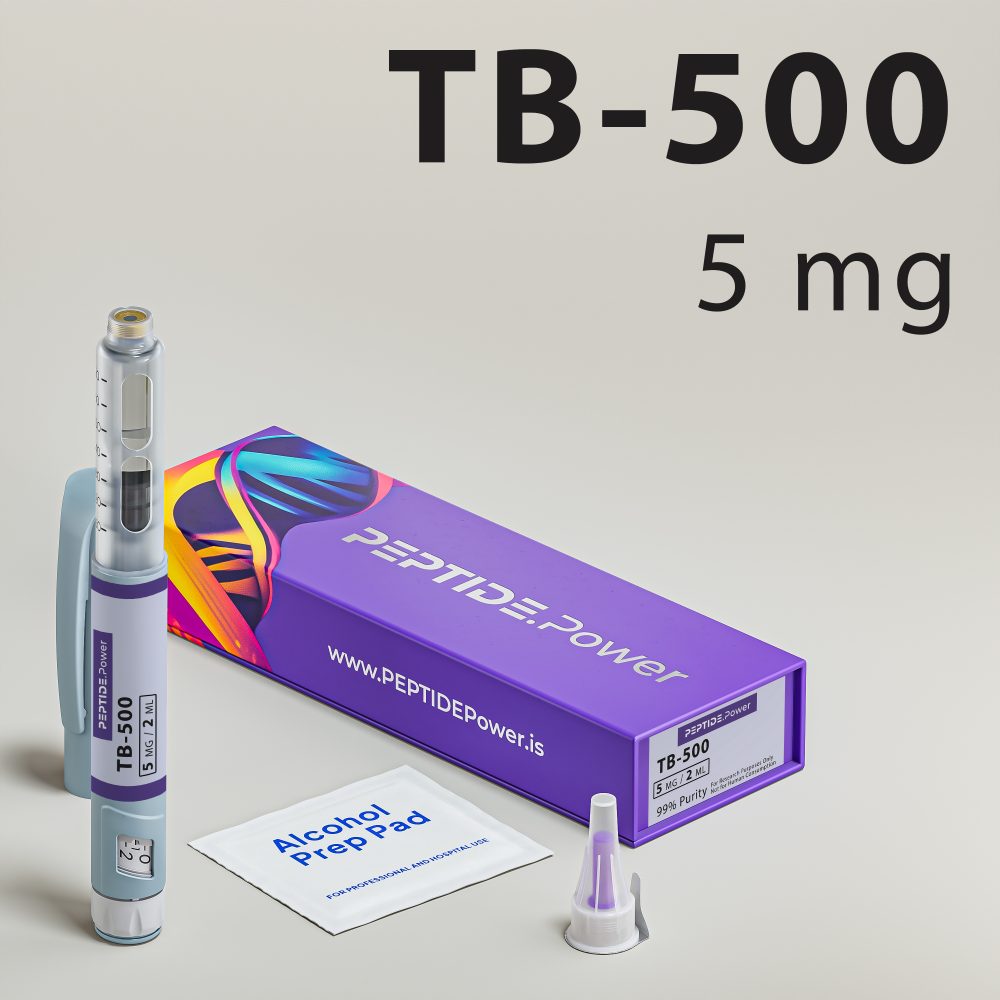
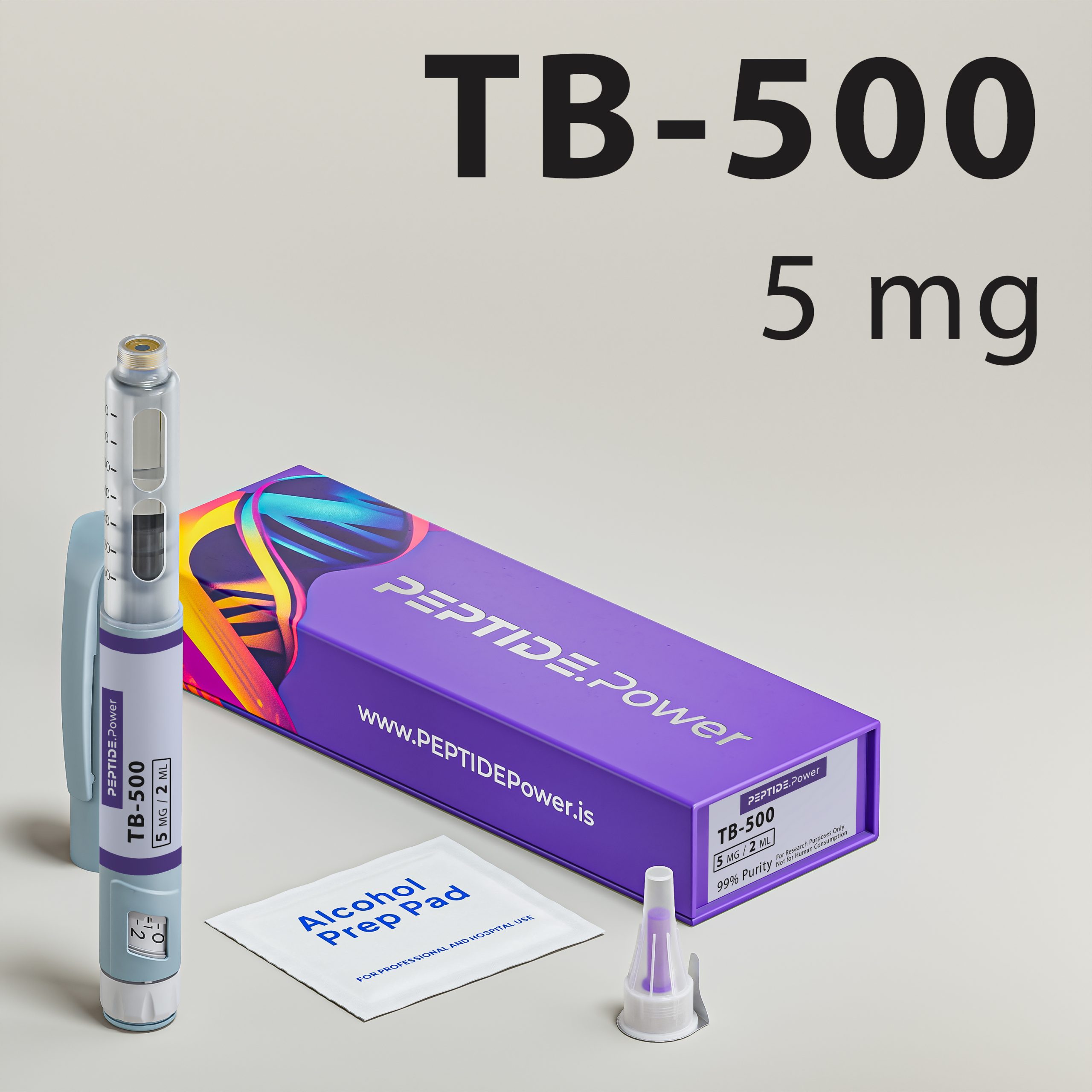
TB 500 (Thymosin Beta 4) is a synthetic peptide studied for its role in cell migration and tissue regeneration. In preclinical models, it has been observed to support angiogenesis and structural repair processes. Administered subcutaneously, TB 500 demonstrates systemic distribution and actin modulation activity in experimental settings. Formulated for research use only in a stabilized pre-mixed injection pen for controlled laboratory protocols.
61,00 € – 109,00 €Price range: 61,00 € through 109,00 €
- Tissue Repair & Recovery Support
Description
TB 500 (Thymosin Beta 4) is a synthetic analog of a naturally occurring thymic peptide studied primarily in tissue repair and regenerative biology research. It belongs to the class of actin-binding peptides and is investigated in musculoskeletal, connective tissue, and systemic recovery models. In preclinical studies, TB 500 has been observed to regulate cellular migration and structural remodeling processes. These properties position it among the most researched peptides in experimental tissue regeneration domains.
Our formulation is provided in a stabilized pre-mixed injection pen for SubQ administration. Subcutaneous delivery supports high bioavailability and consistent systemic exposure in research settings. Each unit is freshly prepared to ensure potency and standardized dosing within experimental protocols. This format eliminates multi-step vial reconstitution and simplifies laboratory handling. The product is formulated strictly for research use only.
In research models, TB 500 has been observed to influence actin polymerization, a critical mechanism for cell movement and structural repair. Preclinical studies indicate upregulation of VEGF signaling → ↑ angiogenesis and improved vascularization in injury models. Modulation of NF-κB pathways has also been documented → ↓ inflammatory signaling in certain experimental contexts. Histological analysis in animal studies shows improved collagen alignment and reduced fibrotic tissue formation. Evidence type: primarily animal and in vitro data, with limited human exploratory research.
Clinical Status
Human RCT ▣ | Observational ▣ | Animal ✔ | In vitro ✔
Primarily studied in preclinical tissue repair and angiogenesis research contexts.
Mechanism of Action
TB 500 works primarily through actin regulation, a structural protein essential for cell movement and tissue repair. In research models, it has been observed to bind G-actin monomers and support dynamic cytoskeletal restructuring. This facilitates cellular migration toward areas of tissue stress or injury. Preclinical studies indicate ↑ vascular endothelial growth factor (VEGF) expression → ↑ angiogenesis and improved microcirculation in damaged tissue. These coordinated effects contribute to structural remodeling and regeneration in experimental models.
Benefits
- Accelerated Tissue Repair And Regeneration: TB 500 has been studied for its role in cellular migration and tissue regeneration across multiple preclinical injury models. Research suggests it supports actin regulation, which is essential for cell movement and structural repair. In animal models, enhanced recovery of muscle fibers and connective tissue has been observed. Increased angiogenesis and improved collagen organization have also been documented. These mechanisms position TB 500 as a central peptide in regenerative biology research. Evidence type: Animal ▣ | In vitro ▣.
- Actin Cytoskeleton Modulation: TB 500 is a synthetic analog of Thymosin Beta 4, a naturally occurring peptide involved in actin-binding dynamics. Laboratory studies indicate that it regulates G-actin polymerization, supporting cytoskeletal remodeling. This process is critical for wound closure, cell migration, and structural repair. In vitro research demonstrates improved cellular motility following exposure. The peptide’s actin-related activity is considered one of its primary mechanistic hooks.
- Enhanced Angiogenesis And Blood Vessel Formation: Preclinical studies show increased VEGF expression in tissue injury models. This upregulation contributes to new blood vessel formation and improved oxygen delivery to damaged areas. In animal research, enhanced capillary density has been observed following administration. Improved vascularization supports nutrient transport and tissue remodeling processes. Evidence derives primarily from animal and laboratory models.
- Support For Muscle Recovery Models: In experimental muscle injury models, TB 500 has been observed to accelerate regeneration of damaged fibers. Studies report improved organization of muscle tissue architecture. Reduced scar tissue formation has been documented in certain animal trials. Enhanced satellite cell activation has also been explored. These findings contribute to its inclusion in performance and recovery research protocols.
- Connective Tissue And Tendon Research Applications: TB 500 has been studied in tendon and ligament injury models. Preclinical data indicate improved collagen fiber alignment and structural strength. Enhanced fibroblast migration has been documented in vitro. These cellular processes are essential for connective tissue remodeling. The peptide’s regenerative profile makes it relevant in musculoskeletal research.
- Anti-Inflammatory Signaling Modulation: In animal models of tissue injury, reduced inflammatory markers such as TNF-α and IL-6 have been observed. Research suggests TB 500 may modulate NF-κB pathways involved in inflammatory signaling. This appears to support a balanced repair environment rather than excessive inflammation. Laboratory findings indicate regulation rather than suppression of immune activity. Evidence type: Animal ▣ | In vitro ▣.
- Reduced Fibrosis In Experimental Models: Certain preclinical studies suggest decreased fibrotic tissue formation following injury. Improved collagen matrix organization has been measured in histological assessments. Reduced scar tissue density has been observed in comparison groups. These findings indicate potential relevance in fibrosis-related research. Data remain primarily preclinical.
- Systemic Distribution Profile: Research suggests that TB 500 may exhibit systemic distribution beyond the site of administration. Animal pharmacokinetic models indicate broad tissue penetration. This characteristic differentiates it from localized growth factor approaches. The systemic effect profile supports its inclusion in whole-body recovery research models.
- Cardiac And Organ Tissue Research: TB 500 has been evaluated in experimental cardiac injury models. Preclinical data show improved cellular survival and reduced necrotic area following ischemic stress. Enhanced endothelial cell migration has been documented in laboratory settings. These findings are exploratory and remain within animal and in vitro contexts.
- High Bioavailability Through Subcutaneous Administration: Provided in a stabilized pre-mixed injection pen for SubQ administration, supporting consistent experimental dosing. Subcutaneous delivery allows reliable systemic exposure in research models. The formulation avoids multi-step vial reconstitution and supports standardized protocols. Each unit is prepared fresh and intended strictly for research use only.
Research Data
xxx
Stack Suggestions
xxx
Pen Dosage Chart
Dosage & Protocols Variations
xxx
Possible Side Effects
xxx
Product Attributes
xxx
Scientific References
xxx
Included In The Box
Every product arrives in a premium, custom-designed PEPTIDE.Power box, engineered for convenience, hygiene, and safe storage in your refrigerator. Inside, you will find everything needed for your full research protocol:
- 1× Disposable Pre-Mixed Injection Pen
- Powered by our proprietary PSM Technology™ – precision stabilization & mixing system for consistent potency
- 10× Ultra-thin Needles (33G, 4 mm)
- 10× Alcohol Pads for sterile preparation
- Internal Stabilizing Foam Insert to prevent shaking during transport
- Instruction Panel printed on the inside of the box for quick reference
- Security Seal Sticker ensuring the package has not been opened or tampered with
Storage
Store the product in a refrigerator at 1 – 7°C immediately upon delivery. To maintain optimal stability, keep the pen away from light, and do not expose it to repeated temperature changes.
Once reconstituted (all our pens come pre-mixed), research compounds remain stable for 6 – 8 weeks under proper refrigeration.
Do not freeze after reconstitution. Always keep the box closed so the pen, needles, and alcohol pads stay clean and protected.
For best results, use the product consistently within the recommended time window and always follow your research protocol.
Delivery
We ship with Next-Day EU Delivery via DHL Express or UPS Express.
All orders are prepared fresh on the day of dispatch, placed in EPS cold-chain transport boxes, and shipped with cooling elements to maintain a stable temperature throughout the journey.
Our logistics process is designed so the package arrives overnight, avoiding customs delays inside the European Union.
Products are shipped from our EU facility, ensuring no import duties, no customs clearance, and always fast and secure delivery.
Payment
Due to the nature of research peptides and the high-risk category assigned by payment processors, credit card companies do not support merchants in this field.
For this reason, we accept bank transfers only.
Within the European Union, SEPA transfers are fast, low-cost, and usually arrive within minutes to a few hours, making the payment process smooth and simple.
Once the transfer is received, your order is prepared immediately and dispatched the same day (cut-off dependent).
This method ensures compliance, security, and continuity of service for all customers across the EU.
RELATED PRODUCTS

CJC-1295 (No-DAC) + Ipamorelin

DSIP

GHK-Cu

GLP-1S