

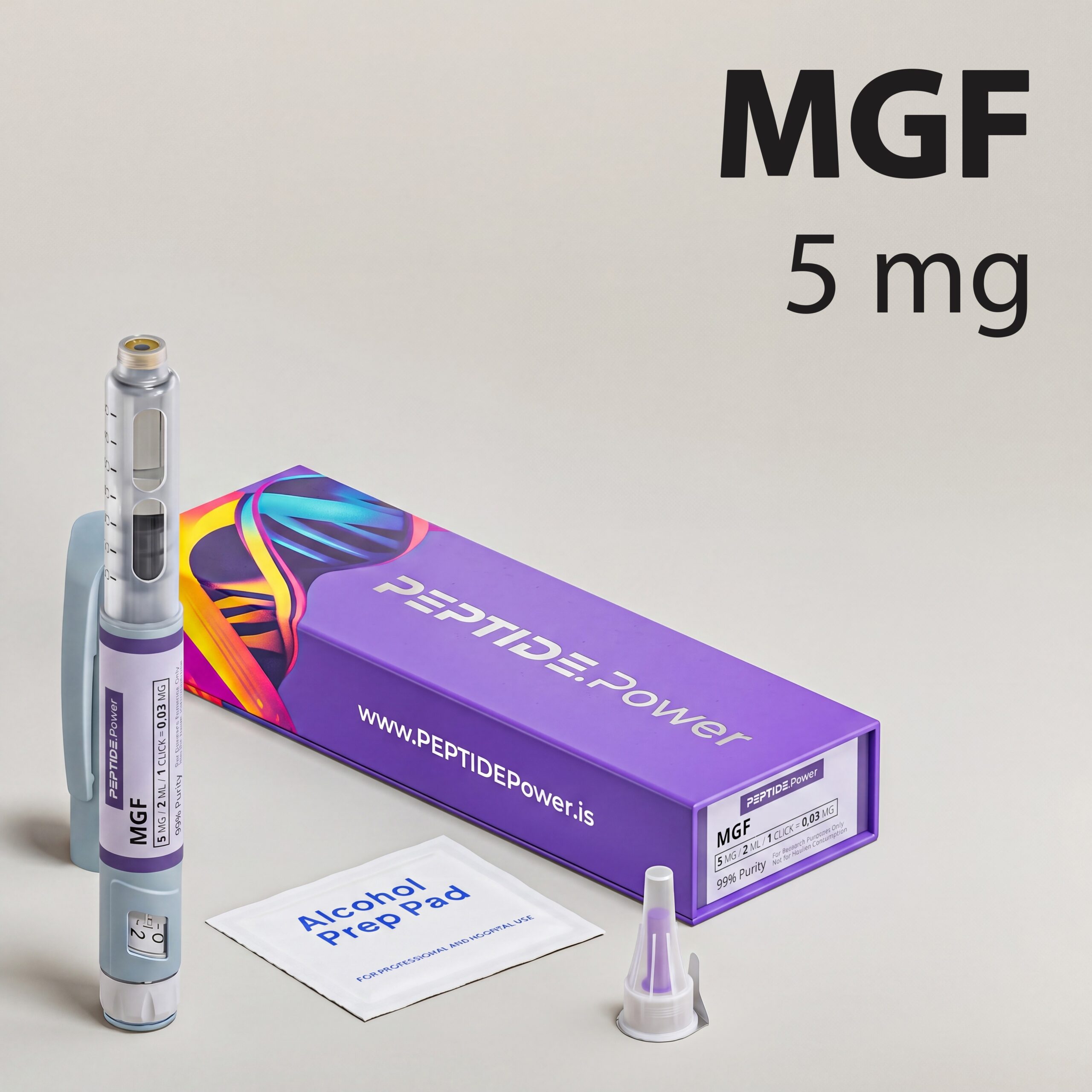










MGF
MGF (Mechano Growth Factor) is a naturally occurring splice variant of the IGF-1 gene studied for its role in localized muscle repair and satellite cell activation. It is expressed in skeletal muscle following mechanical overload and tissue stress. In experimental models, MGF has been observed to support early-phase regenerative signaling and myogenic differentiation. Formulated in a stabilized pre-mixed injection pen for research use only.
66,00 €
Quality Certificates
Independent third-party lab analysis (CoA) - from our own in-house brand.
MGF - Exercise-Induced Growth Factor for Repair Signaling
Studied for activating satellite cells involved in skeletal muscle regeneration
Investigated for supporting site-specific repair following mechanical overload and microtrauma
Observed to promote differentiation of muscle precursor cells in preclinical models
Reported to engage PI3K/Akt pathways linked to anabolic protein synthesis
Studied for modulating early-phase recovery signaling after resistance-style mechanical stress
Evaluated for its role in structural muscle adaptation and regenerative biology
Acts as a localized splice variant distinct from systemic IGF-1 isoforms
Investigated for contributing to muscle fiber growth following mechanical loading stimuli
Description
Mechano Growth Factor (MGF) is an alternative splice variant of the IGF-1 gene expressed in skeletal muscle following mechanical overload and microtrauma. Unlike systemic IGF-1 isoforms, MGF contains a distinct C-terminal E-domain sequence associated with early-phase tissue repair signaling. Its expression is transient and localized, primarily occurring in response to resistance exercise or structural muscle stress. Research interest in MGF centers around its role in satellite cell activation and regenerative muscle biology.
Our formulation is provided in a stabilized pre-mixed injection pen for SubQ administration. Subcutaneous delivery supports controlled experimental exposure and predictable peptide absorption in research protocols. Each unit is freshly prepared to preserve structural integrity and standardized dosing parameters. The product is intended strictly for laboratory and research use only.
In preclinical systems, MGF has been observed to influence satellite cell proliferation and modulate intracellular signaling pathways associated with anabolic repair processes. Activation of signaling networks including PI3K and Akt contributes to protein synthesis and myogenic differentiation within mechanically stressed tissue. Unlike circulating IGF-1 analogs, MGF appears to function primarily in localized regenerative contexts rather than broad systemic growth signaling.
Clinical Status
Human RCT ▣ | Observational ▣ | Animal ✔ | In vitro ✔
Primarily studied in preclinical muscle biology and regenerative research contexts.
Mechanism of Action
MGF supports early muscle repair signaling by mimicking the naturally produced growth factor expressed after mechanical overload. It influences satellite cell activation and promotes intracellular pathways involved in protein synthesis and tissue regeneration. This localized signaling environment contributes to structural muscle adaptation in experimental models.
Benefits
- Activation of satellite cell, mediated regeneration:
MGF has been studied for its ability to stimulate satellite cells, the muscle-resident stem cells responsible for tissue repair. Following mechanical strain, endogenous MGF expression increases locally within skeletal muscle. This localized production signals quiescent precursor cells to enter the cell cycle and begin proliferation. Experimental models demonstrate increased differentiation of these cells into functional myofibers. Activation of early myogenic transcription factors underlies this regenerative process. The peptide’s influence appears most prominent during the early phase of muscle recovery. - Engagement of anabolic intracellular signaling networks:
MGF influences signaling pathways associated with cellular growth and protein synthesis. Activation of PI3K and Akt cascades regulates mTOR activity, a key integrator of anabolic signaling. This intracellular network controls translation initiation and ribosomal assembly within muscle cells. Enhanced signaling contributes to structural repair and adaptation. Unlike systemic endocrine stimulation, these pathways are activated primarily in mechanically stressed tissue. - Localized adaptation to mechanical overload:
MGF is naturally expressed in response to resistance exercise and microtrauma. Its biological role is tied to tissue-specific adaptation rather than global growth effects. Research indicates improved regeneration patterns in overloaded muscle groups in controlled models. Structural organization of regenerating fibers appears coordinated through localized signaling events. This targeted mechanism distinguishes MGF from broader growth hormone axis peptides. - Regulation of myogenic gene expression:
Laboratory studies show increased transcription of regulatory factors such as MyoD and myogenin during MGF exposure. These transcription factors orchestrate differentiation of satellite cells into mature contractile fibers. Coordinated gene expression supports structural remodeling and recovery. This molecular dimension underscores the peptide’s role in regenerative biology research. - Support of structural muscle remodeling:
In injury-based experimental systems, MGF has been associated with improved alignment and maturation of regenerating fibers. Increased cross-sectional muscle fiber area has been observed in controlled preclinical contexts. These structural outcomes correlate with enhanced cellular differentiation and anabolic signaling pathways. - Influence on early-phase recovery dynamics:
MGF expression peaks shortly after mechanical stress, suggesting a role in priming tissue for repair. This timing differentiates it from peptides more associated with sustained hypertrophy signaling. Experimental models highlight its involvement during the initial recovery window rather than prolonged growth phases. - Controlled subcutaneous delivery for research protocols:
Provided in a stabilized pre-mixed injection pen for SubQ administration, MGF supports predictable exposure characteristics in experimental settings. Subcutaneous delivery allows structured dosing parameters and reproducible research conditions. Each unit is freshly prepared and intended strictly for laboratory use only.
Research Data
| Study / Model | Reported effect |
|---|---|
| Rat skeletal muscle overload model | ↑ satellite cell activation and ↑ muscle fiber cross-sectional area |
| Mouse muscle injury / regeneration | Accelerated myofiber repair and improved structural recovery |
| In vitro myoblast culture | ↑ proliferation and delayed differentiation, expanding the progenitor pool |
| Aged rodent muscle model | Restored regenerative response comparable to younger controls |
| Cardiac ischemia model | ↓ cardiomyocyte apoptosis and improved post-injury tissue preservation |
| Mechanical stretch in vitro | Transient ↑ MGF expression linked to early repair signaling |
| Resistance exercise (human biopsy) | ↑ MGF mRNA expression following eccentric loading |
Stack Suggestions
MGF is often combined in research with:
- MGF + IGF-1 LR3 → Combines acute satellite cell activation with sustained anabolic signaling for enhanced muscle repair models.
- MGF + BPC-157 → Pairs localized myogenic signaling with broad tissue and connective regeneration pathways.
- MGF + TB-500 → Supports complementary actin remodeling and myofiber recovery in mechanical injury studies.
- MGF + Follistatin → Investigated for amplified hypertrophic response via myostatin inhibition and satellite cell proliferation.
⚠ Stacks are for experimental design only; not safety or efficacy guidance.
Pen Dosage Chart
| MGF Pen 5 mg | |
|---|---|
| Volume | 2 mL |
| mg/mL | 2.5 mg/mL |
| Click-to-Dose | 1 click = 0.025 mg |
| Example(s) | 10 clicks = 0.25 mg |
Dosage & Protocols Variations
Standard Research Protocol
- Dose: 0.1 – 0.2 mg (= 4-8 clicks)
- Duration: 4 – 6 weeks
- Frequency: Post-training, 3 – 5× per week
- Cycle Interval: 2 – 4 weeks off before repeating
- Goal / Description: Baseline protocol for localized muscle repair and satellite cell activation studies.
Therapeutic Research Protocol
- Dose: 0.2 – 0.4 mg (= 8-16 clicks)
- Duration: 4 – 8 weeks
- Frequency: Site-specific injection, 3× per week
- Cycle Interval: 4 weeks off before repeating
- Goal / Description: Higher-dose targeted application for tissue regeneration and recovery models.
Stacked Protocol (MGF + IGF-1 LR3)
- Dose: 0.1 – 0.2 mg MGF (= 4-8 clicks)
- Duration: 4 – 6 weeks
- Frequency: MGF post-training; IGF-1 LR3 on alternating days
- Cycle Interval: 4 weeks off before repeating
- Goal / Description: Combined local and systemic anabolic signaling for hypertrophy research.
Possible Side Effects
MGF is generally well-tolerated in animal studies and limited human research models.
Reported side effects are typically mild and localized:
- Transient redness, irritation, or swelling at the injection site.
- Mild localized soreness following intramuscular administration.
- Occasional fatigue or lethargy during initial dosing periods.
- Possible mild hypoglycemia-like sensations due to IGF-1 pathway crossover.
- Rare transient headache or flushing reported in early-phase research observations.
No evidence of severe systemic, hormonal, or organ-related adverse effects has been observed in available preclinical data. Because MGF acts primarily through localized signaling rather than sustained systemic exposure, off-target effects appear limited compared with longer-acting IGF-1 analogs.
Product Attributes
- CAS #: 12656-61-4
- Molecular Formula: C121H200N42O39
- Sequence (AA): YQPPSTNKNTKSQRRKGSTFEERK
- Molecular Weight: ~2868 g/mol
- PubChem CID: N/A (peptide fragment)
- Half-Life: ~5-7 minutes (very short, localized action)
- Synonyms: Mechano Growth Factor, IGF-1Ec, MGF E-peptide
- Type: Synthetic research peptide (IGF-1 splice variant)
- Research Focus: Recovery & Performance, Muscle Regeneration
Scientific References
- Mechano-growth factor: a putative product of IGF-I gene expression involved in tissue repair and regeneration Animal | In vitro
- The expression of IGF-I splice variants in young and old human skeletal muscle after high resistance exercise Human RCT | Observational
- Mechano-growth factor stimulates proliferation and inhibits differentiation of skeletal muscle satellite cells In vitro | Animal
- Mechano growth factor E peptide induces the increase of protein synthesis via PI3K-Akt-mTOR pathway In vitro
- Differential splicing of the IGF-I gene to yield forms that are essential for muscle repair Animal | Observational
- Mechano-growth factor, an IGF-I splice variant, rescues motoneurons and improves muscle function in models of neurodegeneration Animal
- Cardioprotective effects of mechano growth factor in postinfarction myocardium Animal
- MGF E peptide pre-treatment counteracts hydrogen peroxide induced apoptosis in cardiomyocytes In vitro
Included In The Box
Every product arrives in a premium, custom-designed PEPTIDE.Power box, engineered for convenience, hygiene, and safe storage in your refrigerator. Inside, you will find everything needed for your full research protocol:
- 1× Disposable Pre-Mixed Injection Pen
- Powered by our proprietary PSM Technology™: precision stabilization & mixing system for consistent potency
- 10× Ultra-thin Needles (33G, 4 mm)
- 10× Alcohol Pads for sterile preparation
- Internal Stabilizing Foam Insert to prevent shaking during transport
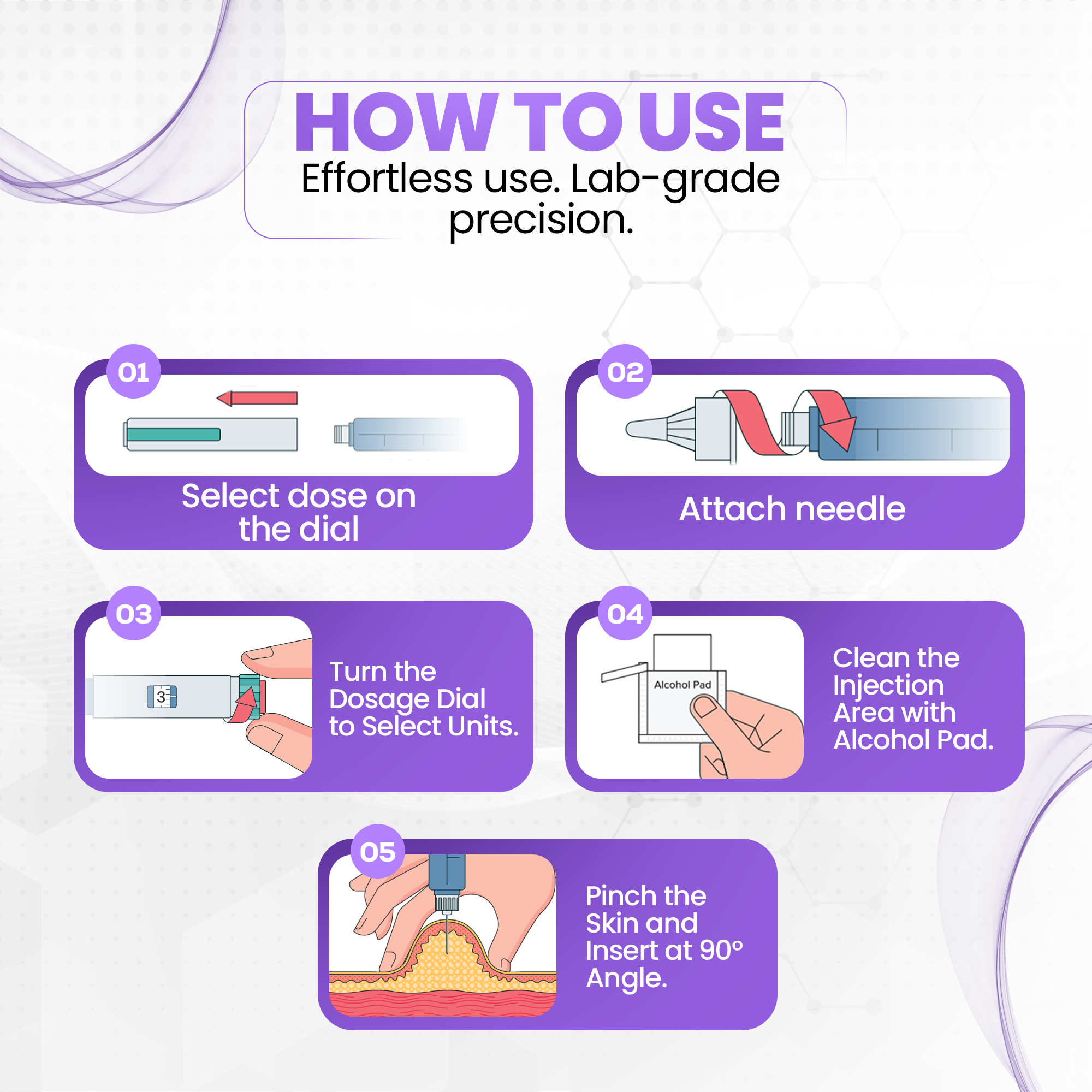
- Instruction Panel printed on the inside of the box for quick reference
- Security Seal Sticker ensuring the package has not been opened or tampered with
Storage
Store the product in a refrigerator at 1-8°C immediately upon delivery. To maintain optimal stability, keep the pen away from light, and do not expose it to repeated temperature changes.
Once reconstituted (all our pens come pre-mixed), research compounds remain stable for 6-8 weeks under proper refrigeration.
Do not freeze after reconstitution. Always keep the box closed so the pen, needles, and alcohol pads stay clean and protected.
For best results, use the product consistently within the recommended time window and always follow your research protocol.
Delivery
We ship with Next-Day EU Delivery via DHL Express or UPS Express.
All orders are prepared fresh on the day of dispatch, placed in EPS Cold-Chain Transport Boxes, and shipped with cooling elements to maintain a stable temperature throughout the journey.
Our logistics process is designed so the package arrives overnight, avoiding customs delays inside the European Union.
Products are shipped from our EU facility, ensuring no import duties, no customs clearance, and always fast and secure delivery.
Payment
Due to the nature of research peptides and the high-risk category assigned by payment processors, credit card companies do not generally support merchants in this field.
For this reason, we accept mainly Bank Transfers.
We also work with a crypto payment provider, and from time to time, card payments may be available depending on processor availability.
Within the European Union, SEPA transfers are fast, low-cost, and usually arrive within minutes to a few hours, making the payment process smooth and simple.
Once the transfer is received, your order is prepared immediately and dispatched the same day, depending on the daily cut-off time.
Please note that we do not dispatch shipments on Fridays or on days before official public holidays. This is done to ensure that parcels can be delivered on the next working day and are not held in transit over weekends or holidays.
This method ensures compliance, security, and continuity of service for all customers across the EU.
Didn't find the answer to your question?
View all frequently asked questionsRELATED PRODUCTS


BPC-157 + TB-500


CJC-1295 (No-DAC) + Ipamorelin

